The Fruit With Painful Consequences—This Is The Only Way You Should Eat The Monstera Deliciosa
The Fruit With Painful Consequences—This Is The Only Way You Should Eat The Monstera Deliciosa
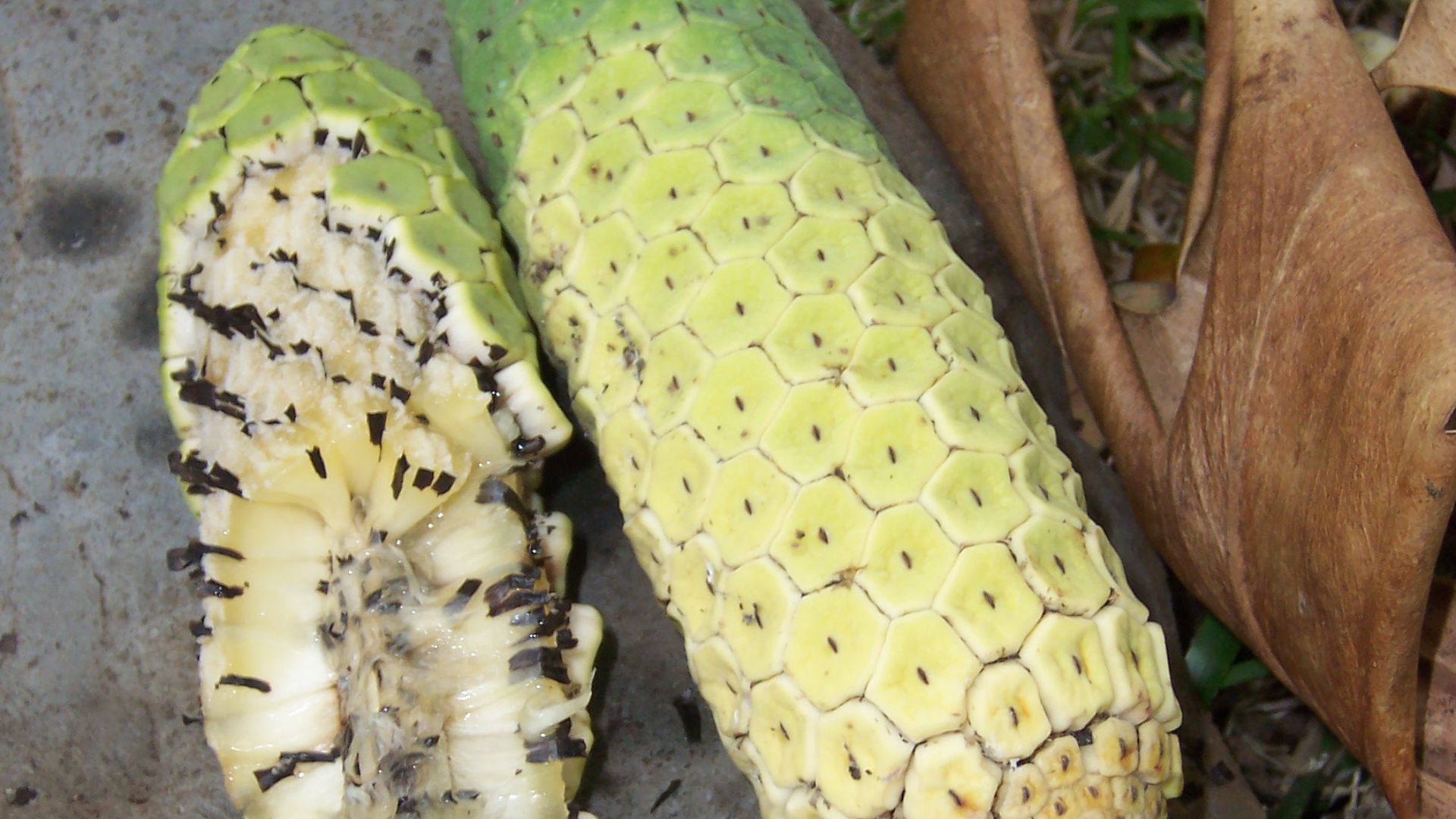
You may be familiar with the monstera, or Swiss cheese plant, because it's commonly found inside people's houses. It's a striking plant with distinct leaves and grows easily indoors. Its popularity as a houseplant, however, is ironic considering all parts of it are toxic to humans, cats, and dogs due to calcium oxalate crystals. All parts of the plant cause irritation, pain, and swelling if ingested, except for the Monstera's fruit. In a cruel twist of fate, this fruit tastes like a mixture of banana, pineapple, and mango, but only if it's perfectly ripe.
What is a Monstera?
The Monstera is a tropical plant originating from the rainforests of Central and South America. It's adapted to climb up surfaces, using its aerial roots. This allows it to reach more sunlight, leading its leaves to grow to their full, mature size. This is why it's helpful to have a moss pole or something similar that it can climb on when keeping a Monstera at home. Once its leaves grow, natural holes and splits form, giving it a unique appearance which earned it the nickname "Swiss cheese plant". The holes are thought to be designed to withstand heavy winds and rain while allowing for more sunlight to reach the roots. Monsteras thrive in bright, indirect light, and while they love humid and warm conditions, they're hearty plants that can survive in varying climates and are fairly easy to care for. This, along with their dramatic aesthetic, makes them extremely popular houseplants. Their toxicity comes from their needle-like calcium oxalate crystals that are found in all parts of the plant and cause irritation, pain, and swelling if ingested.
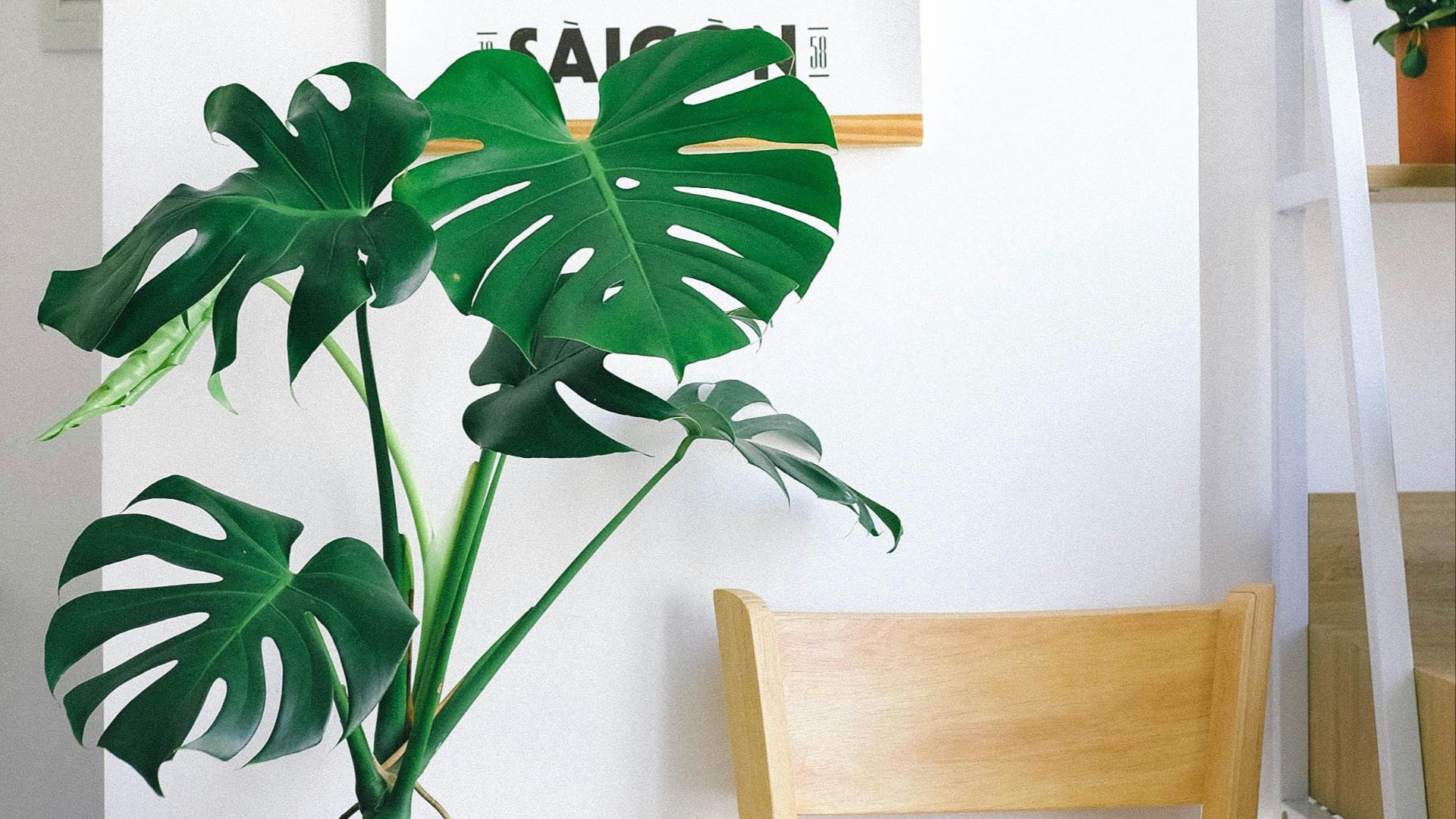
Monstera deliciosa fruit
A lot of people, even those who have a thriving Swiss cheese plant in their home, don't know that Monsteras produce edible fruits. The fruit grows from the central flower stem of the plant, which develops from the main trunk.
It starts out as a green, cone-shaped structure with hexagonal scales on the outside, and takes about a year to mature. Once the fruit is large and the scales have started to spread apart, you can pick it off the plant and place it cut-side up in a glass of water until the scales loosen up even more. Once it has a sweet banana-like aroma and the scales come off easily with a swipe of your finger, it indicates that it's ripe enough to eat. If you eat the fruit before it is ripe, it can cause throat irritation, mouth burning, and stomach pain. Once the scales come off, you can use a spoon to scoop out the aromatic and sweet flesh. Different parts of the fruit become ripe at different times, so you can enjoy it over several days. It's a unique tropical fruit that tastes delicious and is packed with vitamins like vitamin C and potassium. Its high fiber content is known to help with digestion, and it's typically eaten in South America and Mexico after radiotherapy to help replenish nutrients and antioxidants.