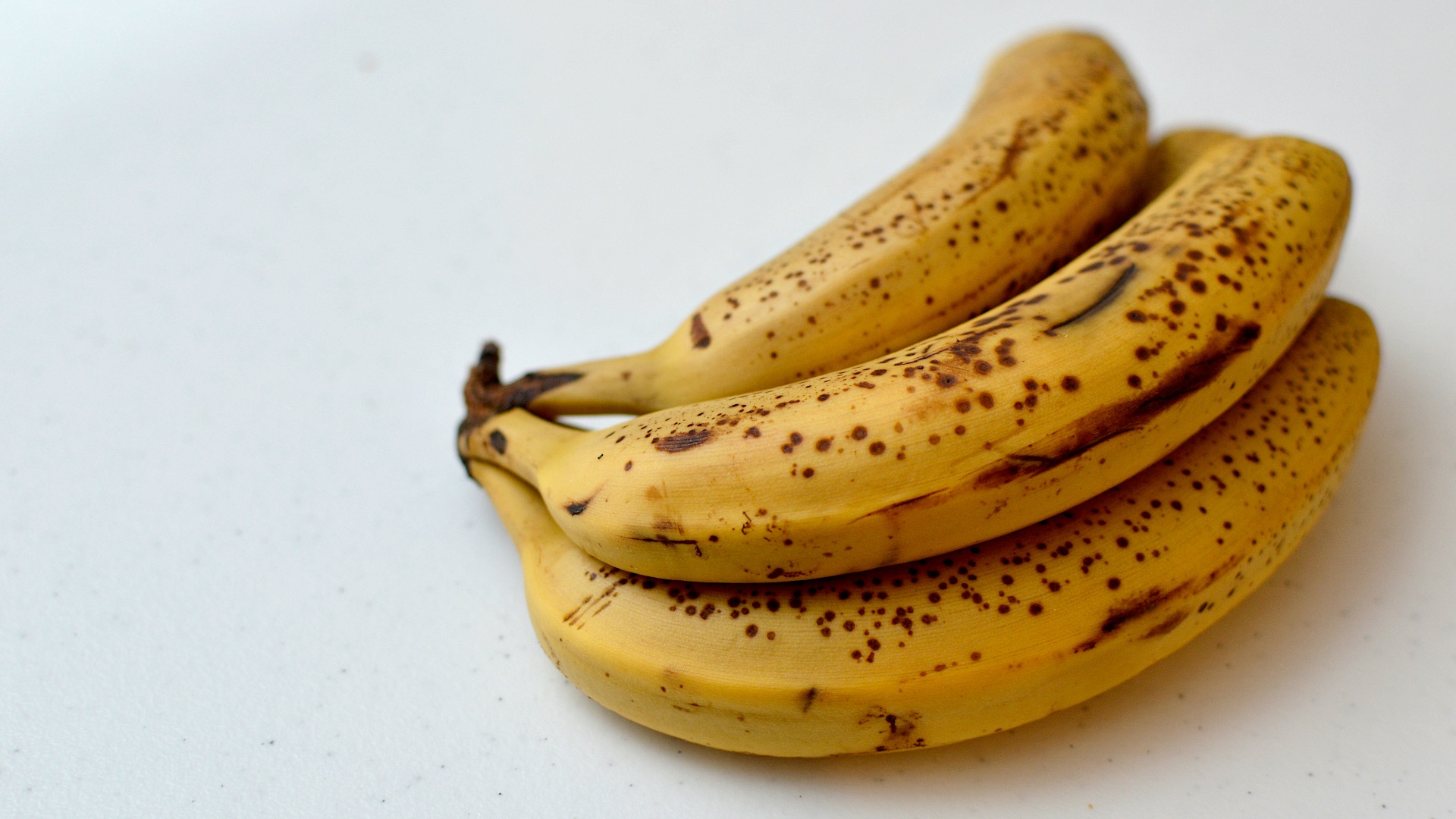
Your bananas were perfectly fine when you picked them up from the grocery store yesterday, so why do they already have brown spots on them? Don't worry; this is completely normal, and you're (probably) not doing anything wrong. If you're wondering why your fruit is already freckled, there's a simple explanation: ethylene gas.
But how should you store your bunch so they don't ripen or bruise so quickly? Can you put them in the fridge? And once they become overripe, are they still safe to eat? Read on, and we'll dive deeper into how to properly store—and enjoy—this popular yellow fruit.
Why Do Bananas Ripen So Quickly?
Why do bananas get brown freckles so quickly, and so soon after bringing them home from the market? Well, the answer is ethylene gas. As the fruit ripens, it releases and reacts with ethylene, which changes its color from green (a hue that's present due to chlorophyll) to yellow, and yellow to speckled brown. This hormone doesn't just cause the peel to decay, but turns starches into sugars, and softens fruit.
Damaged or bruised bananas also produce more ethylene gas. That's why they ripen much more quickly than unblemished bananas. If you put your bananas in a paper bag, you'll also notice that they brown faster, likely due to the ethylene gas being trapped inside.
How Should You Properly Store Them?
What if you don't want your bananas to brown so quickly? On your countertop, it only takes about two-to-six days before they're almost completely ripe. This process happens even faster when the fruit is in direct sunlight, or stored in a warm environment. Plus, storing them as a bunch can cause bruising, since the bananas are lying on top of each other.
What you should do instead to store them properly is to pick a cool, dark, and dry place first. If you have a hook, hang your bananas up—this way, they won't bruise or damage each other. Wrapping plastic around the crown may also help slow down the ripening process. You can also place your bananas in the fridge, provided they've already turned yellow and started ripening. If you put them in the fridge too soon, however, such as when they're still green, you may accidentally stop the ripening process altogether, causing the fruit to taste bitter.
What Can You Make with Overripe Bananas?
If you have overripe bananas that you can no longer eat the regular way, you're in luck: there are plenty of delicious baked goods you can make with them, so don't throw them out just yet. For example, you can turn them into banana bread, muffins, cookies, waffles, pancakes, and Bundt cakes. You'll find numerous recipes online, so search for one that suits your tastes.
Not keen on baking? You can also whip overripe bananas into a refreshing beverage, such as throwing them into shakes, smoothies, and even coffee. Up for dessert? Make them into brownies, pudding, or sorbet. There are endless ways to transform your overripe bananas.