You May Soon Be Able To Tuck Into A Steak Without Taking A Life
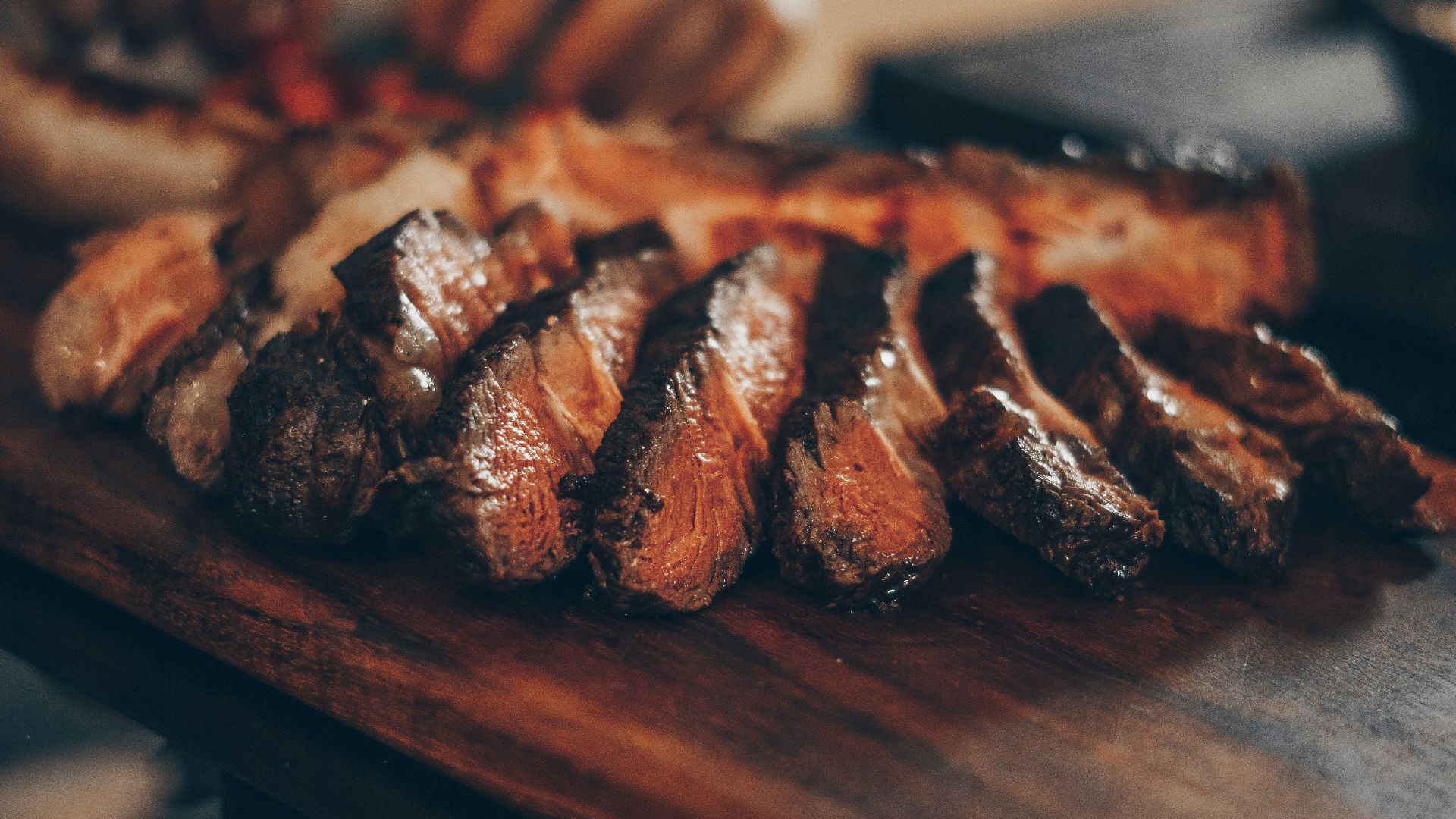
It's no secret that people love meat—its global production has increased five times over the last 60 years. In Asia, where more than half of the population lives, it's grown 15 times. This poses not only concerns about animal welfare but also serious environmental issues. Each kilogram of beef produced creates 70 kilograms of greenhouse gas emissions.
For many conscious foodies, consuming meat poses a serious dilemma: it's delicious and full of protein, but it's also a life. Fortunately, breakthroughs in cellular agriculture and food science may soon make it so that you can enjoy your juicy steak guilt-free. Imagine foie gras without the overstuffed goose, veal without the slaughter of a baby cow, and Bluefin tuna without the risk of extinction.
What is lab-grown meat?
Cultivated or lab-grown meat involves taking a small sample of animal cells and growing them in a bioreactor—a controlled environment that mimics the conditions inside an animal's womb. These cells multiply and grow into muscle tissue, fat, and connective tissue: the components that make up a steak, chicken breast, or pork loin. The result is real meat at a cellular level but without the environmental or ethical baggage.
Taste
While early prototypes of lab-grown meat lacked the complexity of flavor in real cuts, recent advances in 3D tissue scaffolding, fat cell cultivation, and bioreactor technology mean that scientists can now design meat with specific textures and flavors. Now, many cultivated meat products taste uncannily similar to the real version, and new research is likely to match it perfectly very soon.
Nutrition
Lab-grown meat also offers customizable nutrition. For example, fat levels can be adjusted, unhealthy fats can be swapped for more of the healthy kinds, and it can be fortified with vitamins. What's more, it contains none of the growth hormones or antibiotics typically used in traditional livestock farming.
Sustainability
Because it's still in the experimental phase, it's hard to say just how much of an environmental footprint full-scale cultivated meat production will have. However, a life-cycle assessment on the production of lab-grown meat found that it cuts the environmental impacts of traditional beef farming by a whopping 93 percent when renewable energy is used.
This is because it doesn't require the vast lands livestock grazing does or crops for animal feed, and avoids the methane emissions cows and sheep produce. It also eliminates food waste as no bones or other inedible animal parts are needed.
How close are we?
Lab-grown meat may sound like a science fiction concept, but it's actually a lot closer to reality than you might think. A few countries have already approved certain cultivated meat products for sale, including Singapore, Australia, and the US. This means regulators are satisfied that lab-grown meat can be safely produced and marketed.
As great as it sounds, lab-grown meat doesn't come without its challenges. One of the issues researchers have faced is with scaling and cost. In the early days, it was astronomically expensive, but changes in bioreactor designs, tissue scaffolding, and cell culture development have made it a lot more reasonable. Still, costs aren't quite as low as regular meat products, but within the next few years, we can expect to see cultivated meat products appear in high-end restaurants and specialty markets.
To make lab-grown meat viable, the public will also need to be won over. Consumer surveys show mixed attitudes towards it, but public opinion seems to be improving. While there are some skeptics who perceive lab-grown meat as being "unnatural," many consumers are curious and supportive. Younger generations, in particular, are more receptive to the products.
KEEP ON READING


20 Worst Foods for Your Liver