10 Negative Influences That Make You Eat Faster & 10 Ways to Slow Down
Eat, Don't Race
How fast can you finish a burger or a bowl of cereal? If it usually takes you two minutes tops or even less than that, you're eating way too fast. But that doesn't just come down to personal habits; there are plenty of other things that can subtly influence you to race through your plate, such as scrolling on your phone or watching TV. Once you spot these patterns, you can make a few practical tweaks that help meals feel more relaxed, more satisfying, and a lot less like a timed event. Ready to dig in? Here are 10 negative influences that make you scarf your food, and 10 ways to slow your pace down.
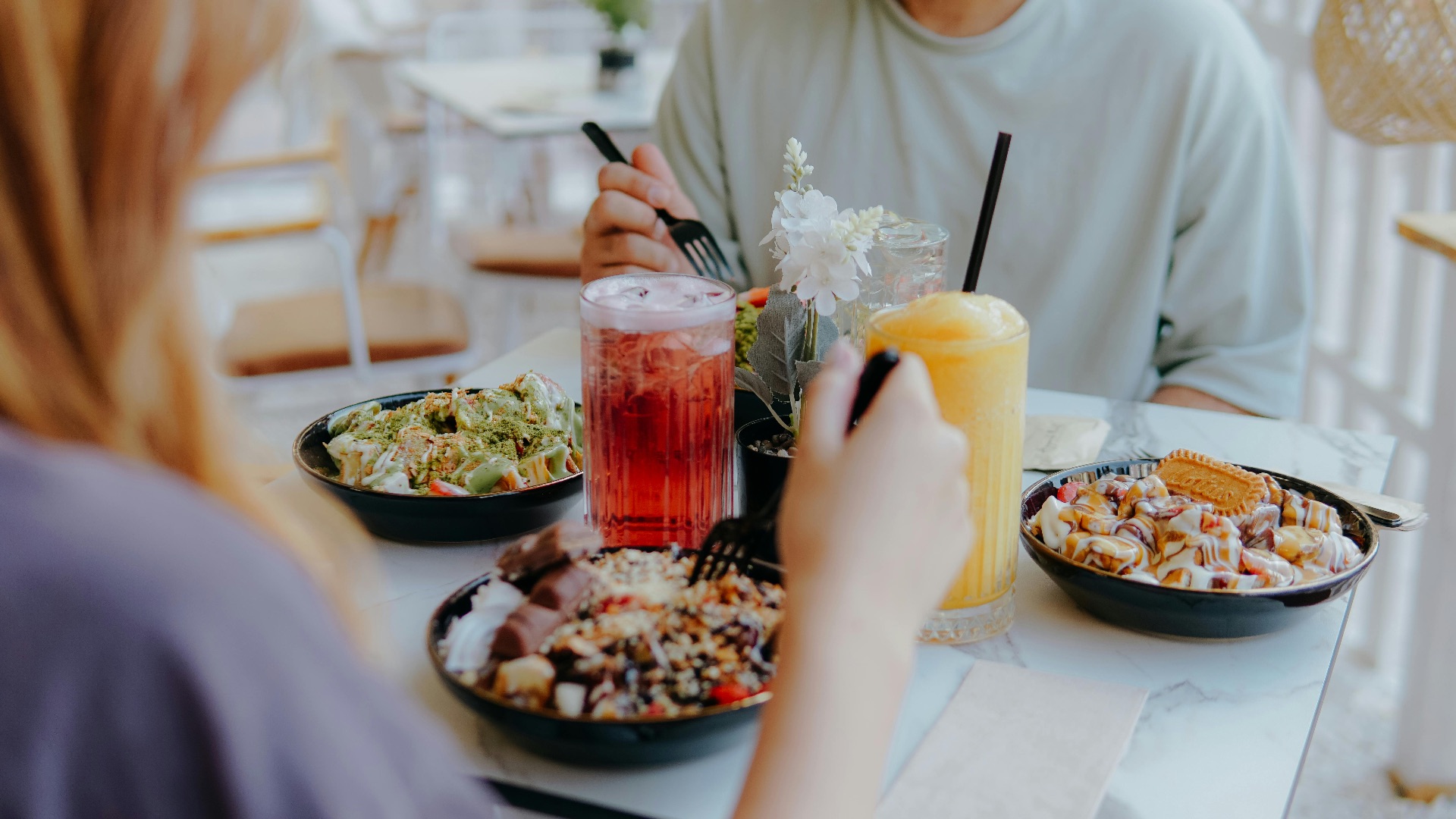
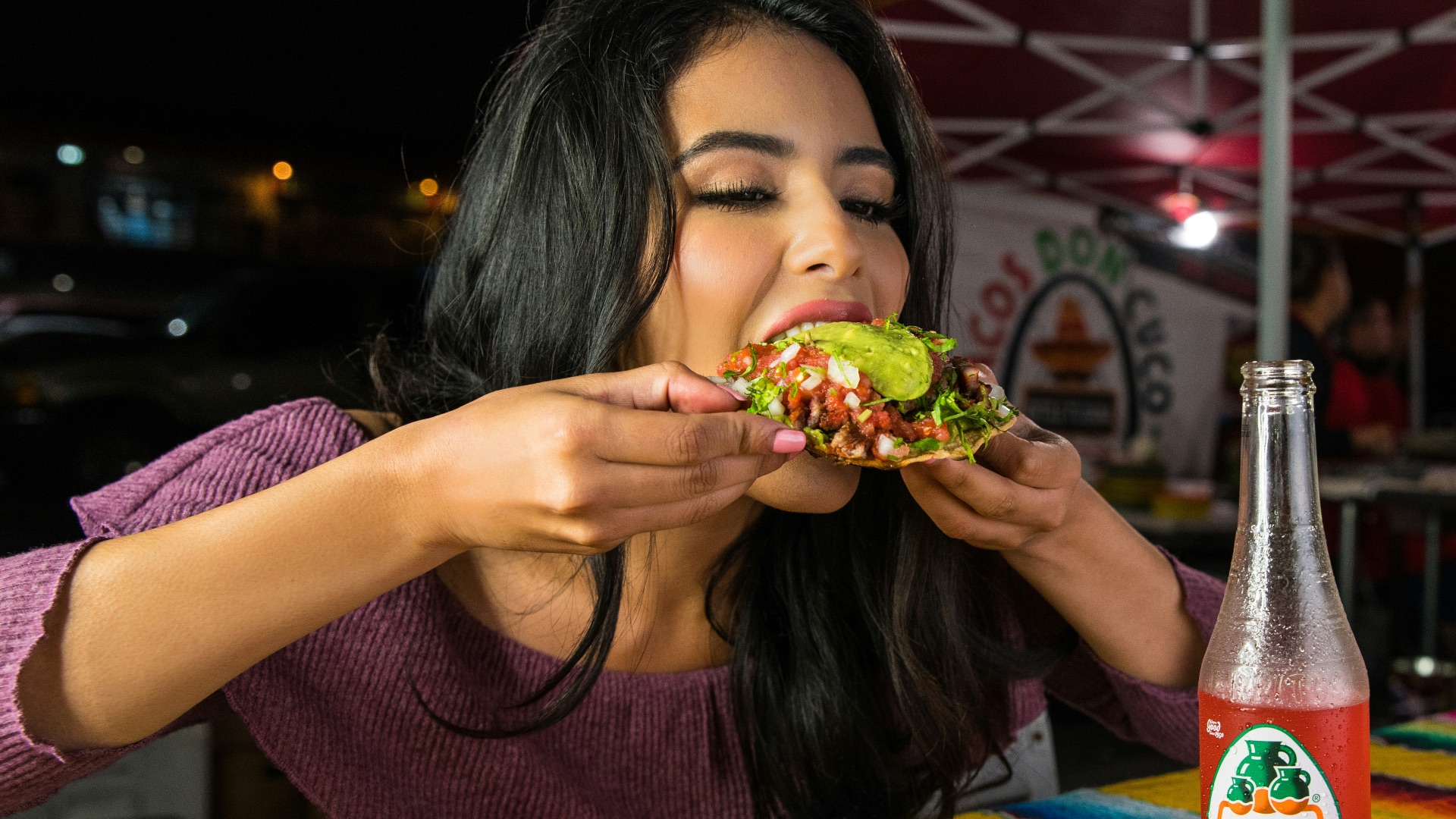 Jarritos Mexican Soda on Unsplash
1. Eating While Working
When your attention is split between food and work, you tend to shovel bites into your mouth just to get it done. After all, tackling emails, spreadsheets, Word documents, and Slack messages keeps your brain in “go mode,” which makes slowing down feel inconvenient. But this also means you miss a lot of the signals that tell you you’re getting full.
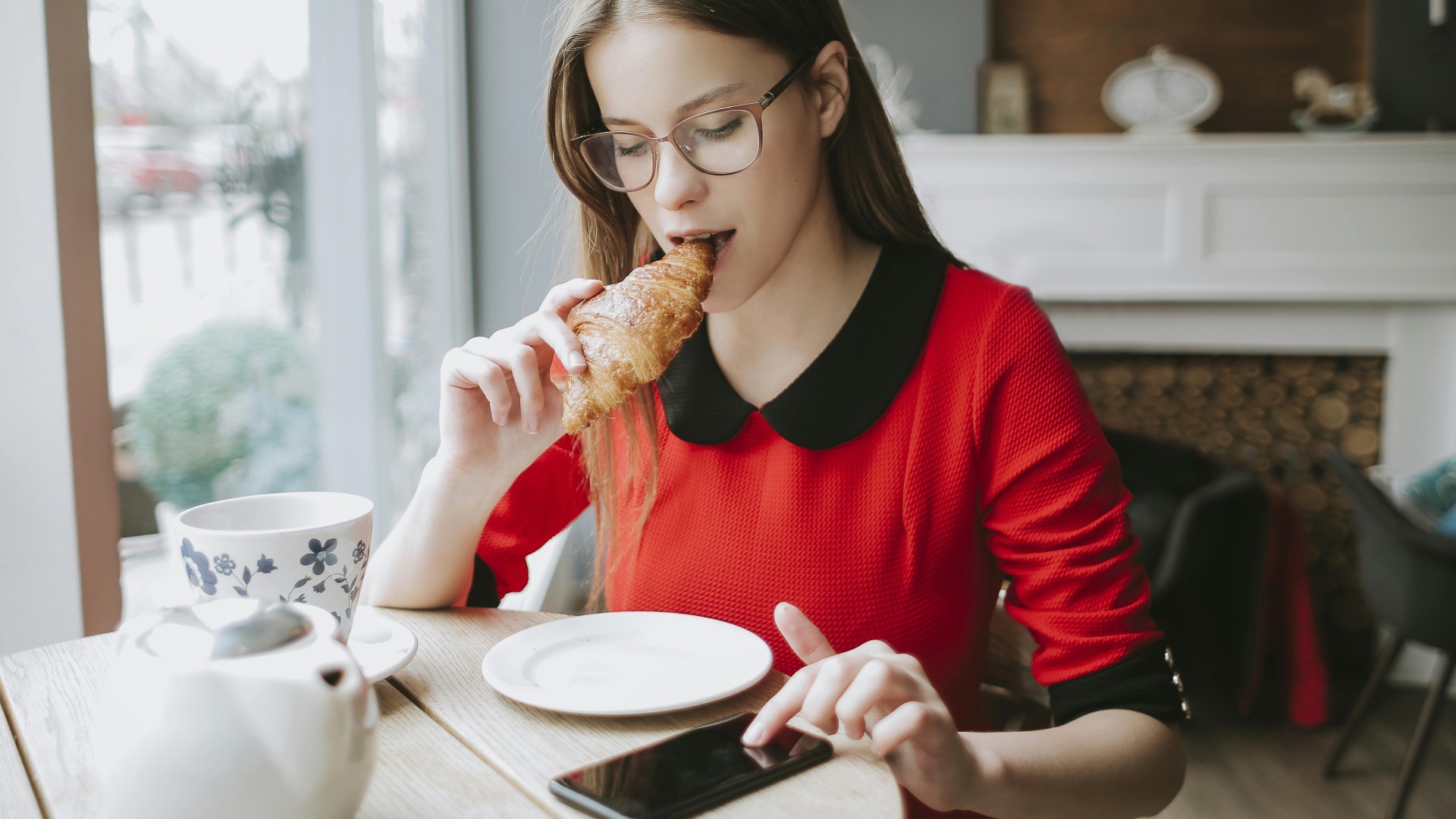
2. Scrolling on Your Phone
Social media is designed to keep you distracted, and that can influence how you pace your meals. If you’re tapping, scrolling, and commenting, you’re not fully present for your meal. Before you know it, the plate’s empty and you barely remember tasting anything.
3. Skipping Meals Earlier in the Day
Long gaps between meals can make your appetite feel urgent and intense, which can greatly affect how you pace yourself when you finally eat. Since, if you’re already starving, you’re going to instinctively eat like you’re trying to catch up.
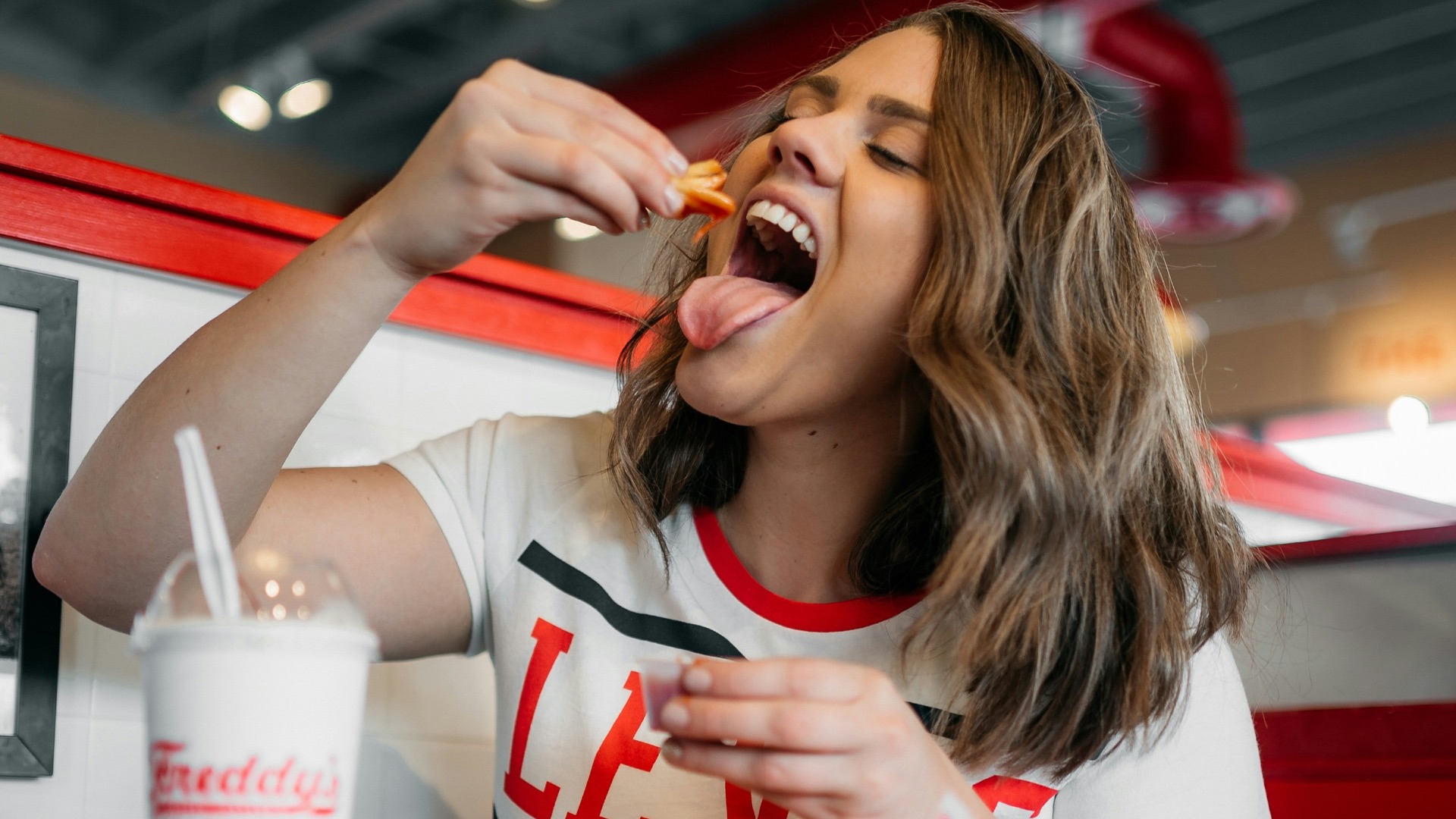
4. Being Stressed Before You Eat
Stress can put you on high alert, and that can make you feel like you need to hurry through everything, including your meals. When your body is keyed up, it’s harder to slow your pace down and take more deliberate bites. You might also be more likely to eat automatically rather than intentionally.
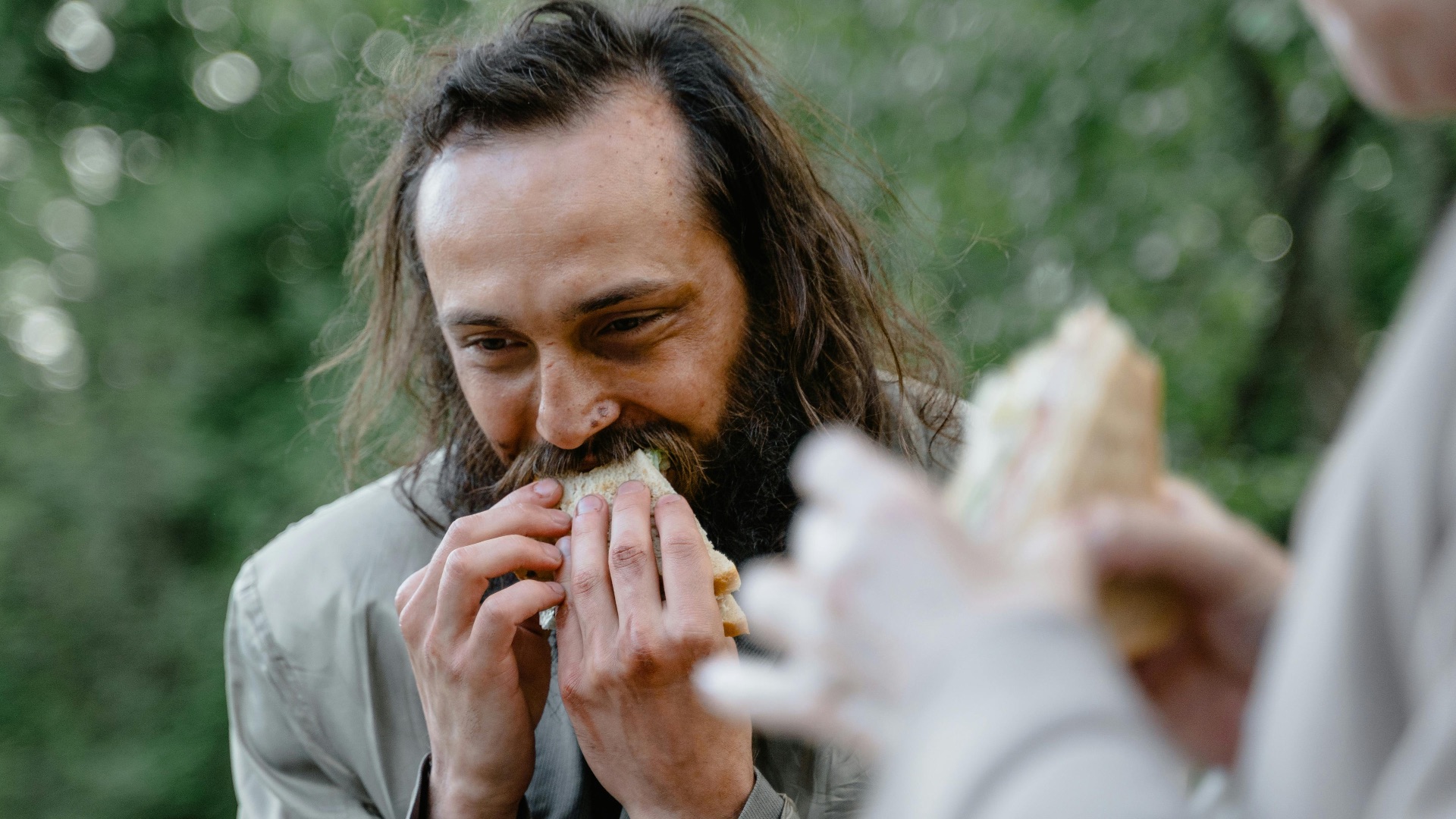
5. Eating Standing Up or on the Move
When you’re not seated, your meal can feel like a pit stop instead of an actual restful break. Being physically in motion encourages you to keep bites quick and minimal. It’s also easier to keep grabbing food without checking in with how you feel.
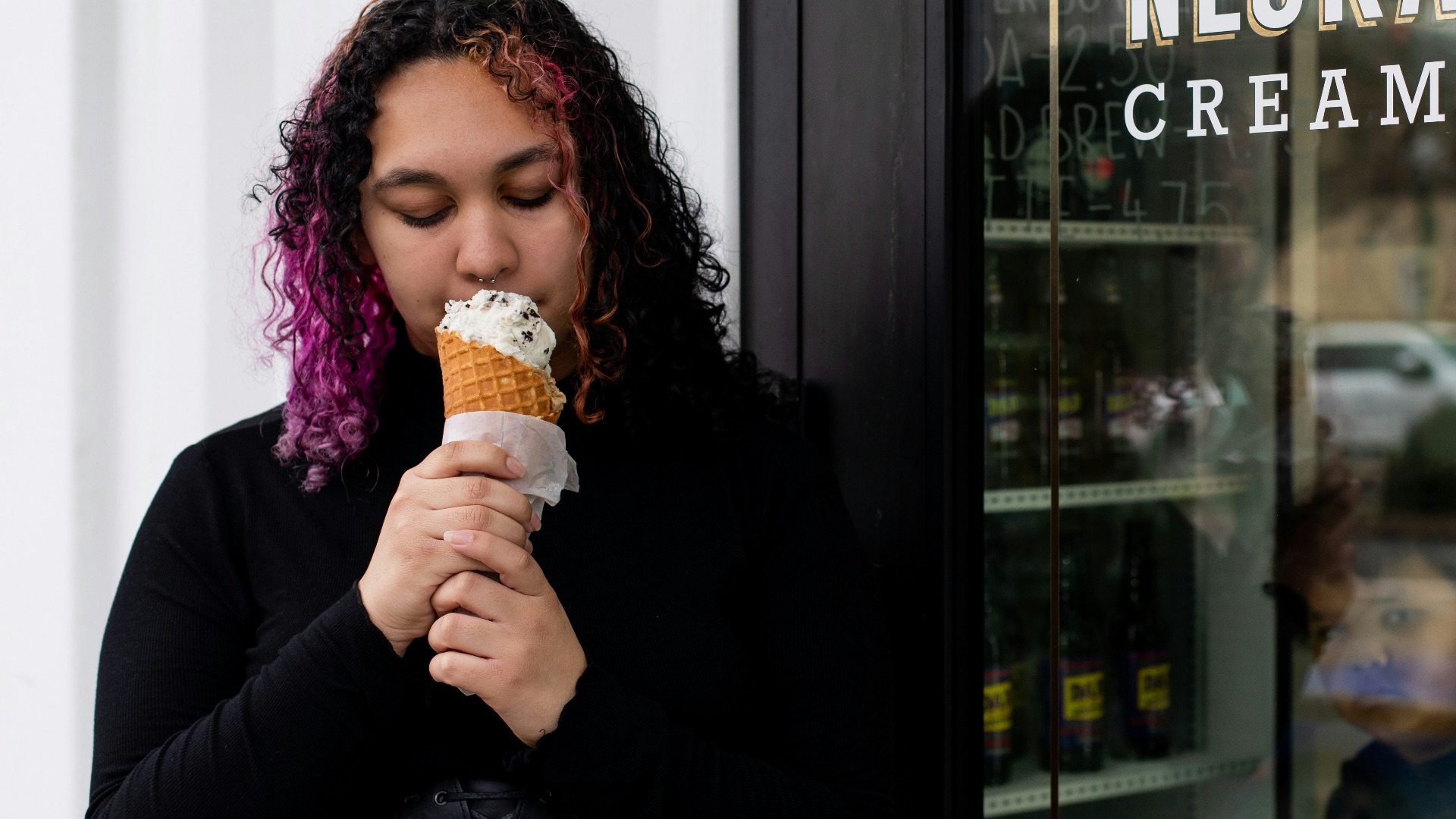
6. Very Short Breaks
If you only have 10 minutes, your body learns to inhale meals to fit the small window. Time pressure changes your behavior even when the meal itself doesn’t change, and over time, fast eating can become your new default pace.
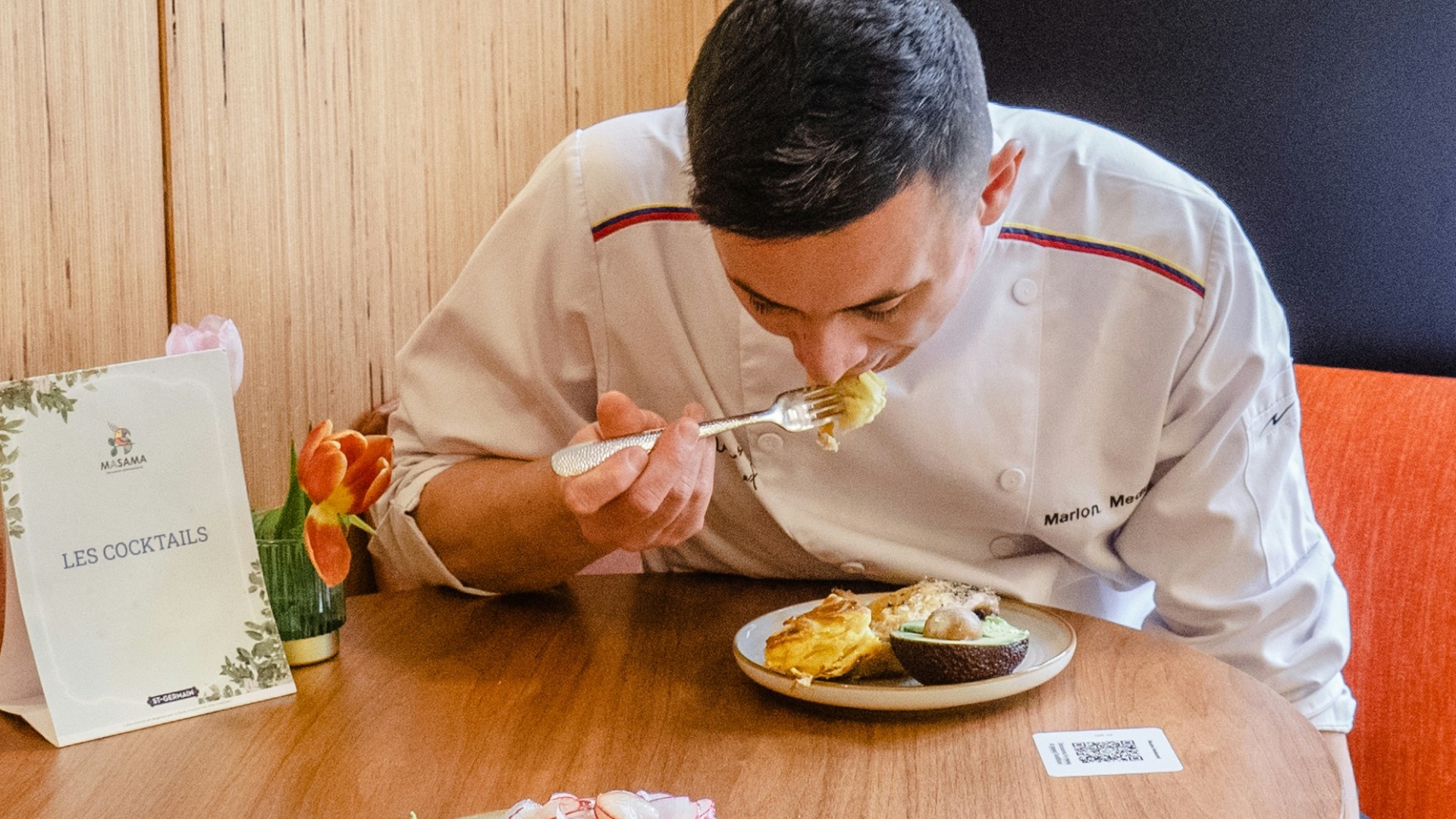
7. Big, Easy-to-Bite Foods
When food requires almost no chewing, you can take larger chunks without thinking, shoveling bite after bite into your mouth. Soft textures and oversized eats speed up the whole process, and the quicker each bite disappears, the faster the meal ends.
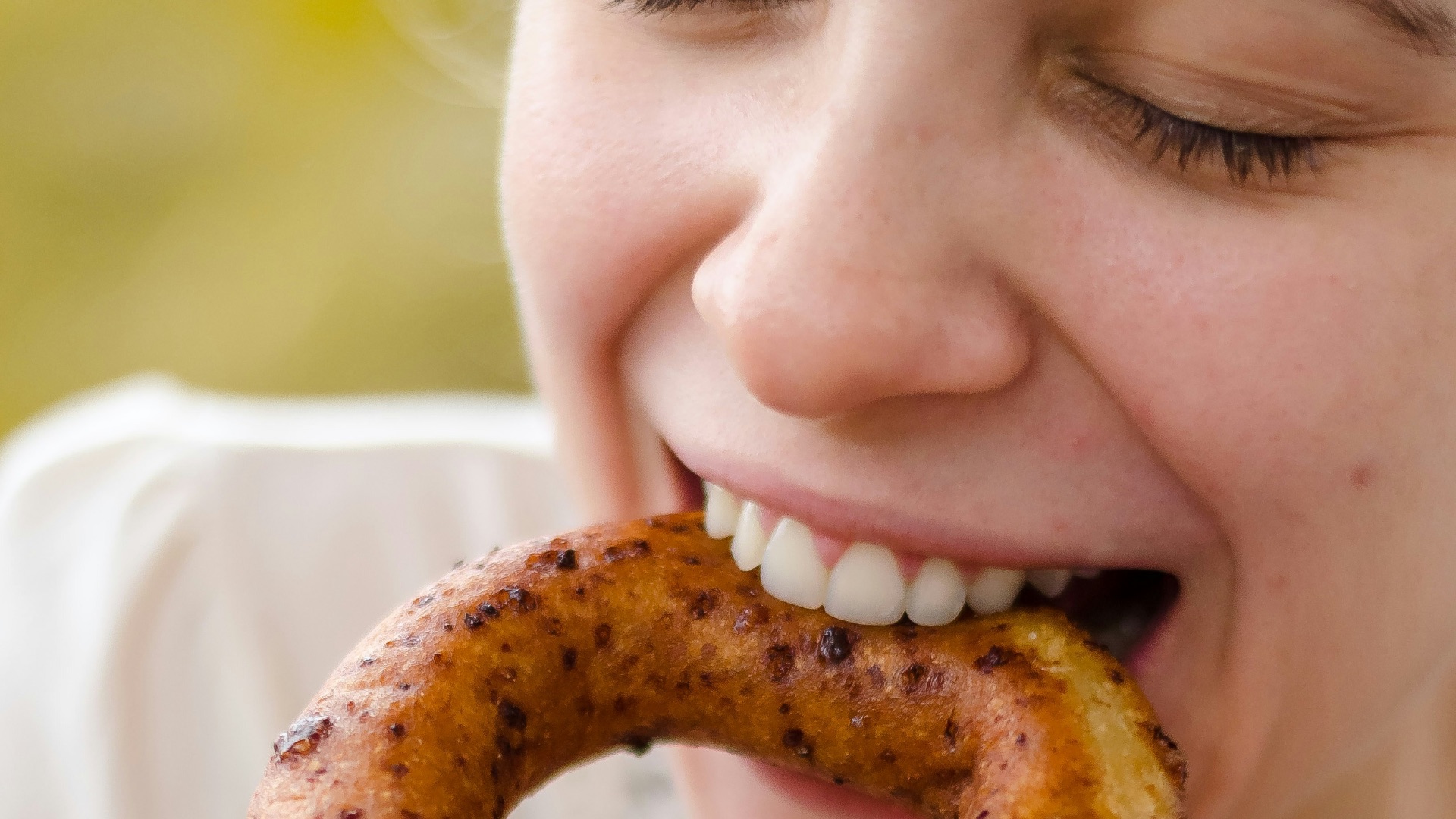
8. Watching TV During Meals
Many people like watching videos while enjoying their meal, but the truth is, a show pulls your attention away, and you end up eating to match the rhythm of what you’re looking at. The more absorbed you are, the less you notice your own pacing. You can end up eating through an entire episode without realizing how fast you went.
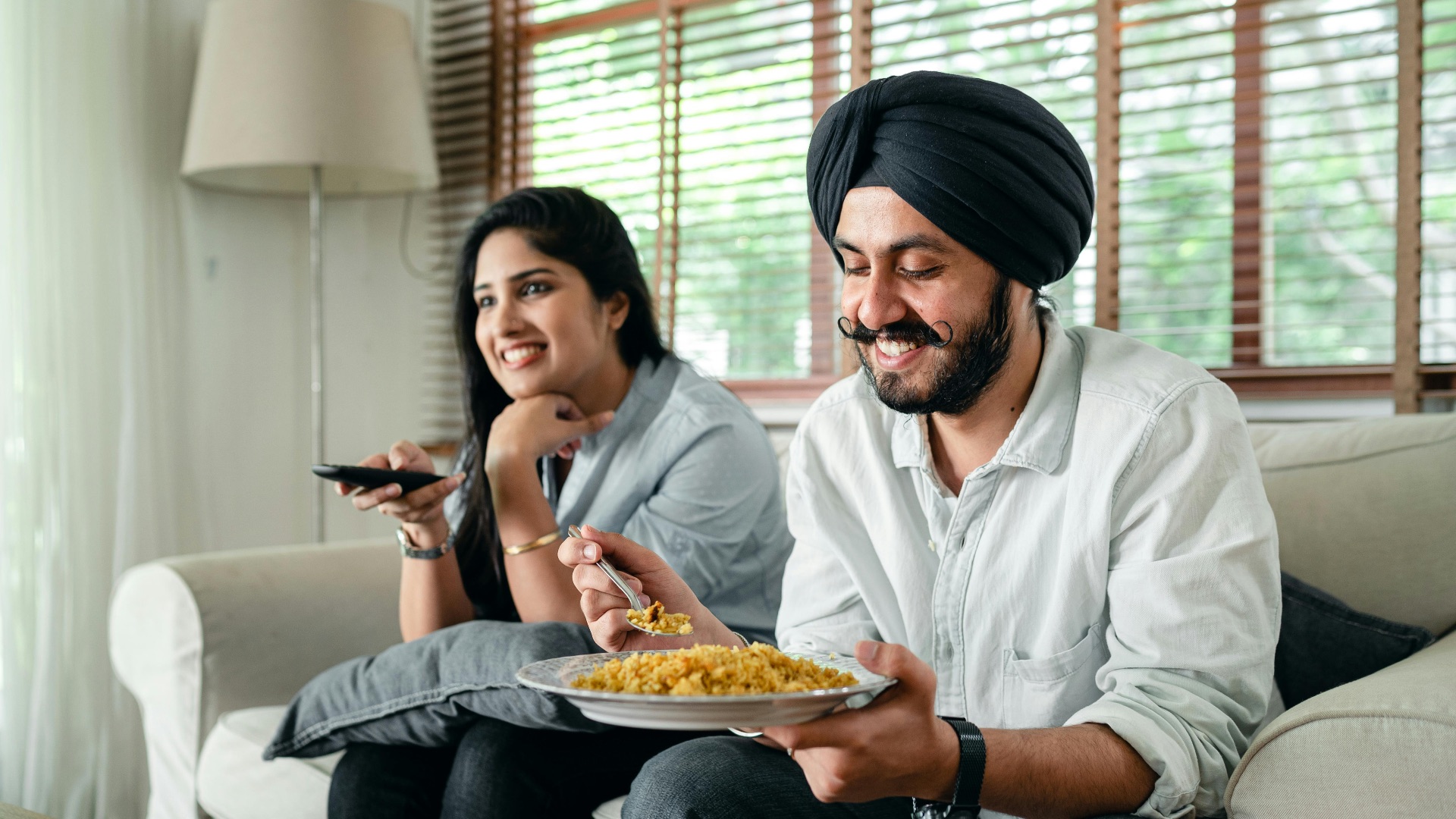
9. Eating in a Noisy, Busy Space
Believe it or not, the sounds we hear can affect our taste buds. It can also subtly influence our speed. Crowds, loud conversations, or a chaotic kitchen can make you feel slightly on edge, and that can make you want to finish quickly and move on. Even if you’re enjoying the food, the environment can still hurry your pace.
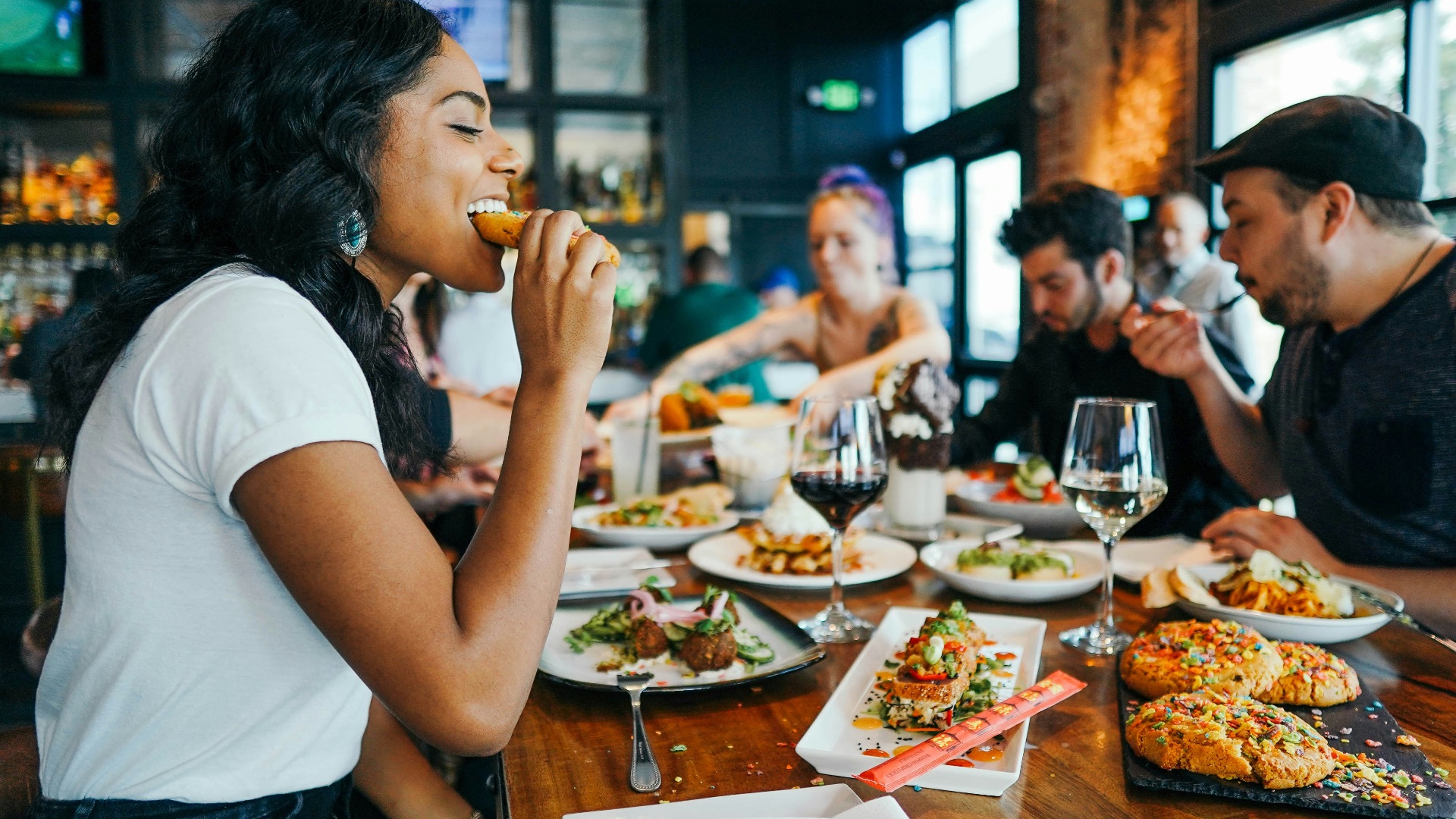
10. Feeling Self-Conscious About Eating
This might sound silly, but it rings true for many of us. If you’re worried about being watched or judged, you might rush to be “done” as soon as possible. Self-consciousness can make you less likely to pause, chew thoroughly, or take a breath; discomfort, unfortunately, often translates into speed.
Ready to try and slow your eating pace down? Read on, and we'll give you some tips on how to savor each bite.

1. Start with a Clear Intention
This might sound too redundant to actually work, but you'd be surprised. Right before you take your first bite, give yourself a quick reminder that this meal isn’t a sprint, and you'll pace yourself. A simple phrase like that can help slow things down, as well as make it easier to notice when you’re speeding up.
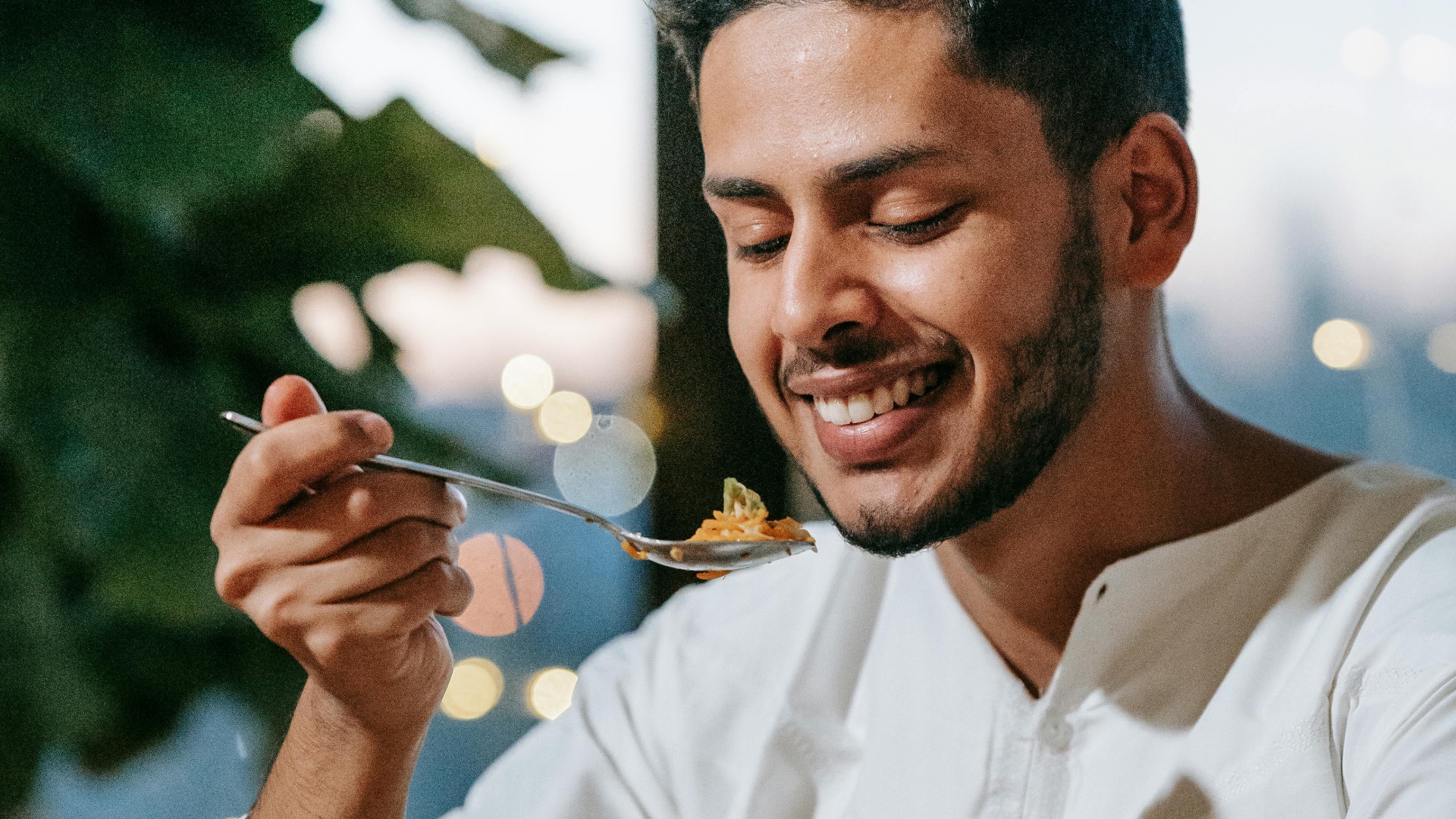
2. Sync with the Slowest Eater
If you’re eating with other people, pay attention to who’s taking their time. Let that person’s rhythm set the tone, even if you naturally move faster than they do. It sounds simple, but it's a great way to pace your speed when you can follow someone else's steps.
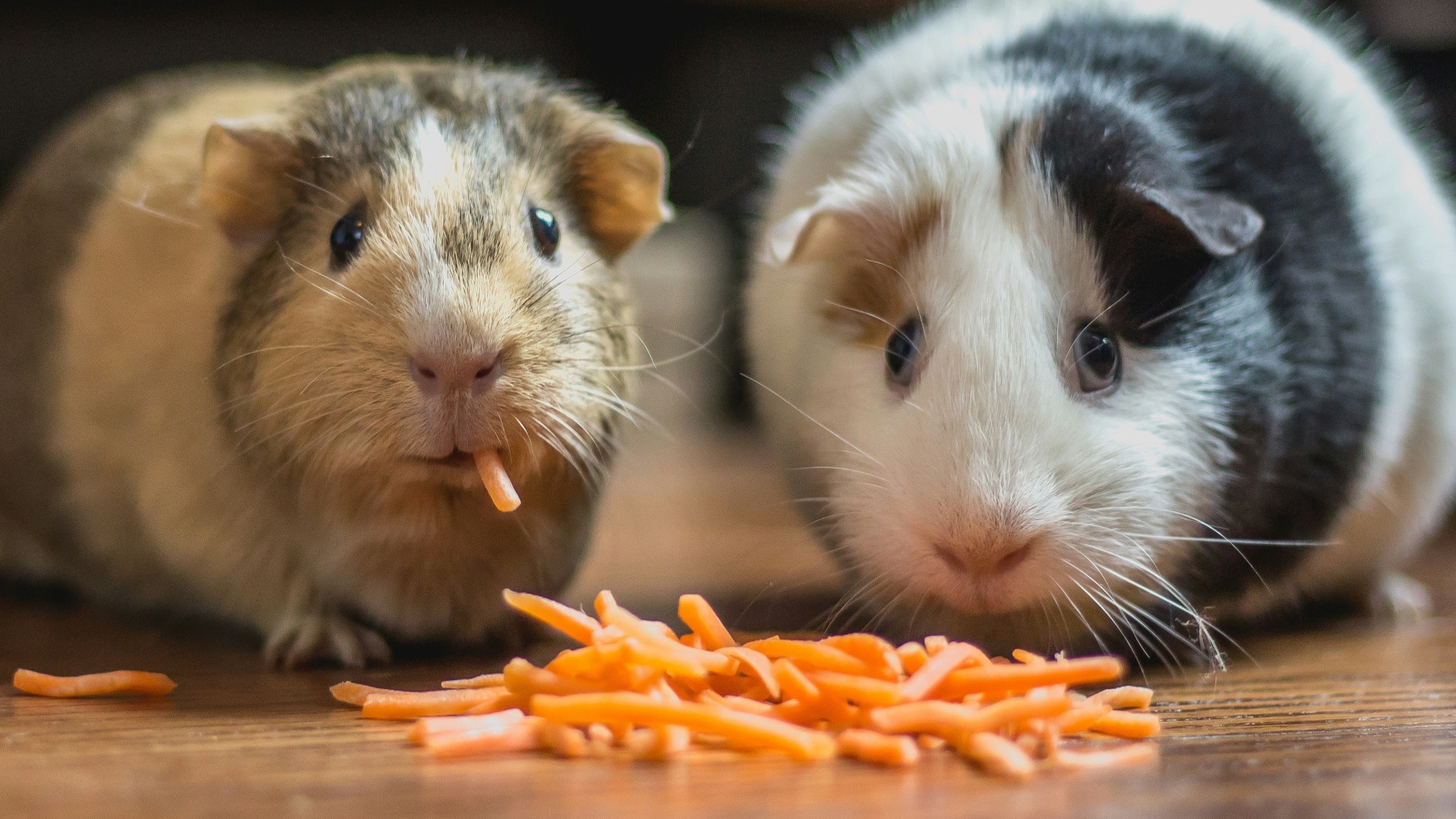
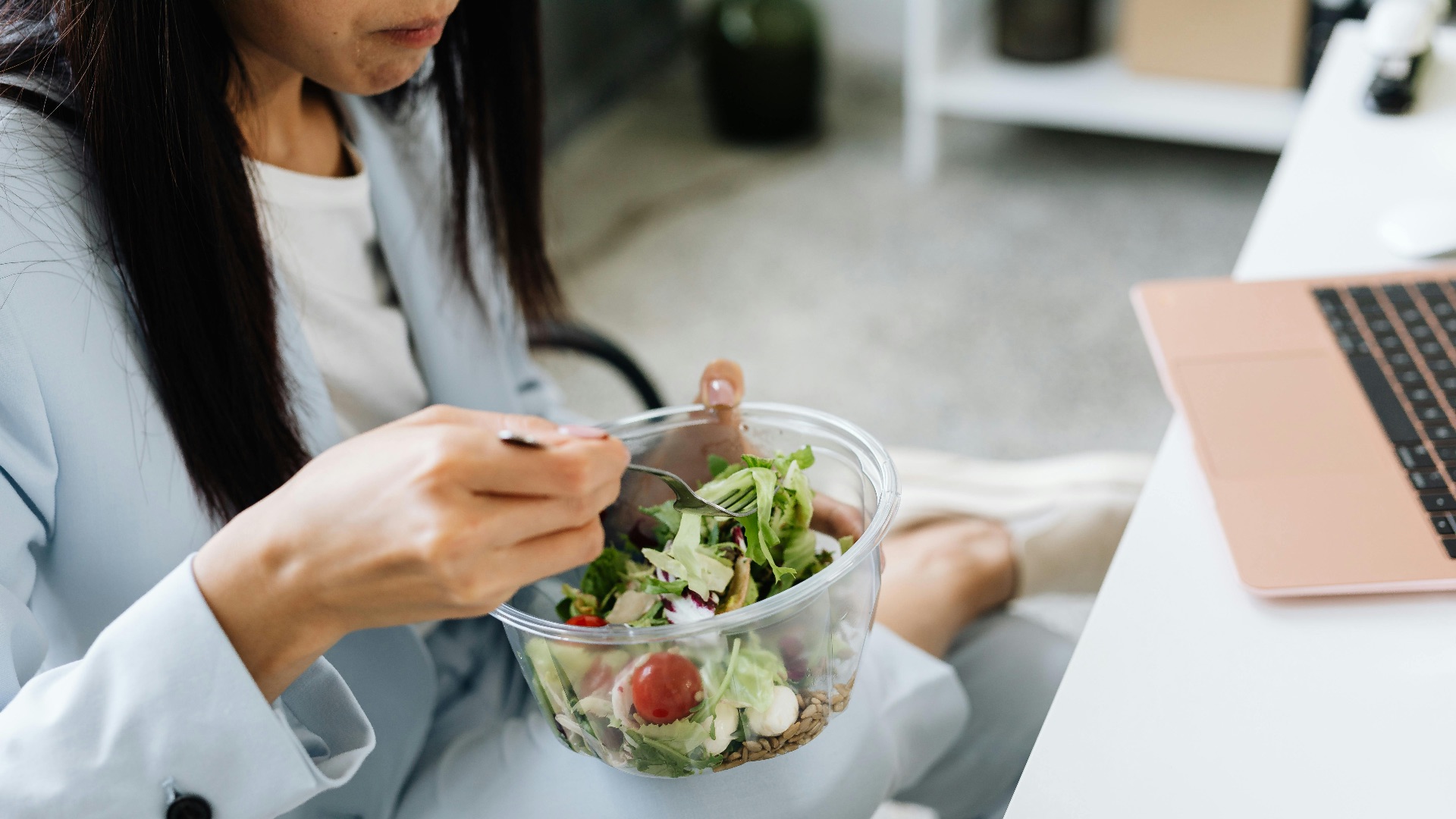
3. Choose Foods That Require Chewing
Adding crunchy vegetables, whole grains, or other chew-friendly foods can naturally slow you down. After all, when your mouth has more work to do, you can’t speed through your plate as easily. Plus, adding more veggies means you'll get more fiber in!
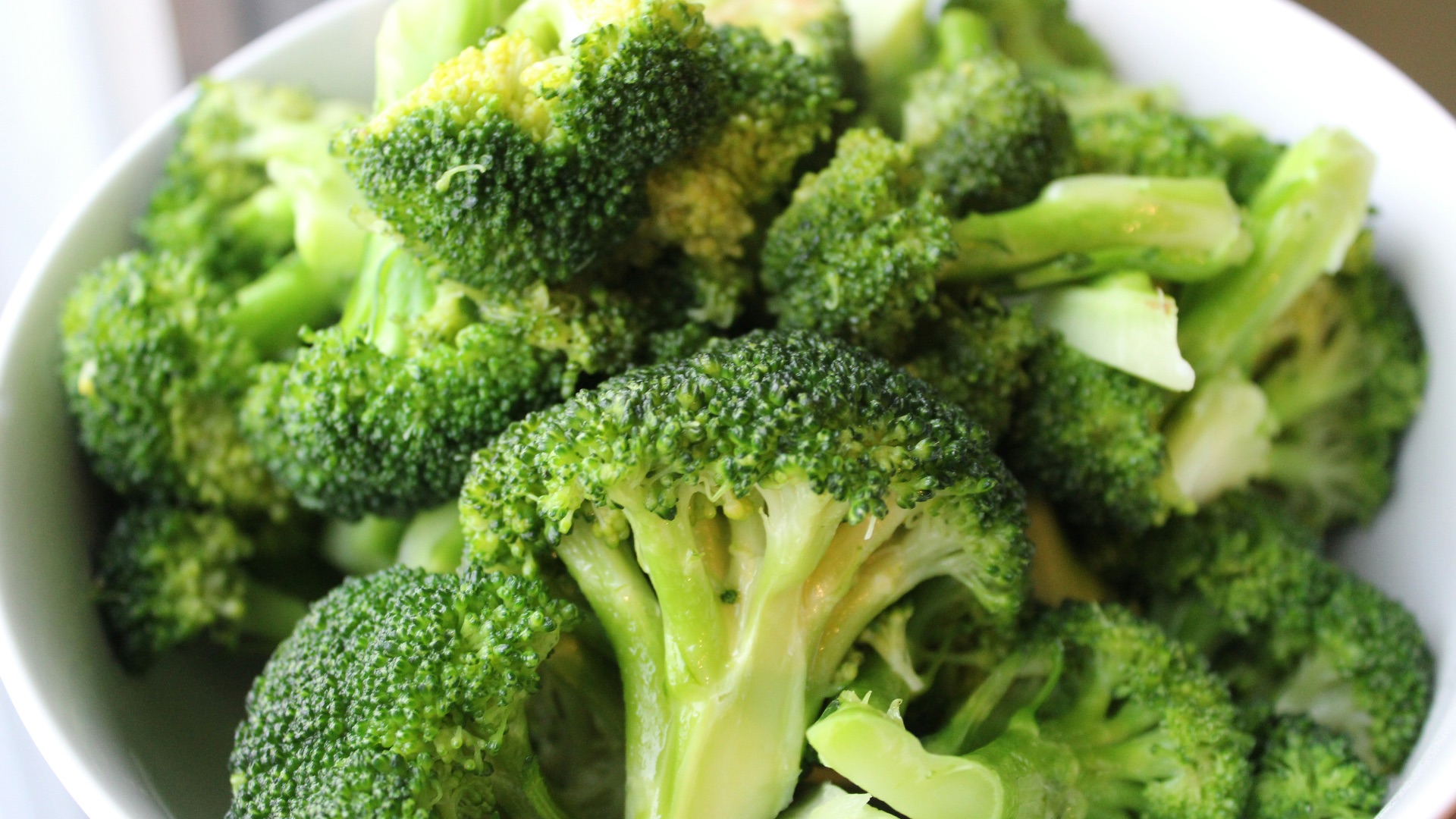 Tyrrell Fitness And Nutrition on Unsplash
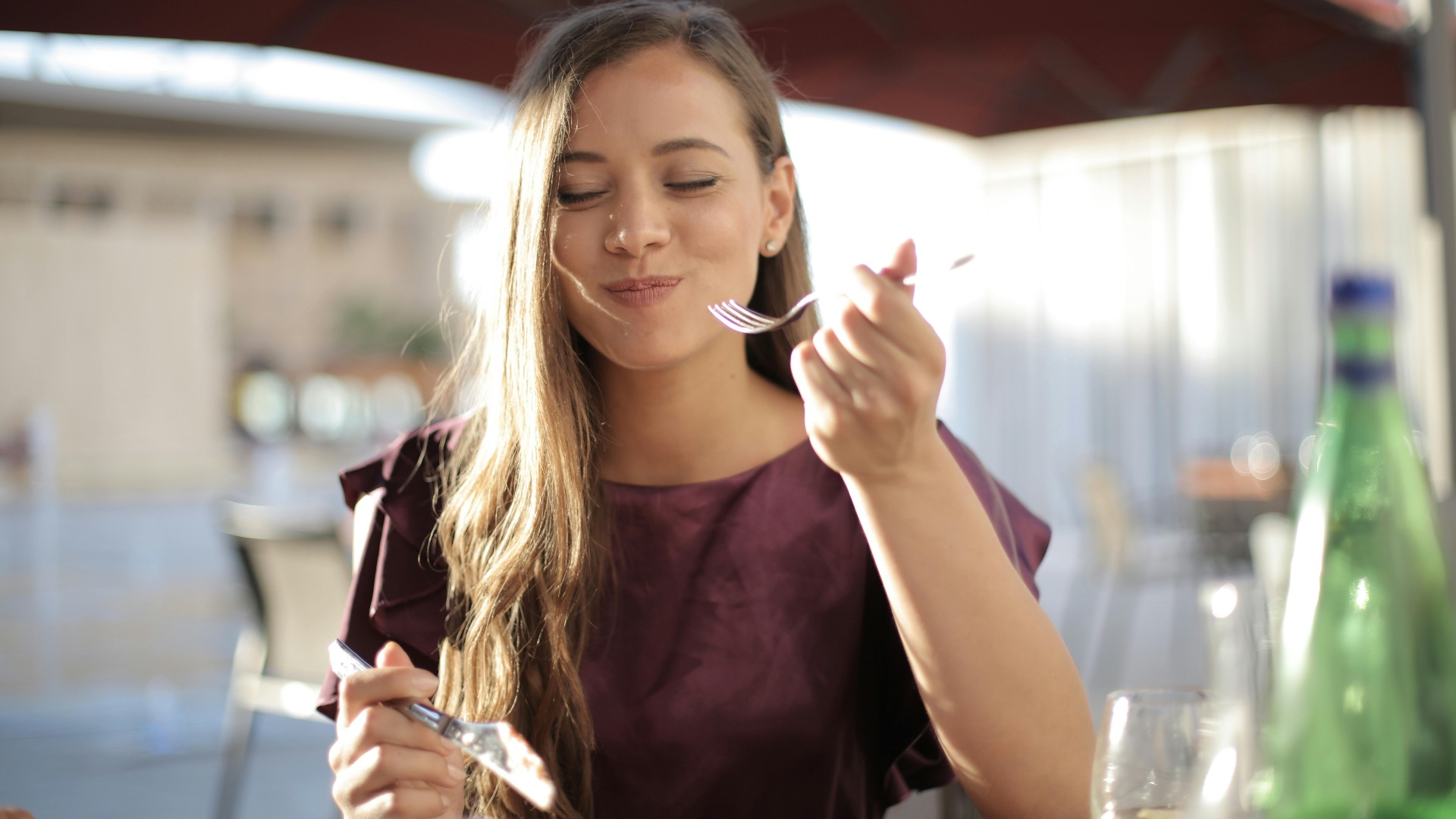
4. Set Your Utensils Down Between Bites
It sounds like a small action, but putting down your fork or spoon forces a natural break in your pace. It keeps your hands from loading the next bite while you’re still chewing the last one. The pause is small, but don't underestimate it, as it can change your whole rhythm.
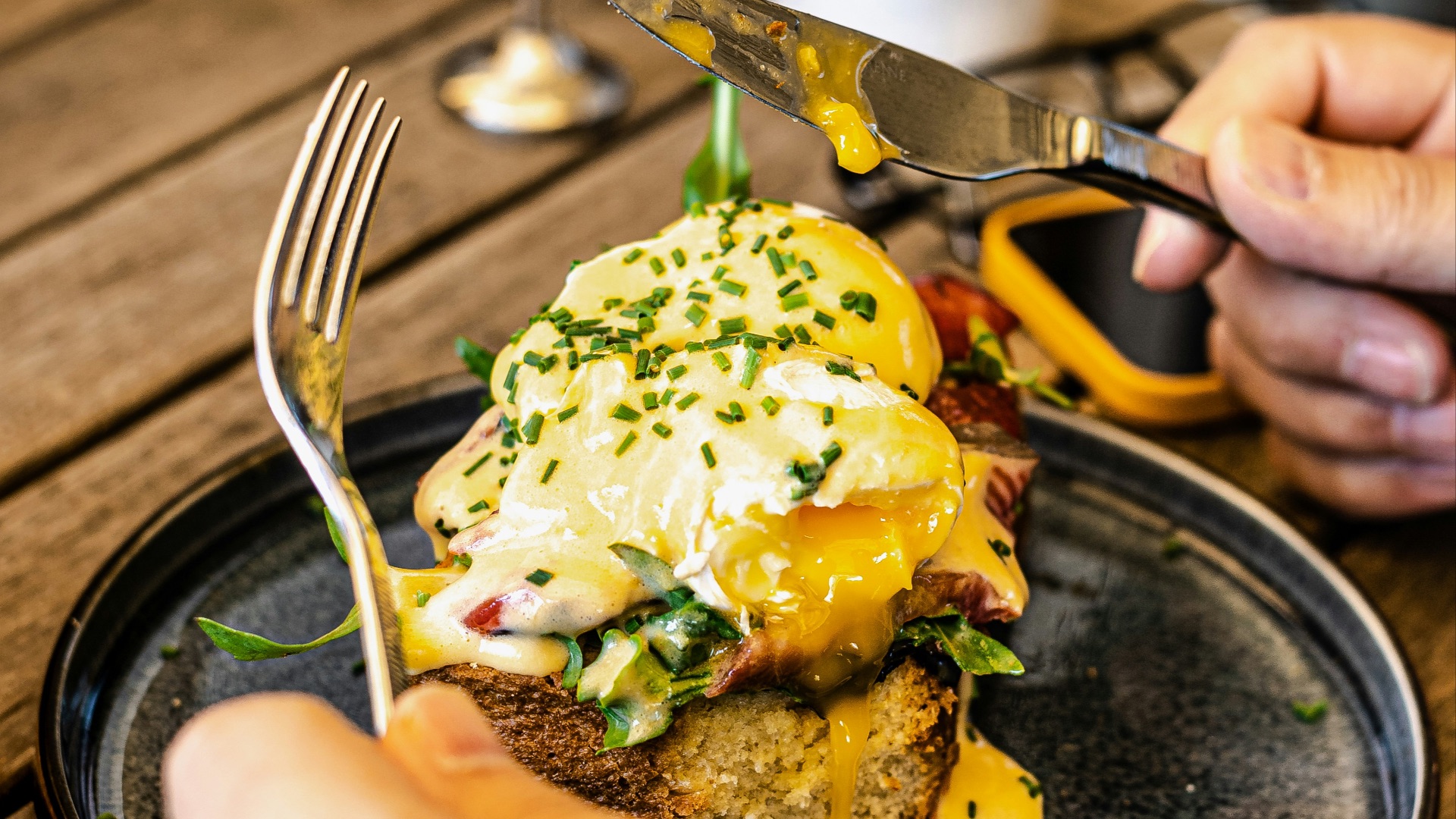 micheile henderson on Unsplash
5. Switch to Your Non-Dominant Hand
Research shows that if you eat with your non-dominant hand, you can slow your pace down by 30%. Crazy, right? Put this to the test yourself by holding your fork or spoon with the hand you don’t usually use. It’ll probably feel a little awkward at first, but that’s the point.
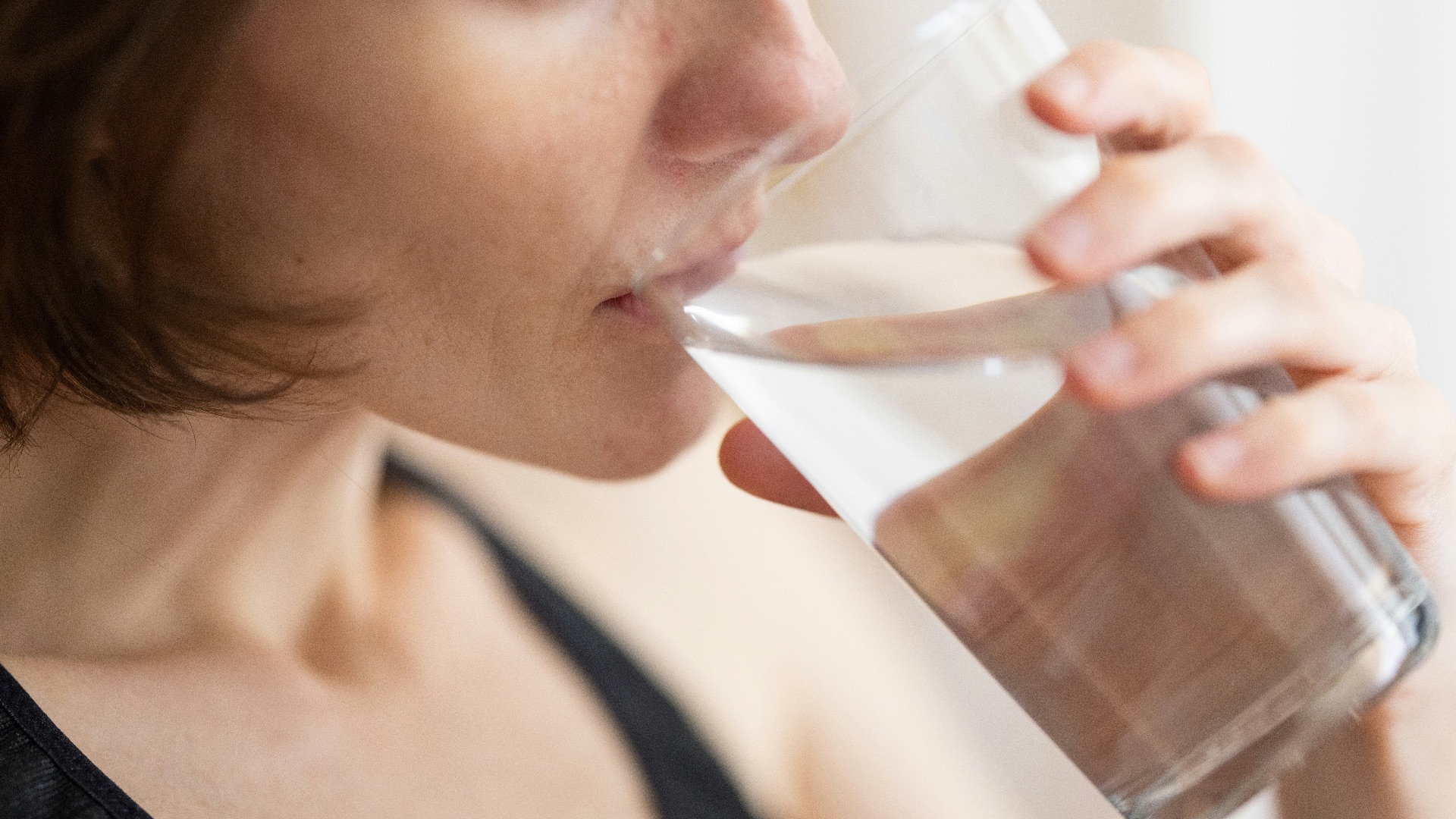
6. Take Sips of Water
Keep a drink, like a glass of water, nearby and take a sip every so often, especially when you notice you’re starting speed up. That tiny pause breaks up the momentum and helps your body settle back into a slower rhythm. It also gives you a moment to check whether you’re still hungry or just shoveling more food into your mouth on autopilot.
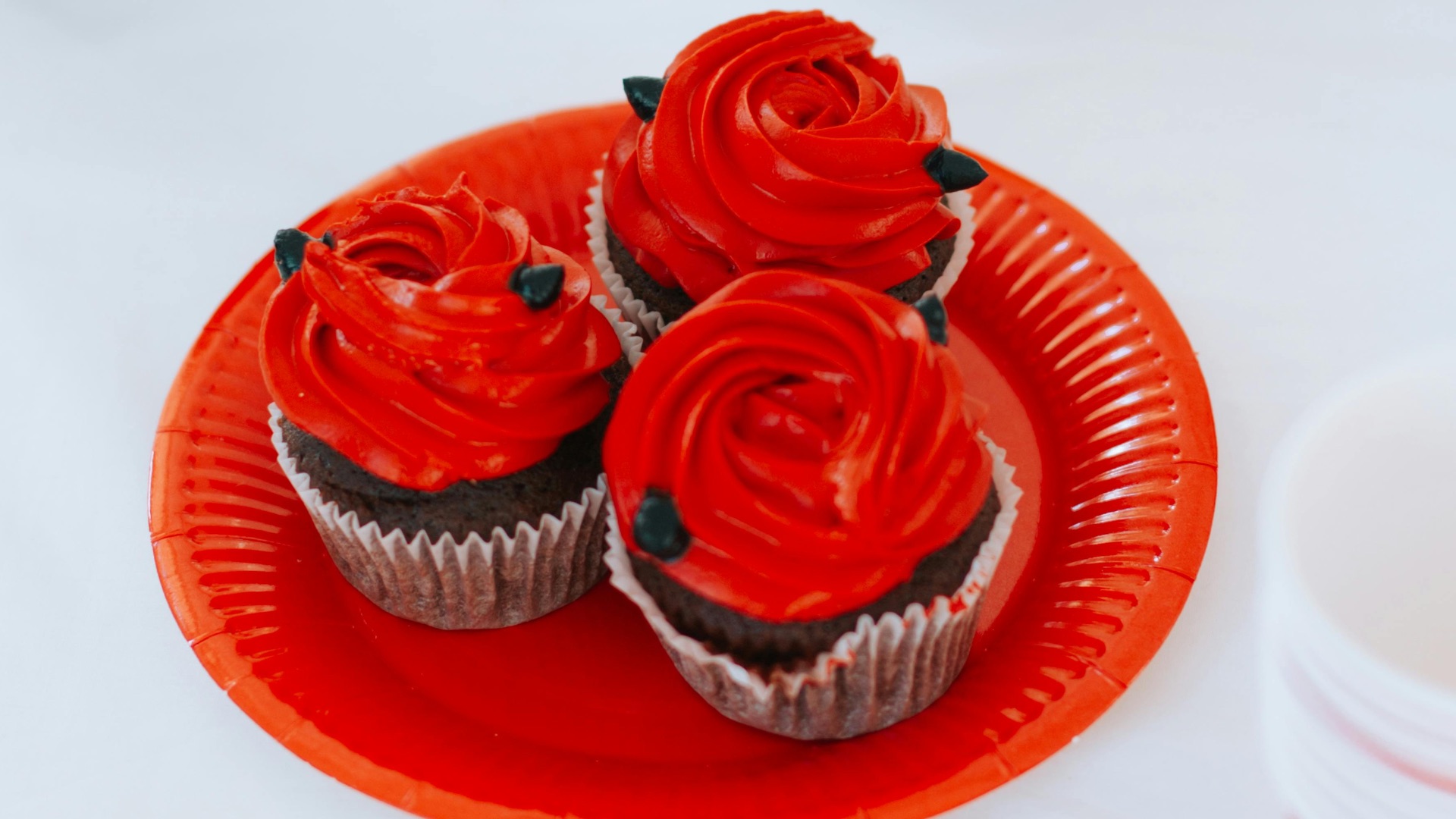
7. Use a Red Plate
Color can also influence your speed. If you want a surprisingly simple nudge, try serving your meal on a red plate. Studies have shown that we naturally slow down, without conscious thought, when we see the color red. Think of it as your brain treating it as a stop sign.
8. Put Your Phone Out of Reach
Your phone, like other distractors, can influence you to eat faster. The fix? Move your phone off the table and out of sight to reduce the constant itch to check it. Since you can’t grab it easily, you’ll spend more time focused on chewing and less time bouncing between inputs.
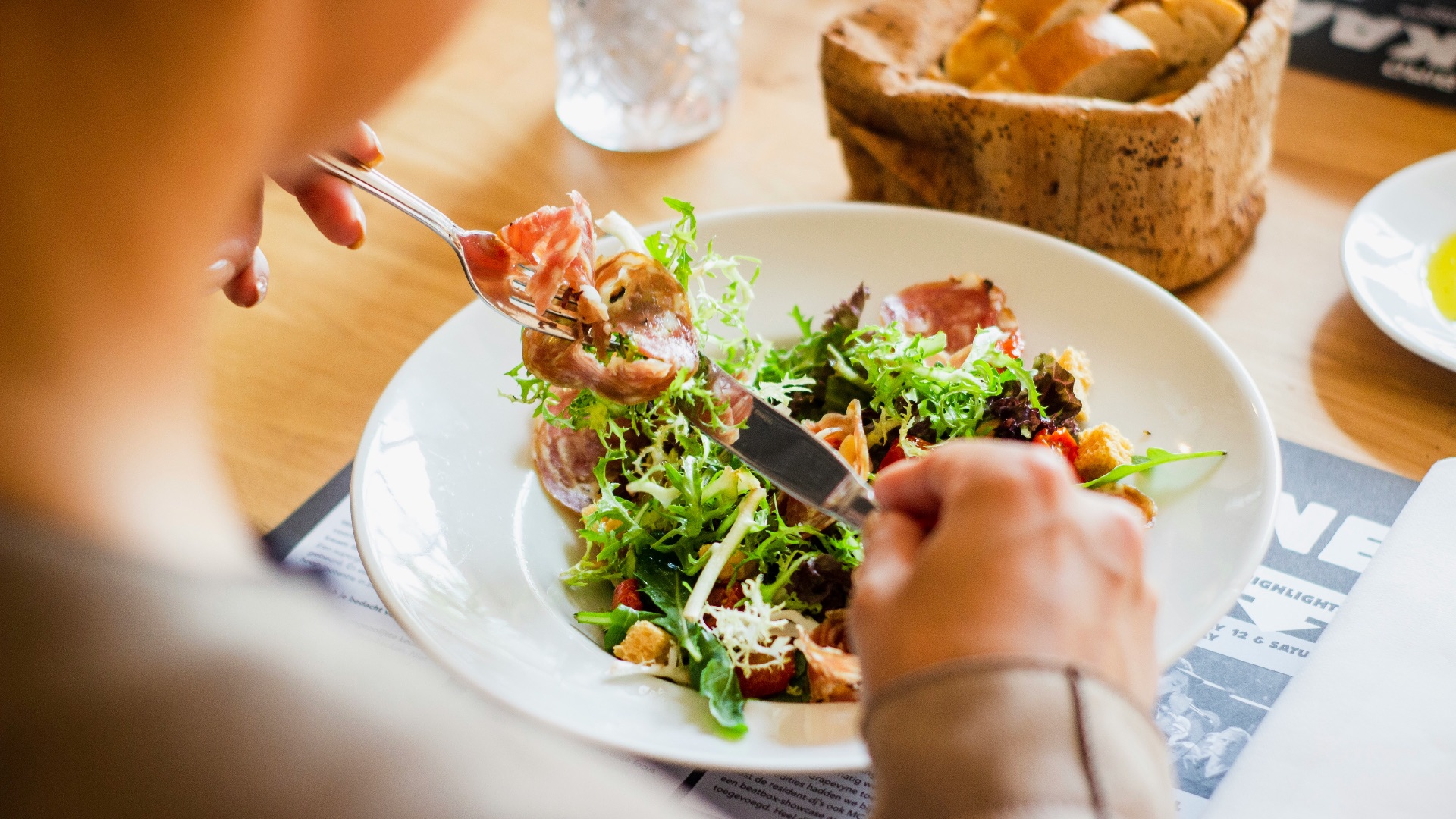
9. Sit at a Table
Avoid standing up to eat. A proper seat and surface make meals feel like something you’re allowed to take time with, which naturally slows your pace down. Even when you’re busy, sitting down signals to your body that it's time to relax and take a breather.
10. Take Smaller Bites on Purpose
Another simple tip? Take smaller bites instead of huge mouthfuls. Your meals shouldn't be a competition, and no one is winning anything just for finishing their plate first. So keep your bites, chew more, and take longer pauses. You’ll also be able to savor the flavor and texture more when you’re not trying to scarf everything down.
KEEP ON READING
You’re Storing Tomatoes Wrong in This Heat
You’re Storing Potatoes Wrong in This Heat
You’re Storing Peppers Wrong in This Heat
You’re Storing Carrots Wrong in This Heat