Here's Why Food Tastes Different on a Plane, According to Science
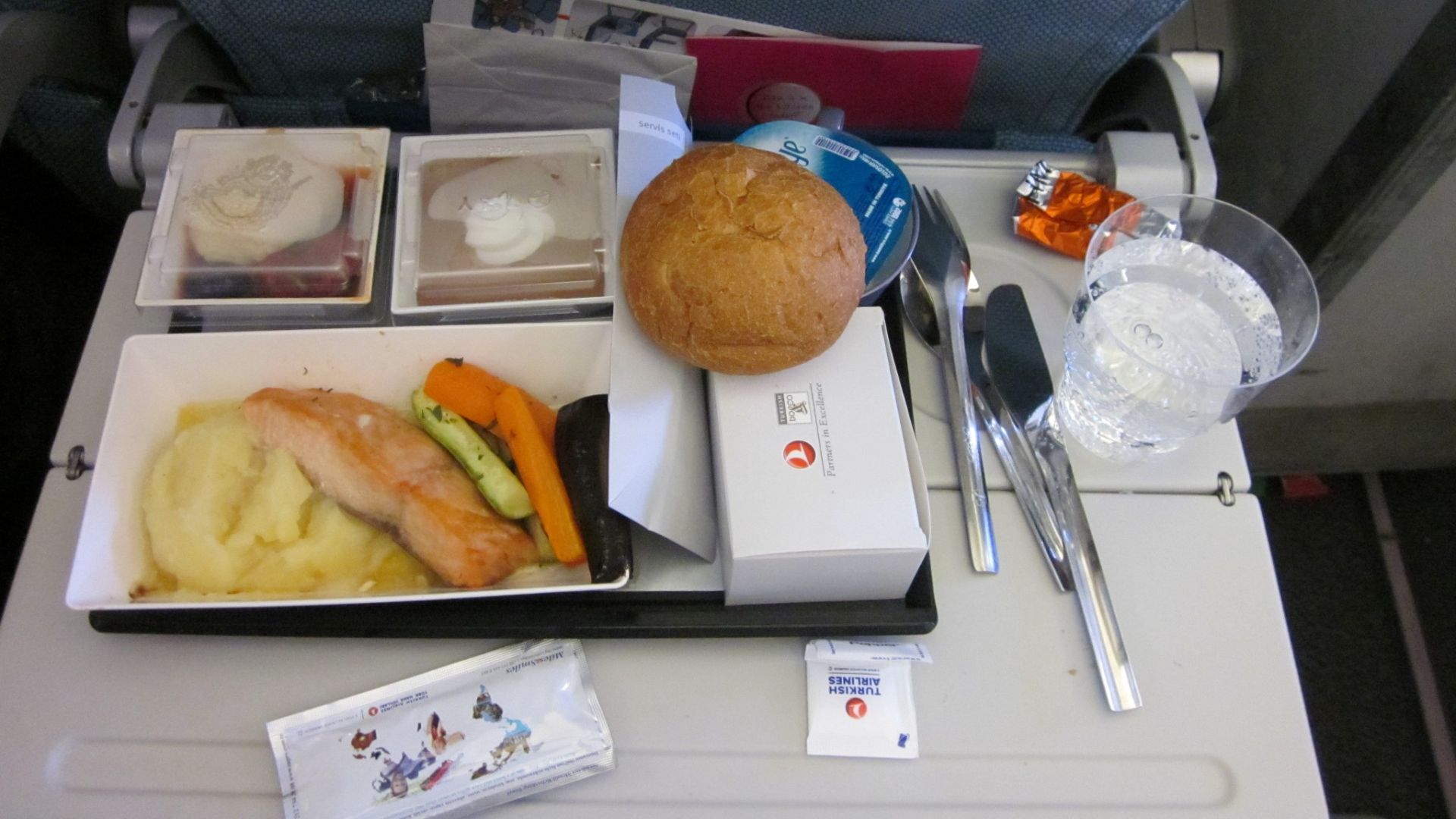
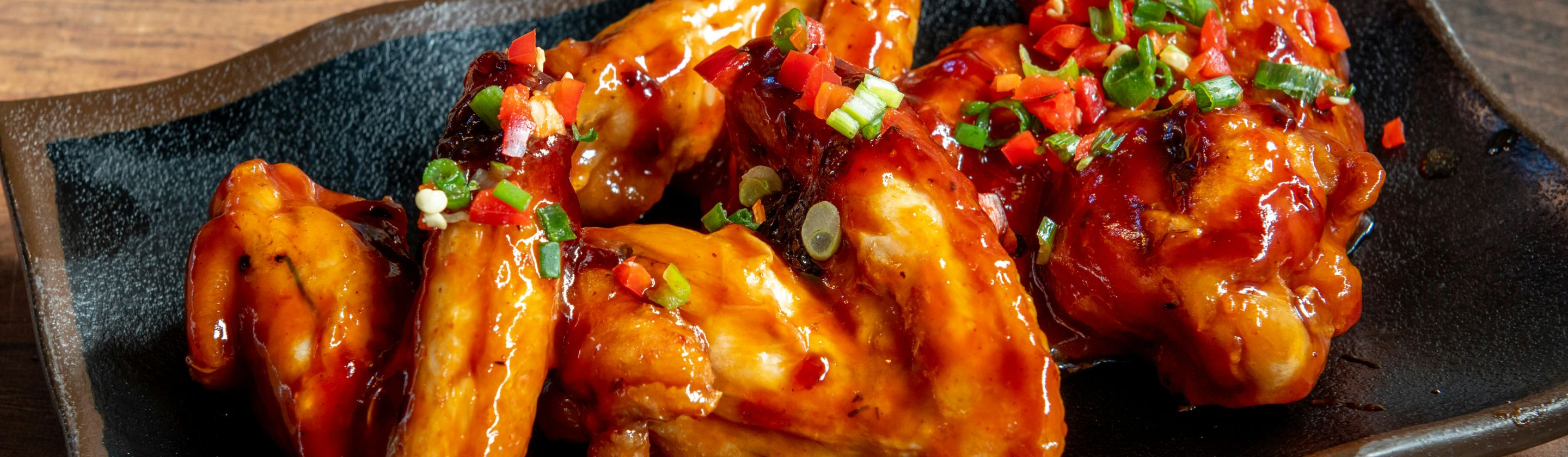
Have you ever been served a plate of Teriyaki chicken on a plane only to find your appetite completely shrivel up after the first bite? It's not just you—food really does taste worse on planes. A combination of factors naturally distorts your perception of flavors, leaving your taste buds wanting something they just can't receive.
You may chalk this up to the airlines, but there's actually a surprising amount of science behind why your food tastes bland or overly salty in the air.
Factors affecting taste on planes
At cruising altitude, the air in the cabin is far drier than what you experience on the ground—often less than 12 percent humidity, which is drier than most deserts. This is one of the main culprits affecting the way you taste food. The dehydrated environment dries out your nasal passages, which makes you unable to smell. Since 80 percent of "taste" is actually scent, foods will naturally taste muted, weaker, and less complex at 35,000 feet.
Another factor is air pressure. Aircraft cabins are pressurized, but not to sea level—usually closer to the equivalent of 6,000–8,000 feet above sea level. At this height, your taste buds become less sensitive. Research has shown that our perception of sweetness and saltiness decreases by as much as 30 percent. That means a dish that tastes perfectly seasoned in the airline kitchen can seem super bland once served mid-flight. This is why airline recipes are often adjusted to include significantly more salt, herbs, or acidity than typical meals on the ground.
Surprisingly, background noise also plays a major role. Jet engines produce a constant low-frequency roar that your brain must work overtime to filter out. Studies suggest that this noise interferes with your ability to detect certain flavors—especially sweet ones—while enhancing others like bitterness and crunch.
What's more, food safety standards necessitate meals to be pre-cooked on the ground, blast-chilled, and reheated in the air, which inevitably alters the flavor and texture of dishes. Often, the dish that hits your tray table is completely different from what the team of chefs on the ground had originally envisioned because of these logistics.
How do airlines cope?
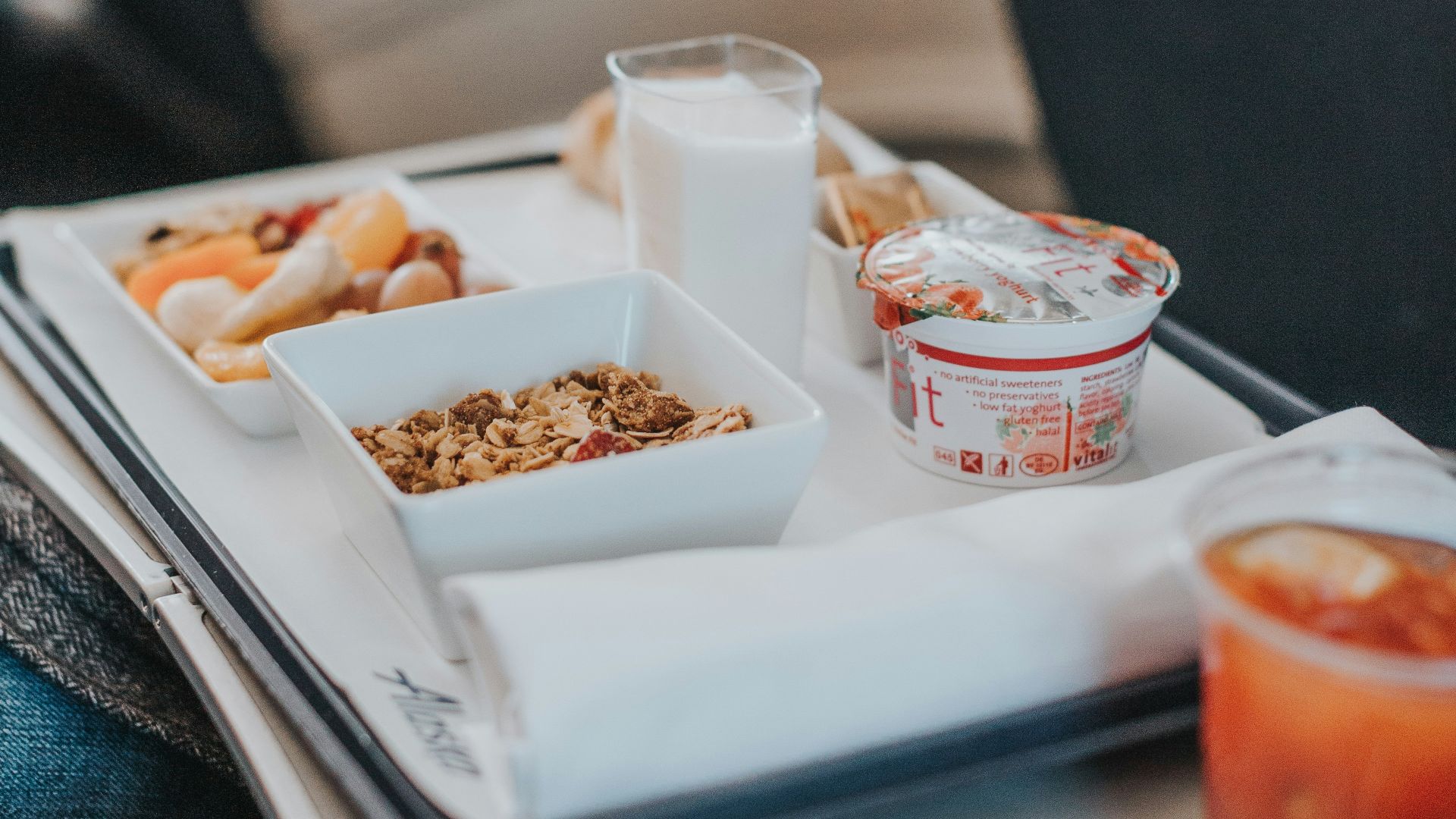
As science is slowly becoming better understood, so is food preparation for planes. For years, airlines have been trying to compensate for the sensory changes experienced in-flight. While meals in coach may continue to be simple, those created for business and first-class flyers are increasingly elaborate.
Airlines hire top chefs to create menus that rely on bold flavors and umami-rich ingredients, and test-taste them in pressurized environments or even aboard actual planes. New modern cooking methods, like sous vide, have also opened the door to more palatable dishes that can be mass-produced and reheated well.
Airplane food doesn't just taste different on planes; it's experienced differents by your body because your senses are altered in flight. From dry cabin air to dulled taste buds to constant background noise, everything conspires to change how flavors hit your palate. Understanding the science behind it helps explain why even familiar foods seem off at 35,000 feet.
So, next time you're flying, you'll know it's not the menu, but the atmosphere that's killing your enjoyment of dinner.