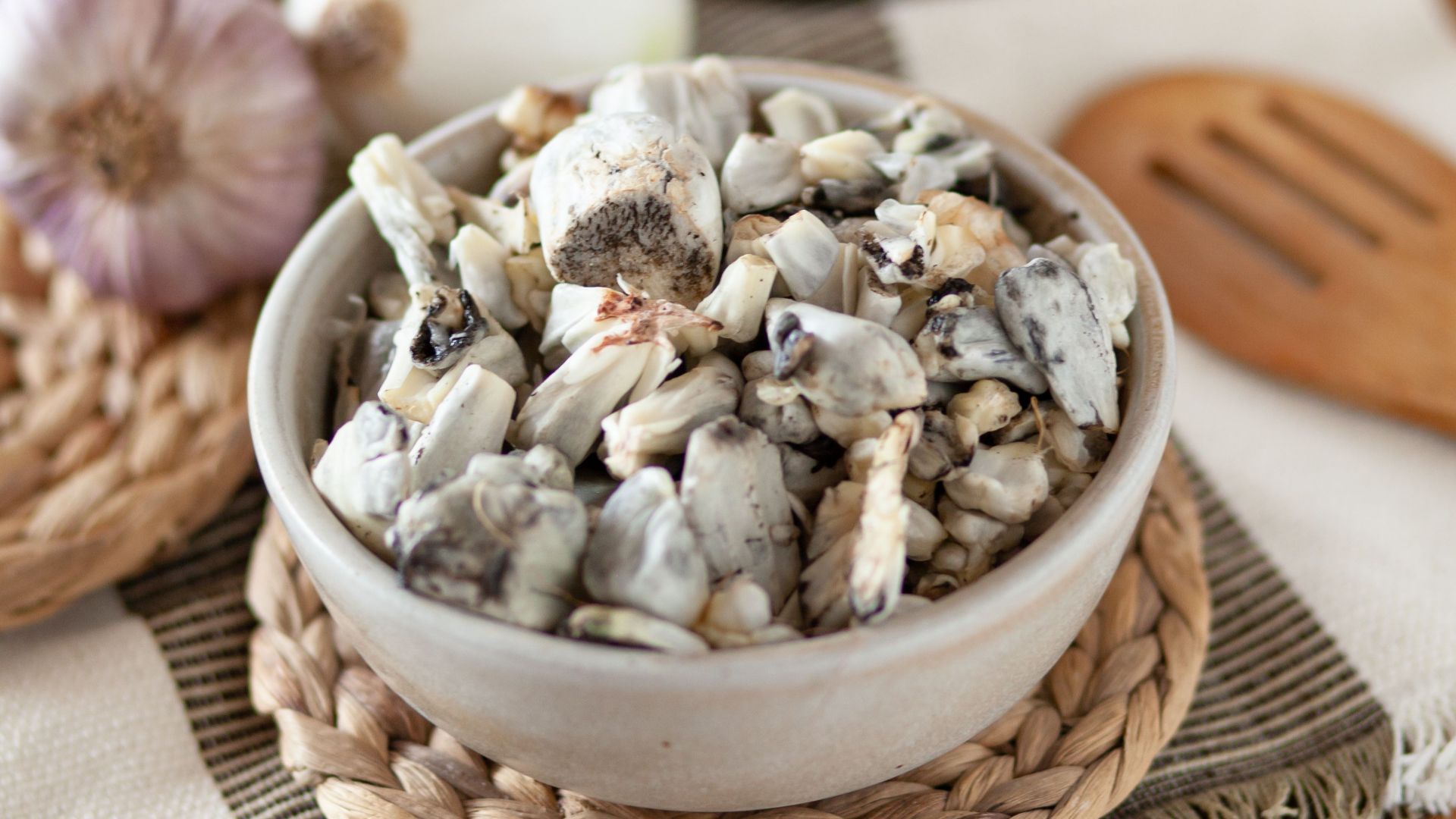
In most of the United States, a corn farmer who finds swollen gray lumps bursting out of an ear will yank the plant and hope the problem doesn't spread. In central Mexico, plenty of farmers would rather have more of them. The lumps are huitlacoche, kernels taken over by a fungus called Ustilago maydis, and farmers haul them by the bucket to Mexico City markets.
It shows up on its own during the rainy season, when wet weather helps spores reach the corn. Growers who don't want to wait on the weather have worked out how to put it there on purpose using a syringe.
How Farmers Get the Fungus Into the Corn
The fungus usually gets in through the silks, the stringy threads at the top of an ear that are supposed to catch pollen. Each silk leads to a single kernel, so a spore that lands on one has a path straight down. It can also slip in through damage from hail or heavy wind. Left to nature, most of it turns up during the summer rains.
Deliberate growers take the luck out of it. They mix spores into water and inject that liquid into the silk channel, the tight bundle of silks inside the husk, shortly after the silks appear. In one sweet corn trial, about 35% of injected ears grew galls, compared with roughly 0.5% of the plants left alone. Homemade spore mixes from fresh or frozen huitlacoche have been tried too, though pure lab strains of the fungus tend to work best.
Pollination gets in the way, since the fungus has a much easier time with kernels that haven't been fertilized. Pulling the tassels off to block pollination makes a big difference in how much huitlacoche a field produces. The galls are ready about 16–18 days after injection, while the insides are still soft and gray. Wait too long and the galls split open, releasing the sooty black spores that earned the disease its smut name.
Why Anyone Would Want It
Cooked, huitlacoche tastes like an earthy, smoky mushroom with a little sweet corn underneath. Cooks usually sauté it with onion and epazote, then fold it into quesadillas or tamales. Mexico has been at this for a long time, and a drawing of an infected ear with a description in Nahuatl appears in the Florentine Codex, compiled in the mid-1500s. The Wixárika people of northern Jalisco also use it to make a dark ceremonial atole.
It's also more nutritious than the corn it ruins. A 1993 analysis found huitlacoche relatively rich in lysine, an amino acid corn barely has, and turned up no aflatoxin or the other toxins that can show up in moldy grain. It also packs more beta-glucans than oatmeal, the soluble fiber oatmeal is known for.
Then there's the money. An ear of huitlacoche costs about 41 cents to produce and sells for around $1.20, while a sweet corn ear costs under a dime to grow and clears only a few cents. A 2023 review put the jump at 20 to 50 times the market price of the corn itself.
Americans Are Slowly Coming Around
North of the border, the same fungus has spent most of its history as a pest. Growers call it corn smut, and many still destroy infected plants without a second thought. The name doesn't help, and neither does the Nahuatl original, which most people translate as something close to "sleeping excrescence."
The image makeover started in New York. In 1989, Josefina Howard of Rosa Mexicano headlined an all-huitlacoche dinner at the James Beard Foundation, and it's now commonly called the Mexican truffle. (The nickname had already appeared in print a year earlier, and the dinner gave it a much bigger audience.) Chefs have kept it on menus ever since, mostly at Mexican restaurants.
Some American growers are catching on. A Cleveland chef now buys infected ears from Amish farmers for up to $1.50 apiece wholesale, ears that would otherwise have gone in the trash. The University of Wisconsin's extension service even posts tips for home gardeners who want to grow more of it in their own sweet corn.
KEEP ON READING

Happy Hour: The 20 Best Foods For Social Snacking