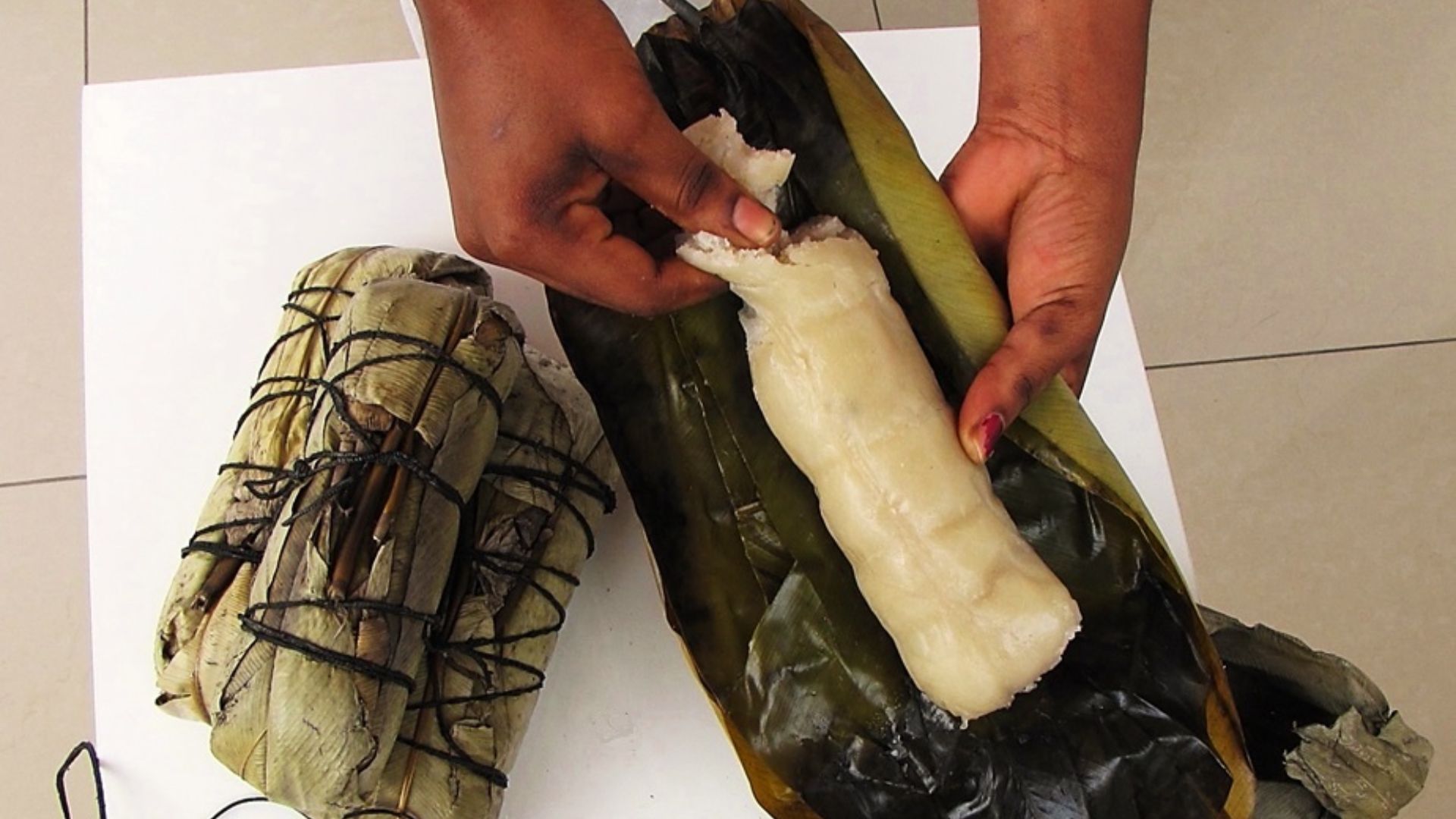
Long before wheat arrived in the Caribbean, people on islands like Hispaniola and Cuba were eating a thin, crispy bread called casabe. It's made from cassava, the starchy root you might recognize as yuca in the produce aisle. The bread is traditionally made from bitter cassava, a variety that can release dangerous amounts of cyanide if it isn't properly prepared.
The Taíno figured out how to make this root edible centuries before anyone understood the chemistry behind it. Many of their techniques survive in kitchens and bakeries across the Caribbean, even after colonial rule and competition from cheap wheat flour. In 2024, the tradition earned international recognition from UNESCO.
Why The Root Is Dangerous To Begin With
Cassava protects itself with compounds called cyanogenic glycosides, the most abundant of which is linamarin. Linamarin is fairly stable on its own, and the FAO notes that boiling alone doesn't break it down. The trouble begins when the root's cells are damaged, bringing linamarin into contact with an enzyme that triggers the release of hydrogen cyanide, according to the Food and Agriculture Organization.
That same reaction is why traditional processing works. Hydrogen cyanide evaporates readily and dissolves in water, so breaking the root down and then pressing and heating it removes much of the poison. The Taíno built a whole method around those steps without any way of measuring what was happening at the chemical level.
The difference between bitter and sweet cassava largely comes down to how much of these compounds each one carries. The sweet variety you're more likely to find at the grocery store generally contains much less, although it still needs peeling and thorough cooking. Bitter cassava has to go through the full process, and international food standards from the FAO and the World Health Organization limit cyanide in edible cassava flour to 10 milligrams per kilogram.
How Traditional Bakers Make Casabe
The Taíno grated peeled cassava using a tool called a guayo, turning the firm root into a wet pulp. That pulp went into a sebucán, a long, flexible tube woven from palm fibers or reeds. The weave tightens around the pulp when the tube is stretched, which wrings out the liquid much like a press would. That milky juice carries a good share of the dissolved toxins, so it's drained off before the pulp goes any further.
Once pressed, the pulp is dried a bit and sifted into a coarse flour. Some casabe makers still use equipment passed down through their families. In Cuba, Julio César Núñez works with the tools his grandmother used, including a sifter woven from natural fibers.
The bread takes its shape on a wide griddle called a burén, which was traditionally clay and is often metal nowadays. Bakers spread the flour in a thin circle and let the heat bind it into one sheet, flipping it once. A finished piece of casabe looks like an oversized cracker, and any round that still bends usually goes back on the heat until it dries out.
Where Cassava Bread Still Shows Up Today
Casabe has been around long enough to work its way into everyday Cuban expressions. There's an old saying, a falta de pan, casabe, which roughly translates to "when there's no bread, there's cassava bread." It has picked up new fans during Cuba's recent wheat flour shortages, and some restaurants serve it with toppings like roast pork and tomato.
The liquid pressed out of bitter cassava gets used too. In Guyana, cooks boil it for hours into a dark, bittersweet seasoning called cassareep. It gives the holiday stew known as pepperpot much of its flavor, and the long boiling drives off the cyanide. Jamaica has its own cassava bread called bammy, which is thicker and softer than casabe. Cooks soak wedges of it in coconut milk and fry them until golden, and it's a standard side for fried fish. In rural parts of the island where cassava grows, plenty of families still make it at home instead of buying it packaged.
In December 2024, UNESCO added the traditional knowledge behind cassava bread to its list of intangible cultural heritage. Five countries came together to submit the nomination, including the Dominican Republic and Honduras, where Garifuna communities along the coast serve casabe with seafood. UNESCO noted that in most of those countries the bread is still part of daily meals and connects families to their Indigenous and African heritage.
KEEP ON READING
How Caribbean Bread Is Made From a Poisonous Root