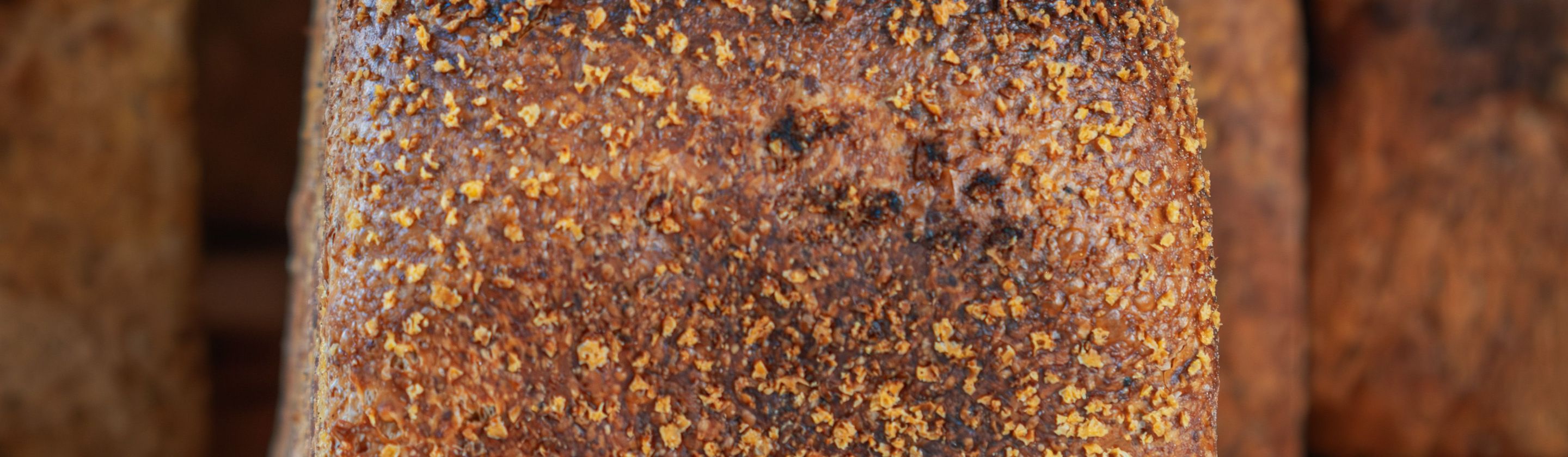
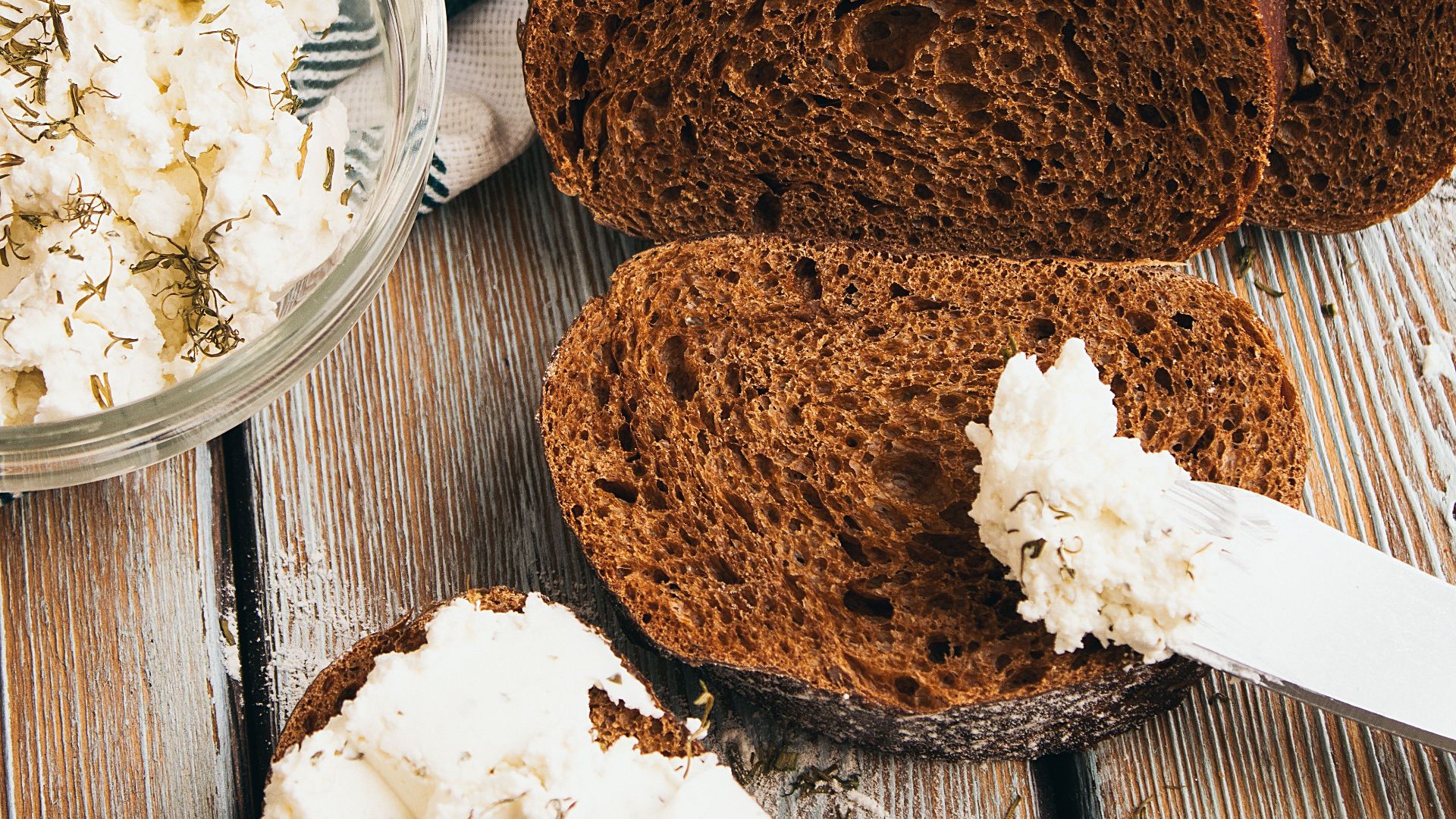
Traditional Westphalian pumpernickel spends between 16 and 24 hours in a sealed tin at a little over 100°C. The long, low bake gives it its nearly black color and mild sweetness without needing the heat of a conventional bread oven. A full day sounds like about as long as anyone could reasonably spend making one loaf.
It still is not the longest clock you can put on bread. With sourdough, the process can be traced beyond the dough itself to the culture used to raise it. Some of those cultures have been maintained continuously for generations.
Where the Clock Starts
Pumpernickel is the easy one to measure. The dough goes into a sealed pan, the oven stays just above 100°C, and the bread remains there for most of a day. That slow process is responsible for much of the color, sweetness, and dense texture that distinguish traditional Westphalian pumpernickel.
Panettone is more complicated. Traditional versions use a continuously maintained sourdough, or lievito madre, followed by multiple refreshments and long fermentation stages. In one peer-reviewed study of artisanal panettone production, the first dough fermented for 18 hours and the final dough for another five to six before baking, while the mother culture itself was maintained through repeated refreshments every four to 16 hours.
That still only counts the production of the individual panettone. The mother culture can have been maintained for years before any particular loaf is mixed. Once you include that ongoing fermentation, asking how long the bread took to make becomes a much less straightforward question.
The Ones That Predate Everybody
Boudin Bakery's own historical archive dates the San Francisco bakery to 1849 and says its mother dough came from the Gold Rush era. The bakery also records that Louise Boudin carried the culture to safety in a bucket during the 1906 San Francisco earthquake and fire. Boudin says portions of that original mother continue to seed its sourdough today.
Belgium takes preservation even further. The Puratos Sourdough Library in Saint-Vith keeps live cultures submitted by bakeries from around the world, maintains them under controlled conditions, and analyzes their microorganisms. Puratos reports that researchers have recorded hundreds of wild yeast strains and well over a thousand strains of lactic acid bacteria through the project.
Home bakers do essentially the same thing on a smaller scale. A starter can be divided, shared, refrigerated, dried, moved between homes, and passed from one baker to another while remaining an active culture. There is nothing unusual about a baker working with a starter that existed long before their current bag of flour did.
What the Daily Feeding Costs You
Keeping one going requires regular maintenance. King Arthur Baking's starter guidance recommends feeding a room-temperature starter daily and a refrigerated one roughly once a week, though individual schedules vary. Each feeding usually means keeping a portion of the old starter and adding fresh flour and water, which is why sourdough bakers accumulate so much discard.
The reason for the routine is microbial. Sourdough is a community of yeasts and lactic acid bacteria, and both groups contribute to fermentation. A scientific review of sourdough starter cultures describes how their metabolism influences fermentation, flavor, texture, and other characteristics of the finished bread.
There is also a practical reason to keep a backup.
Puratos maintains duplicate cultures so bakers can recover a sourdough if the original is lost, while home bakers can preserve starter by drying it for long-term storage. So the loaf itself may take a day or two, but the culture behind it can have been maintained for decades, or in a few famous cases, much longer.
KEEP ON READING
What Is Proper Potluck Etiquette?