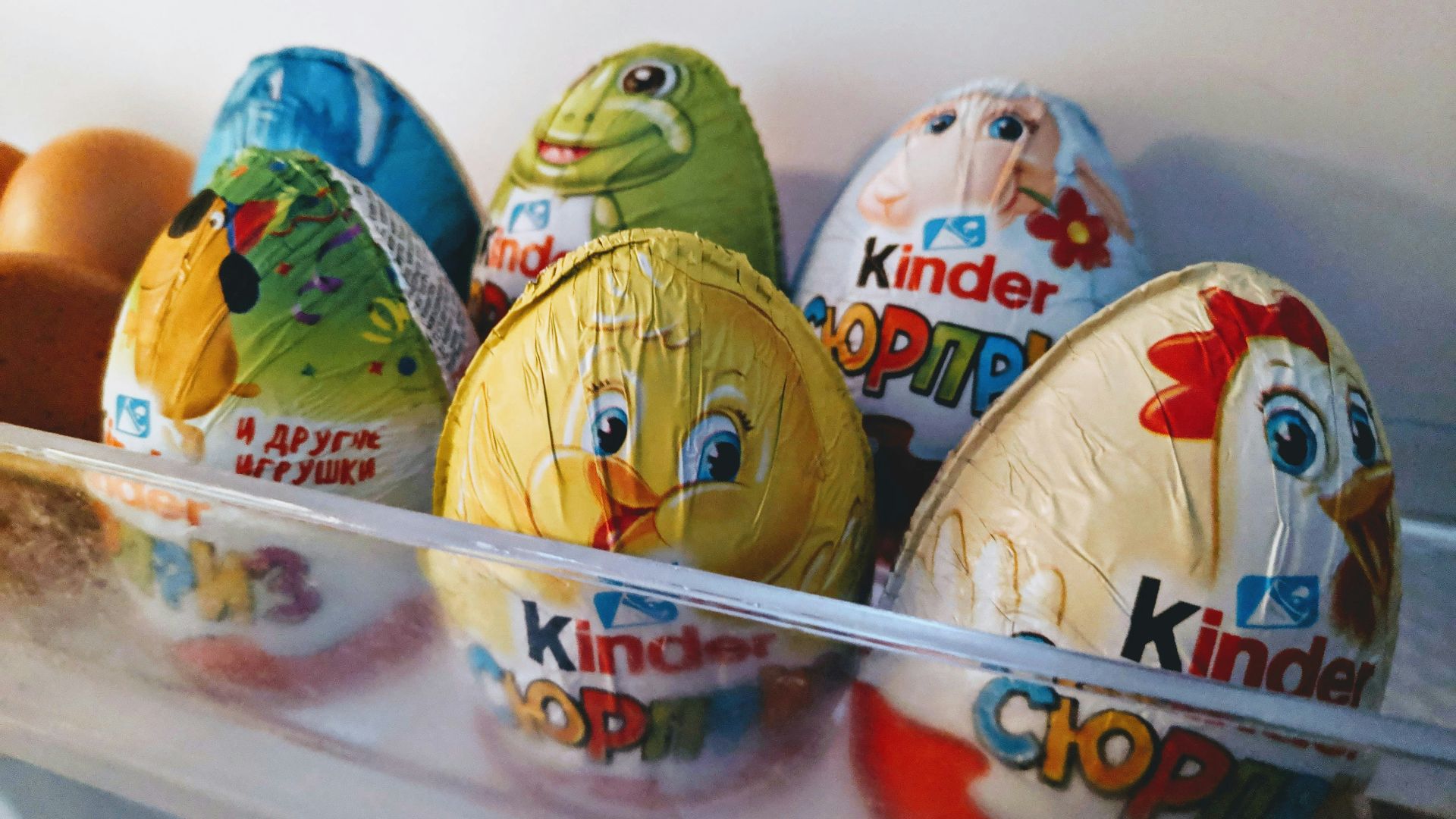
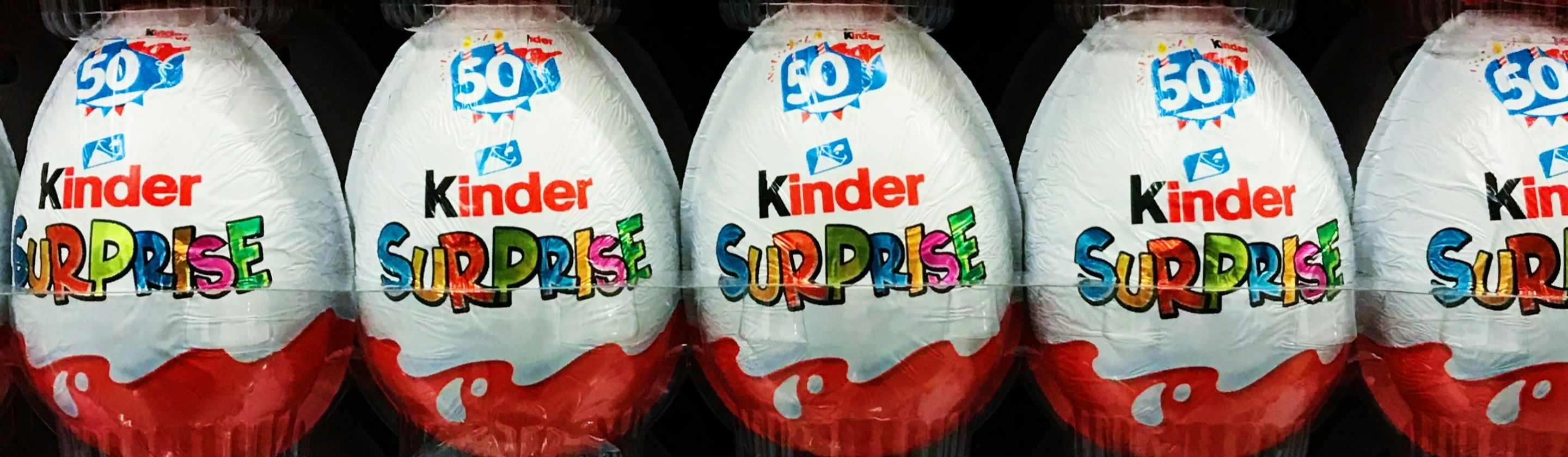
American kids who grew up in the 1990s knew about Kinder Surprise the way they knew about Swiss chocolate, which is to say secondhand. A cousin in Germany had them. Somebody's mother brought four back from Heathrow and rationed them out over a month. The hollow chocolate egg with the yellow capsule inside was an ordinary supermarket item in more than 170 countries and contraband in exactly one.
Nothing was ever passed to outlaw it. A clause written in 1938, thirty-six years before the egg went on sale in Italy, happened to describe the product with uncomfortable precision. That clause put Kinder Surprise on the same customs list as undeclared sausage, and it kept the original egg off American shelves for its entire commercial life.
A Law Written For Something Else
The Federal Food, Drug, and Cosmetic Act deems a confection adulterated if it has partially or completely imbedded therein any nonnutritive object. Children choking on prizes buried in candy was a live problem when that language was drafted, and Congress dealt with it by banning the category instead of policing individual products. No amount of warning text on the wrapper changes how the sentence applies.
There is one carve-out, for an object of practical functional value that doesn't make the candy hazardous. A lollipop stick clears that bar. A sealed plastic capsule holding an unassembled toy does not, and no regulator has ever been persuaded to read it differently.
A second agency piled on. The Consumer Product Safety Commission tested the toys and found that the small parts posed a choking and aspiration risk for children under three, which triggered its own small parts rule. Two separate federal prohibitions now covered the same piece of chocolate, which is part of why the ban proved so hard to argue with.
Thirty Years Of Customs Seizures
Enforcement fell to border officers, and they took it seriously. CBP reported more than 3,176 seizures of Kinder eggs between 2010 and early 2013 at mail facilities, express delivery hubs, and land crossings. In fiscal 2011 alone the agency pulled over 60,000 eggs out of luggage and parcels.
Seized eggs were destroyed rather than returned.
The scenes this produced were fairly ridiculous. A Quebec man driving to Boston for Easter in 2016 was made to carry his eggs back across the line to throw them away, because an American trash can counted as American soil. Canadian officers weren't allowed to accept them either. The chocolate went into a bin on the Canadian side.
Two men returning to Seattle from Vancouver spent more than two hours in secondary inspection in 2012 over eggs found in their car. Stories like that circulated widely, mostly as proof that the government had lost the thread. The eggs stayed banned anyway, which left an obvious opening for whoever was willing to redesign the product.
The Workaround That Finally Worked
Ferrero's answer landed in November 2017. Kinder Joy is a plastic egg that splits into two sealed halves, one holding cocoa and milk creams with a small spoon, the other holding the toy. It arrived in stores at $1.59 and was an immediate hit, topping the industry's new-product rankings for 2018.
The legal logic is straightforward. Nothing is embedded in anything, since the toy never touches the food and the food isn't a shell around it. The product was already selling in Italy under the name Kinder Merendero and in dozens of other markets, so Ferrero didn't invent a format to satisfy the FDA so much as import the one that already fit.
The original egg is still illegal. Buy a Kinder Surprise in Toronto or London today and it remains a prohibited import at every US port of entry, subject to seizure and destruction. Every year CBP issues the same advisory before Easter, and every year travelers hand over their chocolate at the booth.
KEEP ON READING
The Candy That Was Illegal In The US For Decades

3 Foods to Never Buy in Bulk