Walk down the dairy aisle of any U.S. grocery store and you'll find stacks of individually wrapped, perfectly square, almost unnervingly orange slices. Ah, American cheese. It's the stuff that melts into burgers, oozes between two slices of toasted bread, and shows up in school cafeterias across the country. But ask someone what's actually in it, and you might wish you never asked. After all, the product behind the name is far stranger and more engineered than most people realize.
The truth is that American cheese occupies a strange legal gray area. According to the FDA, it doesn't even qualify as real cheese; instead, it falls under a category with a far less appetizing name. So, before you stock your fridge with these suspicious-looking orange squares, you might want to read this article first.
The FDA's Official Stance on American Cheese
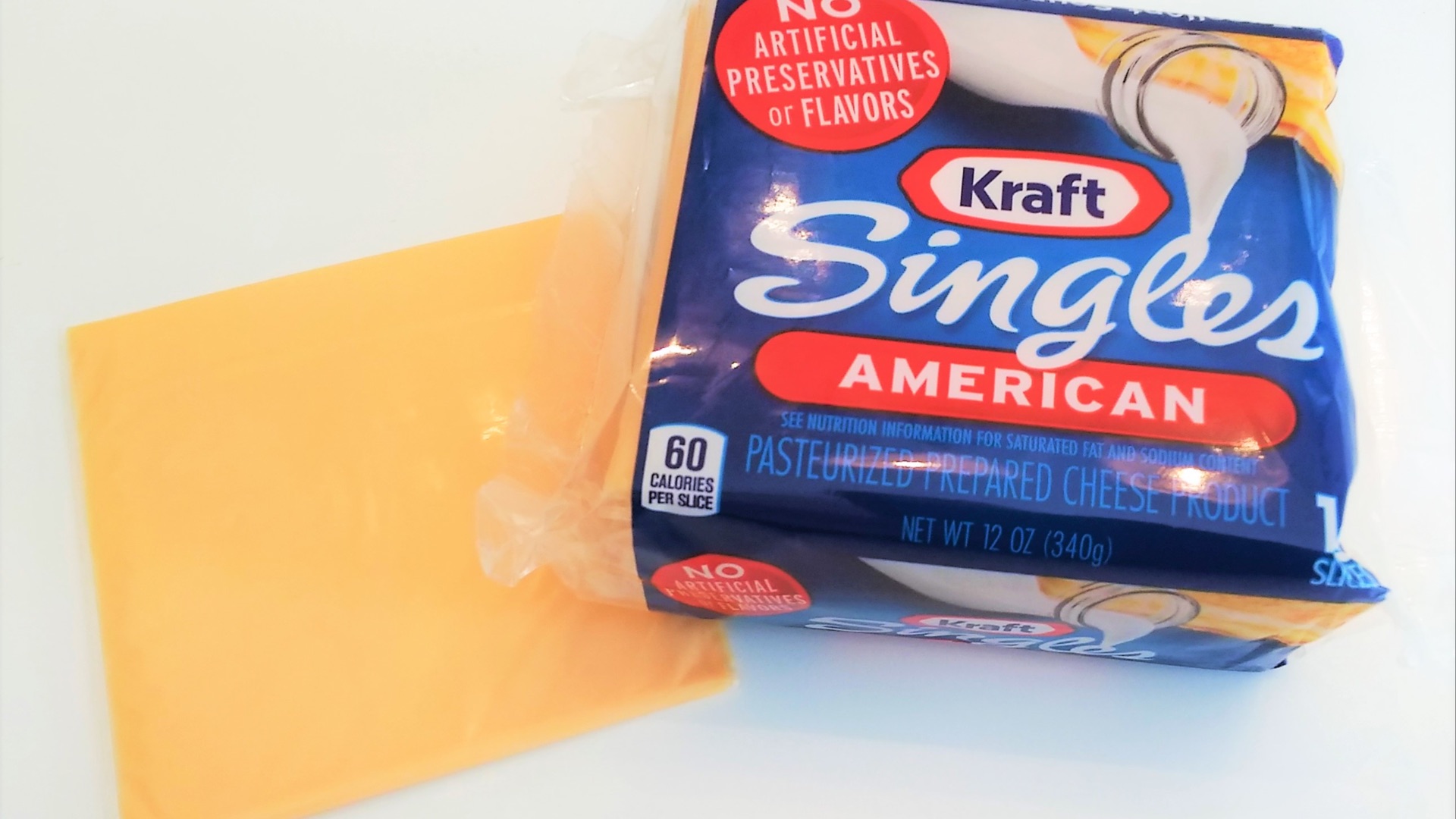
Under federal law, a product can only be labeled plain "cheese" if it meets specific compositional standards involving milk, rennet, and bacterial cultures. American cheese doesn't clear that bar. Yep, you read that right. The FDA officially refers to it as "pasteurized processed American cheese food," and for a product to count as a true cheese, it has to be more than half cheese curds. Most Kraft-style singles fall short of that threshold, which is exactly why the wording on the package looks so clinical.
That doesn't mean the product is fake, though. The FDA actually requires that any cheese made from a blend of two or more real cheeses be labeled as "process cheese" or a "cheese product," and most American cheese is made by blending cheddar and Colby with other ingredients like whey, milk proteins, and emulsifying agents. Those additions are what give the slices their stretch and uniform melt, but they also push the product out of the legal definition of cheese.
There's also a threshold that separates American cheese from its even more processed cousins. Only slices containing more than 51% real cheese can be legally classified as American cheese, while anything below that, like Velveeta, has to be labeled "process cheese food" instead. So even within the world of processed cheese, there's a hierarchy, and not every orange slice on the shelf is playing by the same rules. You can usually tell where a product lands by checking the first ingredient on the label.
How American Cheese Is Actually Made
Despite the name, American cheese wasn't invented in the United States at all. The first cheese processed this way was created by Swiss innovators Walter Gerber and Fritz Stettler back in 1911, using shredded Emmentaler that was heated with sodium citrate until it solidified into a new form of cheese. J.L. Kraft later adapted that method for American manufacturing, looking for a way to use up surplus cheddar and extend shelf life. He patented his version in 1916, and the formula has been refined for over a century since.
The basic process hasn't changed all that much since then. Manufacturers melt down chunks of real cheese, typically cheddar, Colby, or a combination, and combine the mixture with emulsifying salts that prevent the fat and proteins from separating during melting. That emulsification step is the entire secret behind American cheese's signature pull; without it, melted cheddar would just split into greasy puddles. The molten blend gets poured into molds, shaped into blocks or sliced into individual portions, then packaged for sale.
Color is another variable that depends entirely on the manufacturer. White American cheese skips any added dye, while the more familiar yellow-orange version gets its color from annatto, a natural extract pulled from achiote tree seeds. Neither shade says anything about flavor or quality; it's purely cosmetic. Some brands lean more heavily on Colby for a lighter tone, while others stick with cheddar-forward blends for that classic orange hue.
Why It Melts the Way It Does (and Whether It's Bad for You)
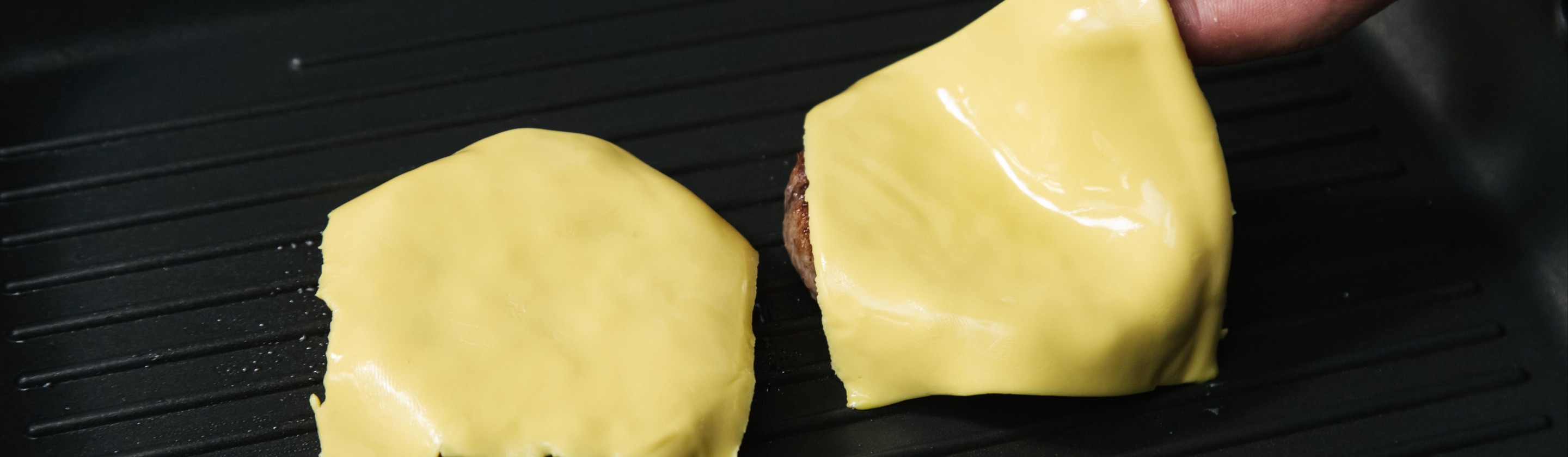
The defining trait of American cheese is its melting behavior, and that comes down to chemistry rather than any culinary trick. Traditional cheeses like cheddar contain proteins that clump and separate when heated, which is why a melted cheddar slice often looks oily or stringy instead of smooth. The emulsifiers in American cheese keep those proteins suspended evenly throughout the mixture, so it melts into a uniform, glossy layer instead of breaking apart. That's precisely why it's the go-to choice for cheeseburgers and grilled cheese sandwiches.
Nutritionally, American cheese isn't the villain people sometimes make it out to be, though it isn't exactly a health food either. It still contains real dairy, so it carries protein, calcium, and a handful of other nutrients you'd find in regular cheese. At the same time, it tends to run higher in sodium and saturated fat than many natural cheeses, largely because of the added salts and preservatives used to keep it shelf-stable. As with most processed foods, moderation matters more than outright avoidance.
It's also worth noting that not everything marketed alongside American cheese is actually American cheese. Products labeled "cheese product" or "cheese food" sit even further from the legal definition, often swapping out more of the dairy content for oils, starches, and flavorings. If you're trying to buy the real thing, checking whether "cheese" appears as the first ingredient on the label is the most reliable way to know what you're getting.
So is American cheese actually cheese? Realistically speaking, not quite, but it's also not the fraudulent product some people assume it to be. It's a deliberately engineered blend of real dairy and stabilizing ingredients, designed specifically to melt better and last longer than the cheeses it's made from. Whether you see that as a clever bit of food science or a step too far from tradition probably depends on how much you enjoy that perfect, gooey cheese pull on a fresh burger.