
How Unhealthy Is the Big Arch, the New Burger the McDonald’s CEO Was Too Afraid To Eat?
How Unhealthy Is the Big Arch, the New Burger the McDonald’s CEO Was Too Afraid To Eat?
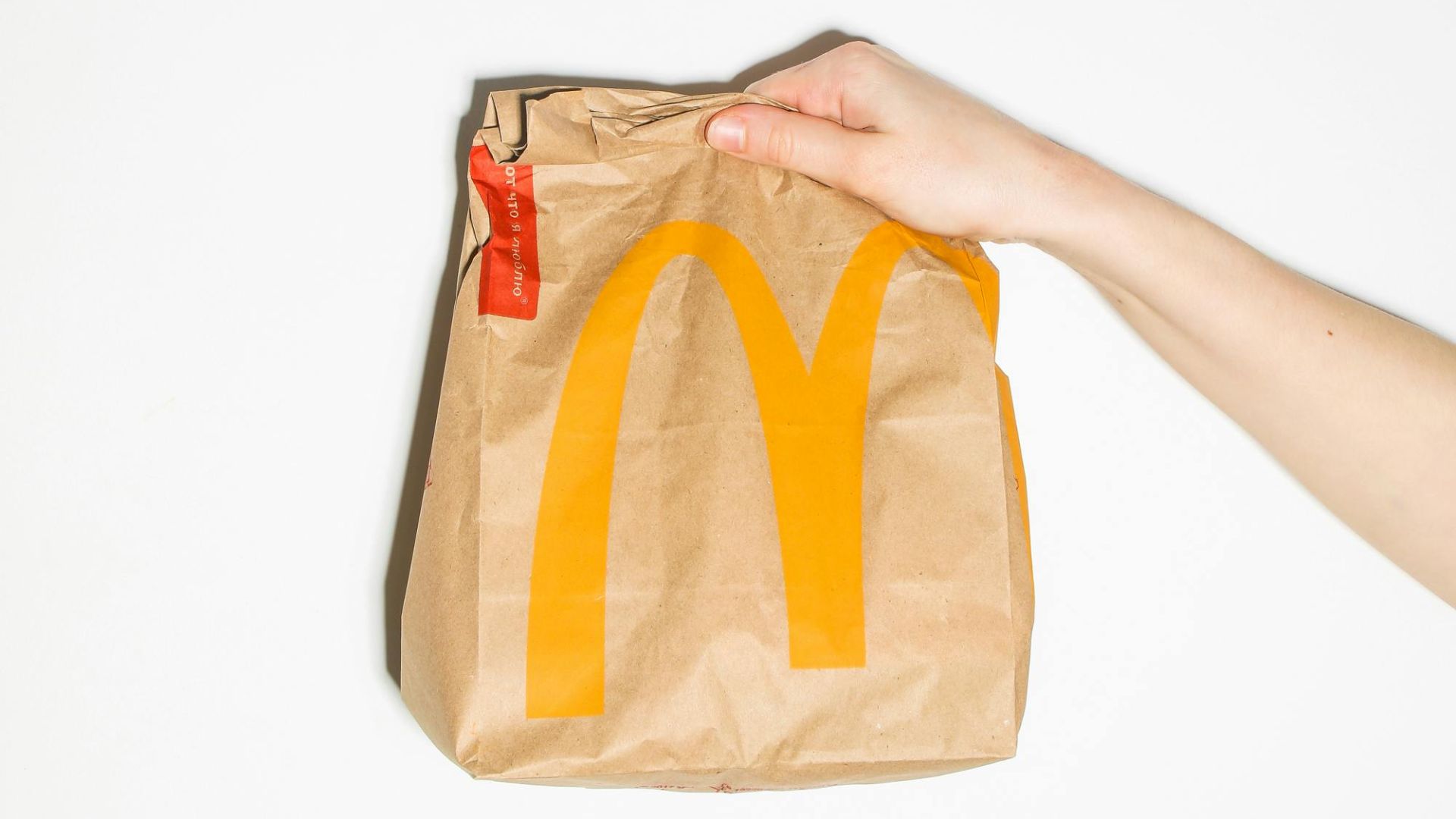
The Big Arch is real, it’s enormous, and it’s exactly the kind of menu item that makes people stop scrolling. McDonald’s describes it as a limited-time burger with two beef patties, three slices of white cheddar, crispy onions, slivered onions, pickles, lettuce, Big Arch sauce, and a sesame-poppy seed bun. As part of the new burger's marketing campaign, McDonald’s CEO Chris Kempczinski was filmed in a promotional clip that's now viral, taking a tiny, reluctant nibble, which he was instantly roasted for all over the internet.
Once you look at the nutrition, his reaction makes a lot more sense. McDonald’s lists the Big Arch at 1,020 calories for the burger alone. Have it as a combo, with medium fries and a medium Coke, and it rises to 1,610 calories. That pushes it well past “regular burger” territory and into obvious indulgence. Let's take a closer look at all the nutrition facts.
The Nutrition Numbers Are Not Subtle
The calorie count is the headline, because 1,020 calories for one sandwich is a big ask for a single meal. If you’re using the standard 2,000-calorie reference diet on food labels, that’s roughly half a day’s calories before you’ve added fries, nuggets, dessert, or a soda. In practical terms, the burger is less of a quick lunch and more of an event.
Calories are only part of the story, though, because the Big Arch also comes with 25 grams of saturated fat, according to CSPI’s analysis using McDonald’s posted nutrition data. The FDA says the Daily Value for saturated fat is less than 20 grams per day on a 2,000-calorie diet—this burger goes over that limit by itself.
Then there’s the sodium, which lands at 1,760 milligrams for the burger alone. The FDA says the Daily Value for sodium is less than 2,300 milligrams per day, so the Big Arch gets you most of the way there in one sitting. If you tend to pair burgers with fries, that number gets even less charming very quickly.
Why It Looks Worse Than a Normal Splurge
Part of what makes the Big Arch stand out is that it’s not just a slightly larger version of something familiar. The Center for Science in the Public Interest (CSPI) says it has more calories, saturated fat, sodium, and added sugars than any other burger on McDonald’s current menu, which is not exactly a casual achievement considering McDonald's isn't necessarily known as a "light lunch" destination. CSPI is calling it the most unhealthy burger on the McDonald's menu.
That oversized profile comes from the full stack of ingredients, not one rogue topping acting alone. You’ve got two quarter-pound beef patties, three slices of cheese, a sauce-heavy build, and extras like crispy (deep-fried) onions that push the whole thing further into excess. Even the cheese matters more than you’d think, because those three slices alone add a hefty amount of sodium.
It also helps explain why the CEO bite became meme material so fast. Kempczinski's hilariously cautious bite after declaring "I love this product. It is so good," and ensuring the audience it's his lunch, turned the burger into an online joke. However, what started as a "fail" actually turned into marketing gold, driving $18 million in sales. It even sparked a fast-food "war" of sorts, with CEOs of other burger chains posting videos of themselves taking genuine, large bites of their products. This face-off, as well as the internet having a field day making fun of the original video, just serves to give the Big Arch tons of free publicity.
So, Is It “Unhealthy” or Just Very Extra?

The fairest answer is that it’s both a legitimate treat food and a genuinely unhealthy burger by standard nutrition benchmarks. It’s high in calories, very high in saturated fat, and loaded with sodium, which is why groups like CSPI have singled it out. At the same time, nobody is claiming that one Big Arch causes instant doom the second you unwrap it.
Context matters a lot here. If you eat one occasionally, skip the full meal, and don’t build your routine around burgers the size of a small engineering project, it’s just a heavy splurge. The bigger issue is when a burger like this becomes normal enough that 1,000-plus calories at lunch starts sounding reasonable.
So yes, the Big Arch is unhealthy in the plain-language sense, and the numbers back that up without much argument. It’s McDonald’s leaning all the way into the “bigger is better” idea, even though the nutrition facts are clearly waving a small red flag from the passenger seat. If you want to try it, you probably can, but this is one of those burgers that makes the phrase “once in a while” sound especially wise. Maybe you should take a page out of Kempczinski's book and eat it with caution.
KEEP ON READING