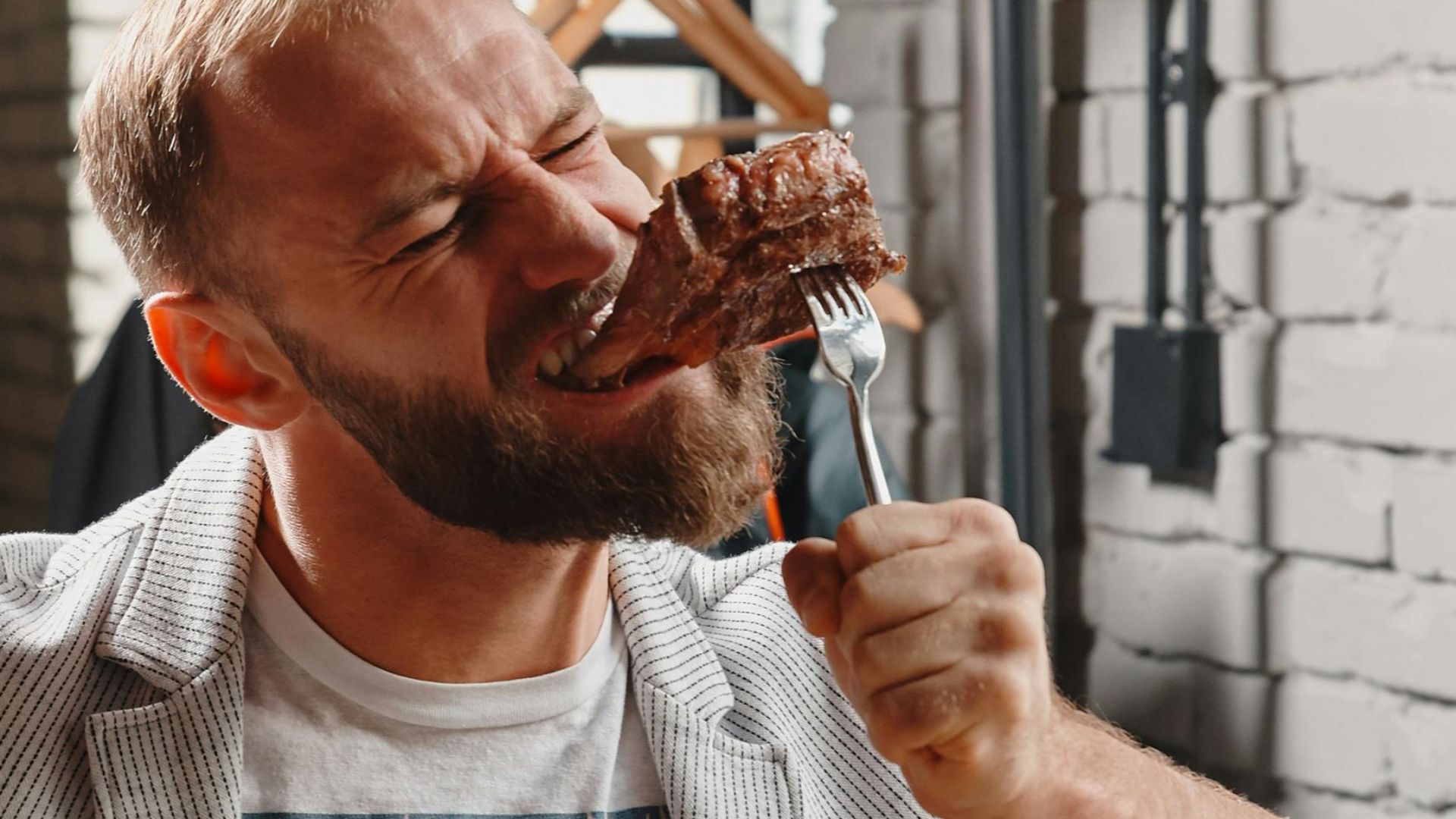
Ever wonder why a man can demolish dinner in five minutes flat while his wife is still working on the appetizer?
The battle of the genders plays out on our plates every day. A groundbreaking research has revealed how differently men and women approach food. From meal timing to meat preferences and snacking patterns to sports habits, gender shapes our relationship with food in meaningful ways beyond simple biology.
The Meat-And-Potatoes Divide
The most striking gender gap shows up in protein choices. Men demonstrate a clear preference for red and processed meats, with research from a comprehensive study by Feraco et al. showing that 86% of males regularly consume red meat compared to just 75% of females. This pattern extends to processed options like prosciutto, where 91% of men versus 85% of women report regular consumption. Meanwhile, women lean heavily toward plant-based choices—94% prefer cooked vegetables compared to 87% of men, and they're significantly more likely to choose whole grains, with 82% consuming them regularly versus 73% of males.
Women also favor foods like tofu and dark chocolate with high cocoa content. These preferences reflect deeper patterns where women generally gravitate toward healthier options. The taste analysis reveals that men favor saltier flavors while women prefer sweeter ones. Water consumption differs too: men average 1.7 liters daily compared to women's 1.4 liters, and men consume sugary drinks more frequently.
When Hunger Strikes
The clock matters differently for each gender. Men report peak hunger before dinner, about 38% feel hungriest in the evening, while women experience more evenly distributed hunger throughout the day, with 29% feeling hungriest in the morning versus 27% of men. These timing differences translate into distinct eating patterns. Women eat more frequently, with 35% eating five times daily versus 26% of men.
When it comes to snacking, women are significantly more active, particularly favoring afternoon snacks at 34% compared to men's 27%. About 20% of men report not snacking between meals, compared to just 14% of women. Men are more likely to skip meals entirely, especially breakfast. The study found that men eat faster, dine out more frequently, and are more comfortable eating alone.
Moving Beyond The Table

The gender divide extends into physical activity. A striking 52% of women reported not participating in any sports, compared to 42% of men. Among those who do exercise, preferences diverge sharply: men gravitate toward strength training and team sports, while active women prefer endurance activities and skill-based sports. This pattern likely reflects both biological factors, like muscle mass distribution, and societal influences shaping what activities feel accessible to each gender.
Well, the combination of dietary patterns and exercise habits creates distinct health profiles, with women generally making choices that align more closely with disease prevention guidelines despite facing unique challenges around emotional eating. Understanding these differences is crucial for developing smarter nutrition strategies and tackling chronic diseases that affect the genders differently.
KEEP ON READING

The Most Popular Signature Dishes Around the World