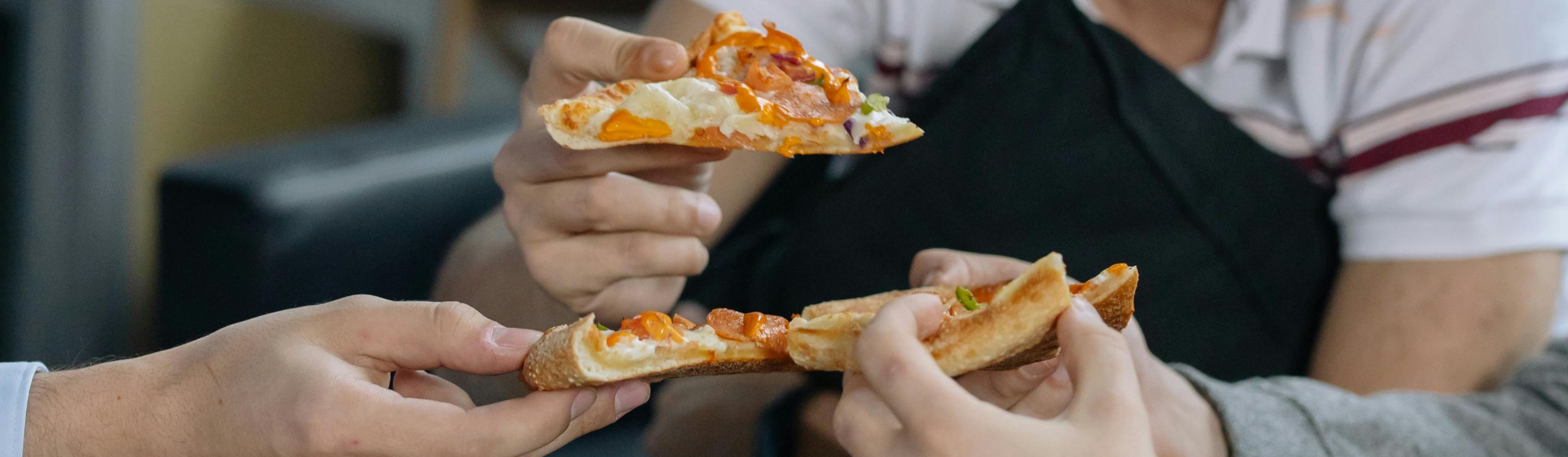
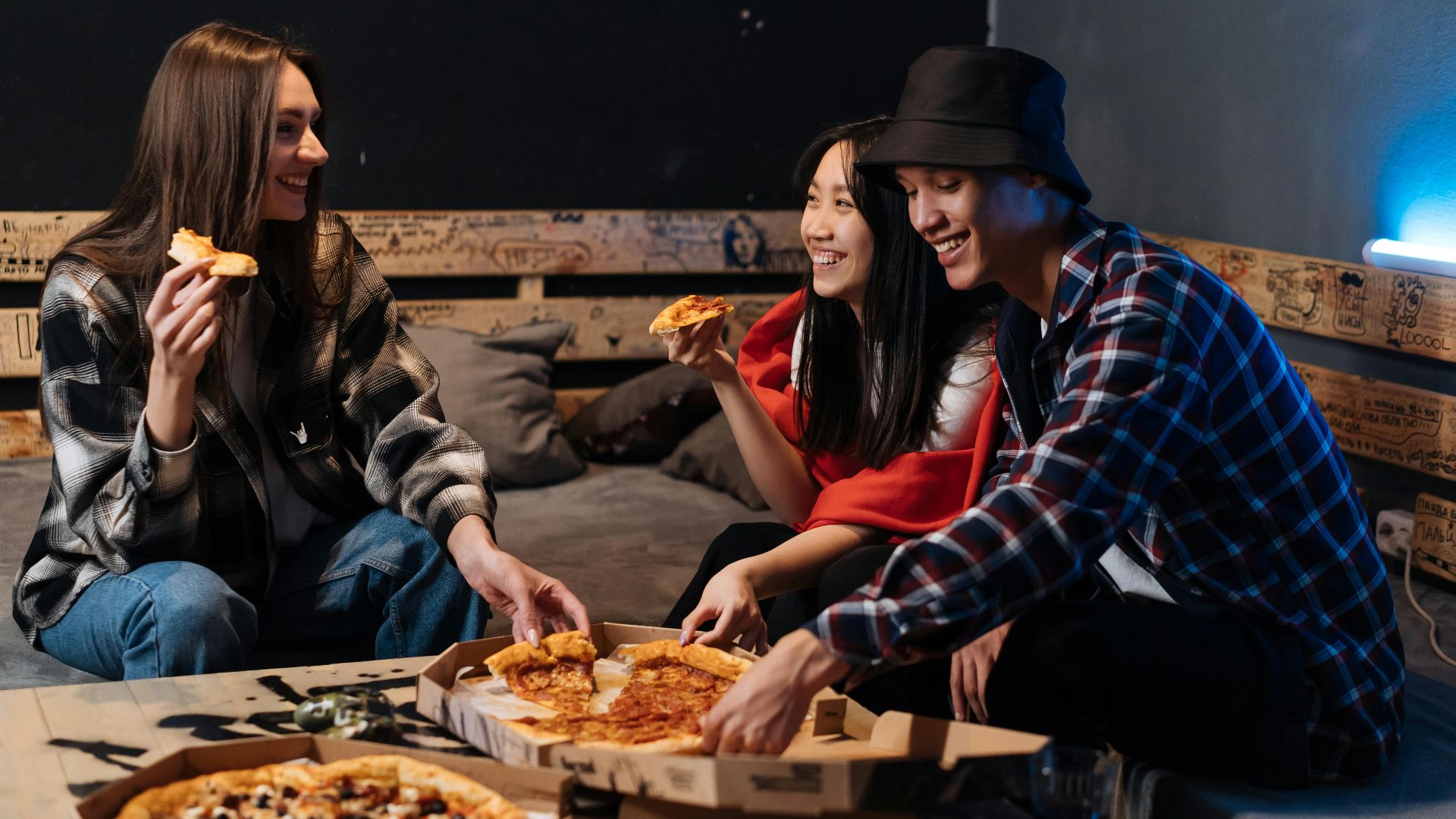
At some point, every group of people who has shared a pizza has faced the same moment. The box is mostly empty, the conversation is still going, and one slice sits alone, getting progressively less appealing as the cheese congeals. Nobody moves toward it. Nobody asks for it. It just sits there, radiating low-grade social tension while everyone pretends to be full.
What happens around that last slice is a surprisingly accurate readout of how a group of people relate to each other. The hesitation, the offers, the half-slice compromise, and the occasional person who just takes it without ceremony all map onto something real about trust, hierarchy, and the invisible rules we follow without ever being taught them.
Why Nobody Just Takes It
The reluctance to grab the last piece has roots in something older than pizza. Across cultures, taking the last of a shared resource signals a particular kind of selfishness, one that prioritizes personal appetite over the group's comfort. Researchers studying food-sharing behavior and prosocial norms have found that communal eating activates strong reciprocity instincts, the same instincts that made resource hoarding a social liability in early human communities. We carry that programming into every pizza order.
There's also a phenomenon that social psychologists call diffusion of responsibility. In the same way that a crowd of bystanders can watch an emergency unfold because everyone assumes someone else will act, a table of people can stare at a last slice because everyone assumes someone else wants it more, or less, or differently. The landmark research by John Darley and Bibb Latané in 1968 established that the presence of others reliably reduces individual action, and that principle holds in trivial situations as much as urgent ones. The slice is a low-stakes version of the same group paralysis.
The longer it sits, the worse the problem gets. Every minute that passes without someone taking it adds social weight to the act of taking it. What was a simple decision at minute one becomes a statement at minute ten. You're no longer just eating pizza. You're the person who ate the last slice after everyone had already silently decided nobody wanted it. The window for casual, consequence-free consumption closes fast.
What the Standoff Tells You About the Room
The speed at which the last-slice standoff resolves tells you almost everything about the group dynamics at the table. Among close friends, someone grabs it within thirty seconds, possibly after a performative offer that everyone at the table understands as a formality. Among colleagues, it can sit for the entire remainder of the meeting. Among first dates, it becomes a small theater of generosity and restraint that both people are actively performing for each other.
Research on food sharing and social intimacy consistently finds that willingness to share food, and willingness to take food without extensive negotiation, tracks closely with relationship closeness. A study by Kaitlin Woolley and Ayelet Fishbach found that eating from a shared plate increased cooperation and reduced conflict in negotiation tasks, suggesting that food dynamics function as a reliable proxy for broader trust levels. Groups that navigate the last slice easily tend to be groups that navigate most things easily.
Hierarchy also shapes who eventually breaks the stalemate. In groups with a clear informal leader, that person often ends the standoff, either by taking the slice themselves or by cutting it and distributing it without asking. The act of resolving the tension is a small exercise of social authority. Nobody appointed them to do it. They just did, and everyone was quietly relieved.
The Ritual Has Rules Nobody Taught You
There is an entire etiquette of last-slice behavior that most people know fluently without ever having studied it. The first move is almost always the performative offer, a gesture toward the box accompanied by some variation of does anyone want this, directed at the table generally. This offer is not really about gathering information. It's about establishing that you're not a person who takes without asking, which then quietly grants you permission to take.
The half-slice compromise deserves recognition as one of the more elegant social inventions in casual dining. Cutting the last piece in half and taking one portion is the universally understood signal that you wanted it but remain a reasonable human being. It leaves an exit ramp for anyone else who also wanted it, and the fact that the remaining half almost always goes untaken is beside the point. The ritual served its purpose.
The person who simply takes the last slice without ceremony, without the offer, without the split, is operating on a different social frequency entirely. We tend to read that person as either very comfortable or completely oblivious, and the distinction matters. In a group of close friends, someone who just grabs it is relaxed and trusted. At a work lunch, the same move registers as mildly aggressive. The pizza is identical in both scenarios. The room makes all the difference.
KEEP ON READING

The Most Popular Signature Dishes Around the World