Everything You Need To Know To Make Perfect Sourdough Bread At Home
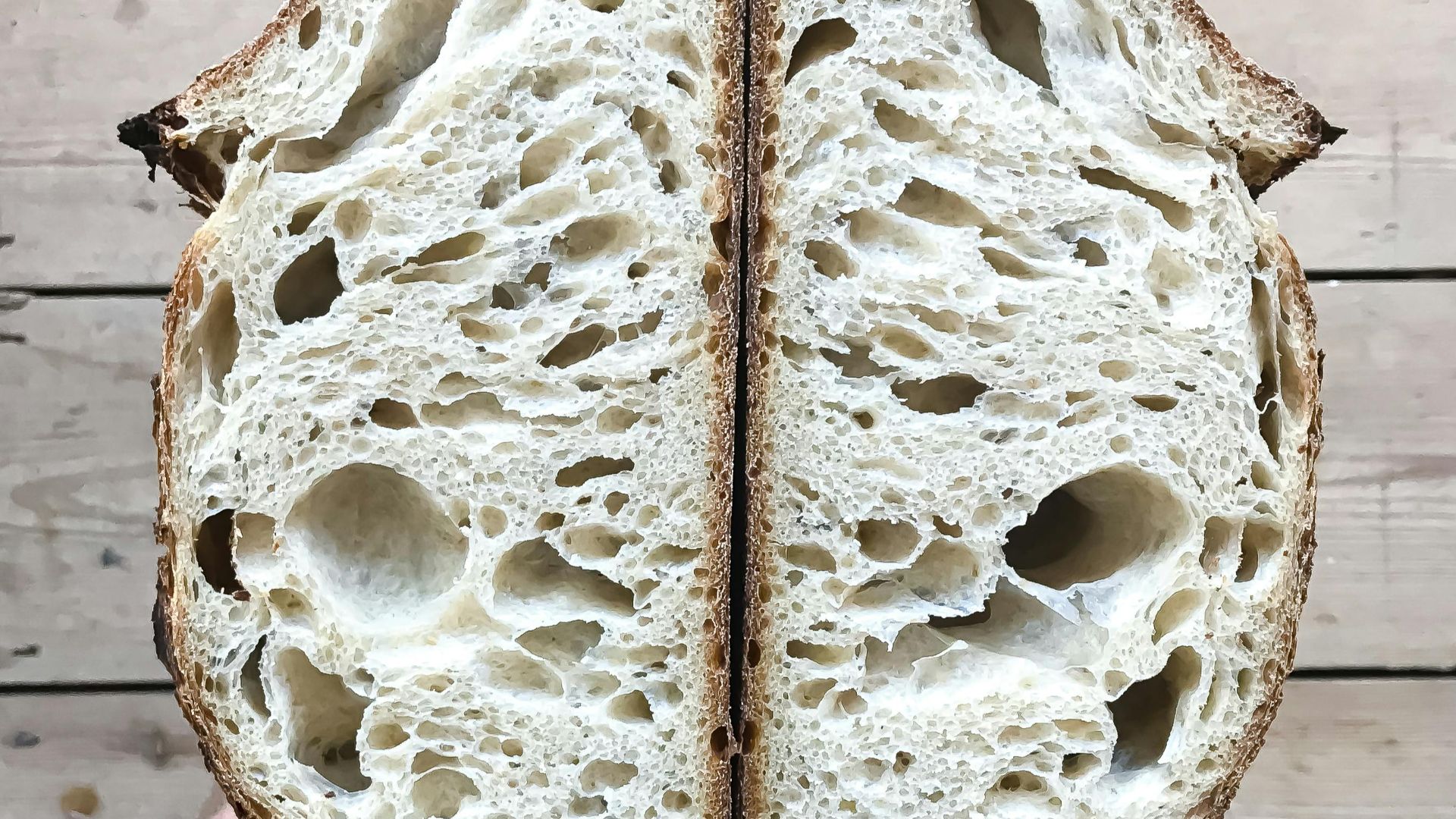
The COVID-19 pandemic saw the meteoric rise of sourdough bread-making—it was a way to connect, slow down, and relax during a stressful time—but the frenzy isn't over. Although flour today isn't flying off the shelves like it was in 2020, people are still interested in perfecting their sourdough game, especially considering that homemade, naturally-leavened bread offers many health benefits, like improved digestion, gut health, and heart health.
Sourdough has a reputation for being intimidating, but the truth is, anyone can make professional-quality loaves at home. All it takes is a little know-how, practice, and patience.
Equipment
To make sourdough, you will need the following items:
- a digital scale
- a large bowl with a lid or a tea towel to cover
- a plastic scraper
- razor blade
- proofing baskets (bannetons)
In terms of ingredients, all you need is flour, water, and salt. You can use essentially any flour you want, but if you're a beginner, white bread flour is easiest to work with.
It all starts with a healthy starter.
The first step to making great sourdough is to have a healthy starter, the living culture of wild yeast and bacteria made from mixing water and flour and letting the mixture ferment. Your starter determines the rise of your bread, so this is a crucial step that can't be rushed.
If you're making one from scratch, you'll need a week or two (depending on the temperature of your home) of daily feedings before it becomes active enough to bake with. Every 24 hours, feed it with a 1:1:1 ratio of flour, water, and starter (by weight), throwing away the excess starter from the day before.
By the time it's ready, it should be consistently doubling in size after several hours at each feeding. Other signs of a strong starter include: a tangy smell, plenty of bubbles, and an airy texture. If you don't want to do all this work to start your own, you can also ask your local bakery for a spoonful of starter.
Feeding your levain
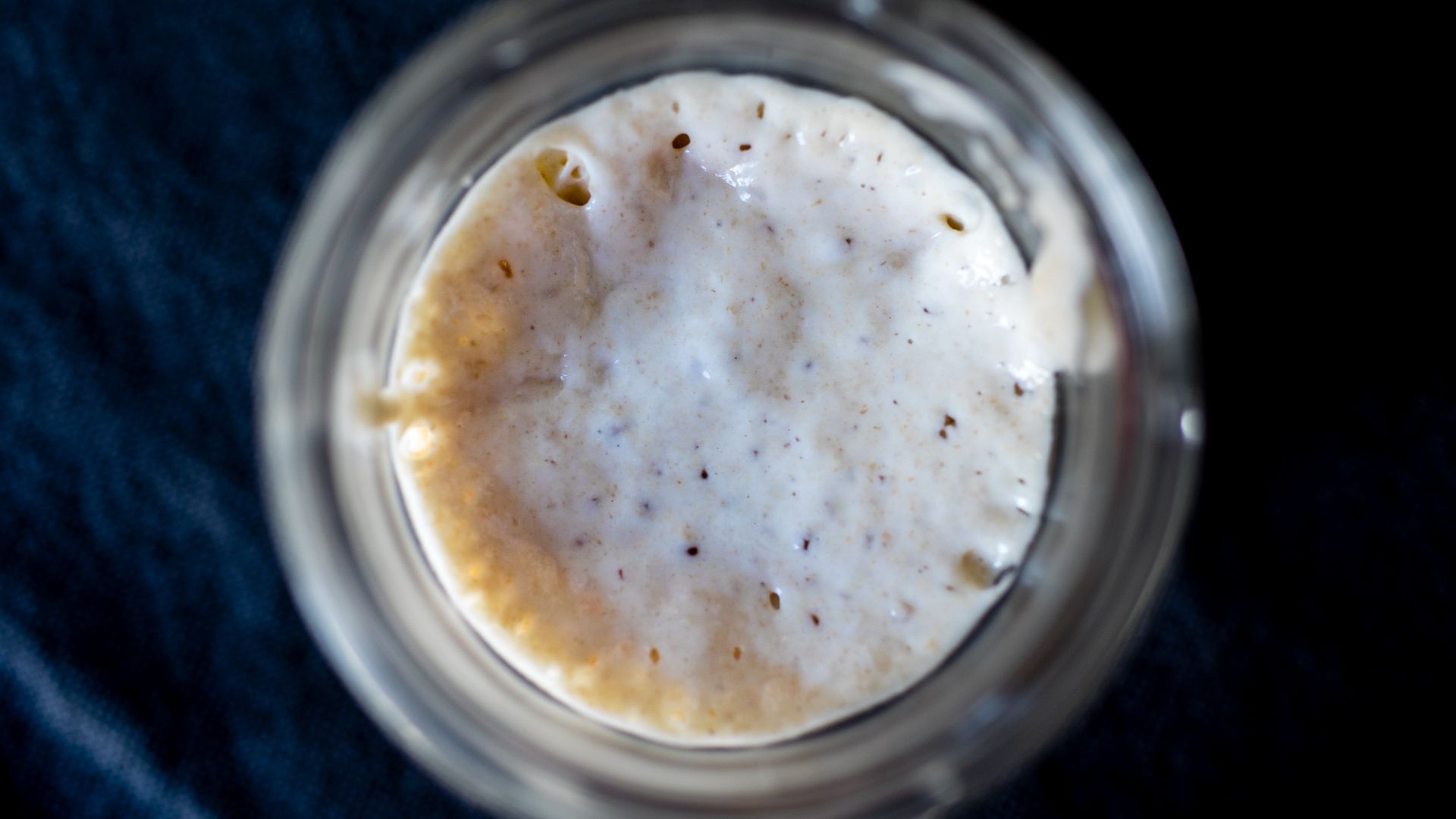
Your levain or "mother" is the bit of starter you feed that's actually going to go into your bread. To create your levain, give your mature starter a "big meal" of equal parts flour and water. Use warm water if your house is cold, and wait four to 12 hours for it to get bubbly, active, and airy. The more you wait, the more tart your bread will be, but don't wait too long, as your levain can actually lose its power.
Different recipes call for different ratios of starter to flour and water, so just follow the directions laid out there. The essential part is to make sure you've waited long enough so your levain is very bubbly and active.
Autolyse & mix
Once your levain is fed, you can start your autolyse. Mix your levain with the flour and water your recipe calls for and let it sit, covered, for about 30 minutes. This is crucial for gluten development and for the hydration of your flour. Once that's done, you can add the salt and an extra splash of water to help it dissolve. You don't need any fancy mixers to make sourdough, just your hands moistened by water so they don't become sticky messes. Don't worry about making a smooth dough at this stage; just mix until it seems like all the salt is incorporated and let it rest, covered.
Folds & bulk fermentation
There are many different folding methods out there, but we recommend doing three book folds every 15 minutes, followed by two coil folds 30 minutes apart. Folding your dough is crucial for building strength and developing gluten. Once all your folds are finished, let your dough bulk ferment (sit at room temperature, covered) for one to two hours. It doesn't need to double in size during this time, but it should look bigger and aerated by the time you return to it.
Divide & shape
To divide your dough, you will need a plastic scraper. Instead of dusting your dough with flour, we prefer to get our hands and scraper a little wet so it doesn't stick. Dump your dough onto the counter and cut it into however many loaves you want to make. Then make tight little rounds and let them relax for 15 to 30 minutes. Dust them with flour, give them their final shape, and place them seam-side-up in bannetons. You can leave them at room temperature for some time if they look a little sluggish, or cover them and place them in the fridge overnight.
Baking
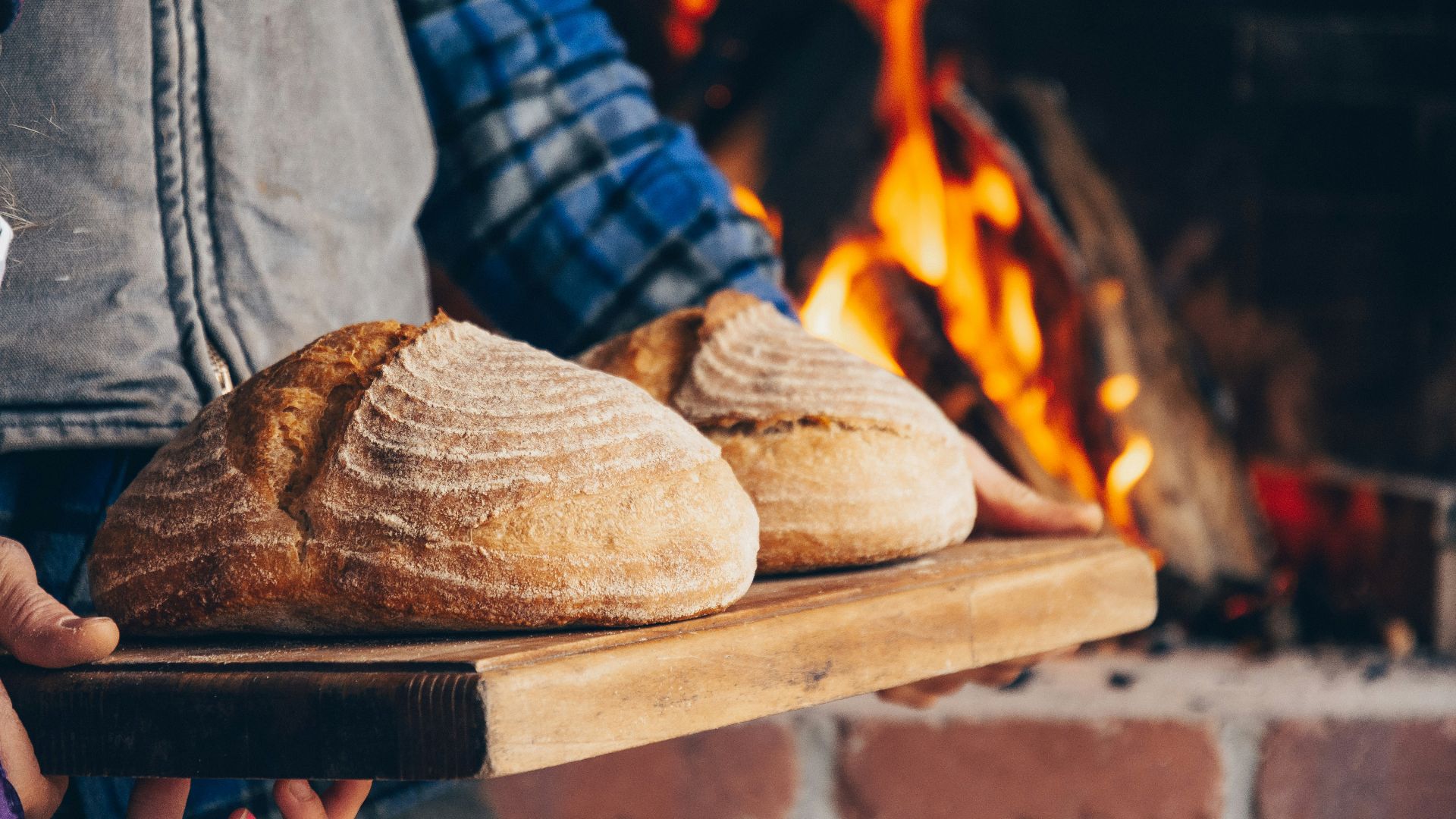
The most exciting part of the process is the baking. Sourdough requires high heat, so crank up your oven to 500 degrees Fahrenheit. For best results, bake your bread one at a time in a preheated Dutch oven. Dust the bottom of your loaf and dump it onto a peel, or a piece of cardboard lined with parchment paper. Give it deep, decisive scores on top with a razor blade and place it in the Dutch oven with the lid on for 15 to 20 minutes to give it its crust. Then take the lid off and bake for another 20 minutes (you may need to turn your oven down 20 or 30 degrees).
When it comes out of the oven, make sure to let it cool for at least an hour before cutting into it, as it continues to bake even after it's out of the oven. We know it's hard, but resisting its charms for that period will be worth it.
KEEP ON READING

The Most Popular Signature Dishes Around the World