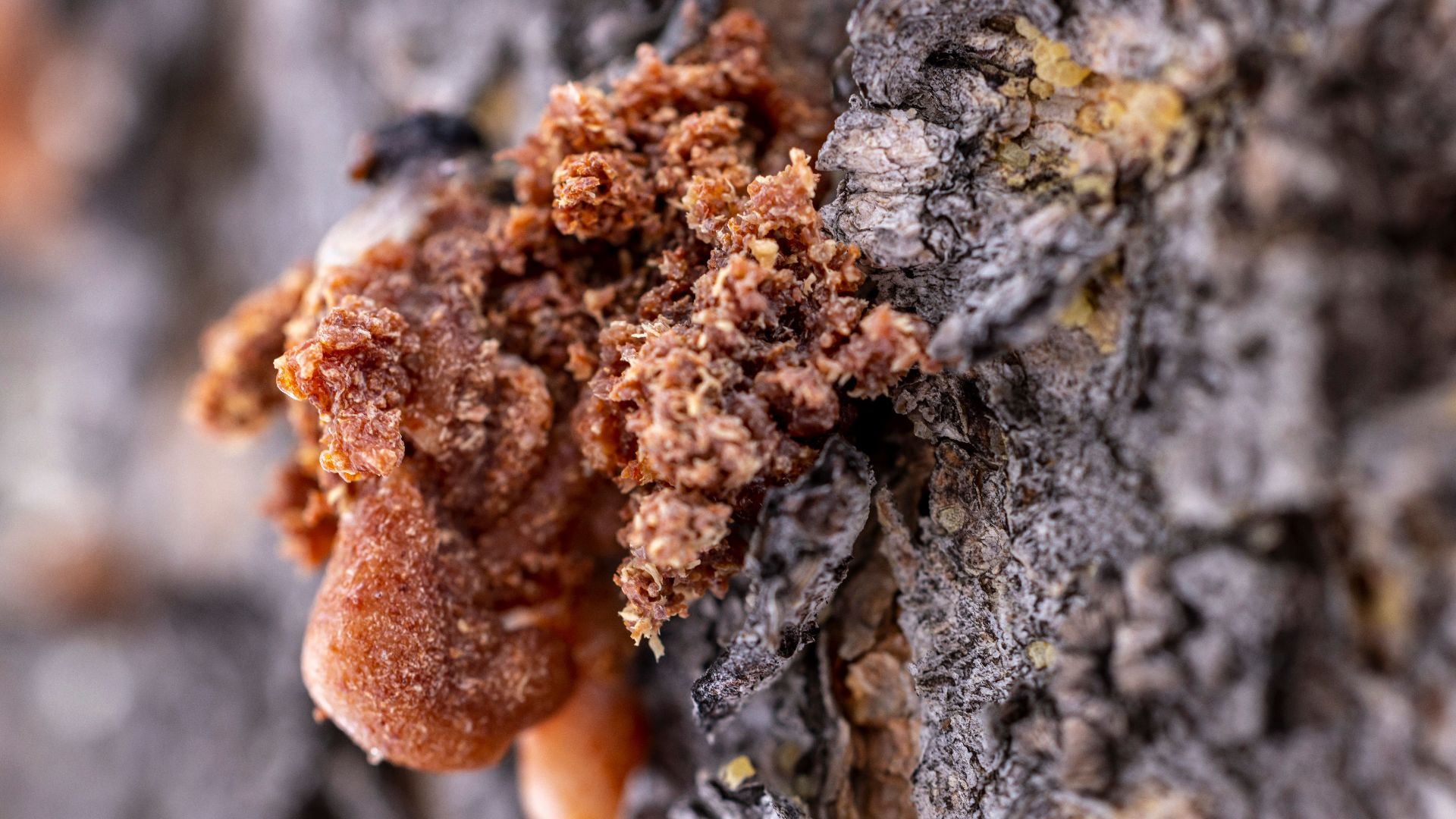
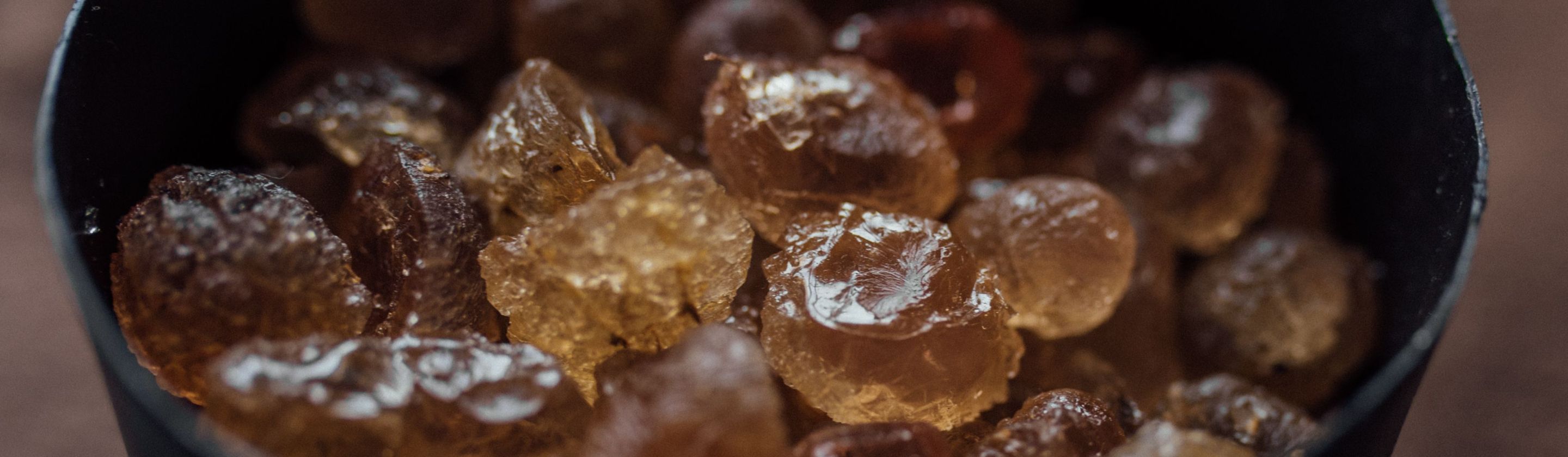
On the southern end of the Greek island of Chios, farmers spend their summers collecting hardened droplets of resin off the dirt. The drops come from Pistacia lentiscus, a scrubby evergreen that bleeds a clear sap when you cut its bark. Left in the sun, the sap sets into brittle translucent lumps that catch the light. Growers have called them the tears of Chios for centuries. Chew one and it softens, turns opaque white, and tastes of pine and cedar after an initial bitterness.
Attempts to produce Chios mastic elsewhere have struggled to match the island's results. The same shrub grows across the Mediterranean, but the cultivated trees in southern Chios produce resin in commercially useful quantities. Local soil and climate play a role, along with harvesting methods passed down through generations. The resin holds EU protected designation of origin status under the name Masticha Chiou, with production centered on 24 villages in the island's south.
Preparing The Ground
The work starts in winter, months before anything gets harvested. Growers prune the shrubs and tend the soil around them, keeping each tree low and spreading rather than tall. A mastiha tree stays productive for decades, so the pruning is a long-term argument with the plant about where it should put its energy.
By mid-June the job shifts to the ground itself. The dirt under each tree gets swept, leveled, and dusted with a layer of inert calcium carbonate until the area looks like a pale dinner plate. Growers call the step cleaning the table. Mastiha picks up every bit of grit it touches, and the white powder gives the falling drops a clean surface to land on.
Men handle the winter pruning and fertilizing, while the sweeping and leveling from mid-June onward is women's work. Older growers teach the cutting technique to younger ones directly, tree by tree, since the angle and depth of the incision cannot really be explained on paper.
Cutting The Tree
The harvest itself is called kentos and runs from early July to around the start of October. A grower scores the bark and thicker branches with a small iron tool, making a handful of shallow cuts before moving on.
The cutting happens early in the morning and no more than about once a week per tree, because a shrub pushed harder than that stops producing.
Resin seeps out of each wound over the following days. Some of it clings to the bark in beads and the rest drips down onto the prepared ground, where the first pieces take roughly two to three weeks to harden fully. The size of a tear and the air temperature decide how brittle it ends up, so a hot September gives a different product than a mild one.
Collection is done by hand and takes longer than the cutting ever does. Growers scrape the residue off the bark, sweep up what has fallen, and run everything through sieves to separate resin from soil and leaf litter. The tears are washed, then sorted over the winter by size from coarse pieces down to powder. Grade depends on how little foreign matter survives the cleaning, and the price follows it.
Why Anyone Bothers
The resin was worth a great deal for a long stretch of history. Trade in it became an imperial monopoly under the Byzantines, and under Ottoman rule the sultan claimed the best of the crop, with theft punishable by death.
The mastic villages were built without doors at street level and entered by ladder. Accounts of the 1822 massacre on Chios record that the Mastichochoria were spared so the supply would keep moving.
Growers organized themselves into a cooperative in 1938, and it still controls collection, processing, and export for the whole island. A grower delivers a cleaned harvest and knows it will sell, which is unusual security for a crop this labor-intensive. In 2014 the knowledge behind the cultivation was added to UNESCO's list of intangible cultural heritage, partly on the grounds that the mutual-aid networks around the harvest hold the villages together.
Mastic has been used medicinally for centuries, although the clinical evidence remains limited. In 2016, the European Medicines Agency's herbal committee recognized its traditional use for mild digestive complaints and minor skin inflammation. The decision rested on traditional use rather than strong clinical trial evidence. It passed with 23 of 27 votes, though Austria and Denmark questioned whether even that history was adequately documented. Most of the resin goes into food, including Greek Easter bread called tsoureki, locally made liqueurs, chewing gum, and a stretchy ice cream known as kaimaki.
KEEP ON READING

How Greek Farmers Harvest Edible Crystals From Trees