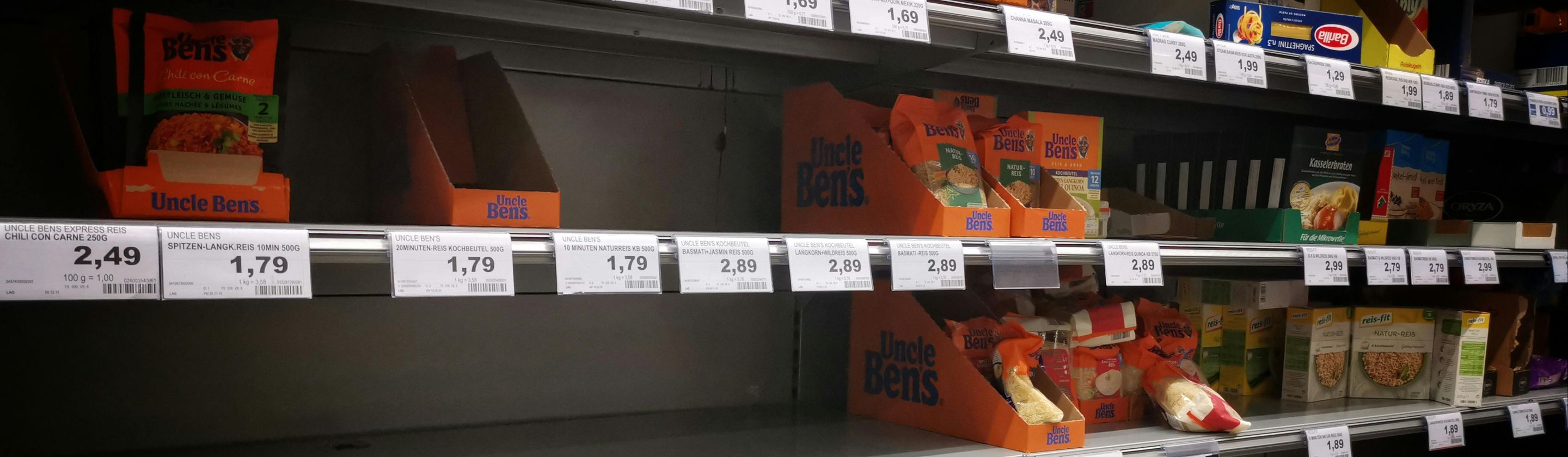
When a food shortage hits the news cycle, the coverage focuses on sticker shock. Eggs cost four dollars each. Olive oil is now a luxury item. Cocoa futures have broken records. The story gets framed as a pricing problem, a supply chain problem, a problem that will resolve itself once conditions normalize and the relevant commodity finds its way back to reasonable territory.
What gets less attention is what happens to the food in the meantime, and often, long after. Shortages don't just squeeze household budgets. They give manufacturers, processors, and distributors a practical reason to quietly reformulate, downsize, or substitute, and once those changes are made, they have a tendency to stay made. The product that comes out on the other side of a shortage is frequently not the same product that went in.
When Supply Drops, the Recipe Changes
The cocoa crisis that peaked in 2023 and 2024 is a recent and clear example of how this works. Ghana and Ivory Coast, which together produce roughly 60 percent of the world's cocoa supply, were hit simultaneously by drought and the spread of cocoa swollen shoot virus, driving futures prices to levels not seen in decades. Manufacturers faced a choice between absorbing those costs, passing them directly to consumers, or quietly reducing the amount of cocoa in their products.
Many chose the third option. Chocolate makers began shifting formulations, increasing sugar content, incorporating more vegetable fat, and reducing the cocoa solids that define the flavor and quality most consumers associate with the product. These changes don't require a press release or a label redesign, at least not immediately. A product can drift significantly before it crosses the legal thresholds that trigger relabeling.
Those thresholds matter. Under U.S. Food and Drug Administration standards, a product must contain minimum percentages of chocolate liquor and cocoa butter to qualify for terms like milk chocolate or dark chocolate. Products that fall below those thresholds get reclassified with labeling that most shoppers don't scrutinize. The shortage created the pressure, and the regulatory framework quietly absorbed the outcome.
Shrinkflation Rewrites the Definition of a Serving
Reformulation is one mechanism. Shrinkflation is another, and it operates on similar logic. When input costs rise and companies want to avoid the consumer resistance that comes with visible price increases, the more palatable move is to reduce the amount of product in the same-sized package. The price stays the same or rises modestly. The amount you're getting drops.
Edgar Dworsky, a consumer advocate who has tracked product size reductions through his Consumer World website for decades, has documented hundreds of examples across snack foods, cereals, beverages, and household goods. The UK's Office for National Statistics published research in 2019 showing shrinkflation across British grocery categories, particularly in grains and confectionery, with more reductions than increases amid rising import costs.
What shrinkflation actually does, beyond the budget arithmetic, is redefine the product. A bag of chips that weighed 16 ounces and now weighs 13.5 ounces is a different bag of chips. A yogurt container redesigned to hold 5.3 ounces instead of 6 has changed the implicit contract with the consumer. We tend to evaluate these changes purely as pricing maneuvers, which they are, but they're also quiet redefinitions of what a product is and what a normal portion of it looks like.
The Substitute Becomes the Standard
The more durable consequence of food shortages is that they permanently reshape what we consider normal. Margarine didn't disappear when butter became available again after World War II rationing. It had already colonized kitchens, recipe books, and taste preferences, and it held a significant market share for decades afterward. Wartime necessity created a product category that outlasted the necessity itself.
The same dynamic plays out at a smaller scale with food-grade palm oil, which surged as a replacement for partially hydrogenated oils after trans fat regulations took effect in the 2010s, and which became dominant partly because it was cheap and available during periods when other fats were constrained. The Food and Agriculture Organization of the United Nations has documented how supply shocks, such as those from the 2022 Ukraine conflict, prompted shifts in global food supply chains—including alternative sourcing and formulations—that endure beyond immediate crises, complicating recovery efforts.
This matters because the food system you're navigating now reflects dozens of previous shortage responses layered on top of each other. The flavors, textures, and portion sizes that feel standard were often established during moments of scarcity, when cost pressures pushed manufacturers toward compromises that nobody officially announced. Shortages don't just empty shelves temporarily. They author the version of food that fills those shelves when everything is supposedly back to normal.
KEEP ON READING

20 Dishes That Built Modern American Cuisine