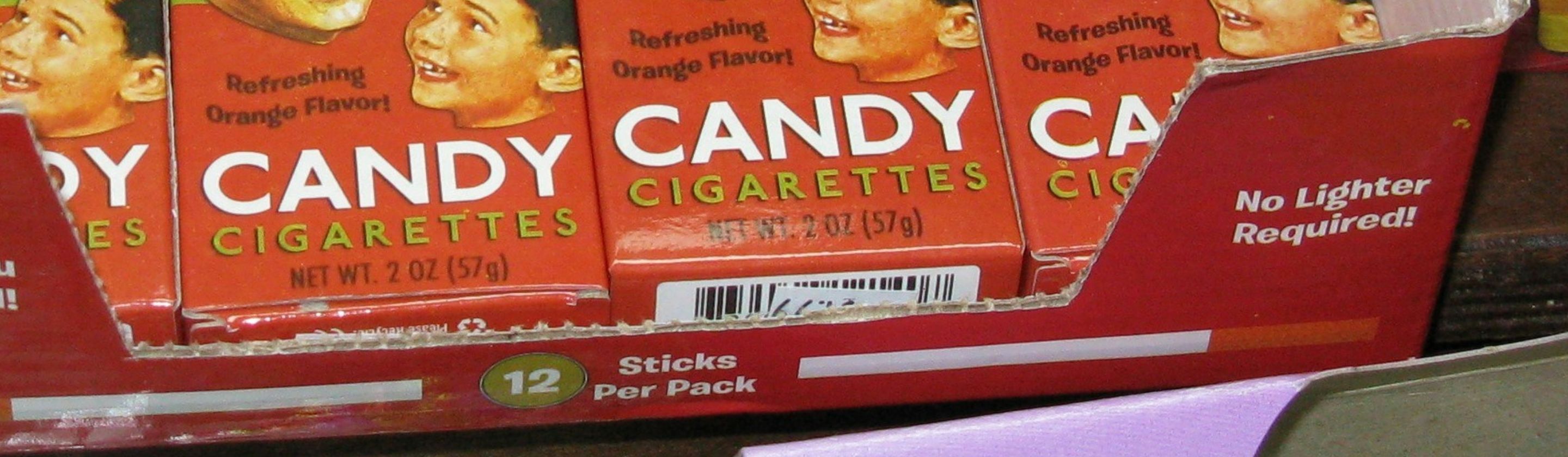
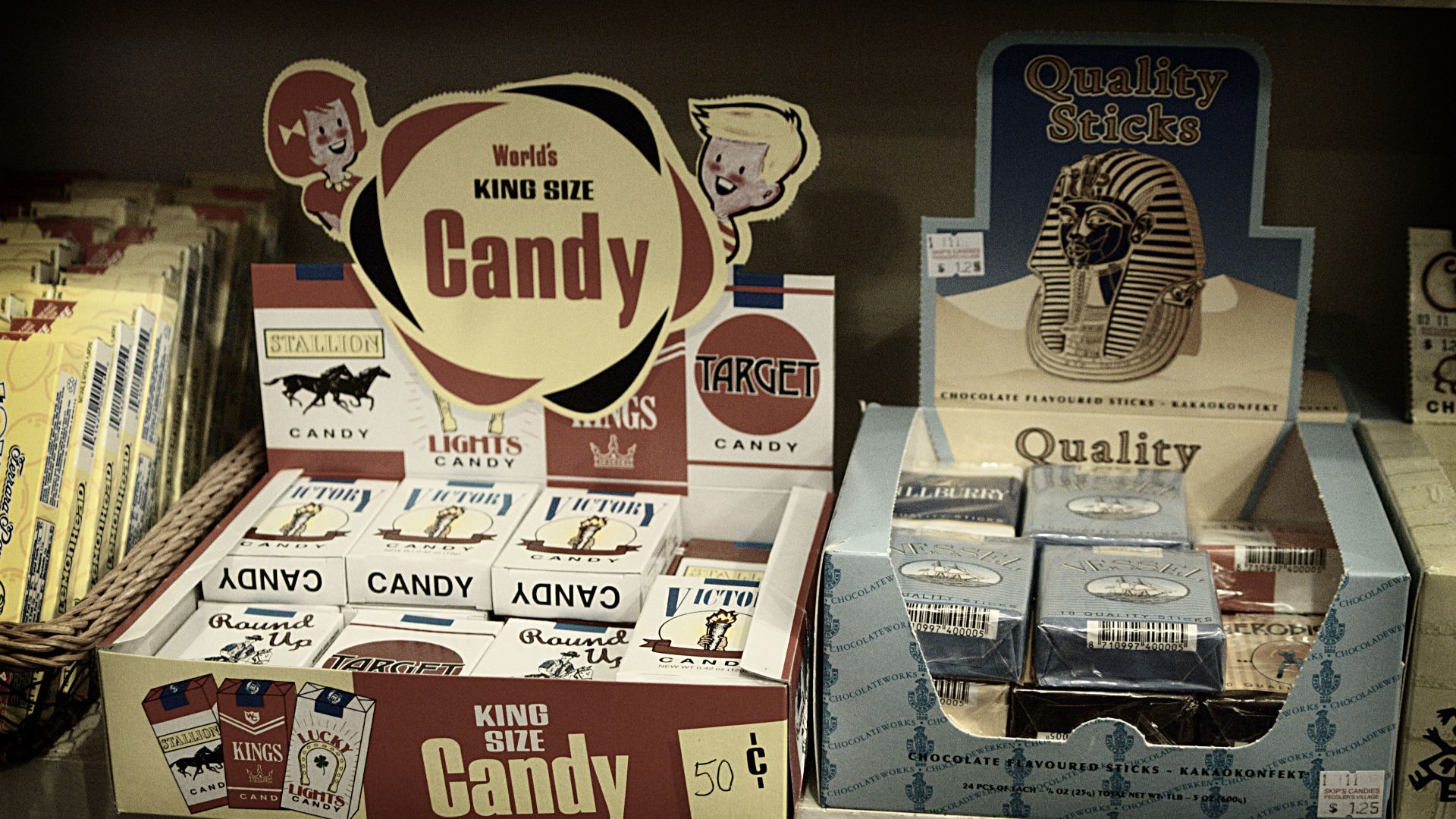
Remember those chalky white sticks wrapped in paper that looked exactly like cigarettes? For kids in the '70s and '80s, candy cigarettes were the ultimate playground accessory. You could strut around pretending to be James Dean or your chain-smoking uncle, complete with realistic-looking smoke—achieved by blowing out a puff of powdered sugar in cold weather.
But while children were living out their mini Marlboro Man fantasies, parents, health advocates, and legislators were losing their minds. For decades, these treats became one of the most controversial confections in American history, sparking fierce debates about marketing to children and triggering ban attempts in state after state. This item that encouraged kids to mimic one of the deadliest habits known to humanity somehow managed to survive wave after wave of legislative attacks.
A History Written In Sugar And Controversy
Candy cigarettes first appeared in American stores around 1915, initially made from chocolate before switching to the chalky sugar sticks we remember. They were wildly popular almost immediately, with manufacturers creating packaging that directly mimicked real cigarette brands. We're talking about nearly identical boxes featuring names like "Lucky Lights" instead of Lucky Strike, complete with similar color schemes and fonts.
The candy came in two main varieties: the chalky sugar sticks and bubble gum wrapped in paper. Some versions even included a red-colored tip to simulate a lit cigarette. By the 1950s and '60s, candy cigarettes had become a staple of American childhood, sold at corner stores, five-and-dimes, and movie theater concession stands across the country.
The trouble really started heating up in the 1960s when medical evidence about smoking's dangers became undeniable. Health advocates began arguing that candy cigarettes normalized smoking for children, essentially serving as gateway products that made the real thing seem familiar and acceptable. By 1970, President Nixon signed legislation banning cigarette advertising on television and radio, but these treats remained untouched.
The Battle That Never Quite Ended
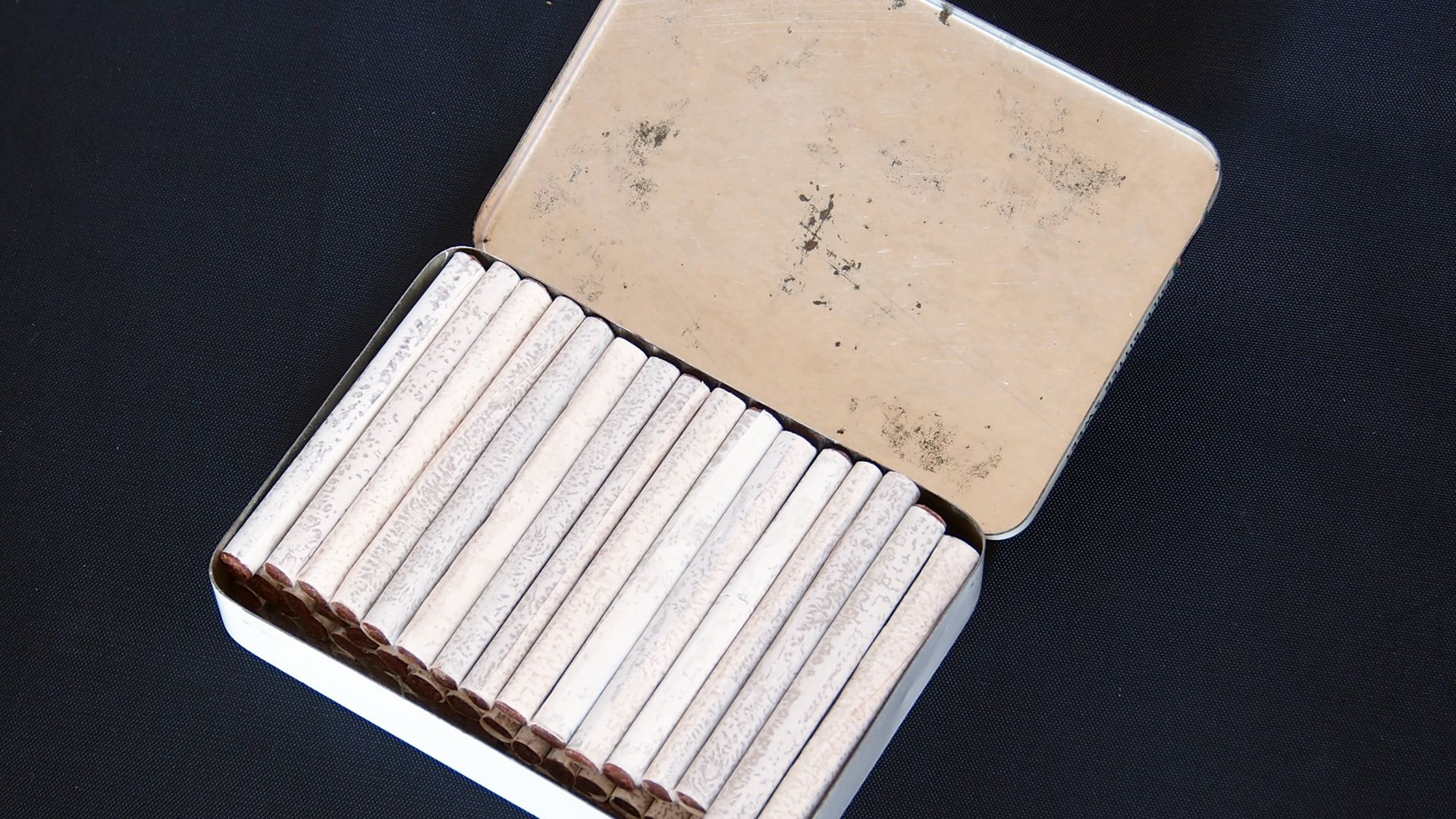
North Dakota became the first state to ban candy cigarettes in 1953, but enforcement proved nearly impossible, and the law was eventually repealed. Throughout the 1980s and '90s, dozens of states introduced bills attempting to ban or restrict candy cigarette sales. Minnesota, Wisconsin, and several other states debated legislation repeatedly. Some cities, like St. Paul, Minnesota, and Syracuse, New York, passed local ordinances. But manufacturers fought back hard, arguing these were simply candy products and their packaging fell under free speech protections.
The surprising twist? These sweets never fully disappeared. In 2009, federal legislation finally banned flavored cigarettes and required candy cigarettes to rebrand. Many manufacturers simply changed the name to "candy sticks" and slightly modified packaging to remove explicit cigarette branding.
Today, you can still buy them online and in certain stores. They've become nostalgic novelties rather than mainstream treats, but they survived America's decades-long war against them—proof of how difficult it actually is to ban candy, even when everyone agrees it's probably a terrible idea.
KEEP ON READING
The Most Popular Chocolate Bars in the USA
The Most Popular Candies in the USA

20 Annoying Foods That Get Stuck In Your Teeth