Turns Out They Had Pizza In Ancient Rome, But What They Put On It Will Surprise You
Turns Out They Had Pizza In Ancient Rome, But What They Put On It Will Surprise You

When you think of the ultimate comfort food, a hot, cheesy pizza likely tops your list of favorites. However, if you could hop into a time machine and head back to the glory days of the Roman Empire, you'd find something that looks strikingly familiar yet tastes entirely different. Recent archaeological finds, including a stunning fresco discovered in Pompeii, show that the ancestors of modern Italians were already enjoying a flatbread that served as a precursor to the Margherita we love today. It’s fascinating to realize that the basic concept of a doughy base topped with savory ingredients has been a staple of the Mediterranean diet for over two thousand years.
The big twist is that these ancient "pizzas" were missing two of the most critical components considered non-negotiable in the twenty-first century. You won't find a drop of tomato sauce on a Roman flatbread because tomatoes are native to the Americas and didn't arrive in Europe until the 1500s. Furthermore, the creamy mozzarella placed on modern crusts wasn't yet part of the standard culinary toolkit for an average Roman citizen. Instead of the classic red-and-white combo, these diners were experimenting with a wide array of Mediterranean flavors that would probably leave a modern delivery driver scratching their head in total confusion.
The Missing Ingredients and the Roman Base
Let’s start with the base. Ancient Romans ate what was called panis focacius, the predecessor to modern focaccia bread. Often made with emmer wheat or barley, this bread was most commonly prepared using a dense, unleavened dough that was cooked atop the hot stones of a communal bread oven. This flatbread could be purchased from a street vendor while running errands in Rome or Herculaneum. It was simple and easily transportable, making it a popular lunch among Roman laborers. With no yeast to help the dough rise, sauces were an important textural contrast to an otherwise crunchier base.
Tomatoes had yet to be introduced to Europe, so olive oil was most commonly used as a base layer to prevent the bread from drying out. It would be topped with fine oil and then rubbed with garlic or fresh herbs grown locally, perhaps oregano or rosemary. No saucy anchovies or tomatoes would be found on this pizza, but the richness of the olive oil and garlic combined with the charred taste of wood-fired grain created a satisfyingly simple meal.
Romans also didn’t have cow’s milk mozzarella to top their pizza crusts. Instead, they sprinkled goat’s milk cheeses, such as varieties similar to feta or hardened cheeses comparable to modern-day pecorino, on top of their dough once it was out of the oven. These cheeses were usually crumbled over the still-hot bread, which would slightly melt the exterior and release the cheese’s aroma. Each bite would be hearty and tangy, packing more of a punch than a typical slice of cheese.
A Topping Palette of Salt and Sea
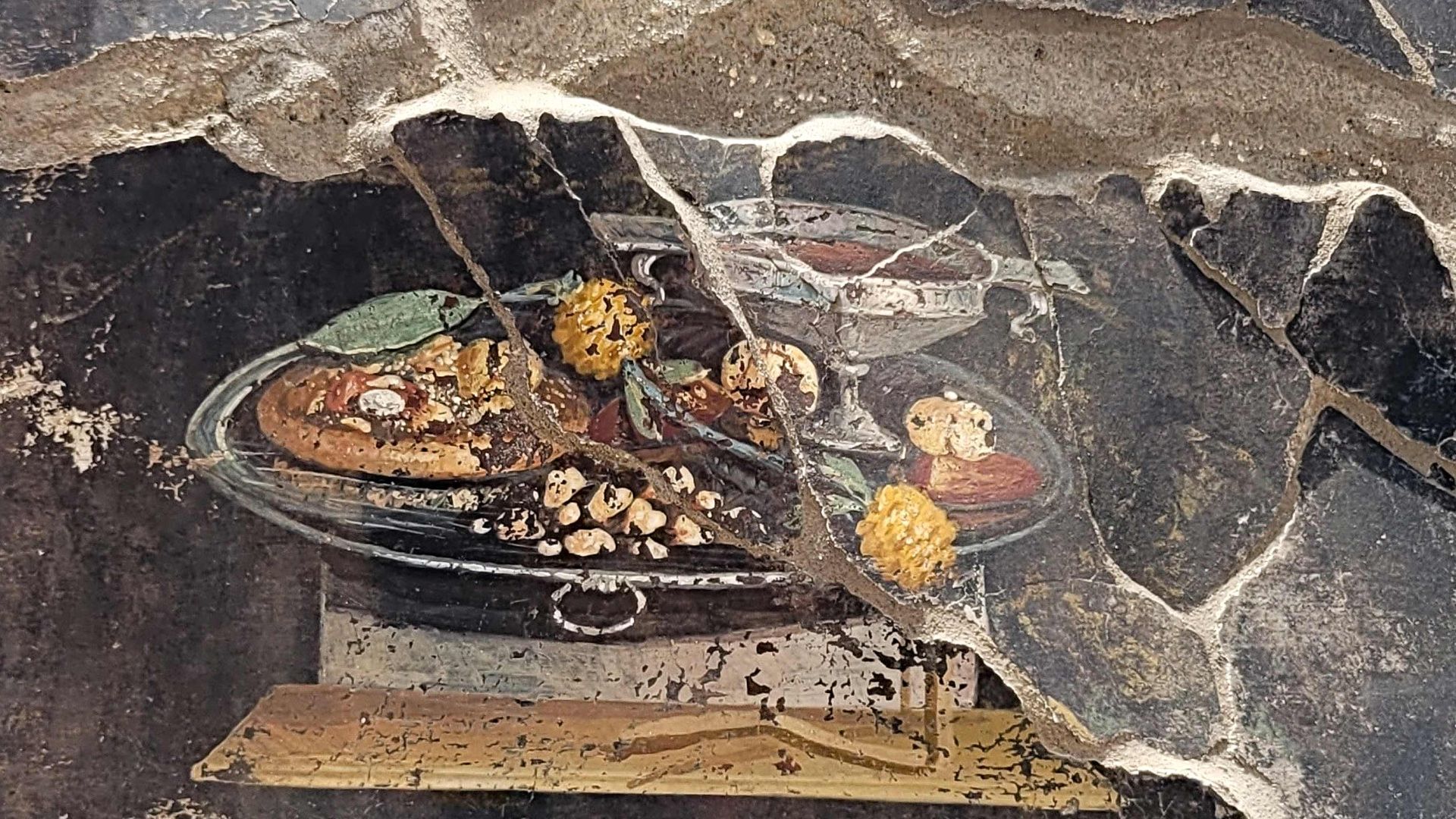 Unknown ancient Roman artist on Wikimedia
One of the most surprising elements on an ancient Roman pizza is the heavy use of a fermented fish sauce called garum. This liquid was essentially the ketchup of the ancient world, and Romans poured it on almost everything to add a salty, umami kick to their meals. It was made by fermenting fish innards with salt in the sun for months, resulting in a potent dressing that would likely overwhelm a modern palate. Sprinkling this over a herb-crusted flatbread created a complex flavor that balanced the sweetness of the grain with a deep, oceanic saltiness.
Beyond the fish sauce, Romans loved to top their bread with various preserved vegetables and fruits available throughout the changing seasons. A spread of salted olives, capers, and even pickled leeks might be arranged in decorative patterns across the surface of the dough. Mushrooms were also a highly prized topping, often foraged from nearby forests and sautéed in wine before being placed on the crust. These ingredients provided a variety of textures, from the crunch of a pickled vegetable to the earthy softness of a well-cooked mushroom, ensuring every bite was interesting.
Nuts and seeds played a much larger role in Roman pizza-making than they do in the current culinary landscape. It wasn't uncommon to see crushed pine nuts or poppy seeds sprinkled over the olive oil base to add a nutty crunch and a boost of healthy fats. A version topped with chopped walnuts or chestnuts might also be encountered, especially in northern regions where these trees were more abundant. This focus on crunchy, shelf-stable toppings highlights how ancient pizza was designed to be a durable, high-energy food for travelers and soldiers on the move.
Perhaps the most jarring addition to a Roman flatbread for a modern diner would be the inclusion of sweet ingredients alongside savory ones. The Romans didn't view "sweet and savory" as separate categories, often mixing honey with salty cheese on the same piece of bread. A drizzle of dark, thick honey would frequently be poured over a bed of bitter greens or sharp goat cheese to create a sophisticated balance of flavors. This combination was considered a gourmet treat and was often served at wealthy banquets as an appetizer to whet guests' appetites.
KEEP ON READING