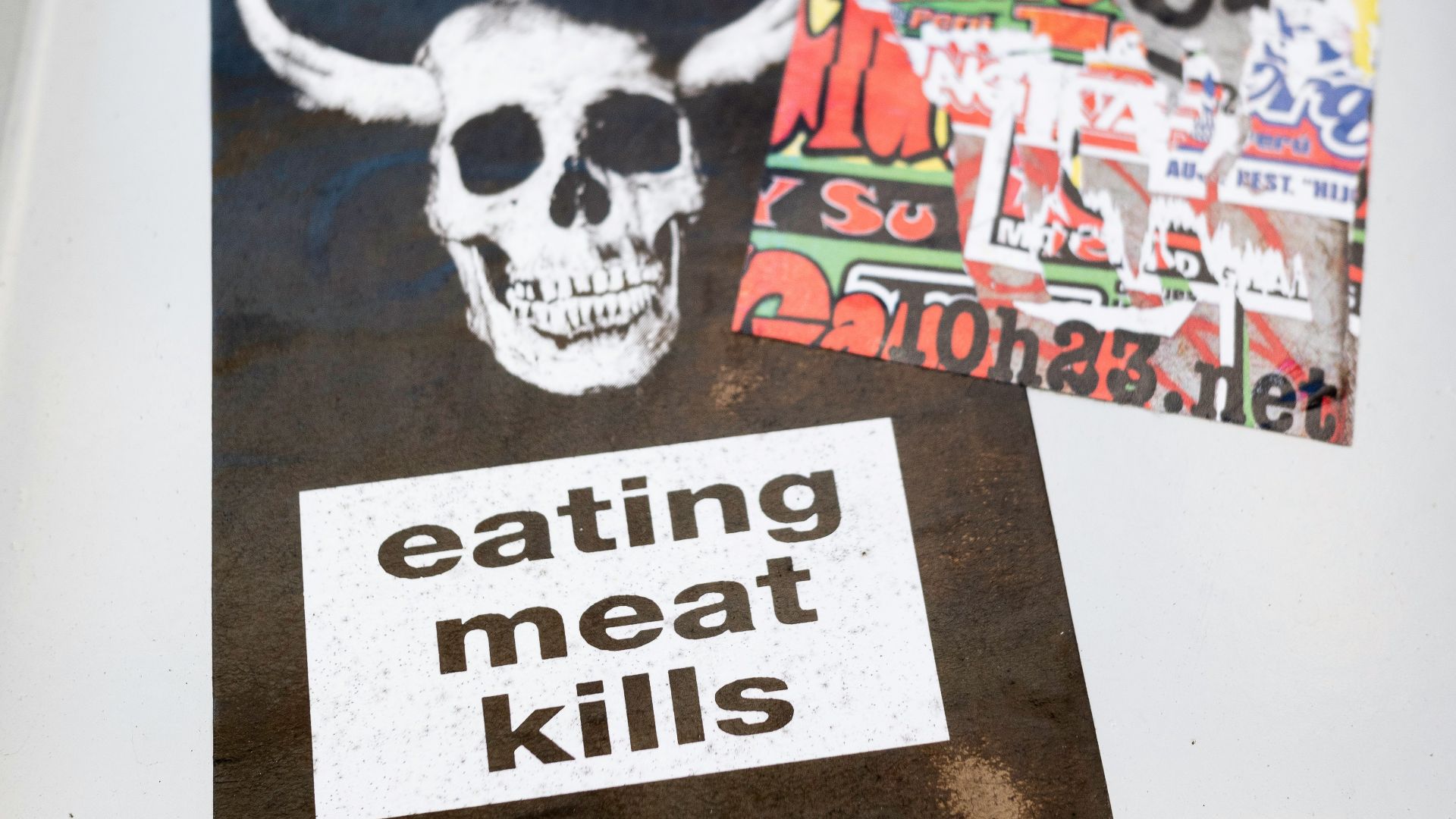
Eating used to be one of the few remaining areas of life that could stay relatively personal. What you put on your plate was shaped by where you grew up, what you could afford, what your body needed, and what you happened to enjoy. That's mostly over now. Food has become one of the primary languages through which we perform identity and broadcast values, and somewhere between the rise of clean eating and the oat milk wars, having a diet stopped being a practical matter and became an ethical one.
The strange part is how normalized this has become. We now expect that any food with cultural momentum will arrive pre-loaded with a framework for why choosing it makes you a better person, or why failing to choose it makes you a worse one. The moralization of eating isn't a fringe phenomenon. It's the water we swim in, and most of us are too busy arguing about seed oils to notice.
How Wellness Turned Eating Into a Character Test
The clean eating movement of the early 2010s was probably the clearest turning point. What started as loosely defined dietary advice about whole foods and reduced processing gradually developed the architecture of a belief system, complete with its own orthodoxies, heretics, and conversion narratives. The language was health-focused on the surface, but the underlying structure was unmistakably moral. Certain foods became pure, others became toxic, and the person who ate correctly was understood to be exercising a form of discipline and virtue that the uninformed or undisciplined were failing to access.
Researchers have tracked what happens when this framing takes hold. A 2017 study found that exposure to clean eating messaging was significantly associated with orthorexic tendencies, an obsessive preoccupation with eating correctly that is recognized as a form of disordered eating. The harm isn't abstract. When food choices get moralized, the psychological stakes of eating anything outside the approved category become genuinely distorted, and the line between self-care and self-punishment gets very thin very fast.
What made clean eating particularly effective as a moral framework was its flexibility. Almost any dietary restriction could be absorbed into its logic and given a virtuous coating. Gluten-free, dairy-free, low-carb, raw vegan, and eventually carnivore diets all took turns wrapping themselves in the language of purity, optimization, and superior self-knowledge. The specific rules kept changing, but the underlying message stayed constant: what you eat reveals what kind of person you are.
The Environmental Pivot and Its Complications
The moral architecture of food trends got a significant structural upgrade when environmental arguments became central to dietary discourse. A 2018 Oxford-led study by Joseph Poore, published in Science, found that food production is responsible for about a quarter of global greenhouse gas emissions, and it also showed that animal agriculture has a much larger environmental footprint than plant-based food production. These are real numbers worth taking seriously, and dietary choices do connect to them in ways that matter.
The problem is what happens when genuinely complex systems-level issues get collapsed into individual consumer morality. Eating a burger becomes not a personal choice but an ethical failure, and the person making it becomes responsible for outcomes that are primarily driven by industrial policy, agricultural subsidies, and supply chain infrastructure that individuals have very little direct power over. The focus on personal dietary virtue is, at minimum, a strange place to put the weight of that problem.
This doesn't mean individual choices are meaningless. They aren't. The issue is the moralizing tone that frames every food decision as a referendum on your environmental commitments, which tends to produce defensiveness and tribalism rather than the thoughtful engagement it claims to want. People who feel lectured rarely change their behavior. They change the people they're willing to eat with.
What Gets Lost When Food Becomes Ideology
Food has always carried cultural meaning, but the specific meaning it carries now, as a signal of political and ethical alignment, is doing some damage to things that are harder to measure. Shared meals have historically been one of the primary mechanisms through which different kinds of people stay connected to each other. Sociologist Robin Dunbar, whose research on social bonding has been widely published, has documented the role of communal eating in maintaining relationships and social cohesion. When every meal becomes a potential site of ideological friction, the casual sharing that used to happen across difference gets harder to sustain.
There's also something worth naming about class. The foods that tend to receive the most moral endorsement, organic produce, ethically sourced proteins, specialty plant-based products, are consistently the most expensive options available. The implicit suggestion that eating correctly is both a moral responsibility and an accessible one papers over significant economic reality. A 2021 report from the USDA found that food insecurity affected roughly 10.2 percent of American households, a fact that sits uncomfortably alongside dietary discourse that treats premium grocery choices as a baseline ethical obligation.
We've attached so much meaning to food that eating together, the simple act of sharing a table without an agenda, has become quietly harder. Every meal comes pre-argued. The point was never to stop caring about what we eat or where it comes from. The point is that a lecture was never what anyone was hungry for.
KEEP ON READING
The 5 Most Consumed Foods in the Entire World