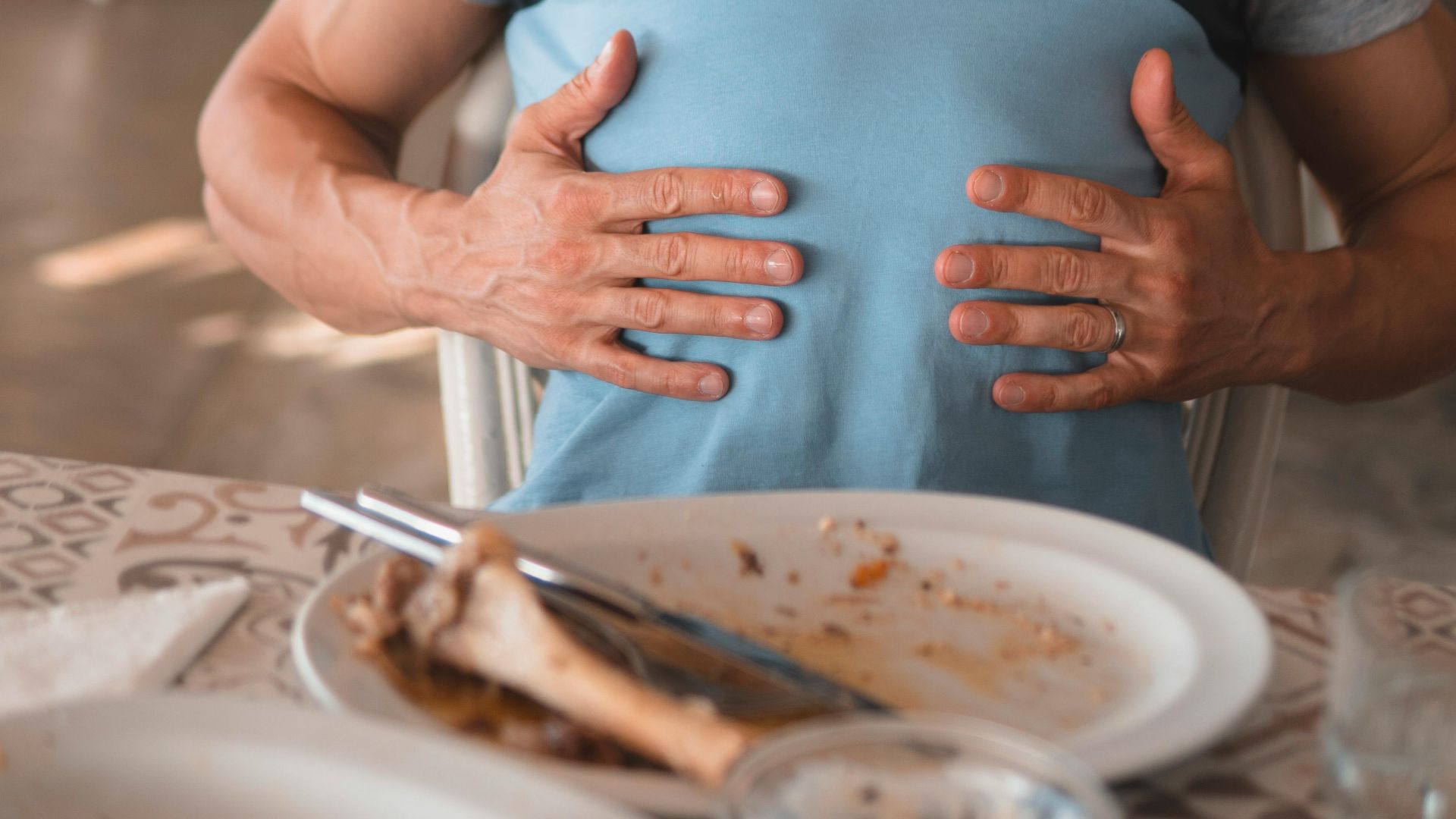
Does your stomach always feel like a balloon after eating? Do you need to unbutton your jeans to let yourself breathe? Don't worry—you're not alone. Having a food baby is common when you've just finished a big meal; in fact, bloating is one of the most common digestive issues people deal with. There's usually a clear reason behind it, from simply eating too fast to shifting hormones, so if you're wondering why your stomach constantly feels tight and full, read on.
You're Scarfing Everything Down
Sometimes, you just can't help it. Maybe you're being served your favorite meal, or it's your first meal of the day, and because you're feeling ravenous, you end up finishing everything on your plate in seconds. You're not pausing between bites, and you're not waiting until your stomach has a chance to tell you it's full. You're just focused on getting everything down.
When you scarf down food, though, you introduce a ton of air into your digestive system without realizing it. This extra air can collect and get trapped inside your stomach, which can, in turn, cause bloating. This is a condition known as aerophagia, and it can result in great discomfort after eating as gas builds up and needs to be expelled, such as through belching. Eating too fast isn't the only way aerophagia happens—you may also swallow more air if you talk while eating.
When you eat too quickly, it also gives your stomach no time to catch up and send cues to your brain that it's full. This may cause you to accidentally overeat, which can make you feel bloated.
You've Got Gas

Aerophagia is just one way that extra air and gas can build up in your gut. Another common reason why you might experience excess gas? You're eating too many foods that naturally introduce gas to your digestive tract, like sparkling water, soda, or certain vegetables, such as broccoli, lentils, beans, and onions. As these foods break down, they fill your stomach with gas, making you bloated.
Food intolerances and allergies can cause gas build-up, too. If you're lactose intolerant or sensitive to gluten, you may experience bloating or other unpleasant digestive issues shortly after a meal containing foods your gut can't break down. That's why it's important to track your eating patterns (and what you eat) if you frequently experience discomfort with certain foods, and to get tested for allergies so you can cut them out of your diet.
It's Hormonal
Bloating can also be caused by fluctuating hormones. For those who experience menstruation, depending on which stage of the cycle you're in, you might feel that your stomach is fuller and tighter. Bloating is most commonly felt in the luteal phase, in the days leading up to their period and on the first few days of bleeding. This is because the shift in hormones can cause you to retain more water and salt.
But there can be many other reasons you're constantly bloated. If none of the ones we've covered in this article seem to fit your experience, it's important to check in with your doctor to make sure there's not a more serious cause, especially if your symptoms don't go away or are accompanied by other symptoms, such as vomiting and fever.