Orange Juice Is Healthier When You Choose The Ones With Pulp
You're in the middle of the grocery store aisle, staring at rows of orange juice cartons, and you've got a decision to make. On one side, there's the crystal-clear, smooth-as-silk version that pours like liquid sunshine. On the other hand, there's the chunky stuff with those little bits floating around that get stuck in your teeth. If you're like most people, you've probably been choosing the pulp-free option your entire life, maybe even gagging a little at the thought of all that texture.
But here's something worth knowing: while the difference between store-bought pulpy and non-pulpy juice is smaller than you might think, choosing pulp does give you a slight nutritional edge—and scientists are discovering that adding even more pulp back into juice could make it significantly healthier.
The Pulp Difference Is Real, But Small
Let's be honest about what you're actually getting. Commercial orange juice with pulp contains only about 2–3% pulp by weight, compared to 33% in freshly squeezed oranges. That's why a serving of orange juice with pulp contains between 0.5 and 1 gram of fiber—not much compared to a whole orange's 3–4 grams, but it's better than the nearly zero fiber in pulp-free versions.
This small amount of fiber still matters for your body. Fiber slows down sugar absorption, helping prevent those dramatic blood sugar spikes that leave you feeling energized one moment and crashed the next. Most Americans consume only about 15 grams of fiber daily when the recommendation is 25–34 grams, so even half a gram counts toward closing that gap, according to Goodnature.
Where Pulp Really Shines: Flavonoids
Here's where pulp gets interesting. Orange pulp is made from the cellular tissues of the fruit's segments—the same parts that contain most of the orange's flavonoids, particularly hesperidin. While a 2019 study found no significant difference in hesperidin between commercial pulpy and non-pulpy juices from the same brands, the pulp does contain higher total phenolic compounds overall.
These plant compounds don't show up on nutrition labels, but research suggests they support your body's natural antioxidant systems. Think of flavonoids as your body's cleanup crew—they help reduce inflammation and support cardiovascular health, working quietly in the background even if you can't directly measure their impact.
The Future: More Pulp, More Benefits
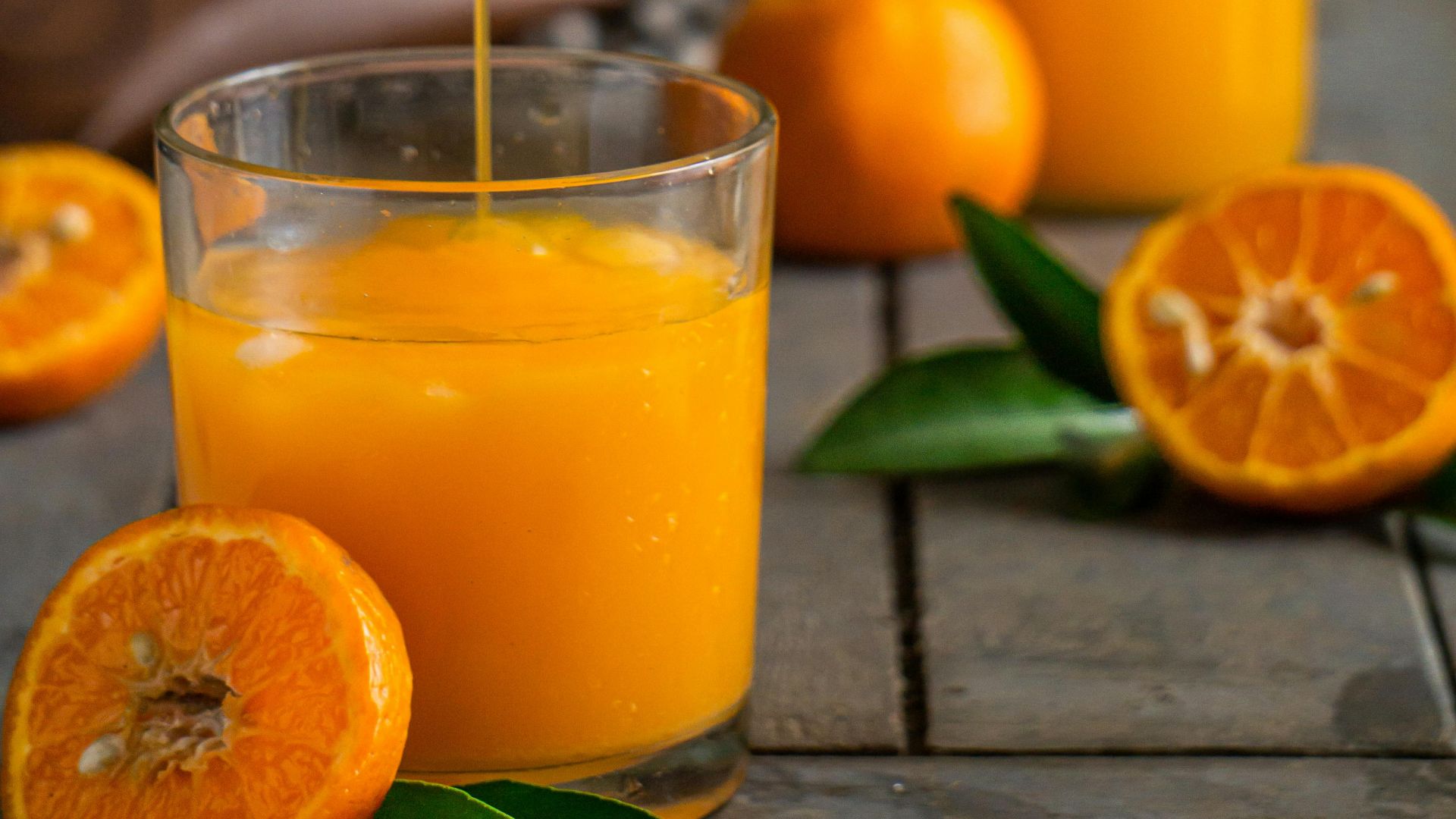
Scientists aren't satisfied with the tiny amount of pulp in commercial juice. Researchers at Illinois Institute of Technology tested orange juice with added orange pomace—finely ground segments, core, and pulp—and found participants experienced a 6.2 percent decrease in their peak blood sugar levels, comparable to eating a whole orange. This pomace-enriched juice isn't available in stores yet, but it shows what's possible when you put more of the whole fruit back into the glass.
Until that technology hits shelves, choosing pulpy juice over smooth is a small step in the right direction; you're getting closer to the whole fruit, even if you're not quite there yet.
KEEP ON READING


20 Food-Related Art Projects