The Hurricane Named Max
My name is James, and I've been teaching seventh grade for nine years. I've seen it all—the shy kids who blossom mid-year, the class clowns who secretly ace every test, and the troublemakers who just need someone to believe in them. But nothing in my teaching career prepared me for the absolute hurricane that was Max. From day one, this kid was a perfect storm of disruption. Picture this: I'm explaining the Civil War, and suddenly Max is loudly theorizing about how Abraham Lincoln was secretly a vampire hunter. I'm demonstrating algebraic equations, and he's making paper airplanes with the worksheet. During silent reading, the only thing silent about Max was... well, nothing. The kid had zero volume control and an opinion on EVERYTHING. His sarcasm game was next-level too—the kind that makes other students laugh while making you question your career choices. Every lesson plan I carefully crafted would inevitably crash against the shore of Max's attention-seeking behavior. Other teachers would give me that knowing look in the hallway when I mentioned his name. "Oh, you got Max this year? Good luck with that one." Little did I know that this human tornado would end up teaching me one of the most important lessons of my career.
 Image by RM AI
First Day Disaster
I'll never forget Max's first day in my classroom. He sauntered in fifteen minutes late, backpack unzipped with papers spilling out like confetti. "Sorry I'm late," he announced to the entire class, "but your directions to this room were super confusing." I hadn't given him any directions. Before I could even finish introducing myself, Max had already interrupted three times with "actually" statements correcting my pronunciation of my own name. By 10 AM, he'd managed to make three different students cry—one because he loudly critiqued her drawing, another because he "accidentally" knocked over his water bottle onto her new shoes, and the third simply because he wouldn't stop humming the Jaws theme song whenever the poor kid tried to speak. During our first group activity, Max decided the instructions were "optional guidelines" and convinced his table to build a paper airplane launcher instead. When I confiscated his phone after catching him texting under his desk, he informed me that I was violating his "constitutional rights" and that his dad "knows people in the school board." As the final bell rang that day, I collapsed into my chair, exhausted, wondering if it was too late to switch careers. Little did I know, Max's first day disaster was just the opening act of what would become the most challenging—and ultimately rewarding—school year of my career.
 Image by RM AI
Conspiracy Theories and Video Games
I thought I'd seen it all until our ancient civilizations lesson. I was explaining the engineering marvel of the pyramids when Max's hand shot up. Before I could even acknowledge him, he was already standing. "Actually, Mr. Fry, the pyramids were built by aliens who are still monitoring us through our Xbox and PlayStation consoles." The class erupted in laughter, but Max wasn't joking. He launched into a ten-minute conspiracy theory lecture, complete with wild hand gestures and absolute conviction. "Fortnite isn't just a game," he announced dramatically. "It's actually a government training program to identify potential soldiers!" I tried redirecting him three times, but each attempt only fueled his enthusiasm. "I have RESEARCH!" he shouted when I suggested we return to actual history. He pulled out a crumpled paper covered in screenshots from questionable websites. The more I tried to regain control, the louder he got, until finally I had to send him to the hallway. As he left, he whispered to the class, "They don't want you to know the truth." That evening, I added this incident to my growing documentation file, wondering what his parents would say if they knew their son was disrupting an entire class with theories he'd clearly found in the darker corners of YouTube. Little did I know I'd soon find out exactly what they thought—and it would leave me completely speechless.
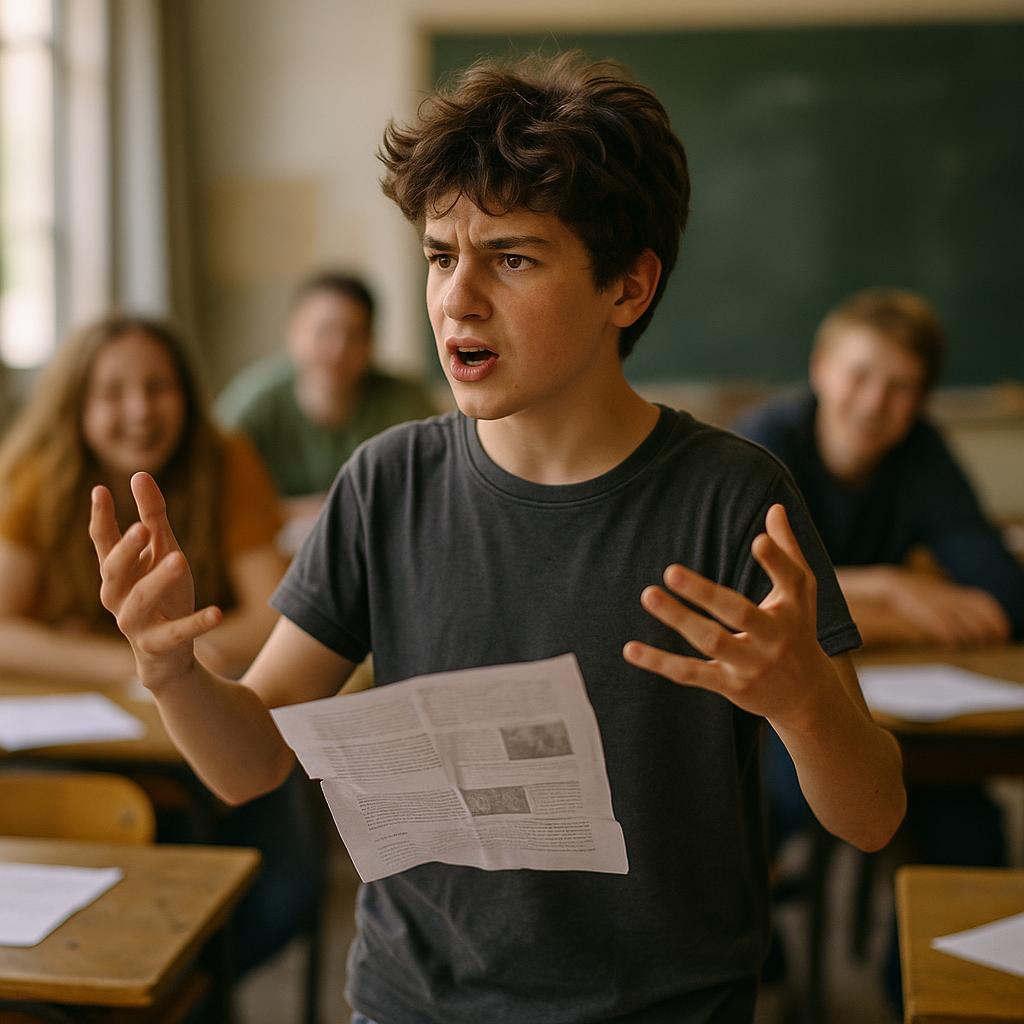 Image by RM AI
The Silent Phone Calls
After three weeks of Max's classroom chaos, I decided it was time to bring in the parents. I dialed the number from his registration form, rehearsing my professional-but-concerned teacher voice. Straight to voicemail. "Hello, this is Mr. Fry, Max's seventh-grade teacher. I'd like to discuss some concerns about his classroom behavior and missing assignments. Please call me back at your earliest convenience." Three days later, still nothing. I tried again. And again. And again. Each time, I left increasingly detailed messages about Max's latest disruptions—the time he convinced half the class that homework was "unconstitutional," the day he brought a water gun filled with blue Gatorade to science lab, the incident with the class hamster and the remote-control car. My voicemails grew longer and my tone less patient. "This is my FIFTH call," I said on day twelve, barely masking my frustration. "Max hasn't turned in a SINGLE assignment this quarter." Nothing but silence. I documented every call in my teacher log, creating a paper trail that would make an FBI agent proud. What kind of parents never return a teacher's calls? Were they screening me? Did they even care? Or—and this thought was particularly troubling—was Max deleting my messages before they could hear them? Little did I know, parent-teacher night was approaching, and I was about to meet the masterminds behind Hurricane Max face-to-face.
 Image by RM AI
The Email Paper Trail
After my phone calls disappeared into the void, I switched tactics. Emails seemed more official, harder to ignore, and—most importantly—they left a digital paper trail. I crafted detailed messages documenting Max's greatest hits: the time he convinced the class that Thomas Edison was a time traveler, the day he brought his pet lizard to dissection lab, all of it was being recorded and sent to his parents.
 Image by RM AI
The Classroom Disruption Log
By week three, I started what I called 'The Max Chronicles'—a small blue notebook dedicated exclusively to documenting Hurricane Max's daily disruptions. Every page was meticulously dated and timed like a police report. '9:15 AM: Made realistic fart noises during silent reading. Five students couldn't stop laughing for 3 minutes.' '10:22 AM: Launched paper airplane competition during state capitals quiz. Convinced Tyler that whoever's plane flew farthest got automatic A+.' The pages filled alarmingly fast. I documented everything—the time he convinced three gullible students that our classroom hamster, Mr. Whiskers, was actually a sophisticated government surveillance robot ('That's why his eyes are so beady!'), the day he brought a homemade 'volcano' that was just baking soda, vinegar, and WAY too much red food coloring. By month two, my little blue notebook had become a 76-page manifesto of classroom chaos. Other teachers started calling it 'The Book of Max.' I kept it in my desk drawer like evidence for a future court case I was sure would come. What I didn't realize then was that this ridiculous documentation would soon become my most powerful teaching tool—and not just for Max.
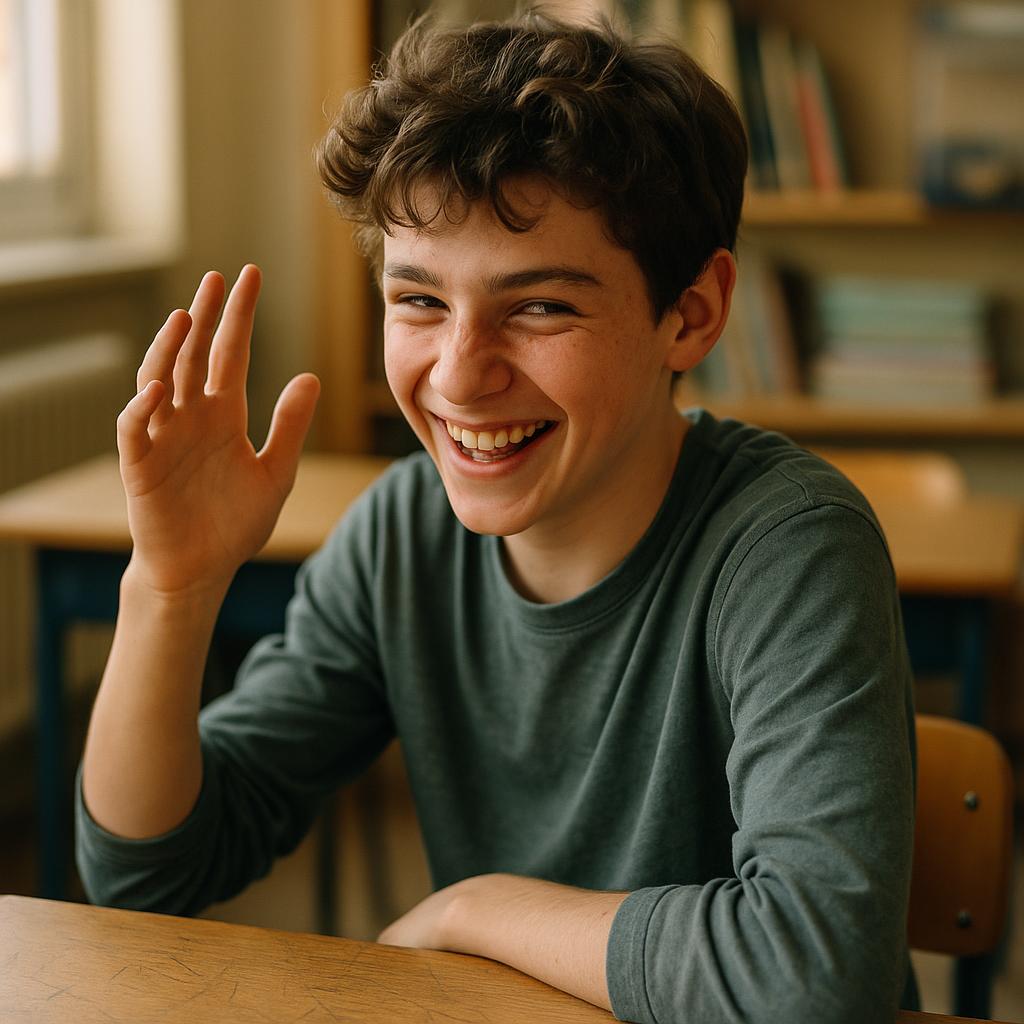 Image by RM AI
The Substitute Teacher Incident
I thought I'd seen the worst of Max's antics until I caught a stomach bug and had to take a sick day. Big mistake. HUGE. When I returned, I found a three-page report from Mrs. Benson, the substitute, written with the kind of traumatized precision usually reserved for war correspondents. Apparently, Max had spent the first fifteen minutes of class solemnly informing everyone that I hadn't actually called in sick—I'd been ARRESTED. According to his elaborate tale, I was running an underground gambling ring from my classroom closet and had offshore accounts in the Cayman Islands. "He showed us a news article about it," Mrs. Benson wrote. "Several students were genuinely concerned." This wasn't just verbal storytelling; Max had actually created a fake news website printout with my faculty photo poorly Photoshopped onto a mugshot. The headline read: "Local Teacher's Double Life Exposed: Vegas Vacations Funded by Student Lunch Money Scheme." By lunchtime, two parents had called the principal, and one particularly gullible student had started a "Free Mr. Fry" fundraiser for my bail money. As I sat there reading the report, I couldn't decide whether to laugh or cry. The kid had literally turned my absence into a crime drama. And the worst part? When I confronted him, he just shrugged and said, "I was just trying to make your job seem more interesting."
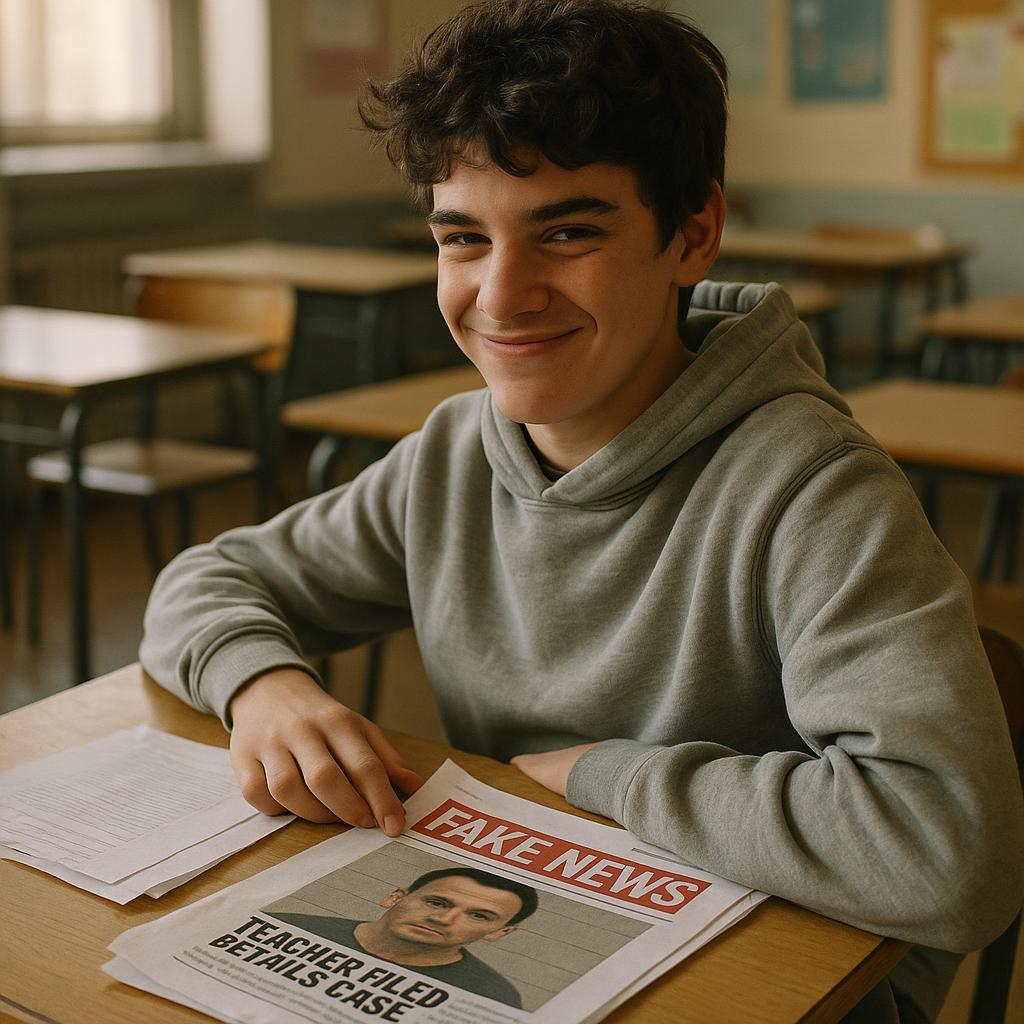 Image by RM AI
The Failed Intervention
After weeks of Max's classroom chaos, Principal Winters called me into her office. 'James, we need a behavior intervention plan for this kid,' she said, sliding a folder across her desk. We spent THREE HOURS after school crafting a personalized system—sticker rewards for completed assignments, points for raising his hand instead of blurting out conspiracy theories, and special privileges for making it through a day without disruption. Max actually seemed excited when we presented it to him. 'So I get a homework pass if I earn twenty stickers?' he asked, eyes calculating something I couldn't quite read. I went home feeling cautiously optimistic. The next morning, I spotted Max huddled with Tyler and Emma in the corner of the classroom, conducting what looked suspiciously like a business transaction. By lunch, I discovered he'd established an underground sticker economy—trading his hard-earned behavior rewards for pencil erasers, snacks, and homework answers. When I confronted him, he just shrugged. 'It's capitalism at its finest, Mr. Fry. Supply and demand!' he explained, as if teaching ME an economics lesson. The intervention plan I'd spent hours creating had lasted exactly 3.5 hours before Max had turned it into his own personal black market. But what happened next with his parents would make this failed intervention look like a minor hiccup.
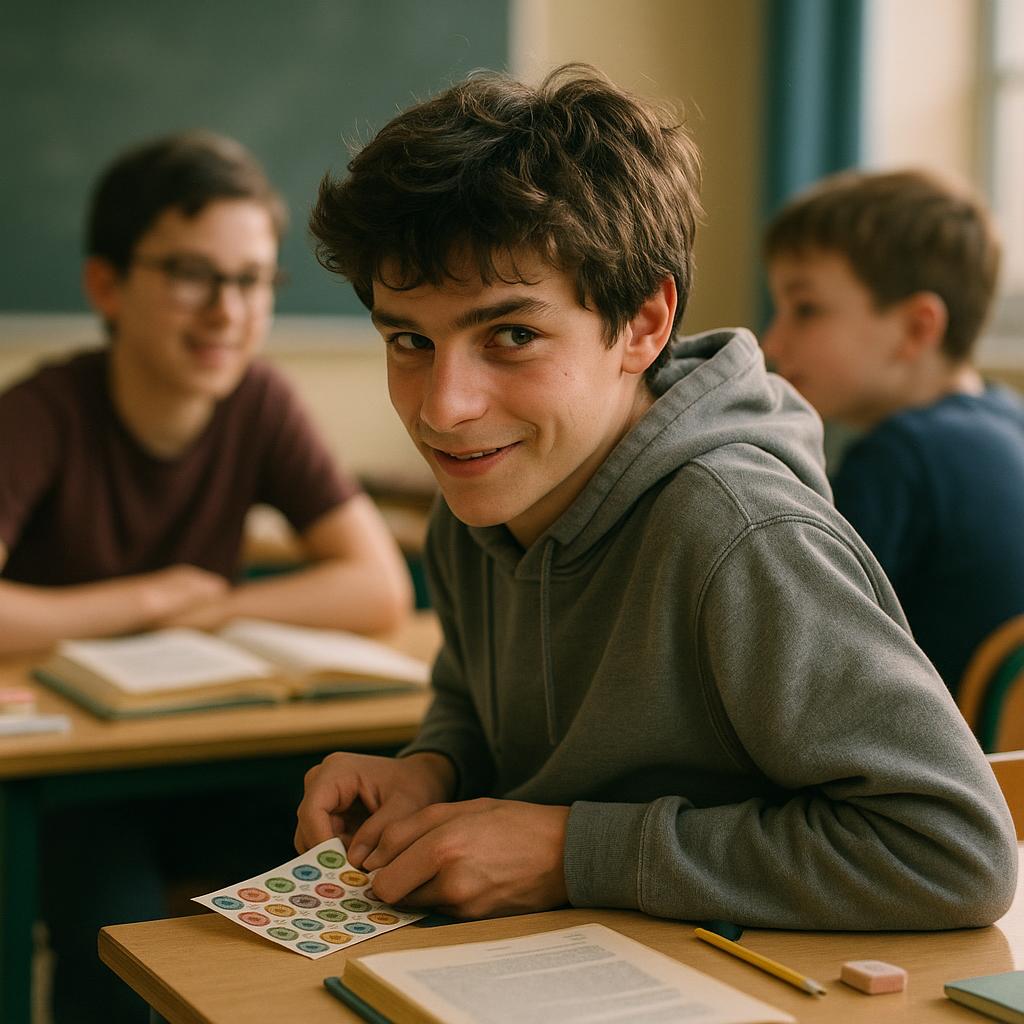 Image by RM AI
The Science Fair Disaster
The annual science fair should have been a chance for students to shine with legitimate scientific inquiry. Instead, Max turned it into yet another showcase of his disruptive genius. While other kids presented projects on plant growth and solar energy, Max proudly unveiled what he called his 'Revolutionary Sound Wave Generator.' The project description claimed it demonstrated principles of electrical engineering, but in reality, it was an elaborate contraption that produced alarmingly realistic burping sounds when triggered by nearby movement. And where did he position this masterpiece? Directly beside the judges' table, of course. I watched in horror as Principal Winters approached the podium for her opening speech. Three sentences in, Max's device activated with a thunderous belch that echoed through the gymnasium. The principal froze mid-sentence while parents gasped and students erupted in laughter. Max stood beside his project, beaming with pride as if he'd just cured cancer. 'It's detecting sound waves and converting them to audible frequencies!' he explained to the stunned science coordinator. I confiscated the device, added detailed notes to my ever-expanding 'Max File,' and wondered how his parents would possibly defend this one. Little did I know, our upcoming parent-teacher conference would make this science fair disaster look like a minor incident.
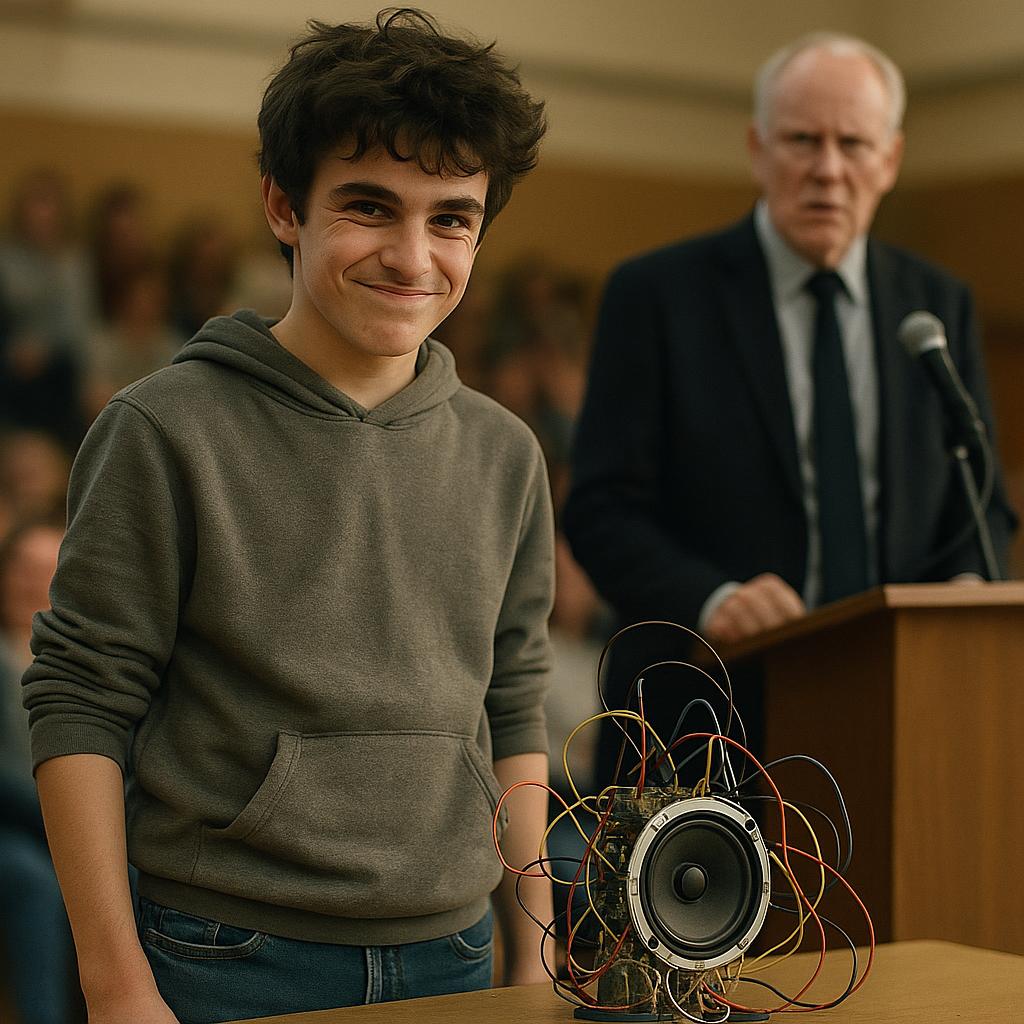 Image by RM AI
The Parent-Teacher Night Anticipation
As parent-teacher night approached, I found myself in the bizarre position of actually looking forward to it. After months of Max's classroom chaos, I was FINALLY going to meet the masterminds who created this human tornado. I spent three evenings organizing my evidence—my blue notebook of disruptions (now requiring a second volume), a folder of blank homework assignments, and a USB drive with video evidence of everything. I was going to blow the lid off of everything that had been happening with Max and give his parents a piece of my mind.
 Image by RM AI
The Parents Arrive
When parent-teacher night finally arrived, I was practically giddy with anticipation. After documenting Max's reign of terror for months, I'd finally meet the architects of this chaos. I arranged my evidence meticulously—behavior logs, blank assignments, and incident reports—ready for a productive discussion. But when the door opened, I nearly dropped my pen. These weren't the frazzled, overwhelmed parents I'd imagined. Mrs. Peterson glided in wearing what looked like a $500 blouse and designer heels that probably cost more than my monthly car payment. Mr. Peterson followed in a tailored suit that screamed corporate executive, his face fixed in a permanent scowl that suggested he had better places to be. Neither offered a handshake or even introduced themselves. They simply sat down across from me with expectant expressions—like I was a waiter who'd kept them waiting too long for their appetizers. Mrs. Peterson placed her designer purse carefully on my desk (right on top of my grading rubrics) while Mr. Peterson checked his Rolex with an exaggerated sigh. In that moment, before a single word was exchanged, I understood Max completely. The apple hadn't fallen far from the entitled tree. What I didn't realize was that their opening statement would leave me completely speechless.
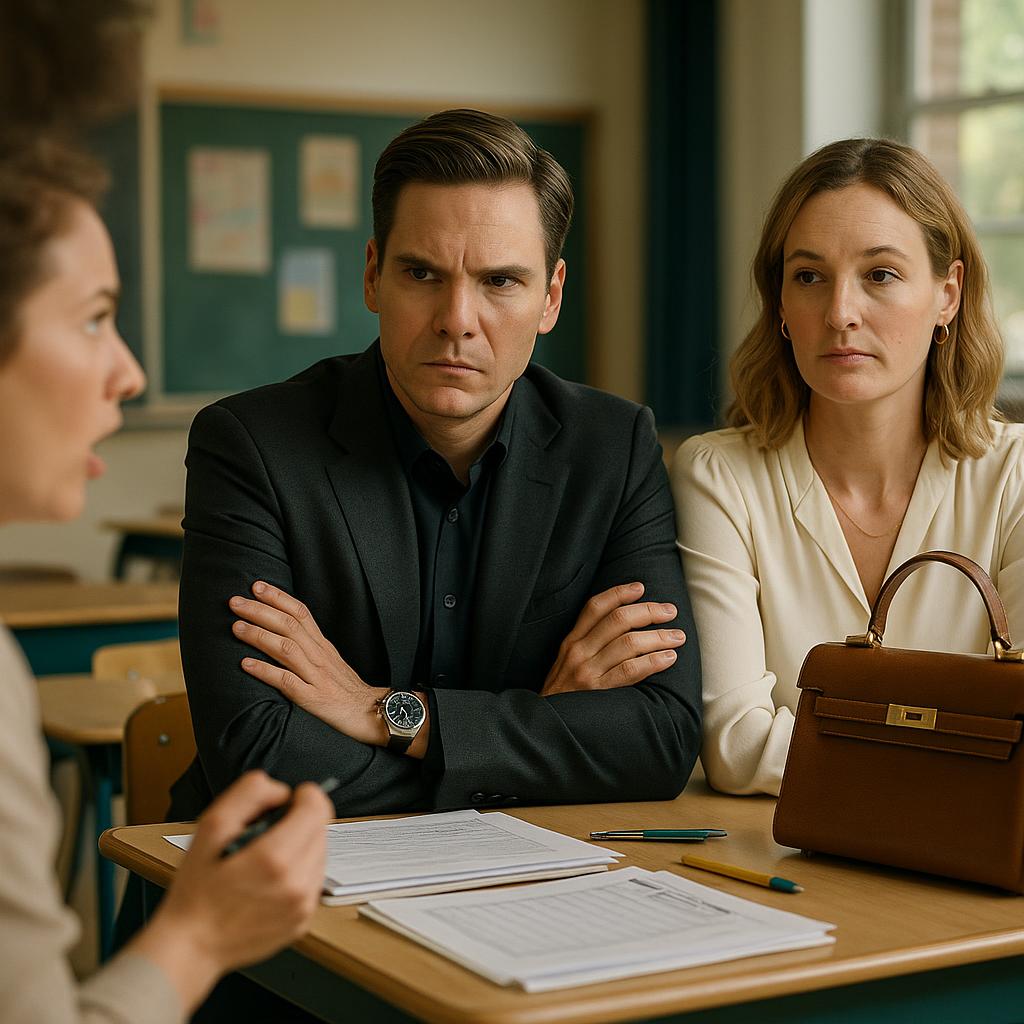 Image by RM AI
The Shocking Demand
I had barely opened my folder of evidence when Mrs. Peterson smiled like we were discussing the weather instead of her son's academic disaster. 'We think Max should be moved up a grade,' she announced confidently. I blinked, wondering if I'd misheard. The stack of blank assignments and behavior reports sat between us like a mountain of evidence she was completely ignoring. 'But he's failing THIS grade,' I replied, trying to keep my voice level and professional despite the absurdity. Mr. Peterson leaned forward, his expensive cologne nearly making me sneeze, and jabbed a manicured finger at me. 'That's because you can't teach!' he snapped. I sat there stunned, my nine years of teaching experience apparently worthless in the face of their delusion. Mrs. Peterson nodded in agreement, adding, 'We know he's gifted.' I glanced down at my documentation—the conspiracy theories, the classroom disruptions, the science fair disaster—and back at these perfectly groomed parents who genuinely believed their hurricane of a child was just misunderstood. In that moment, I realized the problem wasn't just Max; it was an entire family living in an alternate reality where their son was a misunderstood genius rather than a kid desperately needing boundaries. What happened next would change everything—for Max, for his parents, and especially for me.
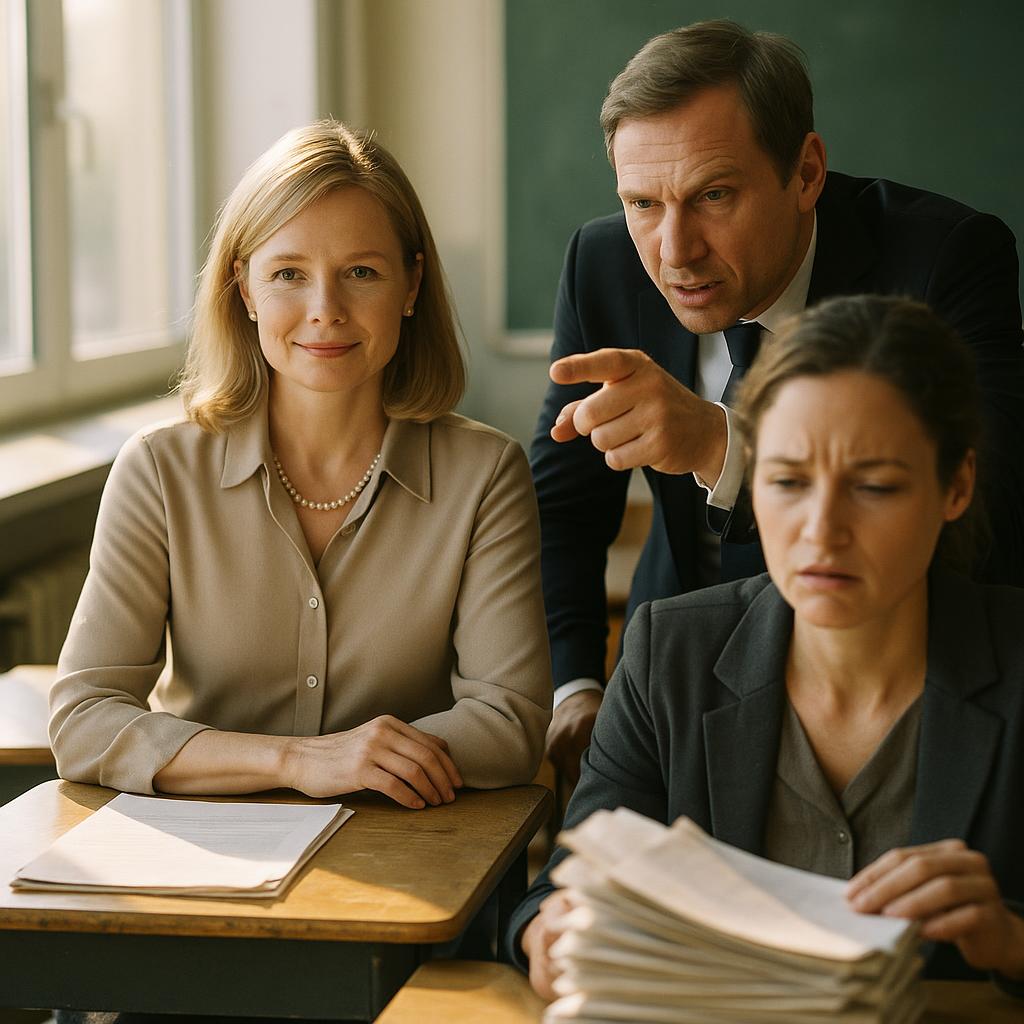 Image by RM AI
The Blame Game
I sat there with my mouth slightly open, staring at these two perfectly coiffed adults who were somehow living in an alternate reality. The evidence of Max's academic disaster was literally spread across the table between us—failed tests, blank assignments, and a behavior log thicker than the school handbook. Yet here they were, not just denying it but somehow twisting it to be MY fault. 'I've documented everything,' I said, sliding Max's progress report toward them. 'He's turned in exactly three assignments this quarter. Out of twenty-seven.' Mrs. Reynolds barely glanced at it before pushing it aside like I'd offered her day-old sushi. 'Max gets bored with busy work,' she explained, as if this justified everything. Mr. Reynolds nodded vigorously, his face reddening. 'We've had him tested privately. His IQ is exceptional.' I wanted to ask if they'd also tested his ability to disrupt an entire classroom with conspiracy theories about hamsters being government spies, but I bit my tongue. Nine years of teaching had taught me one crucial lesson: when parents are this delusional, logic rarely penetrates. What I needed wasn't more evidence—I needed something that would force them to see their son as he actually was, not as the gifted prodigy they'd invented in their minds.
 Image by RM AI
The Evidence Presentation
I took a deep breath and opened my 'Book of Max,' spreading the evidence across the table like a crime scene investigator. 'Here's the behavior log from September,' I said, pointing to entries detailing the hamster surveillance conspiracy and the Gatorade water gun incident. 'And these are his test scores.' I slid over a graph that looked like a ski slope—downhill all the way. Mrs. Peterson barely glanced at it before waving her hand dismissively. 'He's clearly bored,' she sighed, as if I'd missed something obvious. Mr. Peterson nodded vigorously. 'Our neighbor's son had the same issue. Turned out he was gifted.' I pulled out Max's science project write-up—completely blank except for a crude drawing of what appeared to be me with steam coming out of my ears. 'And this?' I asked. Mrs. Peterson leaned forward, examining it like a museum piece. 'He's a visual learner,' she declared confidently. 'Other teachers understand his creative approach.' I bit my tongue so hard I nearly drew blood. Nine years of teaching, and I'd never encountered parents so committed to their alternate reality. That's when I realized standard evidence wasn't going to work. I needed something they couldn't explain away—something that would shatter their carefully constructed illusion once and for all.
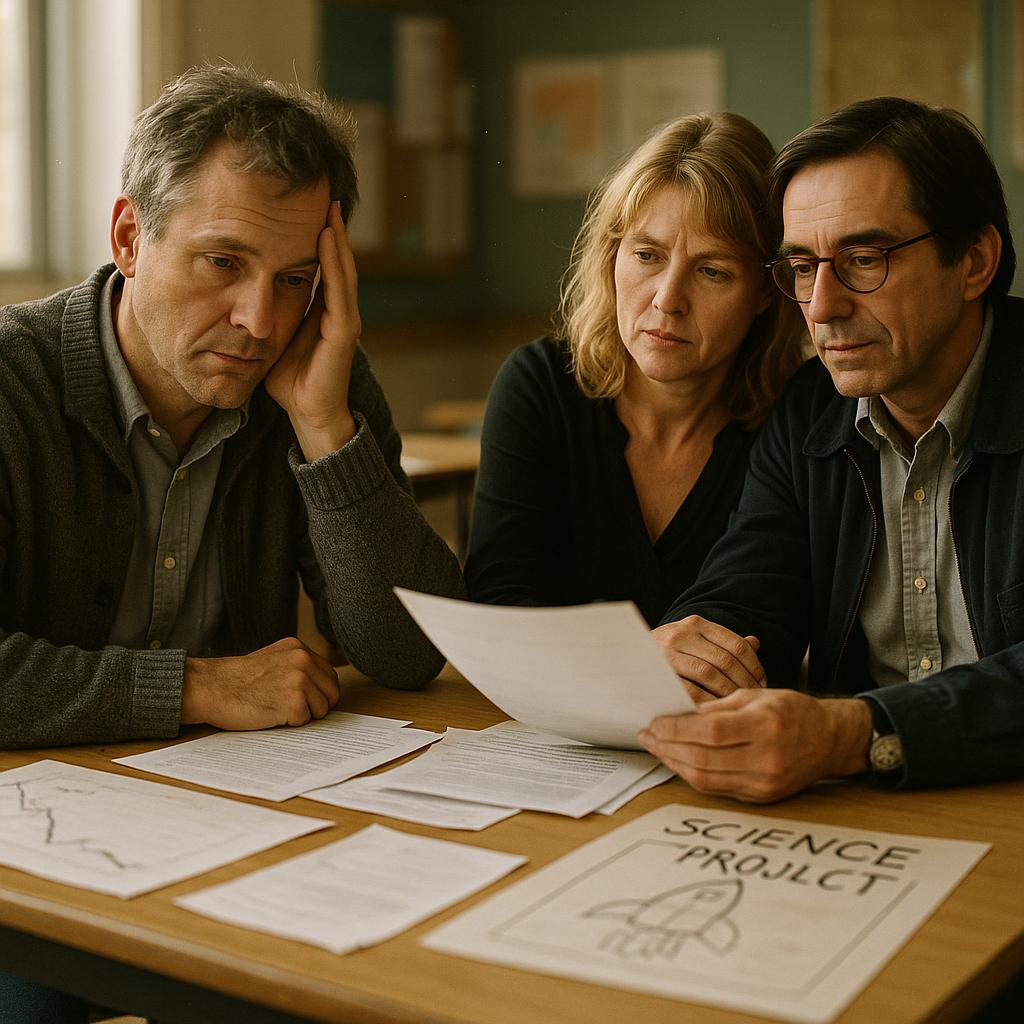 Image by RM AI
The Heated Exchange
The meeting spiraled out of control faster than a viral TikTok challenge. Mr. Peterson's face turned an alarming shade of crimson as he leaned across my desk. 'I'd like to see your teaching credentials,' he sneered, as if I'd bought mine from a discount website. Mrs. Peterson nodded vigorously, adding, 'We feel Max is being targeted.' I took a deep breath and pulled out my phone, queuing up the video our principal had approved for documentation purposes. 'This was Tuesday,' I said calmly, showing Max orchestrating what he called the 'Great Pencil Rebellion' where he convinced half the class to drum continuously during my lesson on the Civil War. Mrs. Peterson barely glanced at it before dismissing it with a wave. 'That's completely out of context. He's demonstrating leadership skills.' I nearly choked. Leadership skills? Was starting a pencil percussion band in the middle of history class the new definition of leadership? As they gathered their designer belongings to leave, Mr. Peterson delivered his parting shot: 'We'll be speaking to the school board about your incompetence.' The door slammed behind them, leaving me alone with my evidence and a sinking feeling that this battle was far from over. What they didn't know was that I wasn't about to surrender that easily.
 Image by RM AI
The Drive Home
I gripped the steering wheel so hard my knuckles turned white as I drove home that night. The radio played some mindless pop song, but I couldn't focus on anything except the absolute circus that was the Peterson parent meeting. Nine years of teaching, and I'd never encountered parents so completely disconnected from reality. Their precious Max—the kid who turned my classroom into a daily episode of 'Survivor: Middle School Edition'—was apparently a misunderstood genius in their eyes. I actually laughed out loud in my car, a slightly unhinged sound that surprised even me. 'A gifted student?' I muttered to myself, shaking my head as I stopped at a red light. 'He turned in a BLANK science project!' The more I thought about it, the more my initial shock transformed into determination. These people honestly believed their hurricane of a child was being held back by the system—by ME. By the time I pulled into my driveway, I wasn't just frustrated anymore; I was resolute. If they wanted proof their son was gifted, I'd give them exactly what they asked for. And in that moment, staring at my dark house, I decided to create a test so challenging it would finally force them to see their son for who he really was.
 Image by RM AI
The Late Night Planning
I didn't even bother changing out of my work clothes that night. After pouring myself a generous glass of wine (teacher fuel, am I right?), I spread my materials across the kitchen table and opened my laptop. If the Petersons wanted to see their precious Max as 'gifted,' I was going to give them exactly what they asked for. I pulled up eighth and ninth-grade curriculum standards, then dug deeper into advanced placement materials. By midnight, my wine glass was empty and my notepad was full of the most diabolically challenging problems I could legally give a seventh grader. I included multi-step algebra equations that required actual critical thinking, not just memorization. I added primary source analysis that would make college freshmen sweat. I even threw in some logic puzzles that had stumped my teacher friends at happy hour. As I stapled together what I was now mentally calling 'The Max Destroyer,' I couldn't help but smile. This wasn't about revenge—okay, maybe a little—but it was mostly about reality. Sometimes kids AND parents need a wake-up call, and I was about to hit the Petersons with the academic equivalent of an air horn at 5 AM. What I didn't realize was that this test would change everything—not just for Max, but for me too.
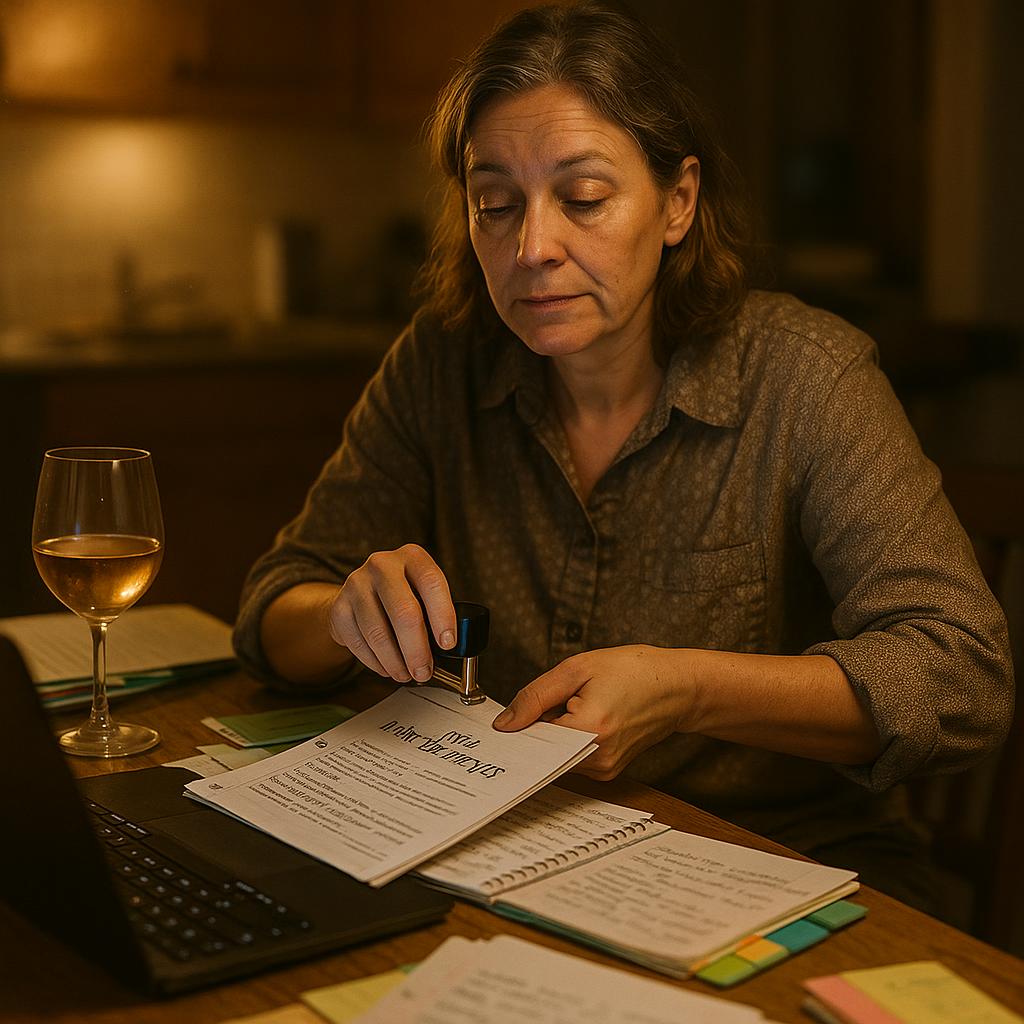 Image by RM AI
The Special Challenge Creation
I spent the next three nights hunched over my kitchen table, surrounded by textbooks, curriculum guides, and an unhealthy amount of coffee. This wasn't just any assignment packet—this was psychological warfare disguised as education. I pulled advanced algebra problems that made my high school brother groan, 'Dude, that's AP Calculus stuff!' I crafted essay prompts requiring literary analysis that would make my college professor friends raise their eyebrows. I even included science questions about quantum mechanics that I had to research myself to understand. By Wednesday night, I had created a masterpiece of academic challenge—twenty pages of increasingly difficult material that would separate the truly gifted from the merely entitled. I formatted it professionally, complete with a fancy header reading 'Advanced Placement Assessment,' and slipped it into a sleek folder. Looking at the finished product, I felt a twinge of guilt. Was I being petty? Maybe. But sometimes a reality check is the kindest gift you can give. As I paperclipped a parent signature form to the front, I couldn't help but smile imagining the Petersons' faces when they saw their 'gifted' son's blank responses. What I didn't anticipate was how this little test would completely transform not just Max, but his entire family.
 Image by RM AI
The Challenge Presentation
The next day, I waited until the final bell rang before calling out, 'Max, could you stay for a minute?' The look on his face was priceless—that universal 'busted' expression all troublemakers perfect by seventh grade. But instead of another lecture, I pulled out a sleek black folder from my desk drawer. 'I've been thinking about what your parents said,' I told him, watching his expression shift from dread to curiosity. 'This is an advanced placement assessment packet. It's designed to determine if students are ready to skip a grade.' I slid it across the desk, and the transformation was immediate. Max's eyes widened like I'd just handed him the keys to a Ferrari. 'For real?' he asked, practically bouncing in his sneakers. 'You think I could skip?' I nodded solemnly, though internally I was setting the stage for my master plan. 'Five days to complete it. No help allowed.' He snatched up the folder without even glancing at its contents, already imagining himself among the eighth graders. 'I'll crush this,' he declared with absolute certainty. As he strutted out of my classroom, folder tucked under his arm like a trophy, I couldn't help wondering if I'd gone too far—or if this would finally be the reality check the entire Peterson family desperately needed.
 Image by RM AI
The Five-Day Countdown
For the next five days, I watched Max strut around my classroom like he'd already been handed a diploma. 'Mr. Fry's finally seeing my potential,' he whispered loudly to anyone who would listen. I just smiled and nodded, knowing what was coming. The packet sat prominently on his desk each day, but I never once saw him open it. When other students asked what he was working on, he'd tap the folder mysteriously and say, 'Advanced stuff. You wouldn't understand.' By day three, Max had miraculously transformed into a model student—raising his hand instead of shouting out, staying in his seat instead of wandering the room. It was almost eerie. His friends looked confused by the sudden personality transplant, but I knew better. This wasn't genuine growth; this was a kid who thought he'd found a shortcut. During lunch duty on day four, I overheard him telling his friends, 'My parents already bought me an eighth-grade backpack.' I almost felt bad for what was coming. Almost. But sometimes the kindest thing you can do is pop someone's delusion bubble before it gets any bigger. What I didn't expect was just HOW spectacularly empty that packet would be when he finally turned it in.
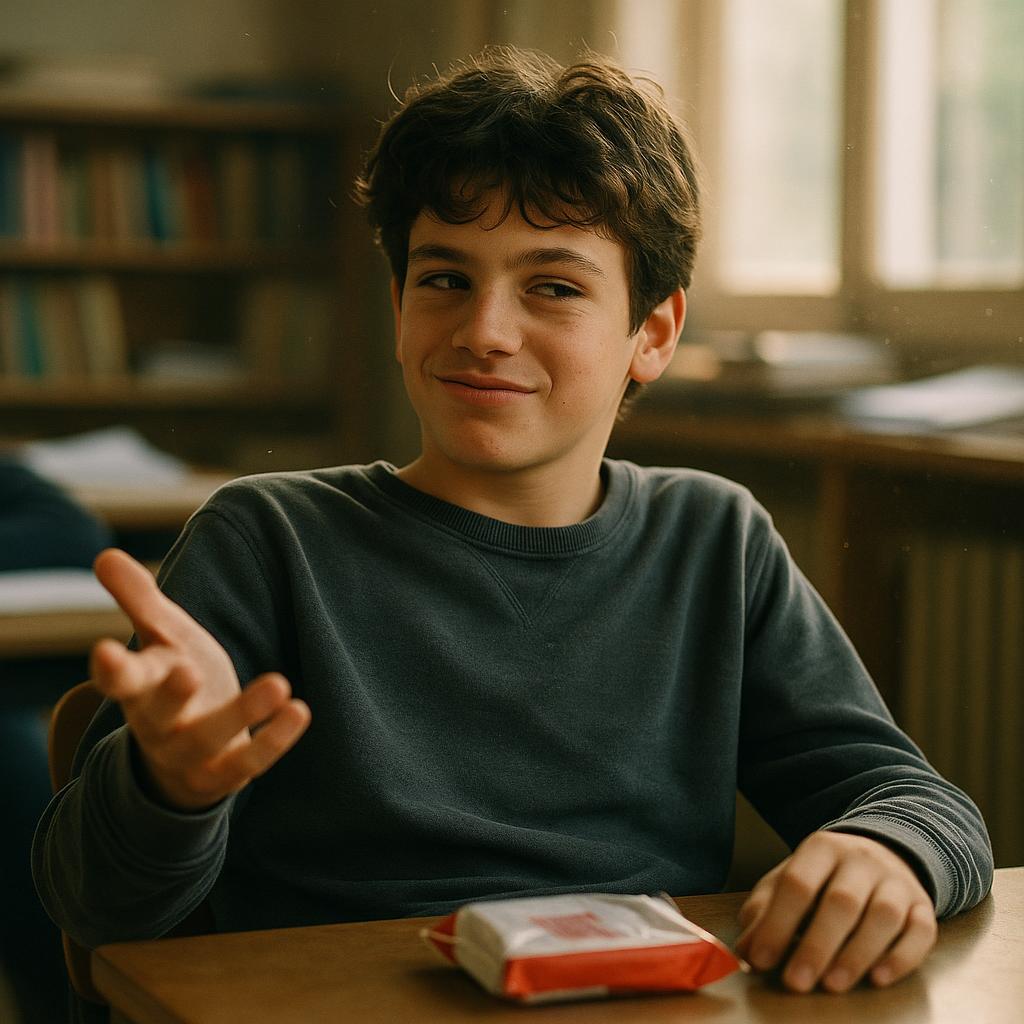 Image by RM AI
The Control Group
While waiting for Max's deadline to arrive, I decided to run a little experiment. I needed a control group—scientific method and all that. I discreetly approached Olivia, a quiet girl who struggled with math but never gave up. Unlike Max, who wore his supposed 'giftedness' like a designer label, Olivia was honest about her challenges. 'This is completely optional,' I explained, handing her the identical packet. 'It's advanced material, but I think you might surprise yourself.' Her eyes widened at the thickness of the folder, but instead of bragging or making excuses, she simply nodded and asked, 'Can I stay after school if I have questions?' For the next five days, while Max paraded around with his unopened packet, Olivia worked through lunch periods, highlighted difficult sections, and left sticky notes with questions. I'd spot her in the library, forehead creased in concentration, actually trying. She wasn't doing it for show or to skip a grade—she was doing it because someone believed she could. By day four, she'd completed nearly half the packet with genuine effort, her messy handwriting filling every available space. What she didn't know was that her hard work was about to become the most powerful teaching tool I'd ever wielded.
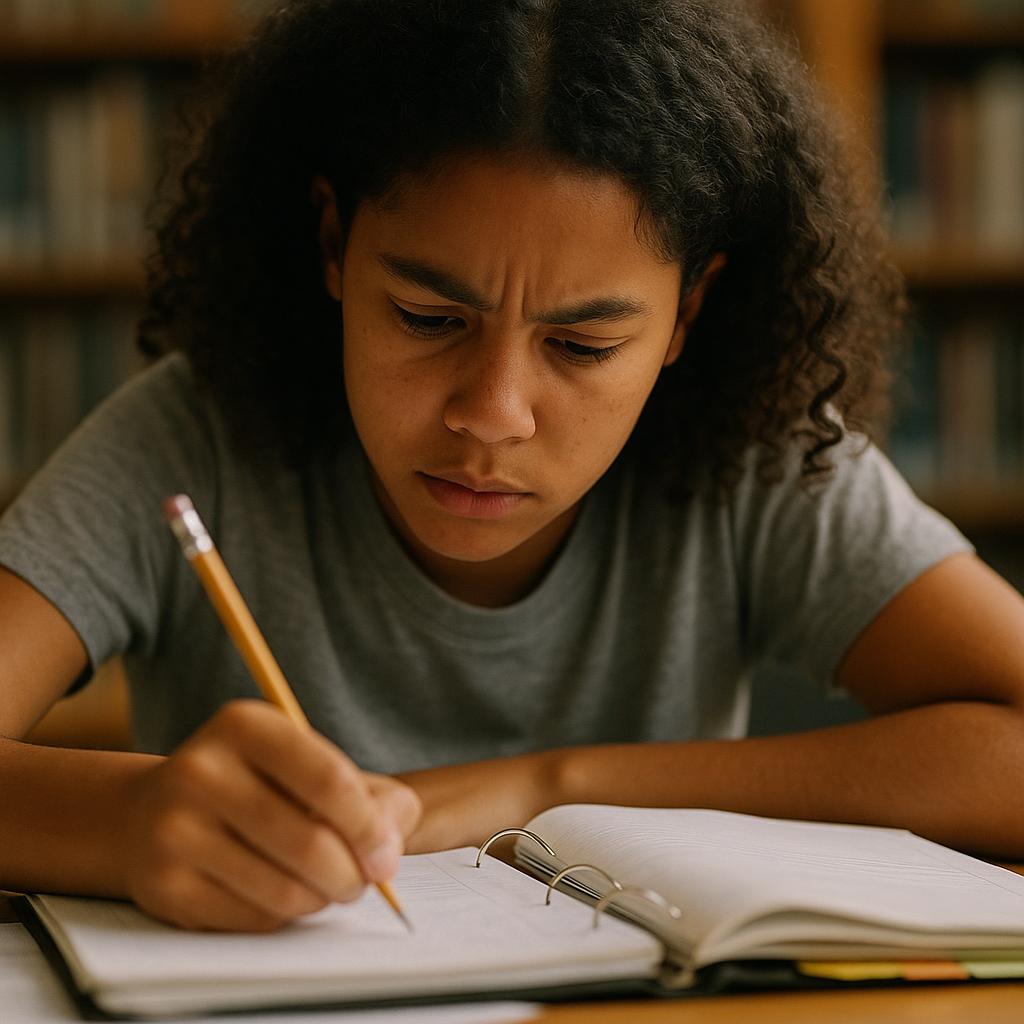 Image by RM AI
The Empty Return
Day five arrived with all the dramatic tension of a season finale. Max swaggered up to my desk after class, his confidence radiating like a nuclear power plant. He slapped down the folder with a flourish that suggested he'd just solved world hunger. 'Here you go, Mr. Fry. Ready to be amazed?' I opened the packet, and there it was—twenty pristine, untouched pages with nothing but 'Max Peterson' scrawled across the top in his signature chicken scratch. I looked up, genuinely confused. 'Max, there's nothing here.' He shrugged like I'd pointed out a minor typo. 'Yeah, I was too busy this week. Plus, some of those questions were written wrong anyway.' The audacity was breathtaking. In nine years of teaching, I'd seen plenty of excuses, but 'the questions were written wrong' was a first-ballot Hall of Famer. What struck me most wasn't the blank pages—it was the complete absence of shame. He stood there, hands in pockets, rocking back on his heels, utterly convinced he'd still be skipping a grade tomorrow. I carefully closed the folder, my mind already formulating the next phase of my plan. 'Thanks, Max. I'll be in touch with your parents about the results.' His smile never faltered as he walked out, but little did he know, I was about to deliver the academic equivalent of a truth bomb to the entire Peterson family.
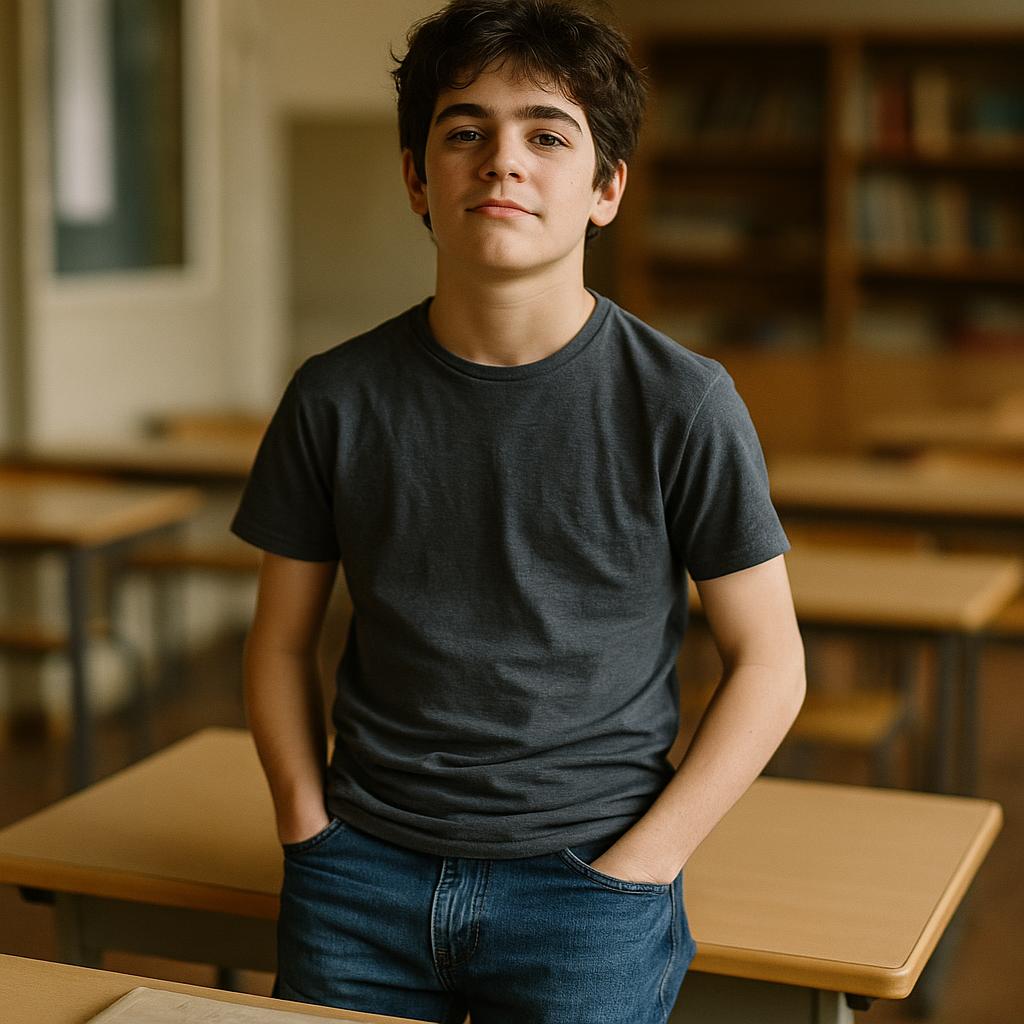 Image by RM AI
The Comparison Preparation
That evening, I spread both packets across my dining room table like evidence in a crime scene investigation. Olivia's pages were a beautiful mess—filled with eraser marks, highlighted sections, and little notes in the margins like 'I don't understand this part' and 'Is this right?' She'd attempted every single problem, even the ones that made ME sweat while creating them. Her work wasn't perfect—she'd gotten plenty wrong—but the effort on each page was undeniable. Next to her packet, Max's blank pages looked almost offensive in their emptiness. Just his name scrawled at the top, like he couldn't even be bothered to try. I carefully graded Olivia's work, adding encouraging comments where she'd shown good thinking, then made copies of both packets. I stapled Max's empty assessment to his abysmal progress report and placed them in a crisp manila folder. Then I picked up my phone and composed what might be the most satisfying email of my teaching career: 'Mr. and Mrs. Peterson, I'd like to schedule a follow-up meeting regarding Max's academic performance and the results of his advanced placement assessment. Would tomorrow after school work?' I hit send with the kind of satisfaction usually reserved for canceling plans on a Friday night. The trap was set, and I couldn't wait to see their faces when they realized their 'gifted' son couldn't be bothered to write a single word.
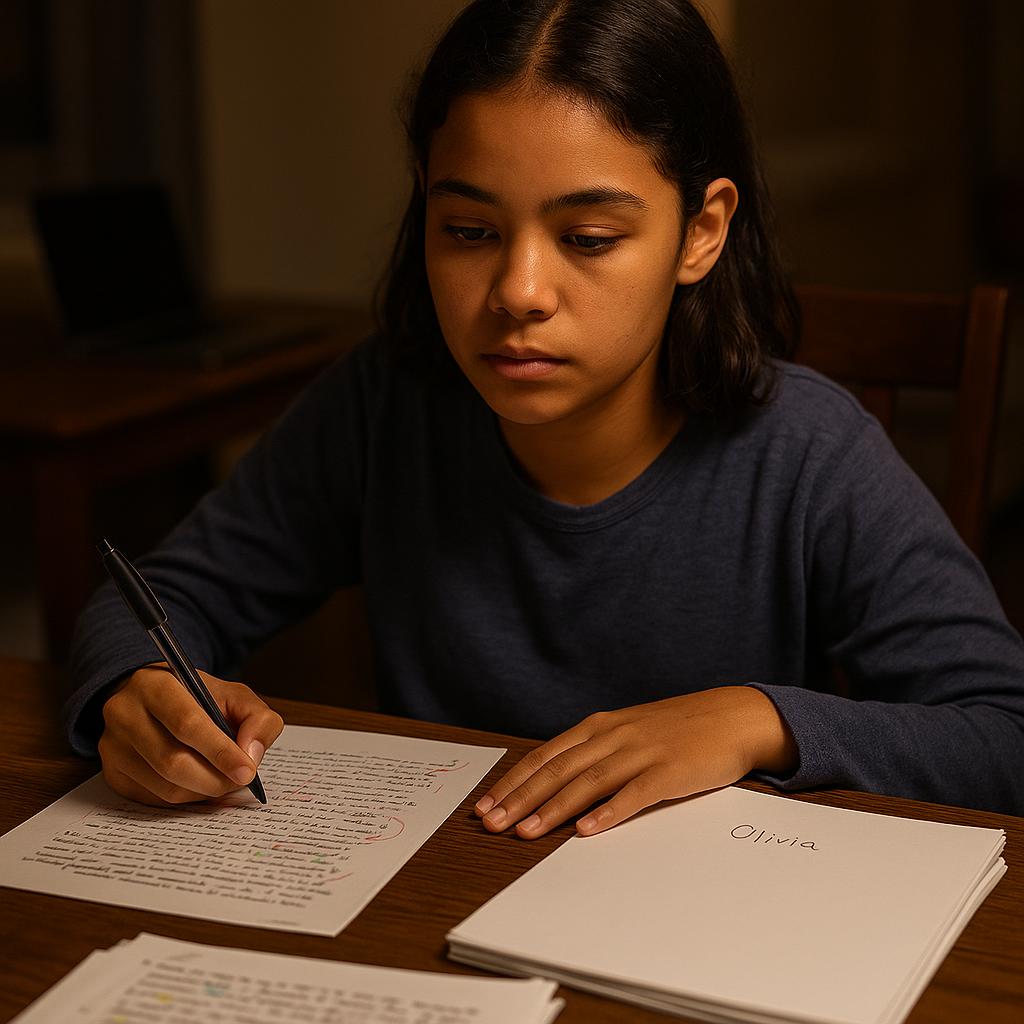 Image by RM AI
The Second Meeting Setup
The Petersons responded to my email with surprising speed, agreeing to meet the very next day. I couldn't help but wonder if they thought I was finally seeing their son's 'hidden potential.' Little did they know what was waiting for them in that manila folder. I spent my lunch break organizing my evidence with the precision of a prosecutor preparing for a high-profile case. Max's blank packet sat on top, its emptiness almost comical compared to the weight of the situation. I'd also made copies of Olivia's work—not to embarrass Max, but to show what actual effort looked like. As an extra precaution, I'd asked Principal Winters to be 'coincidentally' working late that day. 'Just stay within earshot,' I told her during our morning check-in. 'These parents think their kid walks on water, and they're about to find out he can't even swim.' She gave me a knowing smile—she'd dealt with the Petersons during their campaign to get Max out of detention last semester. As the final bell rang and students flooded the hallways, I straightened my tie and rehearsed my opening lines one more time. The stage was set for what might be the most satisfying—or explosive—parent meeting of my teaching career.
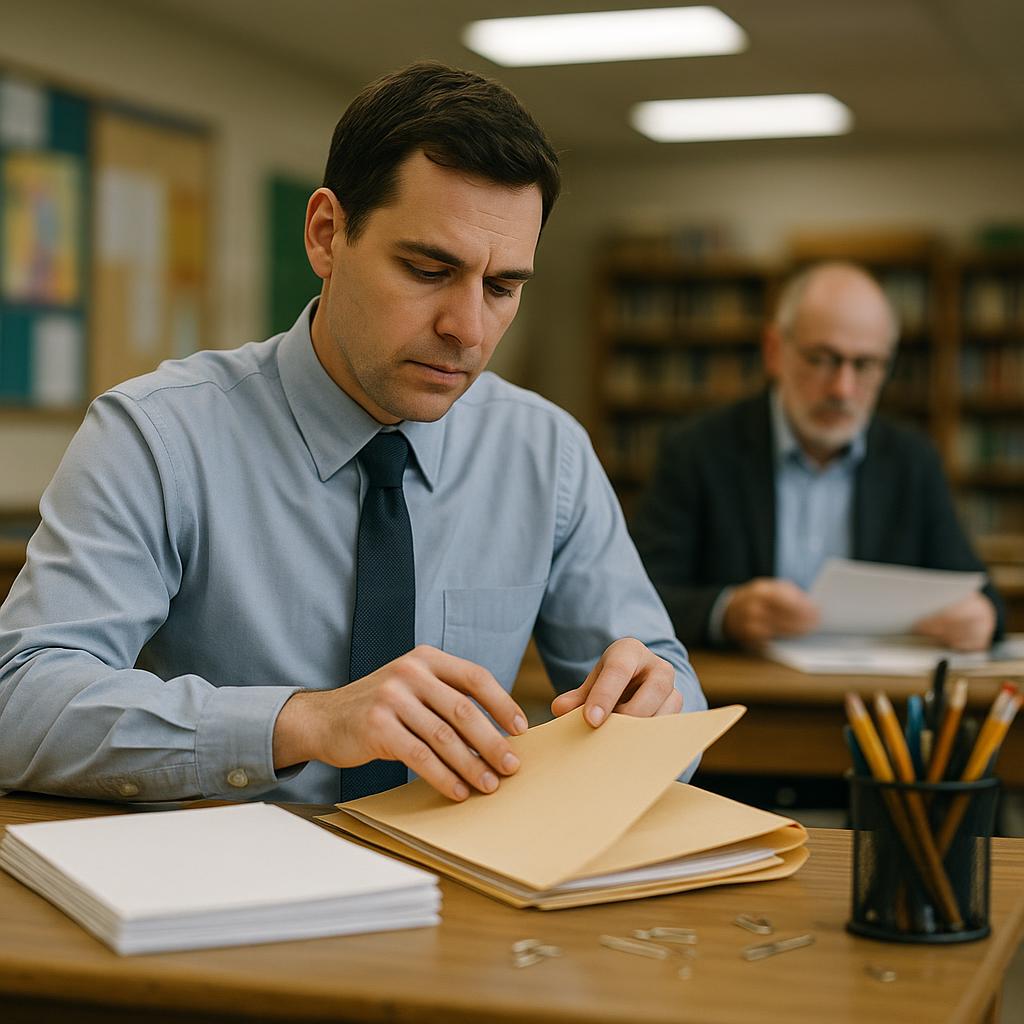 Image by RM AI
The Moment of Truth
The Petersons arrived at exactly 4:15, both dressed like they were heading to a corporate board meeting rather than a middle school conference. Mrs. Peterson's smile was practically stapled to her face as they sat down across from me. 'We're excited to hear about Max's results,' she chirped, already assuming victory. I took a deep breath and slid the manila folder across my desk. 'I gave Max an advanced placement assessment,' I said, keeping my voice neutral despite the satisfaction bubbling inside me. 'Here's how he did.' Mr. Peterson eagerly flipped open the folder, his expression morphing from smug confidence to utter confusion as he stared at page after page of pristine, untouched paper. The color drained from his face like someone had pulled a plug. Mrs. Peterson leaned over, her perfectly manicured nails flipping through the empty pages with increasing desperation. 'There must be some mistake,' she stammered, looking up at me with wide eyes. Then, predictably, the excuses began. 'Maybe he just wasn't feeling well that day,' she offered weakly, her voice lacking its usual certainty. Mr. Peterson remained silent, still staring at the blank assessment as if willing words to appear on the pages. What they didn't know was that I was just getting started – and my next move would leave them completely speechless.
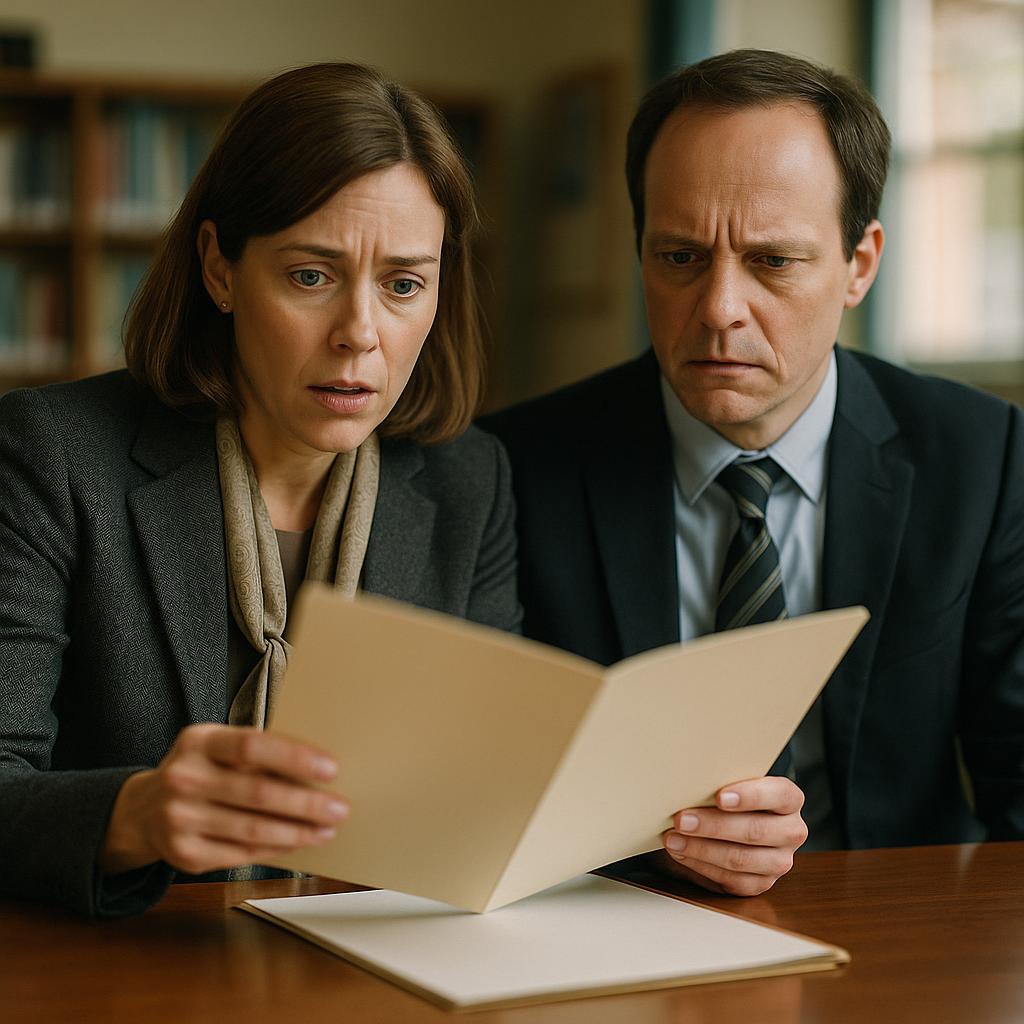 Image by RM AI
The Comparison Reveal
I reached into my bag and pulled out my secret weapon - Olivia's completed assessment with her name carefully blacked out. 'This is what effort looks like,' I said, sliding it across the table. The Petersons' expressions shifted from defensive to stunned as they flipped through page after page of actual work. Messy handwriting filled the margins with notes like 'I don't understand this part' and 'Is this right?' Even the most challenging problems showed erasure marks and multiple attempts. 'This student,' I explained, keeping my voice deliberately calm, 'struggles academically. She's not at the top of the class. But she tried her best on every single question.' Mrs. Peterson's perfectly manicured finger traced over Olivia's calculations, her mouth slightly open. Mr. Peterson kept glancing between the two packets, the contrast so stark it required no further explanation. 'This student didn't complete everything correctly,' I continued, 'but she demonstrated something far more valuable than natural talent.' I let the silence hang in the air for a moment before adding, 'She showed grit.' The Petersons exchanged a look I couldn't quite decipher, but for the first time since I'd met them, they seemed to have absolutely nothing to say. What happened next would completely change my understanding of this family.
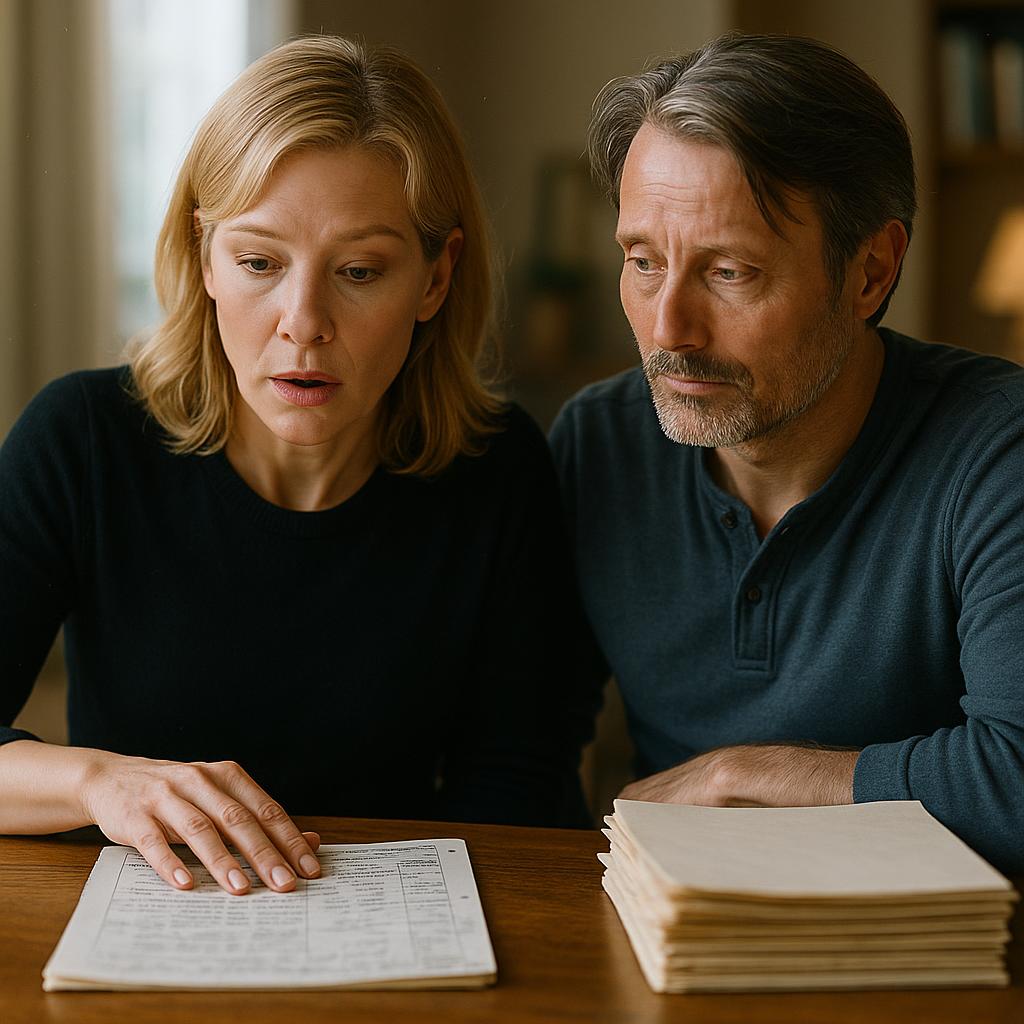 Image by RM AI
The Stunned Silence
For what felt like an eternity, the Petersons sat across from me in complete silence. The contrast between the two packets had hit them like a physical blow. Mr. Peterson's face had transformed into an alarming shade of crimson, his jaw clenched so tight I could practically hear his teeth grinding. Mrs. Peterson, usually armed with a rapid-fire arsenal of excuses, kept opening and closing her mouth like a goldfish out of water, no words materializing. The silence in my classroom was so thick you could have cut it with a knife—the kind of uncomfortable quiet that makes you hyper-aware of every tick of the clock and every breath you take. I didn't push or gloat; I simply let the evidence speak for itself. Finally, without uttering a single word, they gathered their belongings with mechanical movements. Mr. Peterson scooped up his wife's designer purse while she clutched her phone like a lifeline. They stood in unison and walked out, leaving Max's pristine, untouched packet sitting on the table between us like an abandoned confession. As the door clicked shut behind them, I exhaled a breath I hadn't realized I'd been holding. I'd expected anger, denial, maybe even threats—but their stunned silence felt more significant than any argument could have been. What I didn't know then was that this wordless exit would lead to the most unexpected transformation I'd ever witnessed in a student and his family.
 Image by RM AI
The Aftermath Anxiety
I spent the next 24 hours in a state of professional paranoia. Every email notification made my heart skip, and I kept checking my phone like a teenager waiting for a crush to text back. The silence from the Petersons was deafening. No angry voicemails. No emails demanding my termination. No emergency calls from Principal Winters about irate parents in her office. Nothing. I paced my apartment that night, rehearsing defenses to imaginary accusations. 'I was simply showing them evidence of their son's work ethic,' I practiced saying to my bathroom mirror. I even drafted a formal explanation of my teaching methods, complete with citations from educational psychology journals, just in case I needed to defend myself to the school board. By morning, I'd convinced myself I'd be cleaning out my desk by lunchtime. I arrived at school an hour early, coffee in hand, dark circles under my eyes, ready for whatever administrative storm was brewing. But when I checked my school email, there was nothing from the Petersons, the principal, or the district office. Just the usual announcements and a reminder about the upcoming science fair. The knot in my stomach loosened slightly, but I couldn't shake the feeling that this calm was just the eye of the hurricane. Little did I know, something far more surprising than a complaint was brewing in the Peterson household.
 Image by RM AI
The Waiting Game
The next few days felt like walking on eggshells. Every time my classroom door opened, I braced myself for an angry Mr. Peterson or a tearful Mrs. Peterson demanding my head on a platter. But nothing happened. No emails from administration. No emergency parent conferences. Just... silence. Max still showed up to class each day, but something had shifted. The hurricane had downgraded to a mild drizzle. He wasn't raising his hand or suddenly acing quizzes, but he wasn't actively derailing my lessons either. He'd sit at his desk, occasionally staring out the window with an expression I couldn't quite read. Once, I caught him actually opening his textbook without being told—a minor miracle in itself. During group work, he stayed with his assigned partners instead of wandering around the room. His homework remained mostly undone, but the constant stream of sarcastic comments had dried up completely. I found myself studying him like a science experiment, wondering what exactly was happening behind the scenes at the Peterson household. Had they grounded him? Taken away his phone? Or—and this seemed almost too much to hope for—had they actually held him accountable for once? I couldn't help but feel like I was watching a pot that refused to boil, waiting for something to happen. What I didn't realize was that the quiet wasn't the calm before the storm—it was the beginning of something I never could have predicted.
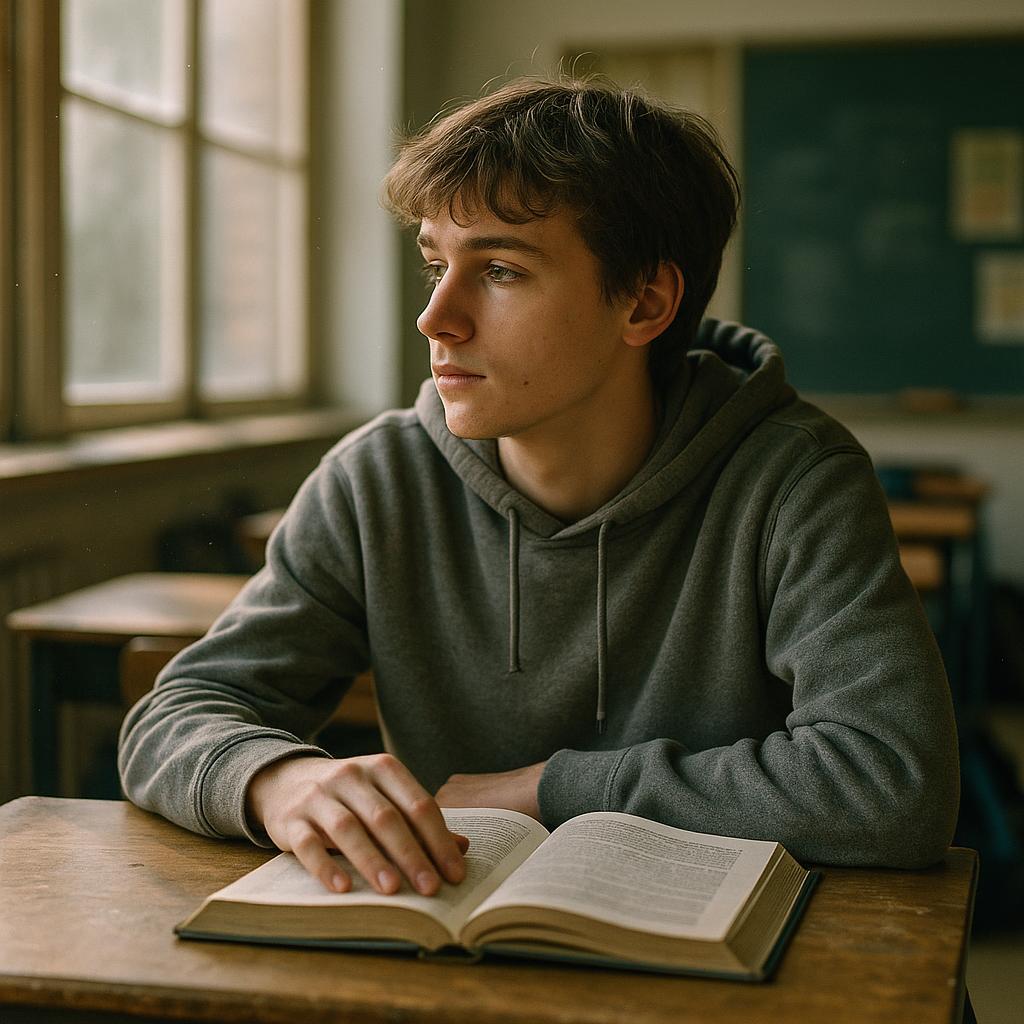 Image by RM AI
The Quiet Weeks
The next few weeks felt like a strange ceasefire in a war I hadn't realized I was fighting. Max still showed up to my classroom with his usual swagger, but something had definitely changed. He'd still blurt out the occasional inappropriate comment or forget his homework, but the constant barrage of disruption had dialed back to a manageable level. The most surprising change wasn't with Max, though—it was with his parents. When I sent home his mid-quarter progress report (still hovering in solid F territory), I braced myself for the inevitable email storm or angry phone call demanding to know why I was 'targeting' their son. But my inbox remained eerily quiet. No passive-aggressive notes appeared in Max's folder. No surprise visits during my planning period. Nothing. It was like showing them those two packets—one empty, one filled with honest effort—had temporarily short-circuited their parental defense system. I found myself checking my spam folder, convinced their complaints must have been filtered out somehow. But deep down, I knew better. This wasn't surrender; this was a tactical retreat. The Petersons were regrouping, and I couldn't help wondering what their next move would be. What I never expected was that their next move would come from Max himself.
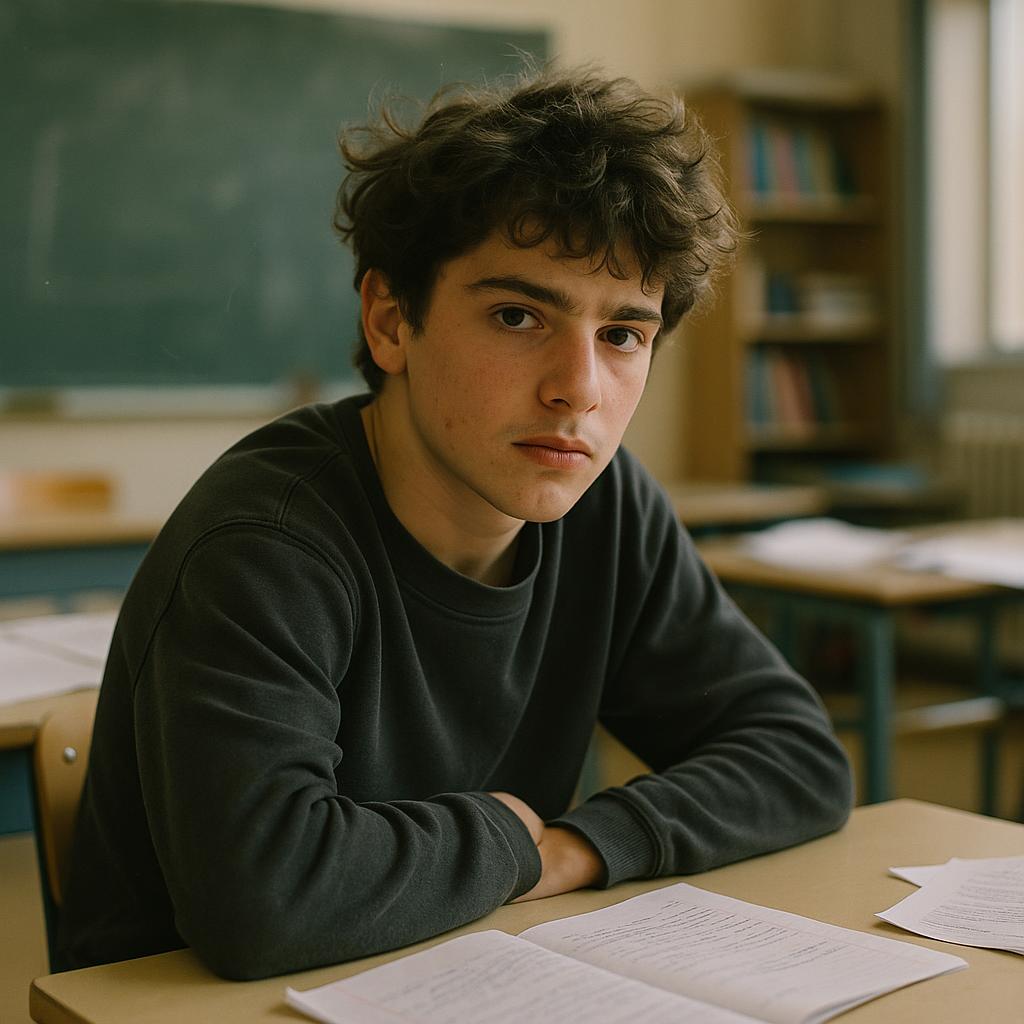 Image by RM AI
The Early Arrival
I arrived at school early that Tuesday, coffee in one hand and a stack of ungraded quizzes in the other, mentally preparing for another day of Max-induced chaos. But as I rounded the corner to my classroom, I nearly dropped everything. There was Max—THE Max—sitting cross-legged outside my door, head bent over what appeared to be an actual book. Not his phone. Not a gaming magazine. A book. I blinked hard, convinced I was hallucinating from caffeine overdose. He glanced up as I approached, and instead of his usual smirk, he just nodded slightly. No sarcastic comment. No eye roll. Nothing. When I unlocked the door, he followed me in silently, took his regular seat, and went back to reading. I busied myself setting up the day's materials, stealing glances at him every few seconds like I was watching a tiger that might pounce. But he just sat there... reading. The classroom clock ticked loudly in the silence. After nine years of teaching, I'd seen plenty of student transformations, but this felt different—like watching a hurricane suddenly decide to become a gentle breeze. I couldn't help wondering what exactly had happened at the Peterson household to cause this 180-degree turn, and more importantly, whether it would last beyond first period.
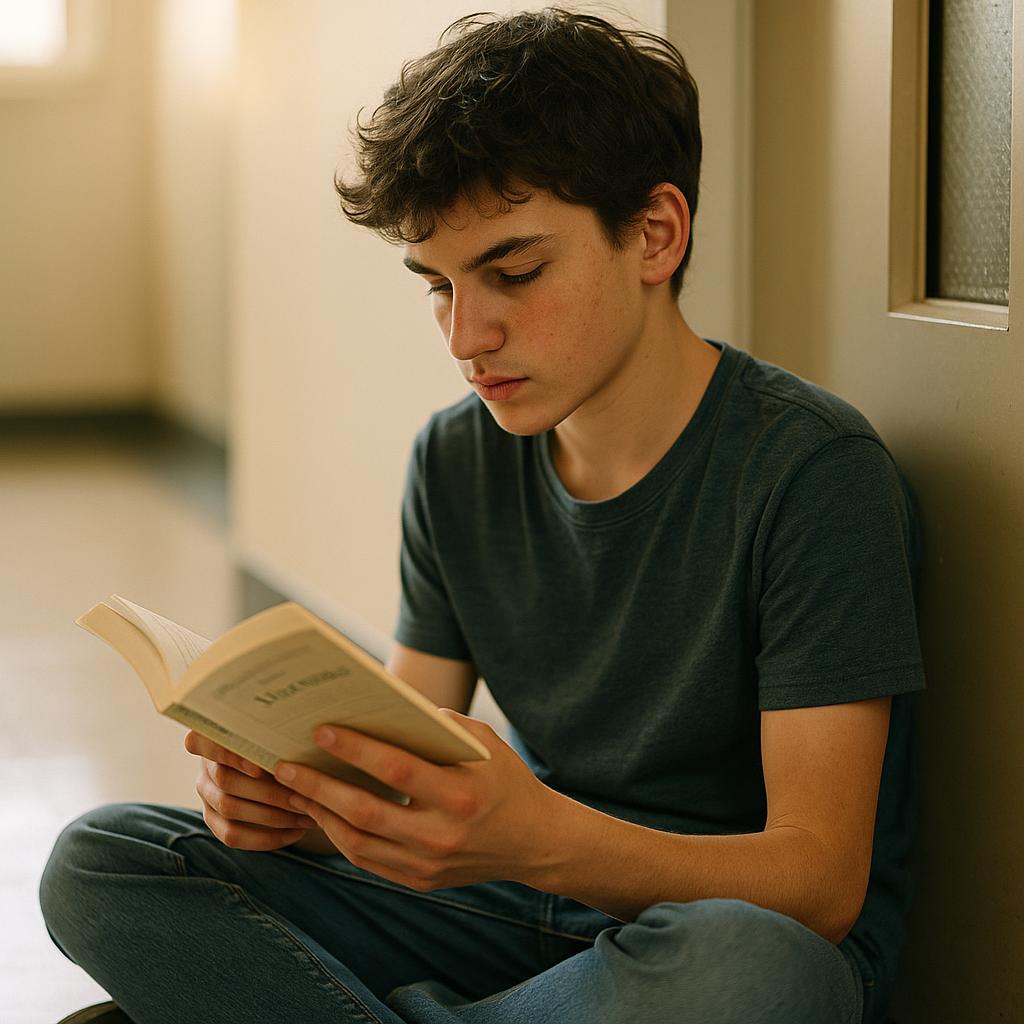 Image by RM AI
The Book on the Desk
I tried not to stare at Max as he sat there, quietly turning pages of 'The Hobbit' like this was completely normal behavior for him. The book was well-worn, with dog-eared corners and a cracked spine that suggested it was actually being read, not just held as a prop for some elaborate prank. I kept glancing up from my lesson plans, half-expecting him to launch the book across the room or reveal it was hollowed out to hide his phone. When other students began filtering in, their reactions mirrored my own disbelief. 'Whoa, Max is here? Before the bell?' whispered Aiden to Sophia. 'And he's... reading?' Madison did a theatrical double-take as she passed his desk, while Tyler actually stopped and asked, 'Dude, are you feeling okay?' Max just shrugged without looking up, his finger tracing along a line about dragons and gold. The Max I knew would have milked this attention, turned it into a performance. But this Max just kept reading, seemingly absorbed in Bilbo's journey. I couldn't help but wonder if the Petersons had somehow found and replaced their son with a surprisingly convincing doppelgänger. Whatever was happening, I wasn't about to question this miraculous cease-fire – though I couldn't shake the feeling that I was witnessing something far more significant than a troublemaker temporarily behaving himself.
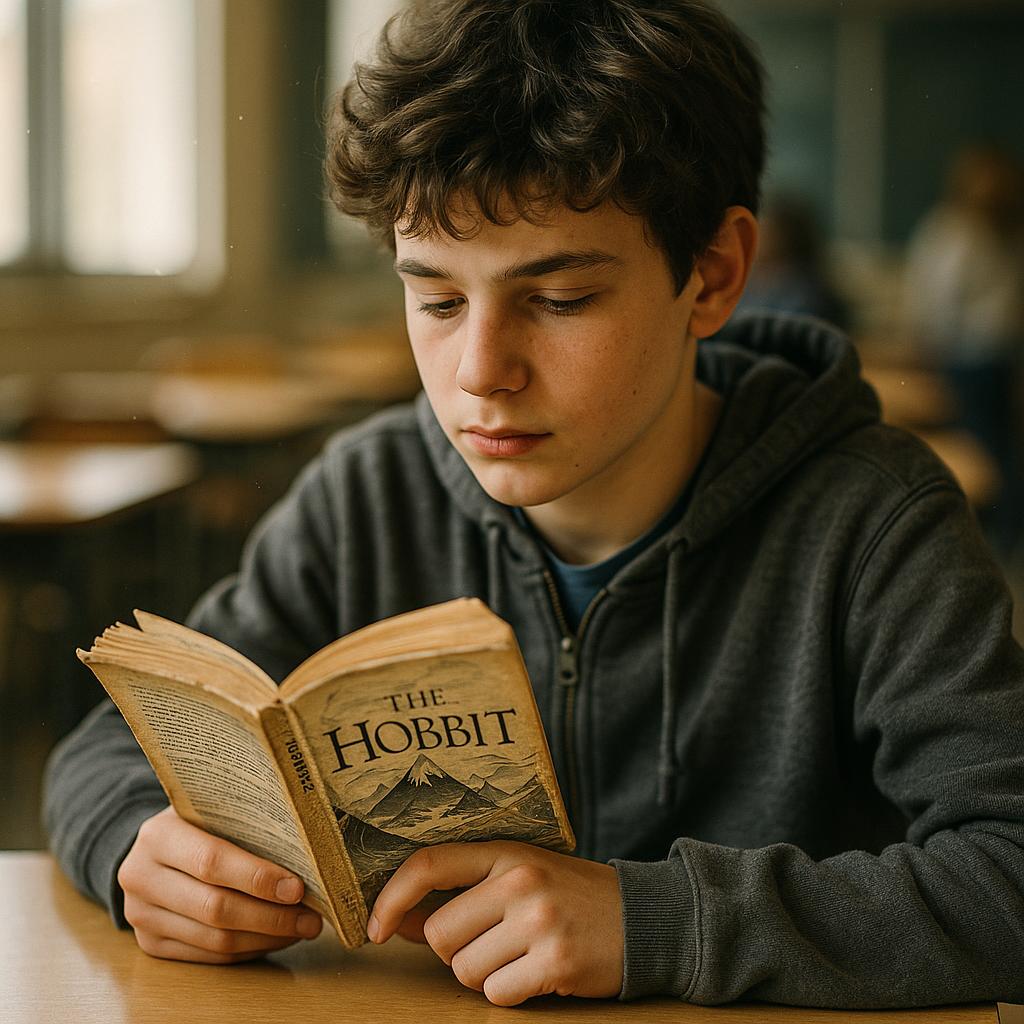 Image by RM AI
The First Completed Assignment
Later that day, I stood at the front of the classroom, hand outstretched like a toll collector as students filed past, dropping off their homework assignments. 'I left mine at home,' mumbled Tyler. 'My printer ran out of ink,' sighed Madison. The usual parade of excuses. Then came Max's turn, and I braced myself for whatever creative story he'd concocted overnight. But instead, he silently placed a worksheet in my hand—not crumpled, not torn, but flat and filled with actual writing. I tried to maintain my poker face as I scanned the page. Every single problem had been attempted. The work wasn't perfect—there were eraser marks and cross-outs—but it was genuine effort. The kind of honest struggle that teachers live for. 'Thank you, Max,' I said, keeping my voice neutral despite the fireworks going off in my brain. The other students froze like they'd witnessed a unicorn sighting. Olivia's jaw literally dropped. Aiden whispered something to Sophia, who shook her head in disbelief. Max just shrugged and returned to his seat without his usual theatrical bow or sarcastic comment. As I placed his worksheet on top of the stack, I couldn't help but wonder: was this a one-time miracle, or the first sign of something truly transformative happening with my classroom hurricane?
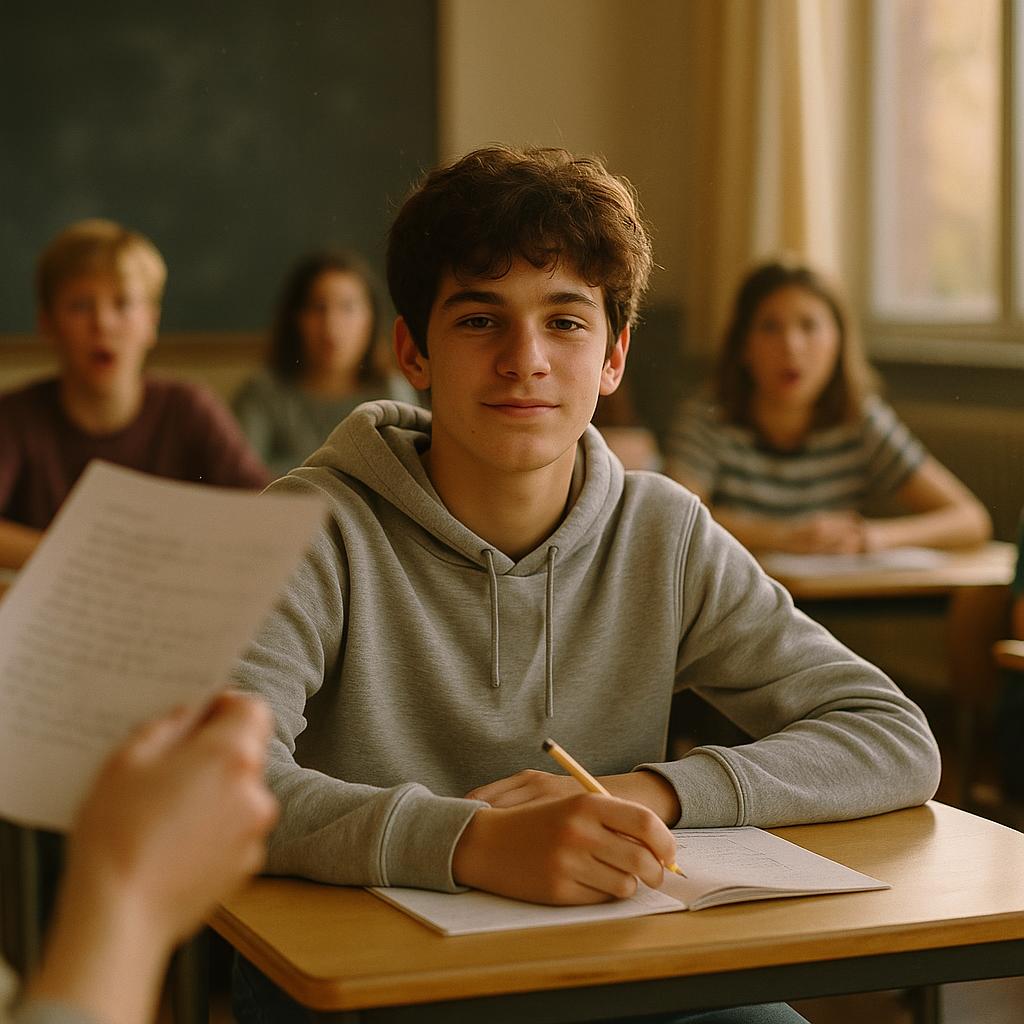 Image by RM AI
The Pattern Shift
Over the next week, I watched Max like a scientist observing a rare specimen. Each day, he arrived before the bell, book in hand, and took his seat without fanfare. During group activities, instead of hijacking discussions with conspiracy theories about how the government was using math to control our minds, he actually... contributed. He'd raise his hand with relevant questions. He turned in not one, but THREE completed assignments—not perfect, mind you, but genuine attempts with actual work shown. I kept waiting for the mask to slip, for him to reveal this was all an elaborate setup for some spectacular classroom disruption. 'This can't be real,' I whispered to Mrs. Winters when she stopped by to check on things. 'It's like someone performed an exorcism on him.' The other students noticed too. I overheard Madison telling Sophia, 'I think Max got body-snatched,' while Tyler kept asking him if he was sick. Through it all, Max maintained this new, focused demeanor with only occasional flashes of his old sarcasm. The most shocking moment came when he voluntarily stayed after class to ask about a problem he'd missed on the quiz. As he left, I couldn't help wondering what exactly had happened at the Peterson household to cause such a dramatic transformation—and whether I was about to receive a thank-you note or a lawsuit.
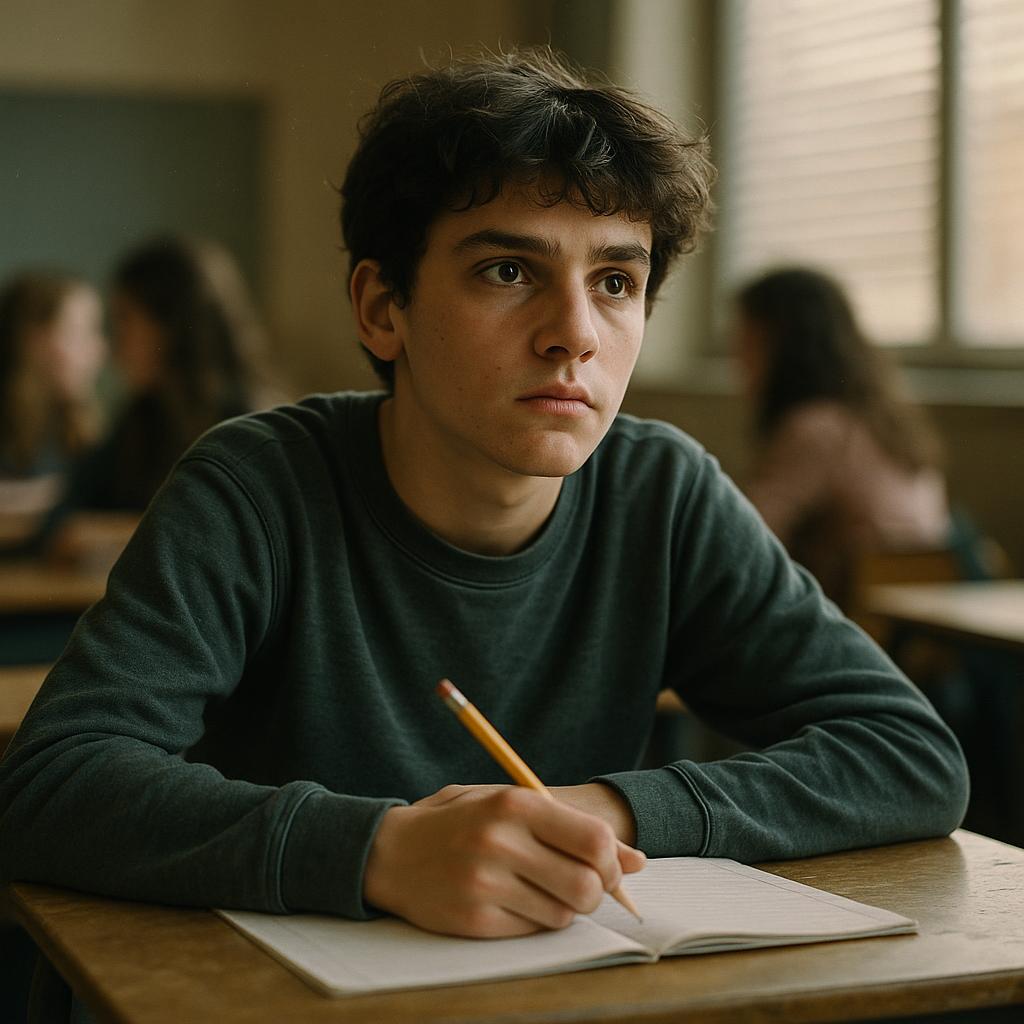 Image by RM AI
The Quiz Success
I'd been teaching long enough to know that one good day doesn't make a pattern, but when I gave a pop quiz on our current novel the following week, I couldn't help but feel a flutter of anticipation as I collected Max's paper. That evening, I saved his quiz for last, bracing myself for disappointment. When I finally worked up the courage to grade it, I nearly spilled my coffee all over my dining room table. An 87%. Not just passing—genuinely good. I circled the grade in red and started to write 'Great job!' before my hand froze mid-exclamation point. Was I celebrating too soon? Would this encourage him or jinx whatever miracle was happening? I finished the note anyway, then sat back in my chair, staring at his quiz with its thoughtful answers and complete sentences. This wasn't just a student who had studied—this was a student who had actually read and understood the material. The same kid who, just weeks ago, had loudly proclaimed that 'books are just trees that died for nothing.' I took a photo of his quiz and saved it to my phone, partly as evidence in case anyone accused me of making this up, but mostly because I had a feeling I was witnessing something rare and precious: the exact moment a student decides to change their own story.
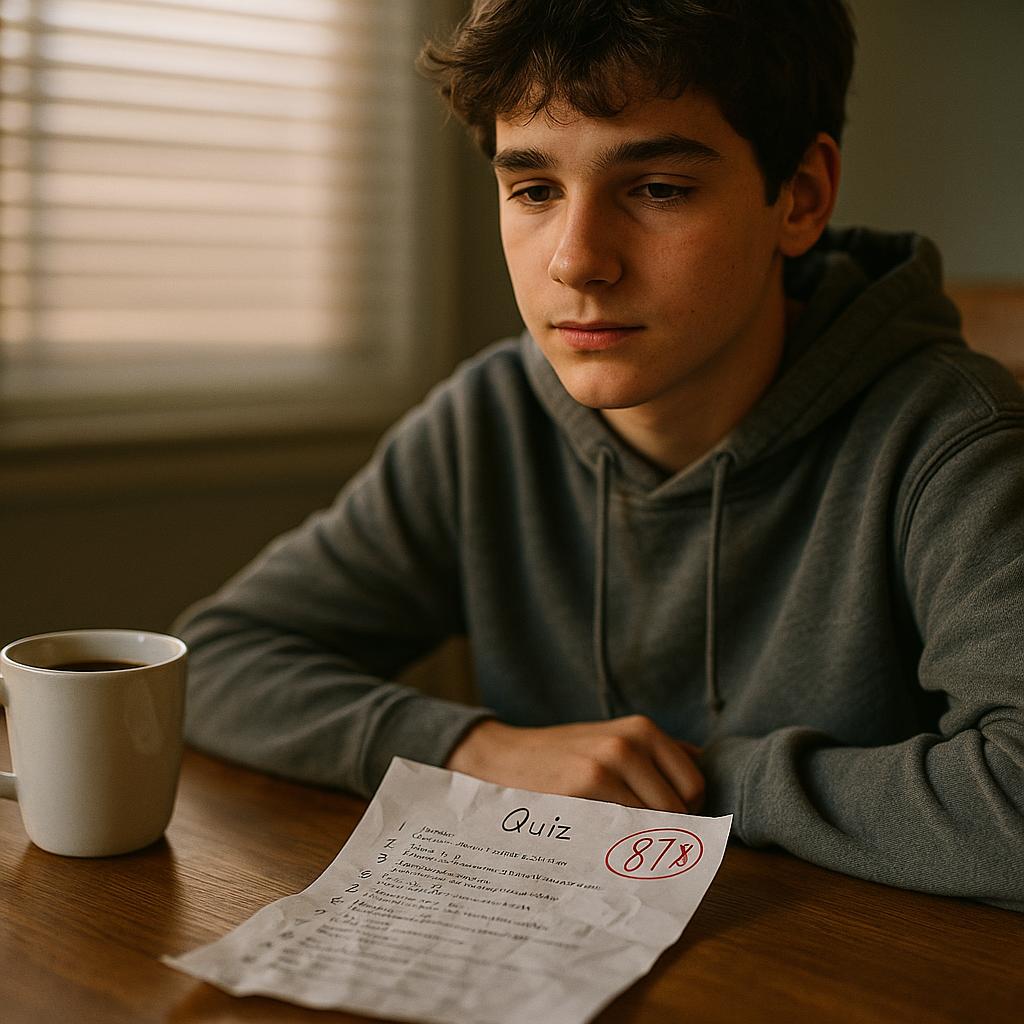 Image by RM AI
The Second Quiz Victory
A week later, I found myself grading another set of quizzes, saving Max's for last again. When I finally flipped to his paper, I had to do a double-take. A 92%. Not just a passing grade—a genuinely excellent one. His analysis of the protagonist's motivations showed actual critical thinking, and he'd referenced specific passages to support his arguments. I circled his grade with a red pen and added 'Outstanding work!' before I could second-guess myself. This wasn't a fluke. This was a student who had not only read the material but had engaged with it on a deeper level. The same kid who, just a month ago, had loudly proclaimed that 'reading is just staring at dead trees with hallucinations' was now writing thoughtful responses about character development and thematic elements. During class discussions, I'd noticed him actually participating, raising his hand to offer insights that sometimes surprised even me. I kept his quiz separate from the others, adding it to my growing collection of 'Max evidence'—physical proof that something remarkable was happening right before my eyes. What I couldn't figure out was whether I should acknowledge this transformation directly or if drawing attention to it might somehow break the spell.
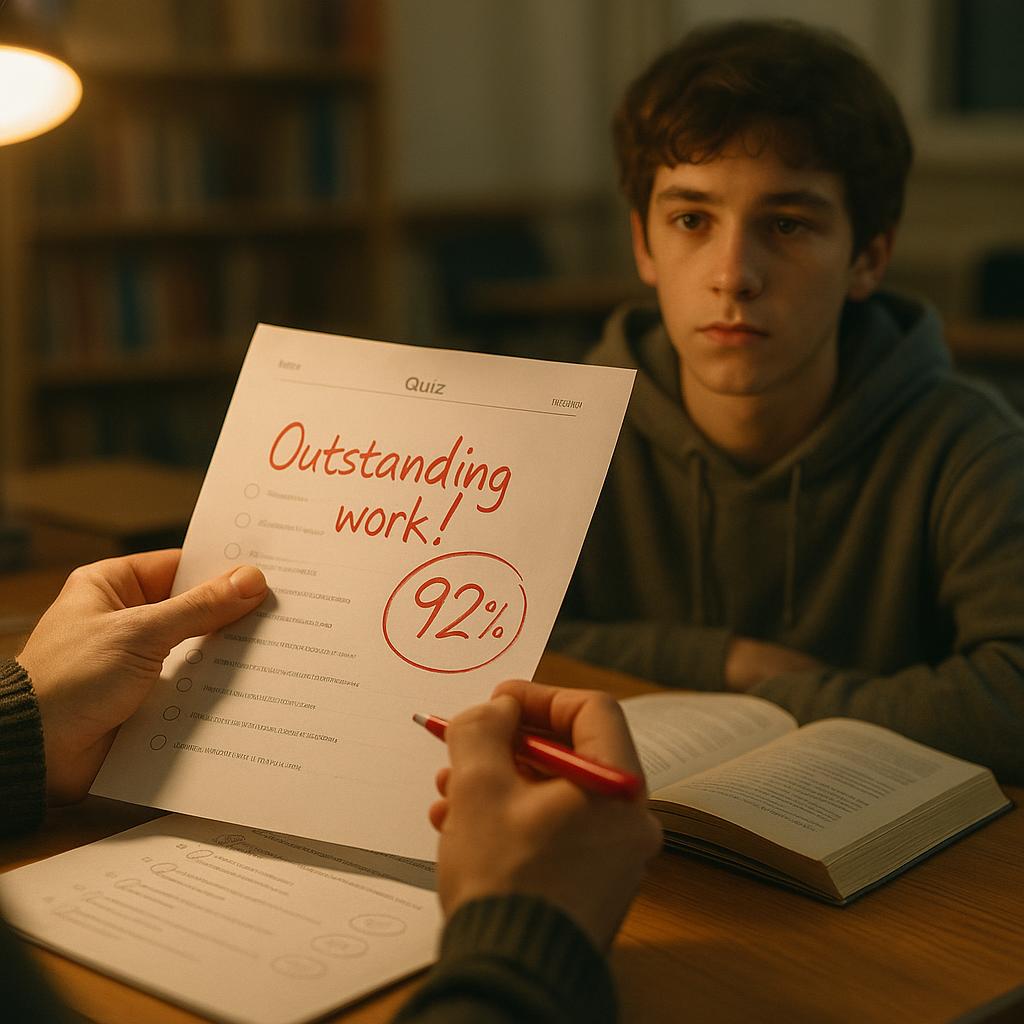 Image by RM AI
The Lunchtime Conversation
I was pouring my third cup of coffee in the teacher's lounge when Mrs. Chen, the math teacher, cornered me by the microwave. 'What kind of voodoo did you perform on Max Peterson?' she whispered, eyes wide with disbelief. 'He actually raised his hand today instead of shouting out random answers like he's on a game show.' I nearly choked on my coffee. 'Wait, Max? OUR Max?' Mr. Gonzalez from Science joined in. 'The kid actually completed a lab yesterday without turning it into a TikTok opportunity.' Soon, a small crowd of teachers had gathered around me, each with their own Max miracle to report. I leaned against the counter and shared the story of the blank packet, the comparison with another student's work, and the stunned silence of the Petersons. 'You showed them actual evidence?' gasped Ms. Williams, the English teacher. 'Bold move.' As I described the parents' wordless exit, heads nodded in understanding. 'Sometimes,' said Mr. Rivera, our veteran history teacher, 'parents need to see the truth without us sugar-coating it.' I agreed, but something still bothered me—this transformation seemed almost too good to be true, and I couldn't shake the feeling that there was more to this story than just a wake-up call from a packet comparison.
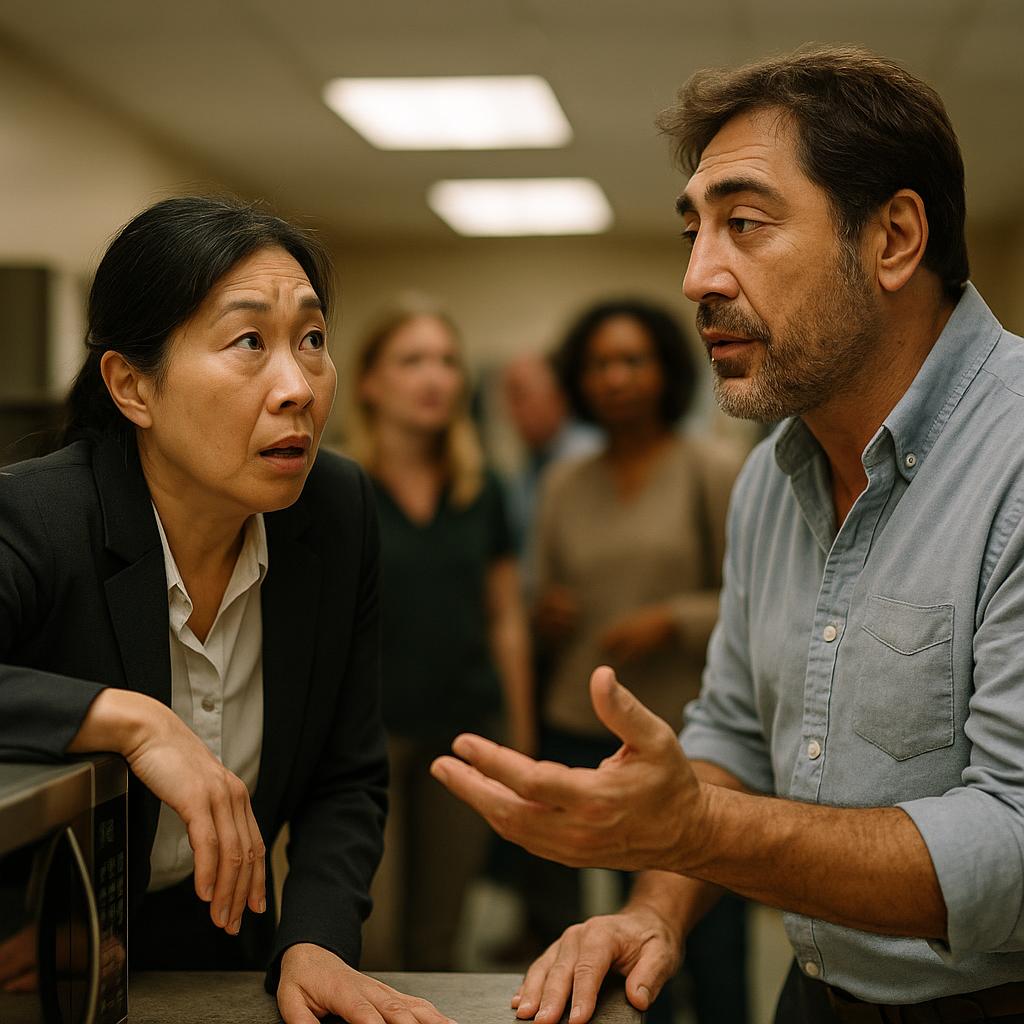 Image by RM AI
The After-Class Moment
The bell had rung ten minutes ago, and the classroom was empty except for Max and me. He lingered by my desk, shifting his weight from one foot to another, fingers nervously twisting the strap of his backpack. I pretended to organize papers, giving him space to speak first. The silence stretched between us like a tightrope. Finally, he cleared his throat. 'Mr. Fry...' he started, then paused, eyes fixed on the floor. 'Thanks for giving me that packet.' I looked up, trying not to show my surprise. 'The one you didn't complete?' I asked gently. He nodded, a flush creeping up his neck. 'My parents grounded me for not doing it. They took away my Xbox and made me study every night.' He glanced up briefly. 'I got bored and started reading. Turns out I like it.' The simplicity of his confession nearly knocked me sideways. After weeks of wondering what miracle had occurred, here was the answer—delivered in the awkward, honest way that only a thirteen-year-old could manage. 'I'm glad to hear that, Max,' I said, fighting to keep my voice steady. What he said next, though, would completely blindside me.
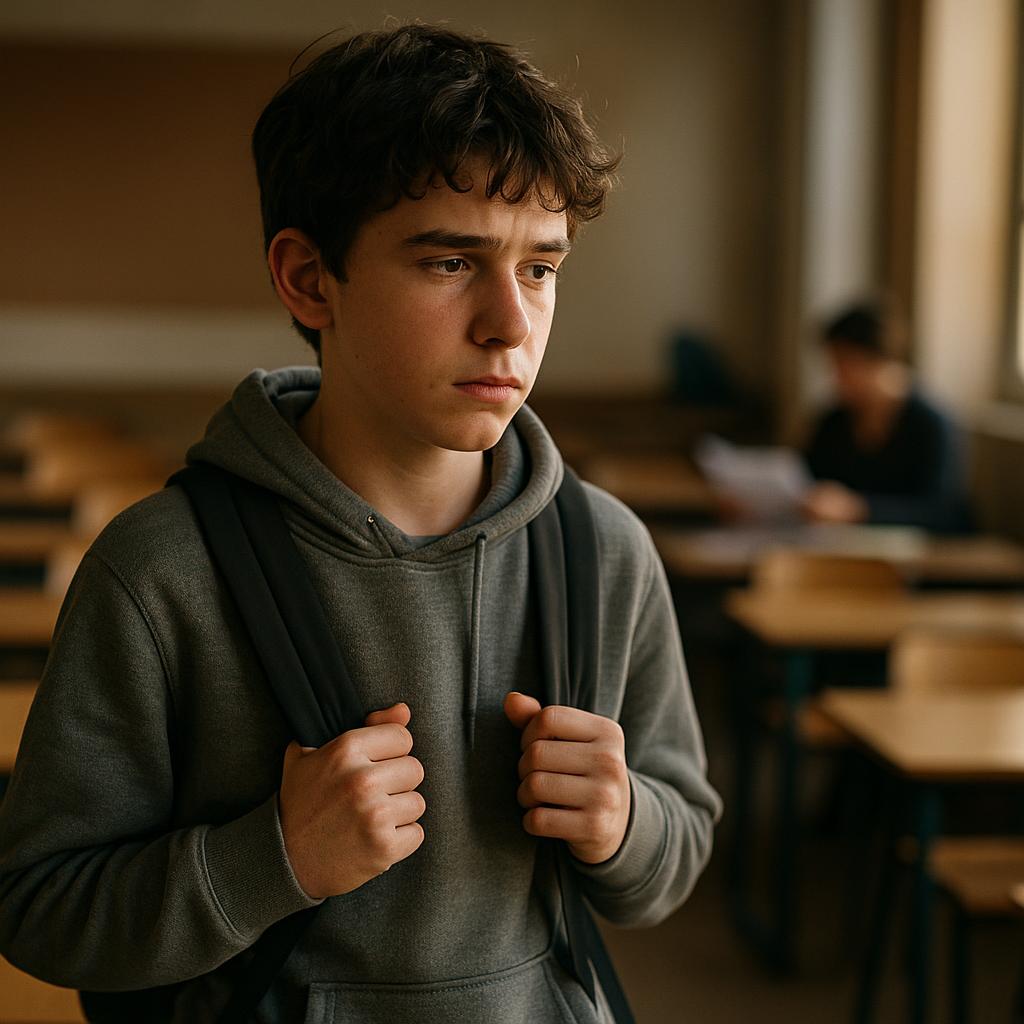 Image by RM AI
The Book Recommendations
The day after our conversation, I brought a small stack of books to class and casually placed them on my desk. Nothing curriculum-related—just good stories I thought might keep Max's newfound interest alive. 'Ender's Game' sat on top, its worn cover showing years of being passed from one student to another. When Max arrived early (which was now becoming his habit), I gestured to the pile. 'Thought you might want to try one of these,' I said, trying to sound casual. He picked up 'Ender's Game' with surprising reverence, turning it over to read the back. 'It's about a kid genius who saves humanity,' I explained. 'Lots of strategy and space battles.' Three days later, he returned it—completely finished. 'Got anything else like this?' he asked, eyes bright with something I hadn't seen before: genuine curiosity. Soon we had an unofficial book club of two, meeting for five minutes before class to discuss plot twists and character arcs. 'I think Ender was justified,' he'd argue, or 'That ending was messed up, but in a good way.' I found myself looking forward to these brief exchanges, watching his analytical skills sharpen with each new story. What amazed me most wasn't just that he was reading—it was how he was reading, with the kind of hunger I recognized from my own childhood. What I didn't realize was that these book discussions were preparing him for something much bigger than either of us expected.
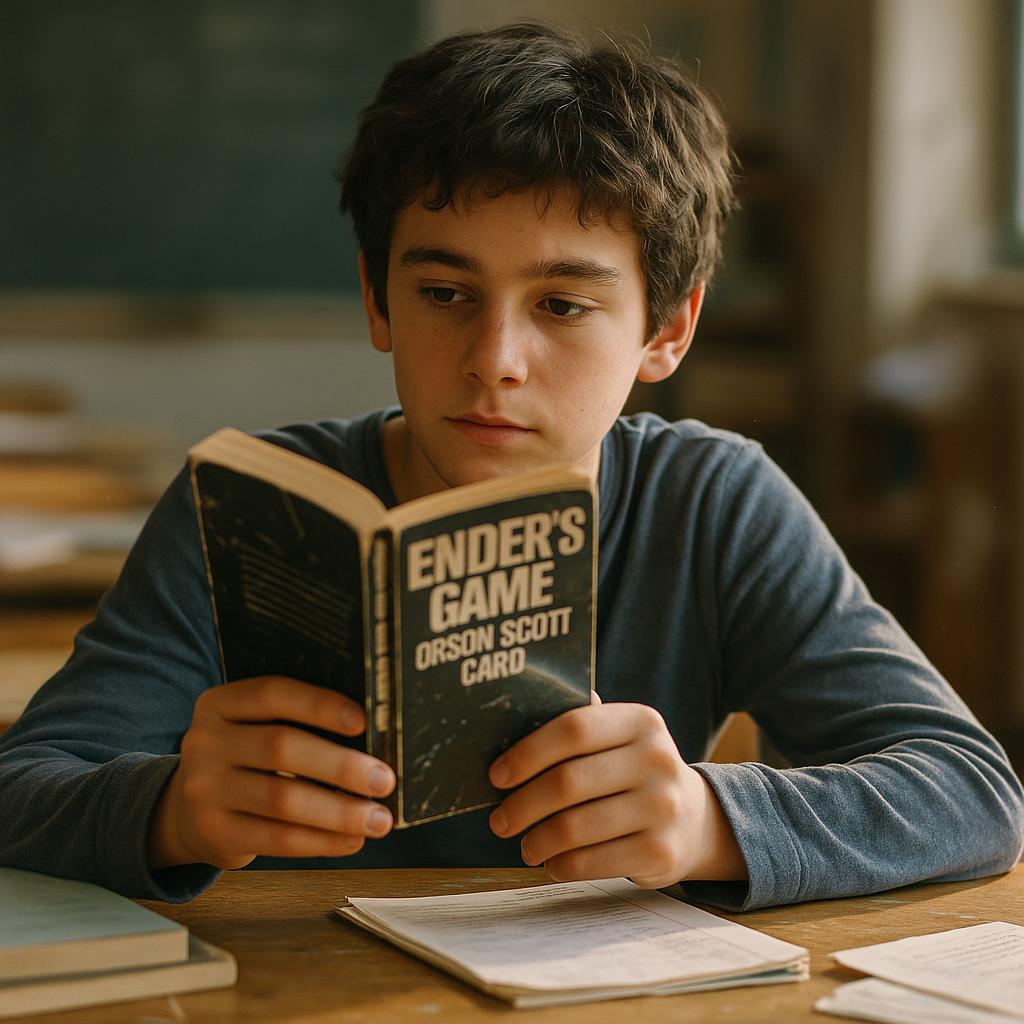 Image by RM AI
The Group Project Surprise
When I announced the ancient civilizations group project, I could feel the collective tension in the room as students realized they'd be assigned to teams. I deliberately placed Max with Olivia, Tyler, and Madison—three of my most diligent students. I braced myself for the inevitable complaints, maybe even a parent email questioning my judgment. But they never came. Instead, something extraordinary happened. Not only did Max not complain about his group assignment, but he actually volunteered to research Mesopotamian irrigation systems. I nearly fell out of my chair when he emailed me his portion of the research THREE DAYS before the deadline. During their presentation, I watched in stunned silence as Max—the same kid who once spent an entire class period trying to convince everyone that aliens built the pyramids—spoke confidently and articulately about ancient water management techniques. No jokes about 'ancient toilets.' No random tangents about video games. Just clear, focused information delivered with genuine interest. The other teachers who happened to be in the room during the presentation kept glancing at me with raised eyebrows, as if to ask, 'Is this really happening?' But what truly floored me wasn't just Max's academic turnaround—it was what I overheard Olivia say to him after they finished.
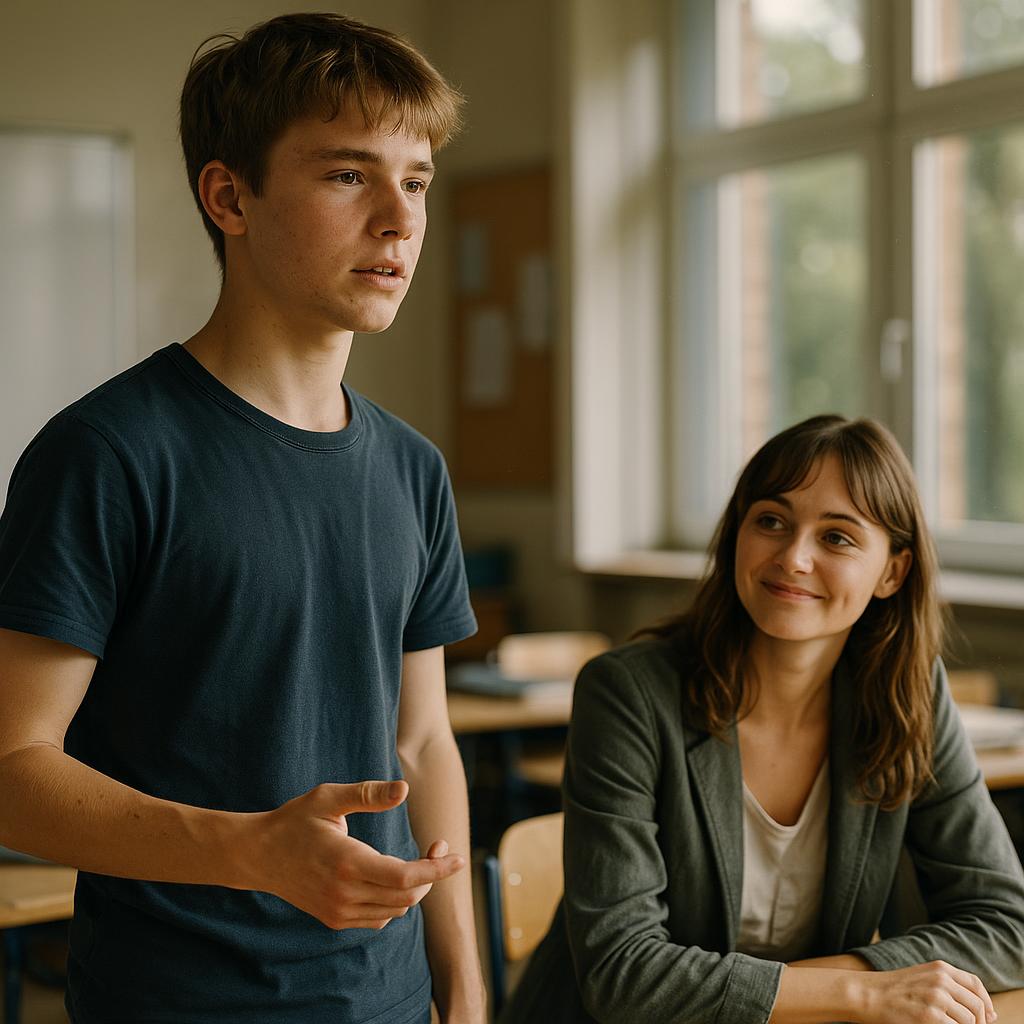 Image by RM AI
The Progress Report
Progress report day always feels like judgment day for teachers too. As I sat at my desk that evening, updating grades in the system, I couldn't help but smile when I got to Max's name. His grade had climbed from a solid F to a respectable C+, with his most recent assignments hovering in the B range. I typed detailed comments about his 'marked improvement in class participation' and 'consistent effort on assignments'—phrases I never imagined associating with Hurricane Max. I paused before hitting save, wondering how the Petersons would react. Would they see this as vindication of their 'my son is gifted' narrative? Or would they recognize what I saw—that the real achievement wasn't the grade itself, but Max's discovery that effort actually matters? I added one final comment: 'Max has demonstrated remarkable growth this quarter through consistent work and engagement.' I wanted to be generous without feeding into their previous delusions. As I printed out his report, I realized I was genuinely curious about their response—something I hadn't felt during our first disastrous meeting. What I didn't expect was the email that would appear in my inbox just twenty minutes after the automated progress reports went out.
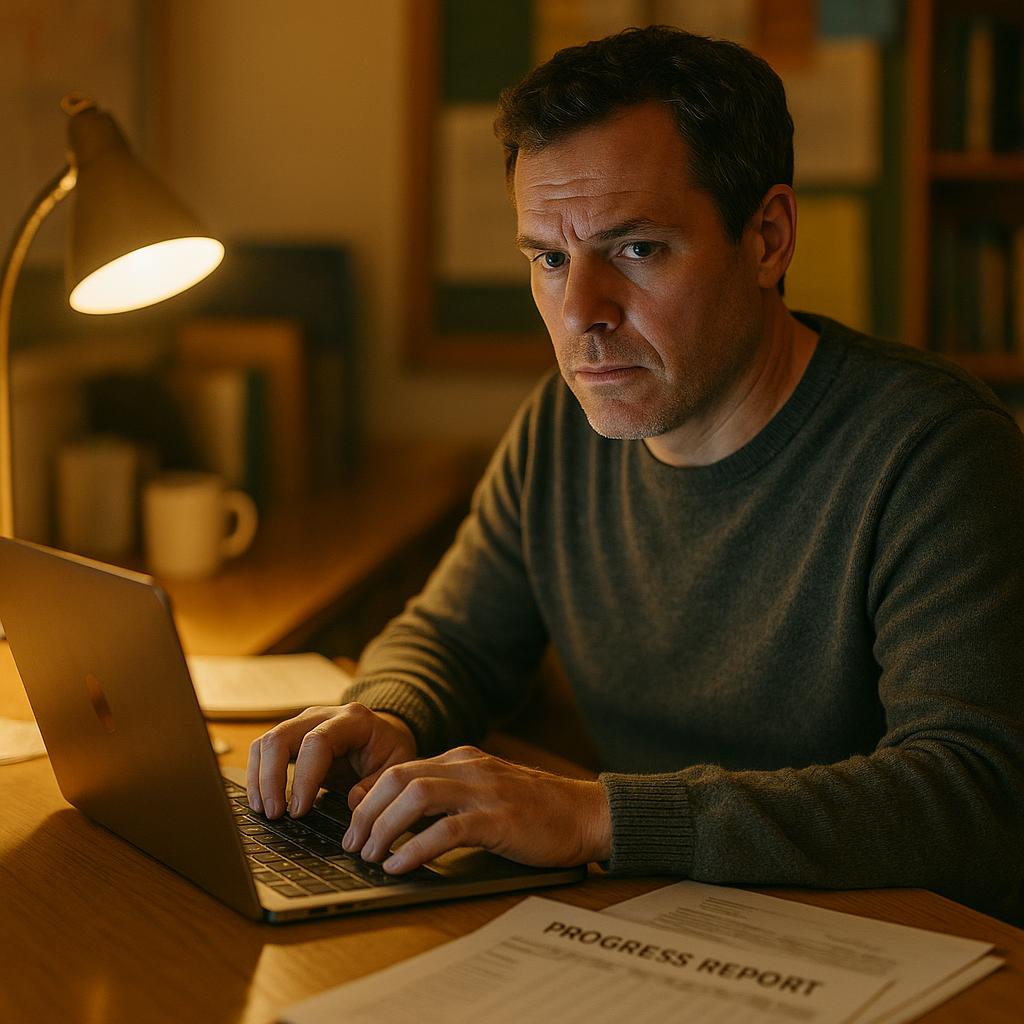 Image by RM AI
The Unexpected Voicemail
I was packing up my classroom after a particularly long day when I decided to check my voicemail. Three new messages—one from the principal about an upcoming staff meeting, another from the school librarian about overdue books, and then... Max's dad. I nearly dropped my phone. 'Hey Mr. Fry,' Mr. Peterson's voice came through, awkward and hesitant, so different from the confrontational tone I remembered. 'I, uh, just wanted to say thank you. We thought we were helping Max by telling him he was gifted. Turns out we were just making excuses for him. You gave him a wake-up call. We appreciate it.' I played the message again, then a third time, convinced I must have misheard. This was the same man who'd leaned across my desk with a scowl and accused me of being incompetent. The same father who'd enabled years of Max's behavior by blaming everyone but his son. I sat down at my desk, staring at my phone in disbelief. Parents rarely admit they were wrong—especially not the ones who start out so defensive. I saved the message, half-expecting it to disappear like some kind of teaching fever dream. What I didn't know then was that this voicemail was just the beginning of something even more unexpected.
 Image by RM AI
The Thank You Card
The very next day, Max walked into class early—as had become his new habit—but this time, he was clutching something in his hand. As students filtered in behind him, he approached my desk and silently placed a small envelope in front of me. 'It's nothing big,' he mumbled, quickly retreating to his seat before I could respond. I waited until the class was busy with their warm-up activity before carefully opening it. Inside was a simple card with a cartoon book character on the front. But it was what was written inside that nearly knocked the wind out of me. In shaky, adolescent handwriting: 'You were right. I'm not gifted. But I'm not dumb either. I just needed someone to call me out.' He'd signed it 'Max, future teacher.' I had to take a deep breath to maintain my composure, pretending to check my lesson plans while I processed what I'd just read. That evening at home, I pinned the card to my bulletin board, right next to my teaching certificate. In nine years of teaching, I'd received thank-you notes before, but never one that hit me quite like this. As I stared at those words—'future teacher'—I wondered if Max truly understood the profound gift he'd just given me, far greater than any card could contain.
 Image by RM AI
The Parent Conference Redux
When parent-teacher conference day rolled around again, I approached it with a completely different mindset. Instead of dreading the Petersons, I actually found myself looking forward to our meeting. I'd prepared a portfolio showcasing Max's transformation—his improving quiz scores, completed assignments, and thoughtful class contributions. When they walked in, the change was palpable. Gone was the combative father with his accusatory scowl and the enabling mother with her delusional expectations. In their place sat two humbled parents who greeted me with genuine smiles. 'We can't thank you enough, Mr. Fry,' Mrs. Peterson said, placing a Tupperware container on my desk. 'Homemade chocolate chip cookies. A peace offering for how we behaved last time.' Mr. Peterson nodded, looking slightly embarrassed. 'We were wrong about a lot of things,' he admitted. 'Max needed accountability, not excuses.' As we reviewed his progress together, I noticed Mrs. Peterson's eyes welling up when I showed them his latest essay—a solid B+ with actual paragraph structure and coherent arguments. 'He's reading for fun now,' she whispered, as if sharing a miracle. 'Actual books!' What struck me most wasn't just their gratitude, but how they kept asking what else they could do to support Max's continued growth. Just as we were wrapping up, Mr. Peterson hesitated, then asked me a question that would change everything.
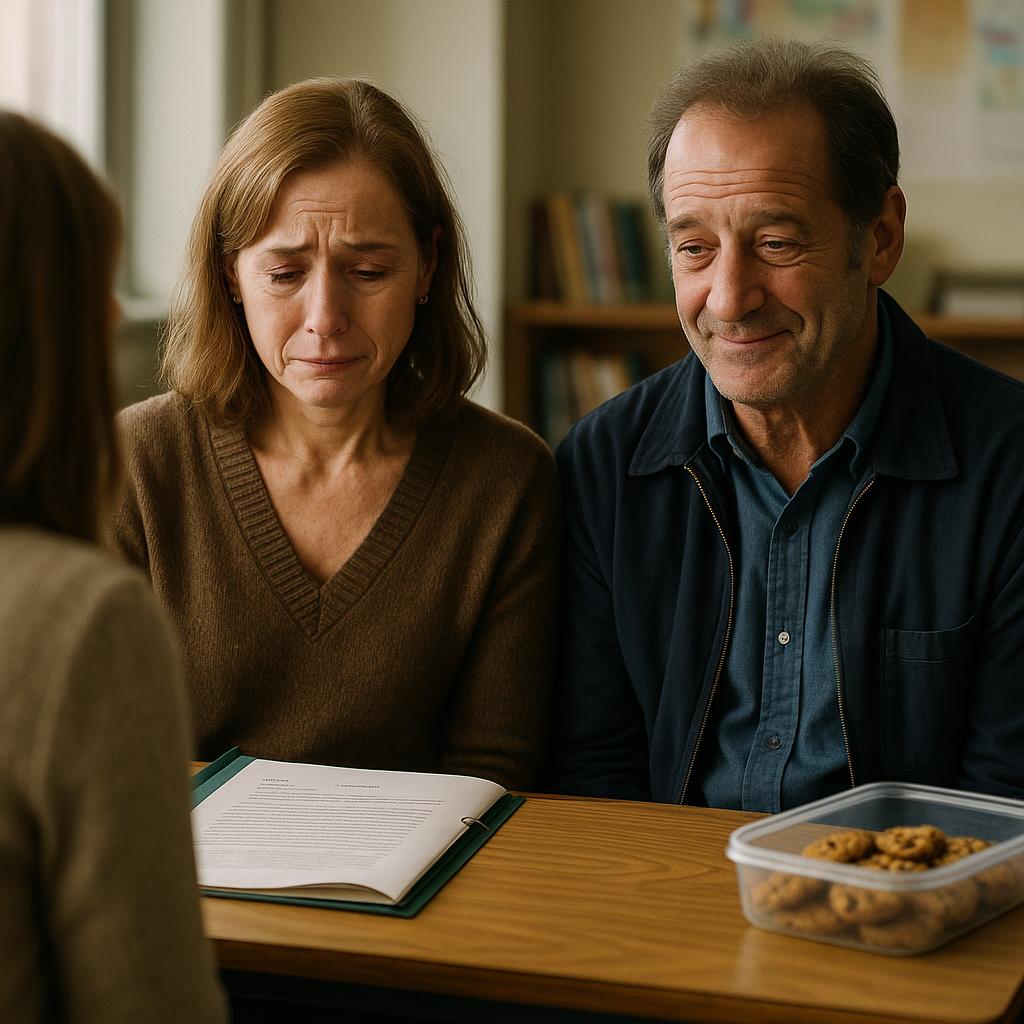 Image by RM AI
The Home Study Plan
As the Petersons explained their new home strategy, I found myself nodding with growing respect. 'We've completely restructured Max's home life,' Mr. Peterson explained, pulling out a color-coded schedule from his folder. 'Regular study times, reading requirements before any screen time, and actual consequences when he doesn't follow through.' Mrs. Peterson jumped in, 'We realized we were part of the problem all along. We always told him he was special, but never actually made him work for anything.' The honesty in her voice was striking. They detailed how Max now had a dedicated study space, free from distractions, and how they'd started sitting with him during homework time instead of just asking if it was done. 'The first week was... challenging,' Mr. Peterson admitted with a grimace that suggested 'challenging' was a massive understatement. 'There were door slams, dramatic declarations about how we were ruining his life—the works.' Mrs. Peterson smiled. 'But then something clicked. He started seeing the connection between effort and results.' As they continued sharing their journey, I couldn't help but think how rare this was—parents who could admit their mistakes and completely pivot their approach. What they said next, though, made me realize this transformation went far deeper than just Max's academic turnaround.
 Image by RM AI
The Classroom Helper
As Max's transformation continued, I decided to test his growth by giving him more responsibility in the classroom. 'Max, would you mind distributing these handouts?' I asked one morning, half-expecting reluctance. Instead, he jumped up with an enthusiastic 'Sure, Mr. Fry!' and carefully handed materials to each student. What started as simple tasks soon evolved into something more meaningful. I noticed him leaning over to help Ethan, who struggled with reading comprehension, explaining the assignment in terms that made sense. 'It's like in Minecraft,' I overheard him say, 'you're just gathering evidence blocks to build your argument.' By the third week, Max was voluntarily staying after class to help organize materials for the next day. The real breakthrough came when I asked him to lead a review session for our novel unit. Standing at the front of the class, the former class clown guided his peers through character analysis with patience and clarity I never would have imagined possible months earlier. Mrs. Chen stopped me in the hallway, wide-eyed. 'Whatever you did with Max, it's spreading. He actually tutored Jeremy through a math problem yesterday instead of making paper airplanes.' Other teachers reported similar experiences—Max raising his hand instead of blurting out answers, offering to help classmates, even staying focused during group work. What none of us realized was that Max's transformation was about to face its biggest test yet.
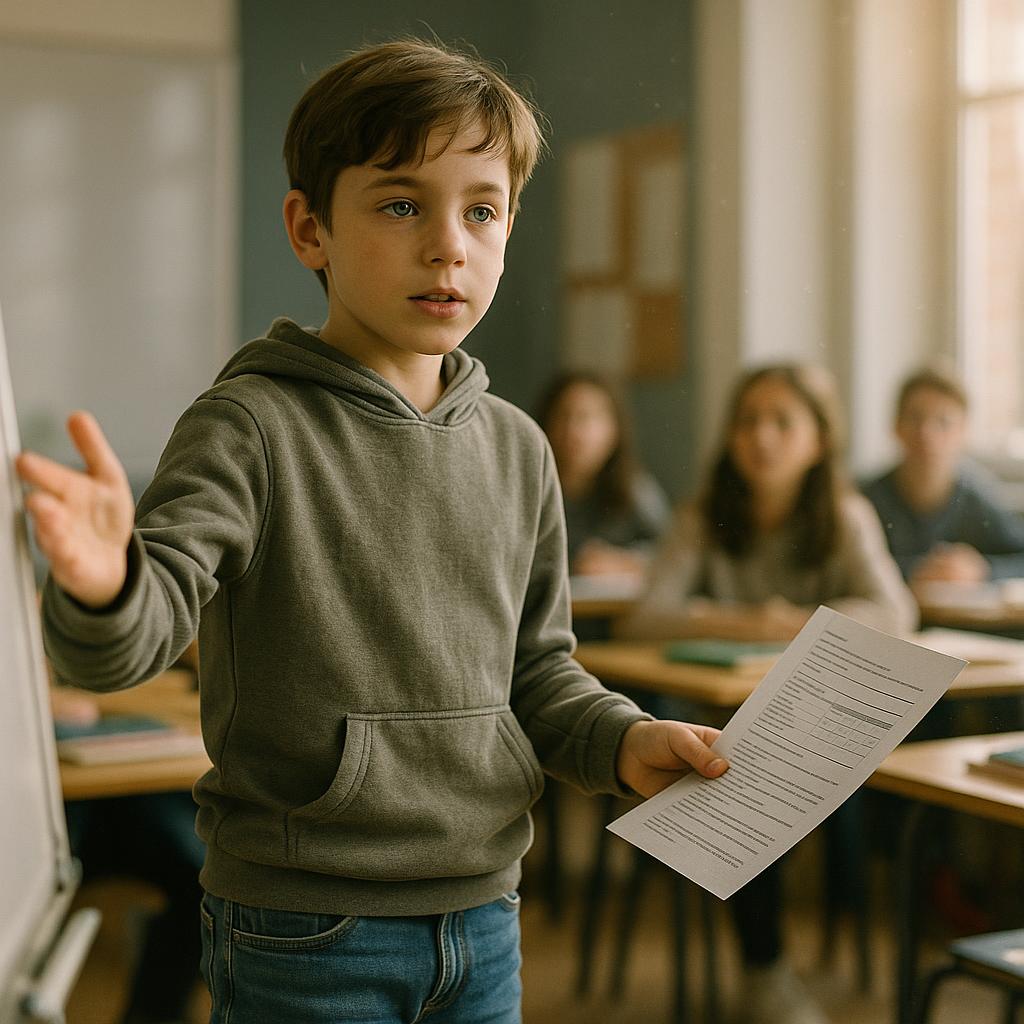 Image by RM AI
The Essay Contest
When our school announced the annual essay contest with the theme 'Overcoming Challenges,' I saw an opportunity. 'Max,' I said casually after class one day, 'have you thought about entering?' I expected hesitation, maybe even that old defensive sarcasm. Instead, his eyes lit up. 'You think I could?' That simple question—so earnest, so different from the Max who once dominated my classroom with chaos—nearly made me emotional. Not only did he enter, but he attacked the project with an intensity I'd never seen before. His topic? His own transformation from class troublemaker to engaged student. I watched in amazement as he worked through draft after draft, actually seeking feedback instead of avoiding it. 'Is this part clear enough, Mr. Fry?' he'd ask, pointing to a paragraph about his 'wake-up call.' One afternoon, I found him hunched over his laptop, rewriting his conclusion for the third time. 'It has to be perfect,' he explained, not looking up. This from the boy who once returned a completely blank assessment packet with the excuse that 'the questions were written wrong.' When he finally submitted his essay, he handed me a copy too. 'Even if I don't win,' he said with a shrug that couldn't quite hide his hope, 'I wanted you to have this.' What I read that evening would bring tears to my eyes for reasons I never could have anticipated.
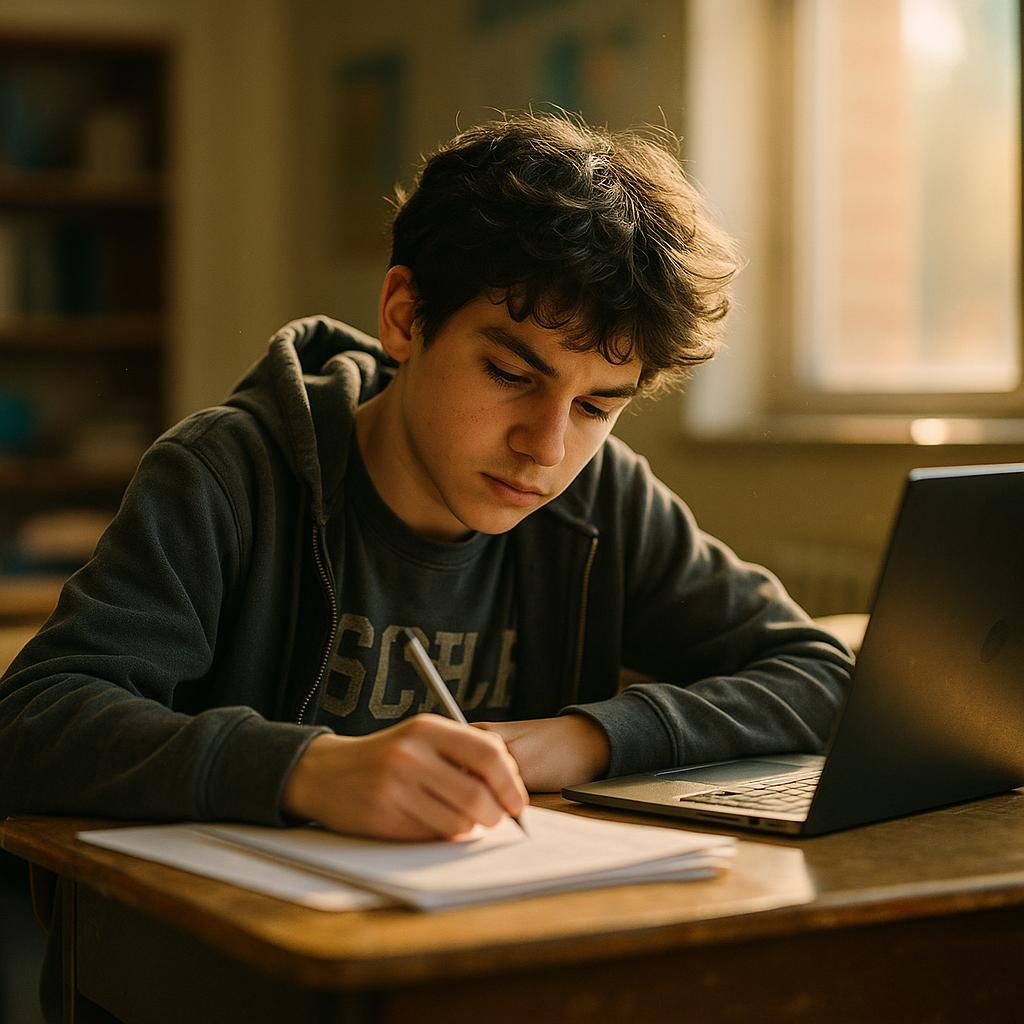 Image by RM AI
The Honorable Mention
The day of the school assembly arrived, and I found myself scanning the crowd for Max as the principal announced the essay contest winners. When they called his name for honorable mention, I felt a surge of pride that rivaled anything I'd experienced in my teaching career. Max walked to the stage with his shoulders back, a far cry from the slouching troublemaker who'd stormed into my classroom months ago. As he accepted his certificate, I glanced toward the audience and spotted the Petersons. They weren't just clapping—they were beaming, their faces lit with genuine pride rather than the entitled expectation I'd seen during our first meeting. Mrs. Peterson was actually wiping away tears. This wasn't about having a 'gifted' child anymore; this was about celebrating hard work and growth. When Max returned to his seat, clutching his certificate like it was Olympic gold, he caught my eye and gave me a small thumbs-up. That simple gesture contained volumes—acknowledgment of our shared journey, gratitude for the tough love, and something else that made my throat tight: respect. But what happened after the assembly, when Max approached me with a folded piece of paper, would change the trajectory of both our lives in ways I never could have imagined.
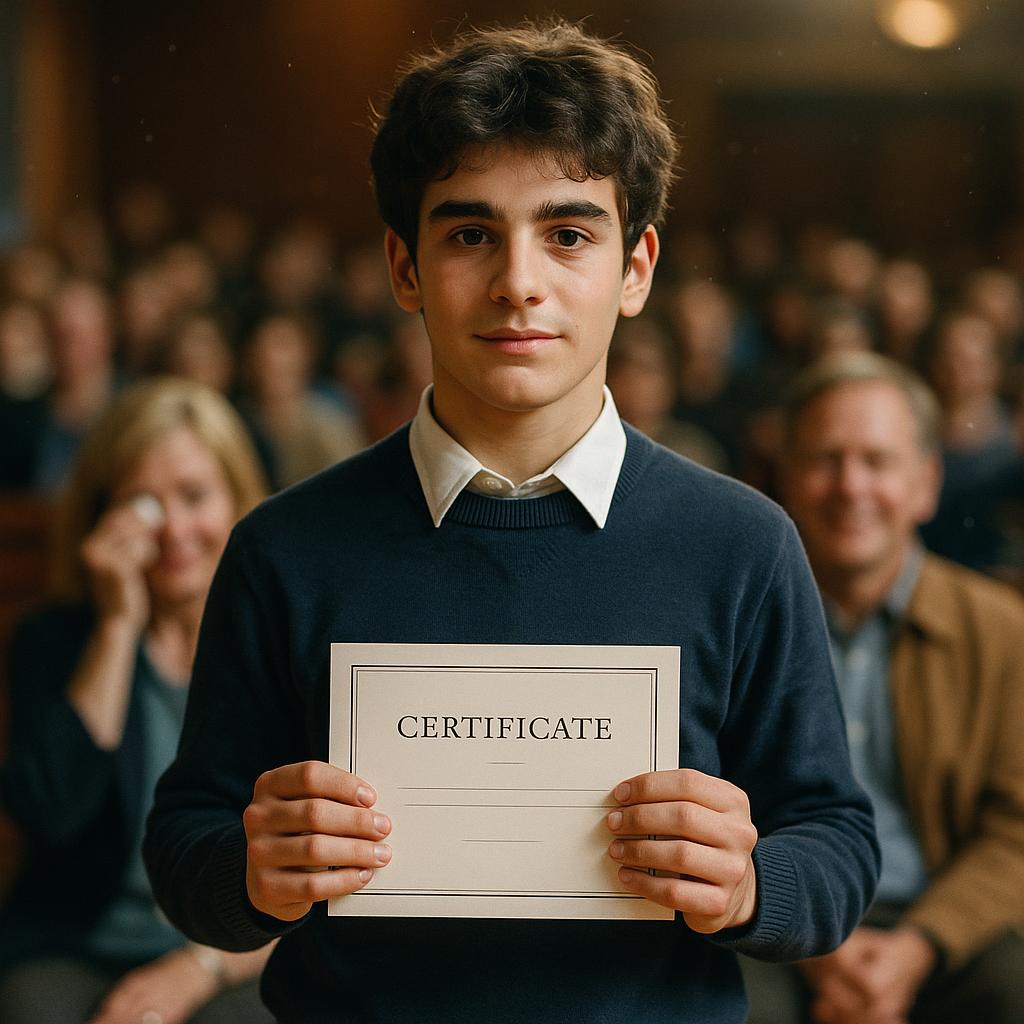 Image by RM AI
The Career Day Revelation
Career Day at our school is always a mixed bag. Some kids have elaborate plans to become astronauts or YouTube stars, while others just shrug and say whatever their parents do. When Max's turn came, I expected something along the lines of video game designer or professional gamer based on his earlier obsessions. Instead, he stood up with a confidence I'd never seen before, shoulders squared and voice steady. 'I want to be a teacher, like Mr. Fry,' he announced to the room. I nearly choked on my coffee as thirty pairs of eyes swiveled between us. The room fell completely silent until Max continued, 'Because good teachers don't just teach subjects - they teach people how to be better.' Mrs. Chen, our science teacher, caught my eye from across the room and gave me a knowing smile while I struggled to maintain my professional composure. Several other colleagues shot me those 'look-what-you-did' glances that made my ears burn. I managed a neutral nod toward Max as he sat down, but inside, my heart was doing cartwheels. This kid who once made me question my career choice was now citing me as his inspiration. What Max didn't know was that his career day announcement would soon be put to the test in a way neither of us expected.
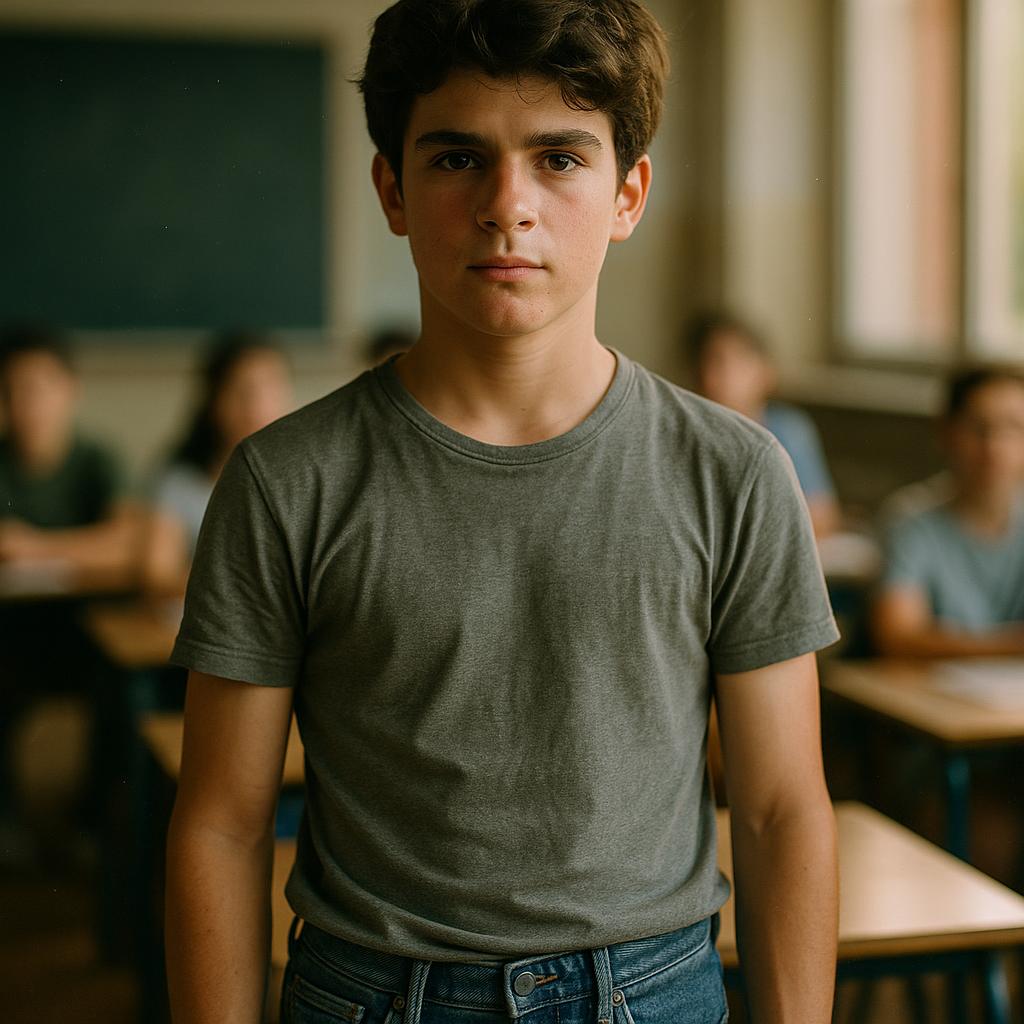 Image by RM AI
The End-of-Year Exams
As May rolled around, I watched in amazement as Max transformed into a student I barely recognized. The kid who once couldn't be bothered to write his name on assignments was now color-coding his study guides. He created an elaborate system of flashcards that covered his entire bedroom wall (his mom sent me photos, still in disbelief). What floored me most was seeing him organize study sessions in the library, patiently explaining literary devices to struggling classmates. 'It's like leveling up in a game,' he told them, 'you just need the right strategy.' The morning of the first exam, I found myself oddly nervous FOR him. When he walked in, there was none of the old Max swagger or deflection tactics—just quiet determination. He finished his test with fifteen minutes to spare, double-checked his answers, and handed it in with a small nod. No drama. No excuses. Just... competence. When I graded his exam that evening, I had to check the name twice to believe it. Not only had he passed, he'd scored in the top quarter of the class. But what I didn't know then was that Max's biggest challenge wasn't academic at all—it was waiting for him at home, and it would test everything he'd learned about perseverance.
 Image by RM AI
The Final Grades
When I sat down to calculate final grades, I couldn't help but smile at Max's remarkable journey. The numbers told a story that even I found hard to believe – a solid B for the semester. This kid who once handed in blank assignments and disrupted my class daily had completely transformed. What impressed me most wasn't just the grade itself, but the trajectory. Looking at his gradebook was like watching a rocket launch – starting with Fs, climbing through Ds and Cs, then settling into Bs before his final month of straight As. I spent extra time on his comments, typing out detailed praise not just for his academic growth but for his character development. 'Max has demonstrated exceptional perseverance and a genuine desire to learn,' I wrote, 'qualities that will serve him well beyond seventh grade.' As I hit submit on his final grade, I leaned back in my chair and thought about that blank 'gifted student challenge' packet that had started it all. Sometimes the best teaching moments come from our biggest challenges. I printed out his grade report to keep in my personal file – a reminder for those tough teaching days that real transformation is possible. What I didn't realize was that Max had one more surprise in store for me, one that would make this entire journey even more meaningful.
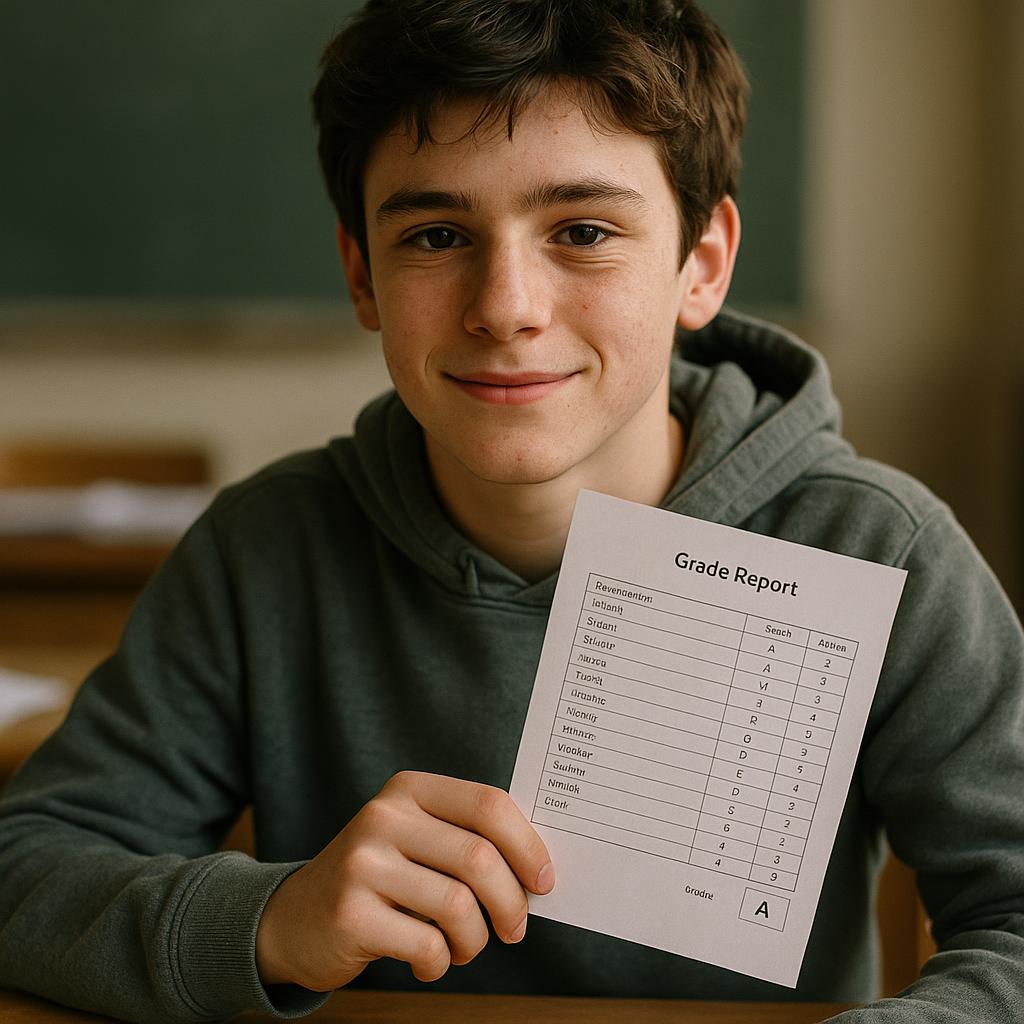 Image by RM AI
The Summer Reading List
On the last day of school, as students were signing yearbooks and counting down the minutes to summer freedom, Max approached my desk with an unexpected request. 'Mr. Fry,' he said, fidgeting with the strap of his backpack, 'I was wondering if you could recommend some books for me to read over the summer?' I must have looked surprised because he quickly added, 'Not just the required ones. I mean good ones, like you've been giving me.' This from the kid who once told me reading was 'basically torture but without the cool factor.' I spent my entire lunch break crafting a personalized reading list, carefully selecting titles that would challenge him while nurturing his newfound love of reading. I included some classics like 'The Outsiders' and 'Ender's Game,' but also threw in some contemporary favorites that dealt with transformation and identity. When I handed him the list after school, his eyes widened at its length. 'This is a lot,' he said, but I noticed he was already scanning the titles with interest. 'I figured you'd want options,' I replied. 'Besides, you've got all summer.' What Max didn't know was that I'd included one special book at the bottom of the list—one that had changed my own life when I was his age and made me want to become a teacher in the first place.
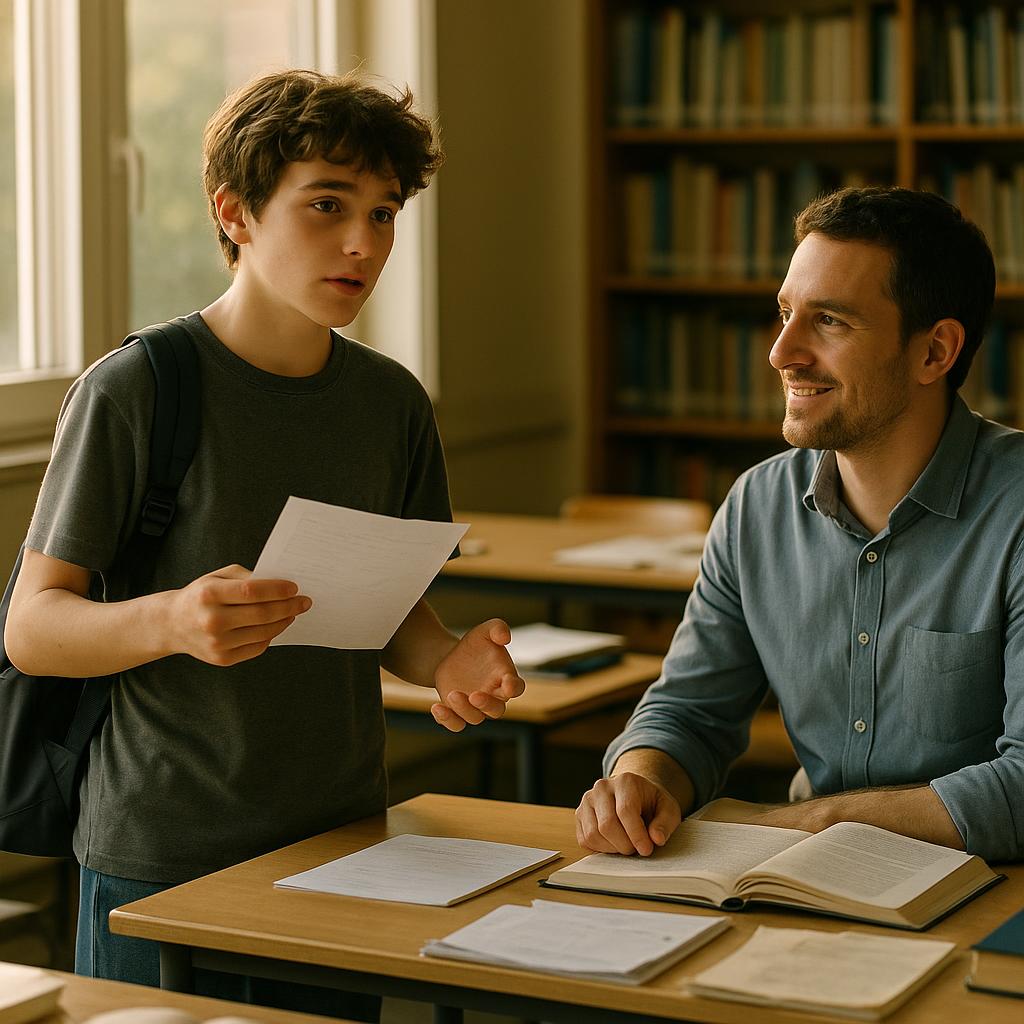 Image by RM AI
The End-of-Year Party
Our end-of-year party was the perfect bookend to a remarkable school year. The classroom buzzed with excitement as students devoured cupcakes and traded summer plans. But what caught my attention was Max—the same kid who once treated my classroom like his personal circus ring—quietly moving through the crowd with a tray of juice boxes. No one had asked him to help; he just did it. When Emma dropped her cupcake, I braced for the old Max to emerge with some cutting remark. Instead, he grabbed napkins and helped her clean up. Later, I overheard something that stopped me in my tracks. 'Hey Emma,' Max said, shuffling his feet awkwardly, 'I just wanted to say sorry for being such a jerk to you earlier this year. The spitball thing wasn't cool.' Emma looked as shocked as I felt, but nodded and offered him a genuine smile. When Mrs. Reynolds arrived to pick up Emma, she caught my eye across the room and gave me a grateful nod that said more than words could. In that moment, watching Max voluntarily sweep up crumbs while chatting with classmates who once avoided him, I realized something profound: sometimes our most difficult students teach us the most important lessons. What I didn't know then was that Max had one final surprise that would leave me speechless on the last day of school.
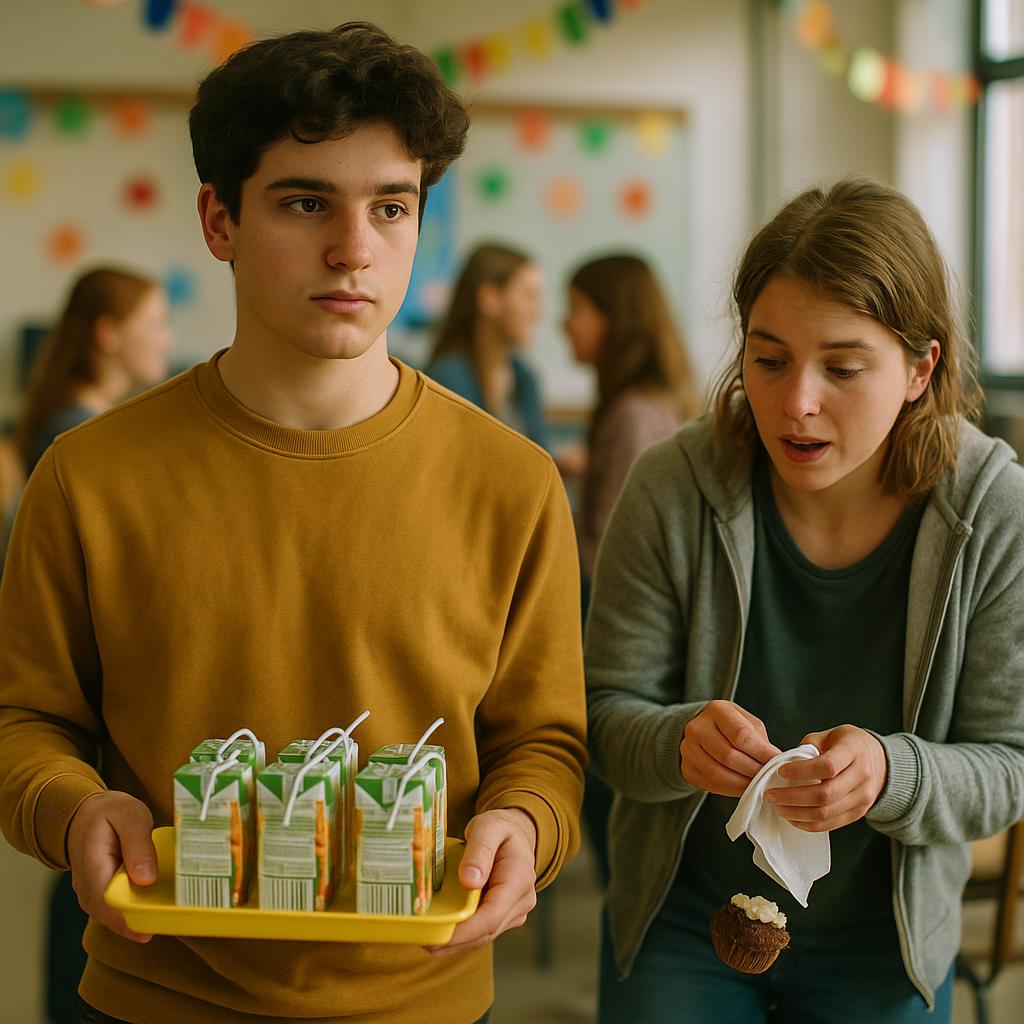 Image by RM AI
The Unexpected Gift
As the final bell rang and students poured out of my classroom like water from a broken dam, I noticed Max hanging back, fidgeting with something in his backpack. He approached my desk with uncharacteristic shyness, placing a clumsily wrapped package in front of me. 'Don't open it until I leave,' he mumbled, his eyes fixed on his sneakers before darting out the door. I waited until the hallway noise faded before carefully unwrapping it, my curiosity piqued. Inside was his honorable mention essay, professionally framed, with a handwritten note taped to the corner: 'Thanks for being the first teacher who didn't give up on me.' My throat tightened as I traced my fingers over his words. Nine years of teaching, hundreds of students, and this simple gesture hit me harder than any formal recognition ever could. This wasn't just a thank-you gift; it was tangible proof that sometimes our hardest battles yield the most meaningful victories. I carefully placed it in my messenger bag, already envisioning the perfect spot in my home office—right next to my teaching certificate. What I didn't realize then was that this framed essay would become my touchstone during the challenging years ahead, a reminder of why I became a teacher in the first place.
 Image by RM AI
The Summer Email
Three weeks into summer break, I was knee-deep in my annual teacher recovery mode—binge-watching shows I'd missed during the school year and pretending grading didn't exist—when my phone pinged with an email notification. The subject line nearly made me drop my coffee: 'Book Report (Not Required)' from Max Peterson. I blinked twice to make sure I wasn't hallucinating. Opening it revealed not just a casual update but a thoughtful, two-page analysis of 'The Outsiders,' complete with character comparisons and theme exploration. 'The part where Ponyboy recites that Robert Frost poem reminded me of what you said about literature connecting to our lives,' he wrote. 'I think I get it now.' I sat there, genuinely moved, as I read his insights about belonging and identity—topics that clearly resonated with his own journey. This wasn't homework. This wasn't for a grade. This was a kid who'd discovered the joy of reading for its own sake. I crafted a response filled with encouragement and additional book recommendations, smiling at the thought that somewhere across town, the former class hurricane was voluntarily spending his summer with books. What I didn't realize was that this email was just the beginning of a summer correspondence that would reveal sides of Max I never could have imagined during our classroom battles.
 Image by RM AI
The Coffee Shop Encounter
July in our town means scorching heat and the blessed air conditioning of Perks Coffee Shop. I was there nursing an iced americano and grading summer school papers when I heard someone call my name. I looked up to see the Reynolds family waving from a corner table—Emma, her parents, and to my complete surprise, Max Peterson. My stomach did that teacher-anxiety flip (you know the one), but their genuine smiles put me at ease. 'Mr. Fry! Come join us!' Mrs. Reynolds called. Max was already pulling out a chair before I could politely decline. 'Look what I'm reading,' he said, proudly displaying a dog-eared copy of 'Fahrenheit 451'—one of the more challenging titles from my summer list. Mr. Reynolds leaned toward me while Max enthusiastically explained the symbolism of book burning to Emma. 'His summer tutor called us yesterday,' he whispered. 'Said she's never seen such a turnaround. He's actually prepared for their sessions.' I watched Max animatedly discussing Bradbury's themes, remembering the boy who once claimed reading gave him 'literal hives.' As I sipped my coffee, Mrs. Reynolds squeezed my arm and murmured, 'Thank you for not giving up on him.' What she didn't know was that Max was about to share something that would make me question everything I thought I knew about his home life.
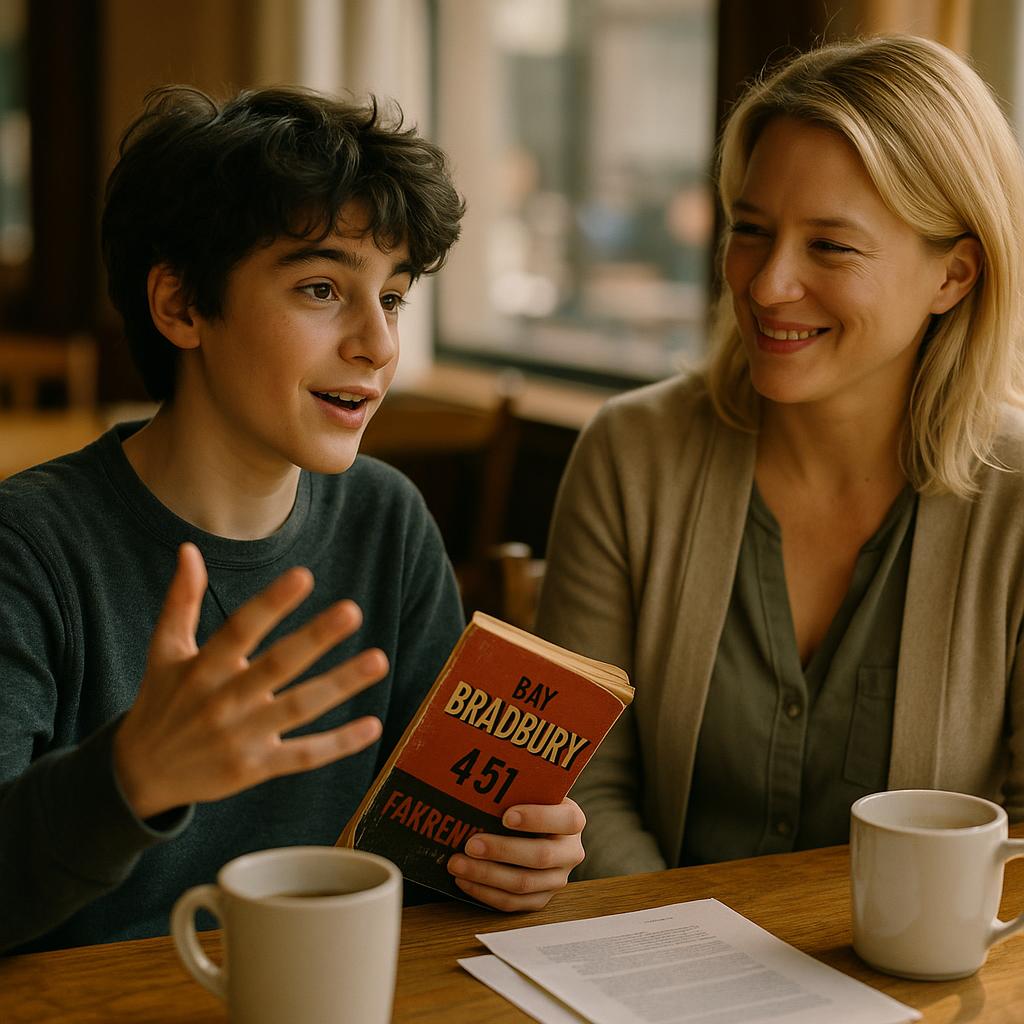 Image by RM AI
The New School Year Preparation
August brought that familiar mix of excitement and dread that every teacher knows—new class lists, curriculum updates, and the smell of fresh dry-erase markers. I was organizing my classroom when an email notification popped up from Mrs. Hernandez, Max's soon-to-be eighth-grade English teacher. 'We're a bit confused,' she wrote. 'Max Peterson's placement scores show remarkable improvement. Is this the same student whose previous records showed consistent underperformance?' I nearly laughed out loud. I typed back a detailed response, explaining Max's transformation and what had worked—high expectations, consistent accountability, and refusing to accept the 'gifted but unmotivated' narrative his parents had constructed. 'He responds well to structure and genuine challenge,' I wrote, 'but needs to know you won't let him slide.' Later that week, I received another email, this time from the entire eighth-grade team. They were considering moving Max into advanced literature and possibly honors math. I felt a surge of pride as I endorsed their plan, attaching copies of his recent work as evidence. That evening, as I finalized my new seating charts, I couldn't help wondering: would I find another Max in my incoming class? Someone whose potential was hidden behind behavior problems and excuses? What I didn't realize was that Max himself was about to reach out with news that would make me question everything I thought I knew about teaching.
 Image by RM AI
The First Day Visit
The first day of the new school year brought the usual chaos—nervous sixth graders clutching oversized backpacks, returning students comparing summer tans, and teachers gulping coffee like it was oxygen. I was arranging my desk when a familiar figure appeared in my doorway. Max stood there, somehow taller than I remembered, his posture relaxed but confident—nothing like the human tornado who'd stormed into my classroom last year. 'Just wanted to say hi, Mr. Fry,' he said with a genuine smile. 'And to tell you I got into the advanced English class.' The pride in his voice wasn't the entitled smugness I'd once known; it was the earned satisfaction of someone who'd fought hard for something meaningful. 'Mrs. Hernandez said my summer reading really impressed her,' he continued, adjusting the strap of his backpack—the same one, I noticed, but now without the video game pins that once covered it. 'She asked if I'd read all those books on my own.' I couldn't help but smile, remembering the boy who once declared reading was 'basically torture.' As the warning bell rang, Max gave me a quick nod before heading out. 'Thanks again for everything,' he said, then paused at the door. 'Oh, and my parents wanted to know if you'd be free for dinner sometime. They said they have something important to discuss with you.'
 Image by RM AI
The Full Circle Moment
Five years flew by in the blink of an eye. I was sitting in the back row of a packed conference hall at the annual District Education Summit when I spotted a familiar name on the program. It was Max. My eyes lit up as soon as I saw it. I knew he was on the right trajectory but it was finally able to see the outcome of my tireless efforts to help out a well-meaning, but misguided, kid. I knew right then and there that this was what being a teacher was all about.
 Image by RM AI
KEEP ON READING


The Most Popular Chocolate Bars in the USA

The Most Popular Candies in the USA