Apart from blueberries—which have green flesh—and blue cheese—which only has pockets of blue, there's a serious dearth of blue foods available. Normally, when you want blue food, you have to rely on fearsome-looking dyes, like the one used for Takis Blue Heat. However, there is a natural way to dye food blue, and it's been taking the world by storm the past few years.
The Rise Of Butterfly Pea
Butterfly Pea is a lot nicer than the name suggests. Also known as Asian pigeonwings, this Malaysian plant is used to naturally dye food and drink blue. It is also used in ayurvedic medicine as an antidepressant and an anticonvulsant. However, this flower comes with a secret.
It's brilliant blue color is just one of several shades Butterfly Pea produces. When acid is added, Butterfly Pea turns purple or even pink, depending on how much you add! It's basic chemistry with a dazzling effect.
Thanks to this show-stopping reaction, Butterfly Pea has migrated across the Atlantic where it can be found in a variety of drinks. Butterfly Pea tea and boba are among the most popular. However, it can also be used in gin and absinthe, which alters the color when carbonated.
All this to say that Butterfly Pea is a truly fascinating flower with near-endless artistic possibilities. However, its use isn't restricted to drinks. You can also use it in foodstuffs, as seen throughout Malaysia.
Nasi Kerabu
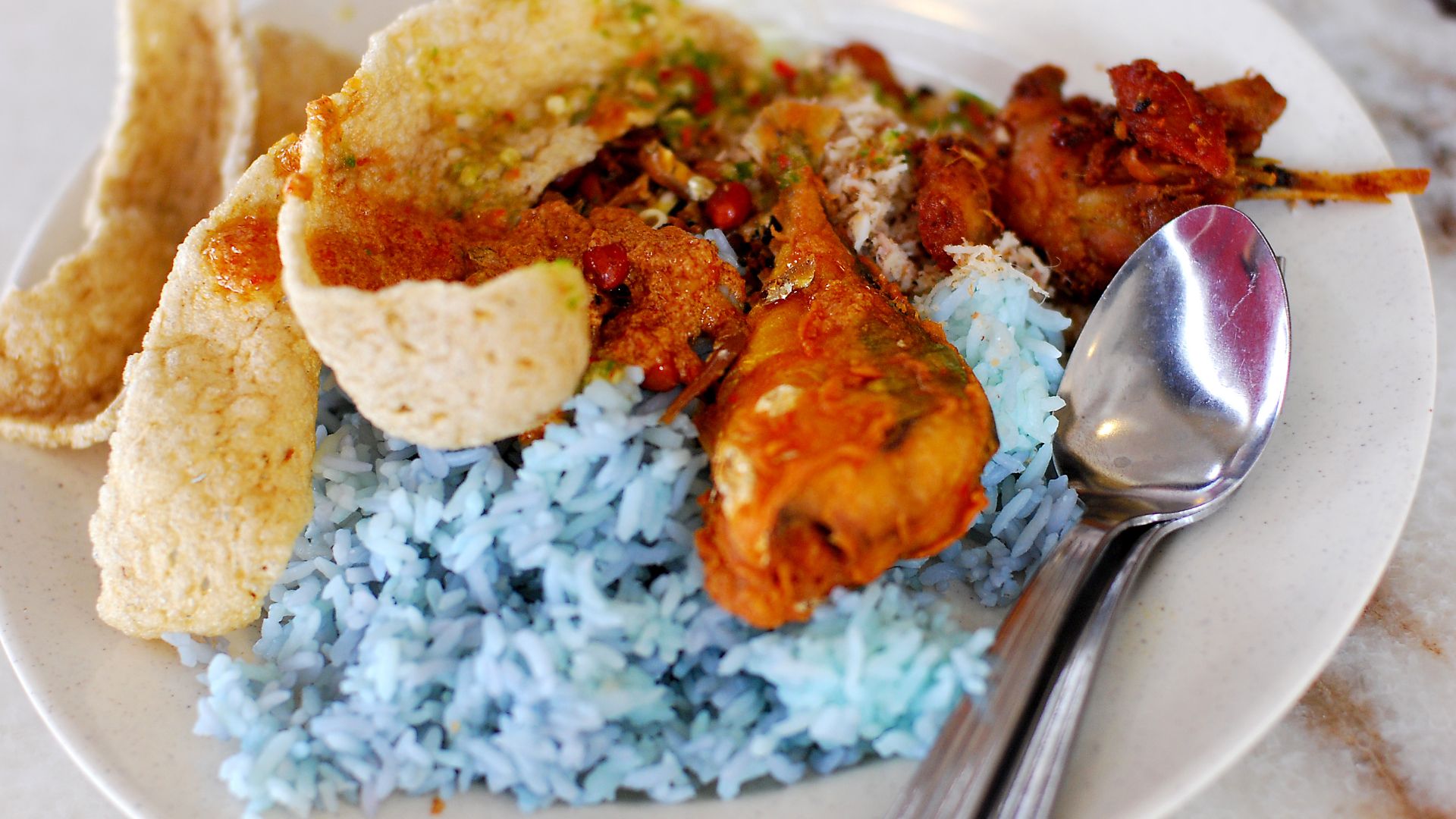 amrufm from Shah Alam, Malaysia on Wikimedia
Nasi kerabu is probably the best-known use of Butterfly Pea in Malaysian cuisine. Originating in the states of Kelantan and Terenggau, this dish speaks to the relationship between farmers and fishermen. Nasi karabu can also be found in Thailand's southern provinces, which have significant Malay populations.
Nasi kerabu is similar to nasi ulam and nasi lemak, the latter of which is Malaysia's national dish. All three dishes use rice (nasi) as the centerpiece. From there, composition—and color—varies by ingredients.
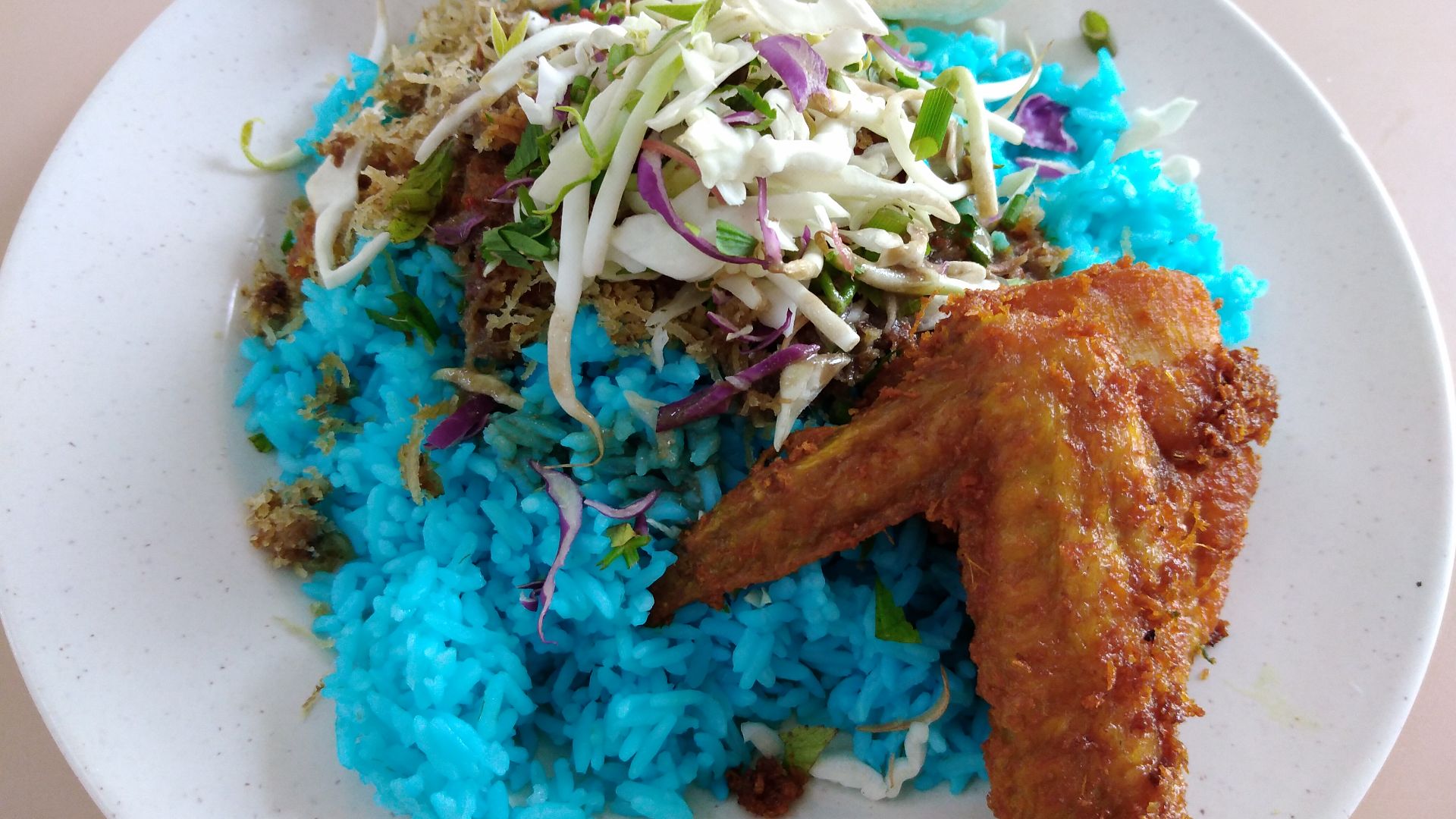
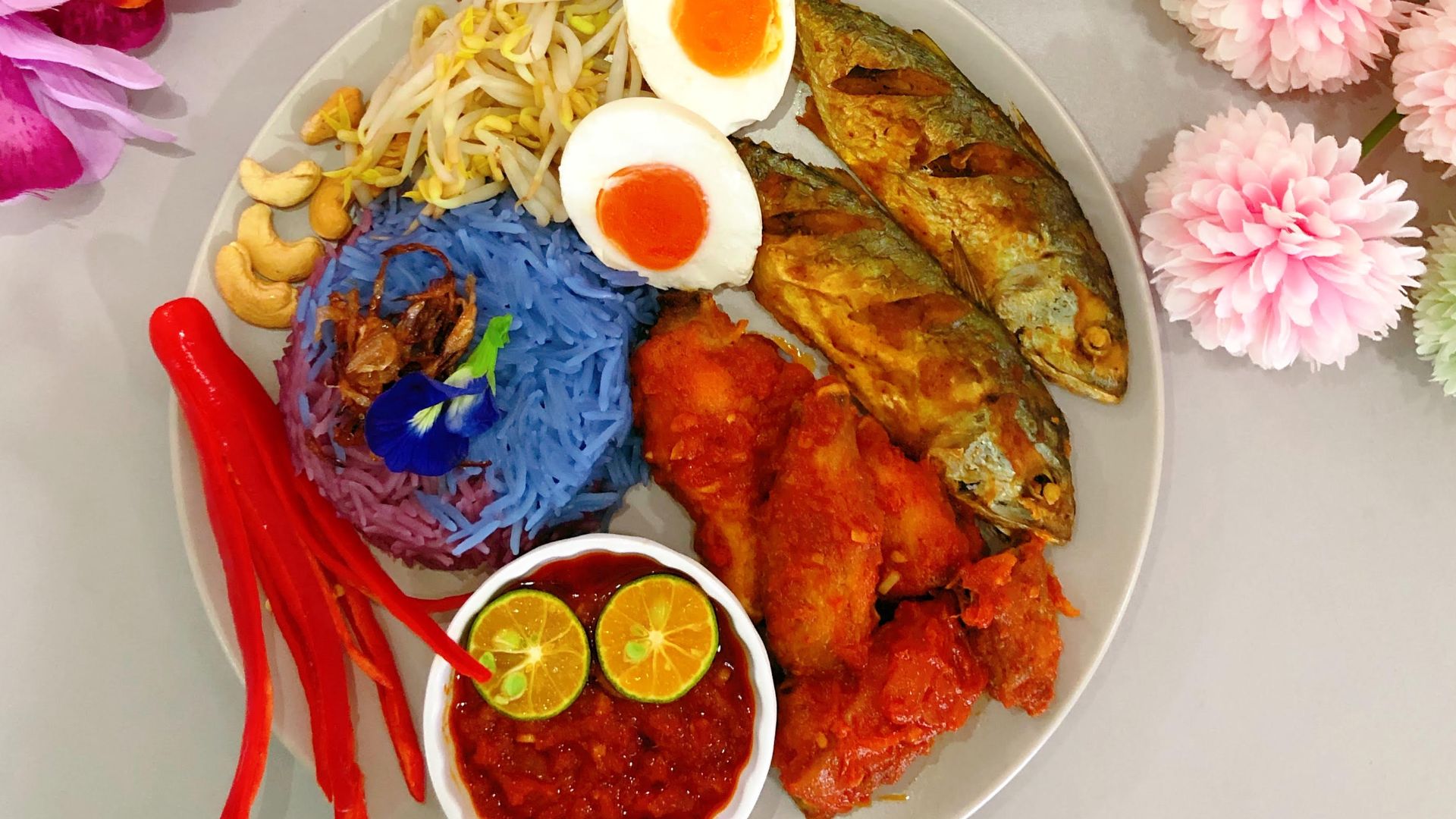
Traditionally served at breakfast, nasi kerabu is a hearty dish that will fill you up. In addition to the iconic blue rice, nasi kerabu also includes fish—normally grilled or fried—or chicken, a salty hard-boiled egg, seafood crackers, and a shredded salad of lemongrass, cabbage, and bean sprouts. However, two dishes of nasi kerabu are the same, even if they're made by the same person.
In fact, each bite of nasi kerabu has a different flavor experience. You have the subtle floral notes from the blue rice, the smokiness from the protein, and the freshness of the salad. Throw in the saltiness of the egg and the umami notes from fermented anchovy sauce, and you have a taste unlike any other.
Nasi kerabu can be served hot or at room temperature; eaten at a restaurant or on the go. Street vendors sell fast food versions wrapped in paper for workers to eat during their commute. This is made especially easy as the Malaysians traditionally eat with their hands.
Unlike its neighbours, Thailand and the Philippines, Malaysian cuisine hasn't yet gone mainstream in the West. Perhaps it's because the flavors are complex, or, with nasi kerabu, Westerners find the visual of blue rice to be off-putting. Malaysia has embarked on a quest of "gastrodiplomacy" to share its cuisine with the world.
Nasi kerabu is easy to make at home and there are plenty of recipes online. Since Butterfly Pea is popular in drinks, you shouldn't have any trouble finding it. To feast on the finished dish, use your right hand to assemble the ingredients into a small ball and enjoy!
KEEP ON READING