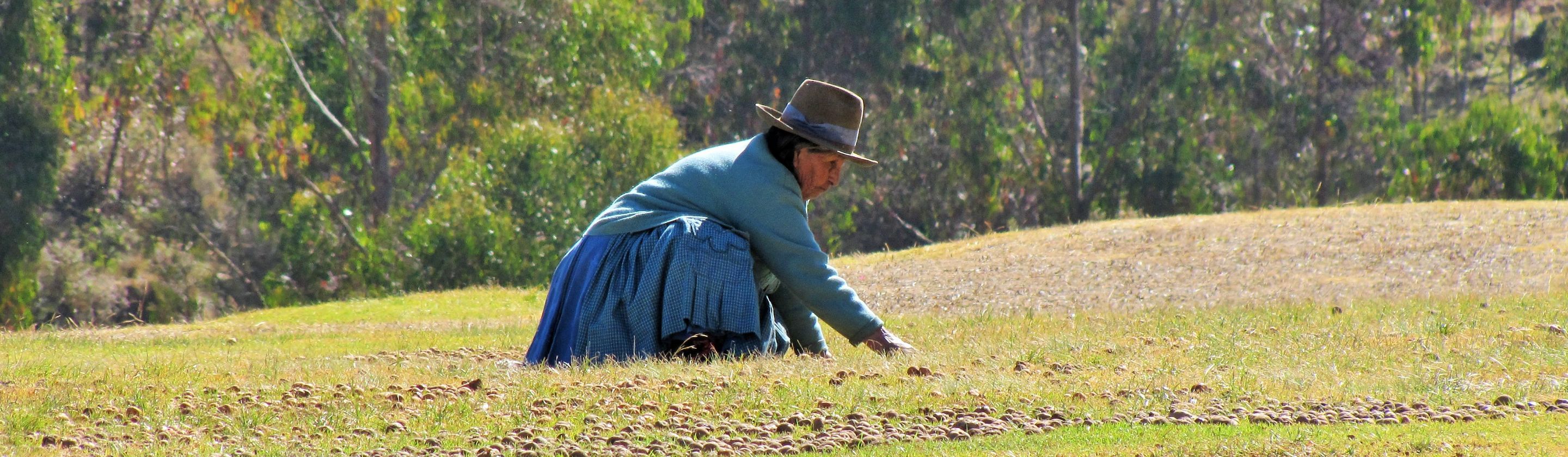
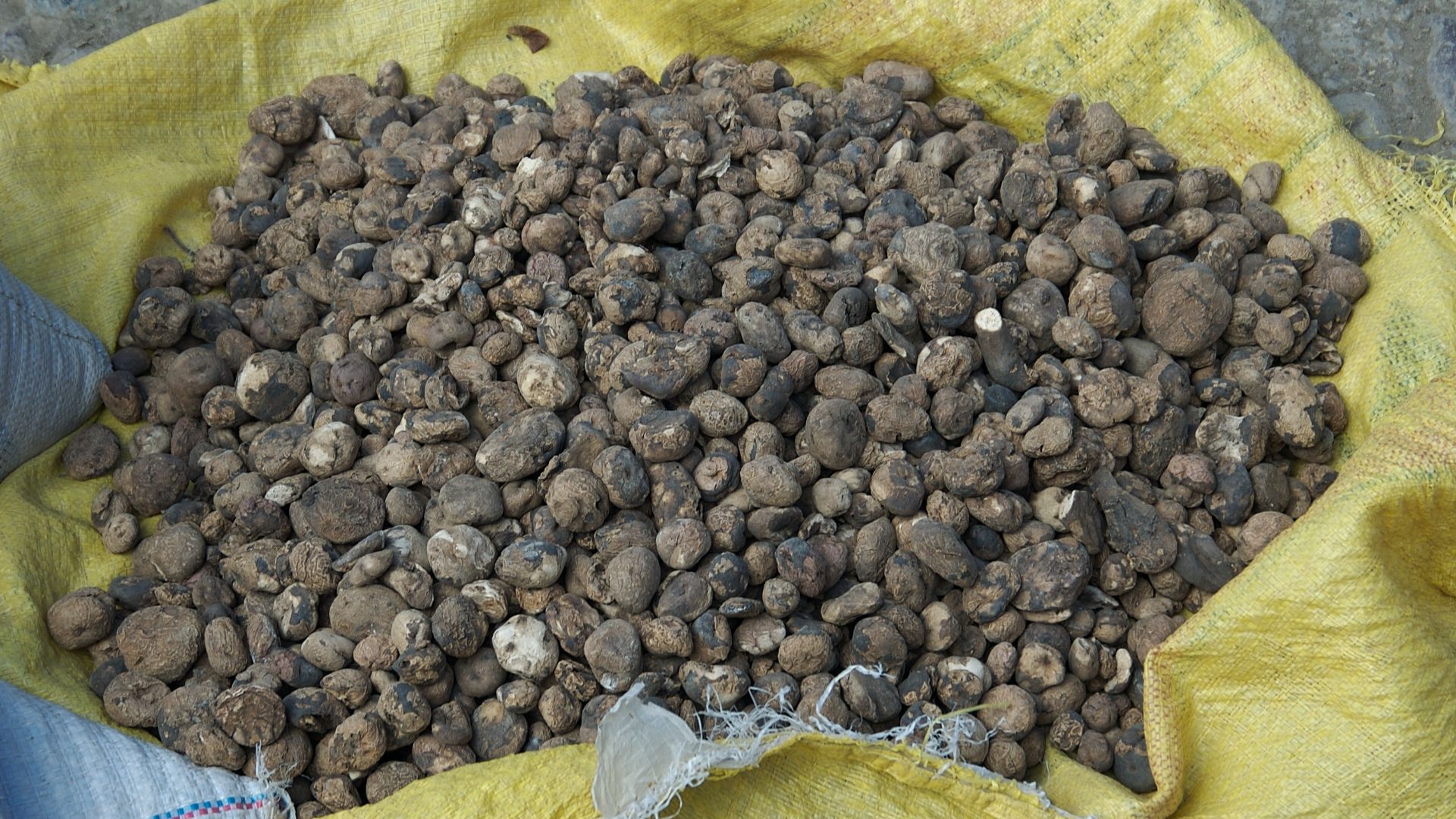
On the high plains around Lake Titicaca, the potato harvest ends with what looks like a bizarre ritual. Families spread small potatoes across the ground to freeze overnight, then walk over them the next morning to squeeze out the moisture. After several rounds of freezing and drying in the sun, the potatoes become chuño, light enough to carry on long journeys and able to last for years in storage.
Modern freeze-drying requires vacuum chambers and electricity. In the Andes, nature provides much of what’s needed, with freezing nights followed by bright, dry days at high altitude. Communities were making chuño long before the Inca, using a method that preserved food for years without machinery. It took centuries for anyone to build a machine capable of doing something similar.
How The Freeze And Thaw Works
The work happens in the dry winter, high in the mountains, where clear skies let the temperature drop hard after dark and the daytime sun stays fierce. Potatoes left out overnight freeze solid. The ice that forms inside them breaks down the starch and cell structure of the tuber, so when they thaw in the morning sun, the water inside finally has a way out.
After a few nights of this, farmers trample the potatoes barefoot to squeeze out the meltwater and rub off the skins. Freezing and stomping then alternate for several more days, until the tubers shrink into dark, wrinkled lumps that weigh a fraction of what went in. A sack of finished chuño looks a lot like a sack of small gray rocks (a fair warning about the texture, and why it needs soaking before cooking).
Left to dry in the sun after trampling, the potatoes become black chuño. White chuño takes considerably longer, since the tubers first spend a prolonged stretch in running water before their final drying. It comes out paler and milder than the black kind and has its own names, tunta among Aymara speakers and moraya among Quechua speakers.
Why Bitter Potatoes Get This Treatment
The varieties that grow highest up are often ones nobody would eat fresh. Solanum juzepczukii, a natural cross between a wild potato and a cultivated one, can grow at 4,000 meters and above and handles frost far better than the potatoes sold in a supermarket. More bitter potatoes grow on the altiplano than in most other zones. Its tubers carry enough glycoalkaloids to taste bitter and cause digestive trouble if eaten untreated. Freeze-drying, and especially the long soak that produces white chuño, brings those compounds down far enough to make it safe for eating. That tradeoff tends to pay off at altitude, where a single cold night can wreck a crop. In one Peruvian frost of about minus 5°C, the bitter species lost around 5 percent of its harvest while ordinary potatoes lost about 40.
The Potato That Fed An Empire
Fresh potatoes are about 80 percent water, making them heavy to carry and quick to spoil in warmer climates. Properly made chuño, on the other hand, can be stored for up to 10 years. The Inca built that durability into the way they ran their empire. Storehouses called qollqas lined the Qhapaq Ñan, a vast road network stretching from Ecuador to Chile that carried armies and supplies. At Huánuco Pampa alone, they built nearly 500 stone storehouses on a single hillside south of the city.
Actual chuño from the Inca period rarely survives, which made a discovery reported in 2026 particularly exciting. At Tambo Viejo, an Inca center in the Acarí Valley on Peru's southern coast, archaeologists found two dried potatoes roughly 500 years old at the bottom of a buried ceramic pot. A piece of Inca pottery and a damaged spindle lay nearby. Since chuño can only be made in the freezing highlands, finding it near sea level shows just how far the Inca transported their food. Spanish chroniclers also described llama caravans carrying chuño to storehouses across the empire. The tradition continues in Andean kitchens today, where cooks soak the potatoes before serving them with garlic and chile, or herbs like huacatay and mint.
KEEP ON READING

The Most Popular Signature Dishes Around the World