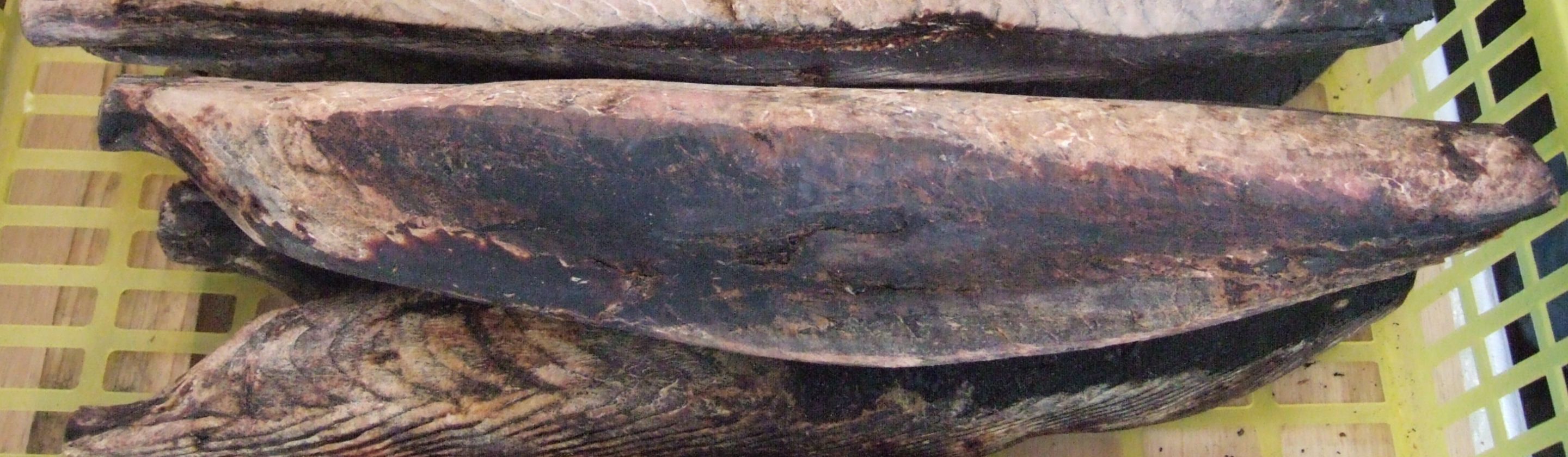
Walk into a specialty shop in Tokyo and you might find what looks like a row of polished driftwood. Each piece is a fillet of fish, dried until it's about as hard as a chunk of oak, and cooks shave it like lumber. It gets called one of the hardest foods in the world, and anyone who has tried to cut one with a kitchen knife tends to agree.
Most people meet it as the pale flakes on top of okonomiyaki, or inside the dashi that seasons miso soup. Getting from a fresh skipjack tuna to that block takes several months, using a method perfected during the Edo period. The best grade spends most of that time sitting under a coat of mold, on purpose.
From Fresh Fish to Arabushi
It all starts with skipjack tuna, called katsuo in Japanese, and the name katsuobushi is said to come from katsuo-ibushi. Much of the country's supply comes from Makurazaki in Kagoshima, where the current method arrived in 1707 and the warm climate suits the long drying. Makers remove the head and guts, cut the fish into fillets, and trim off the fatty belly, which doesn't preserve well.
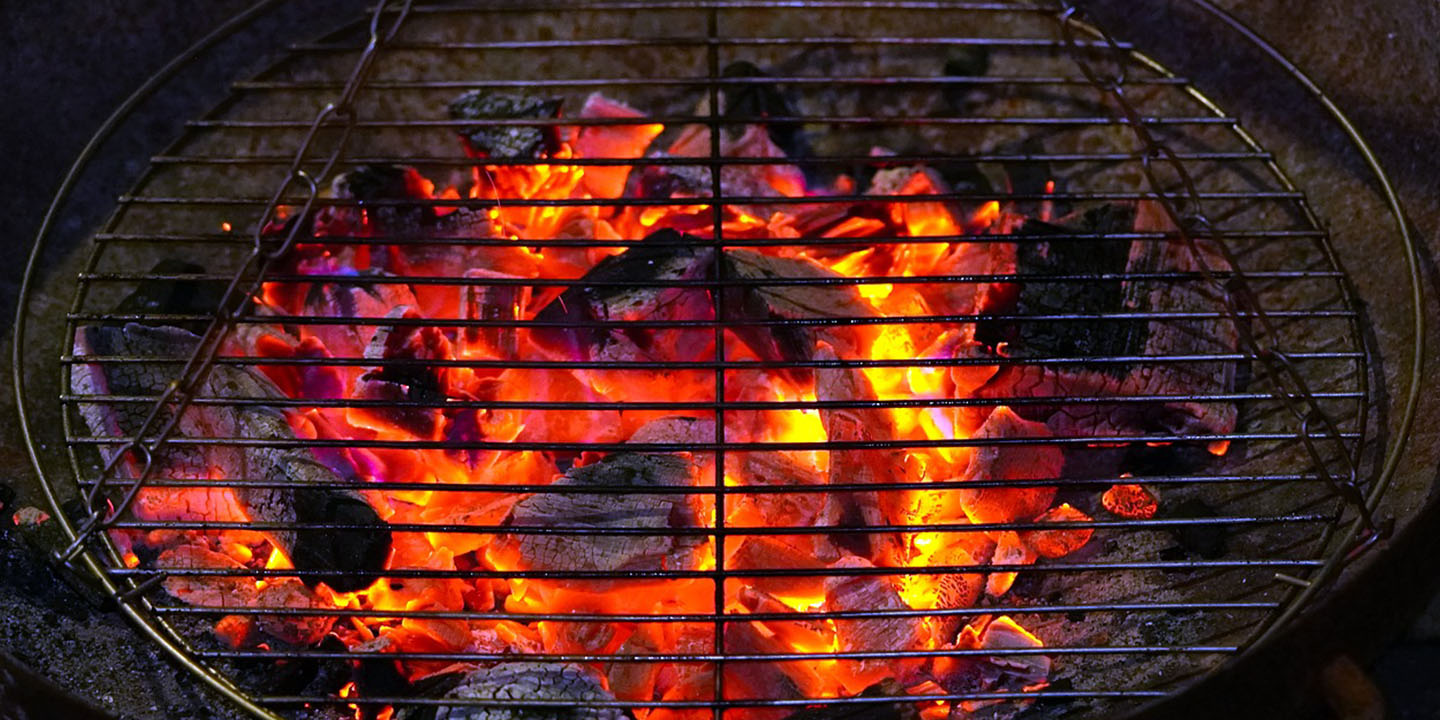
First the fillets go into a bath just below a boil for an hour or two. That sets the proteins and helps hold onto the compounds behind the finished flavor. Once the fish cools, workers pull the small bones out by hand, and then the smoking starts. The fillets are smoked over hardwood such as oak or cherry in repeated sessions spread across a few weeks, with each round drawing out more water.
What comes out is arabushi, a dark and slightly tarry block that already counts as katsuobushi and gets sold that way. Its dashi has a strong smoked aroma and a slightly acidic edge, and a lot of the flakes sold in bags are shaved from this stage. For plenty of everyday cooking, arabushi is all anyone needs.
Where the Mold Comes In
For the premium version, there's still plenty of work ahead. Makers scrape away the tarry coating and surface fat from the arabushi, leaving a smooth brown fillet that's then treated with mold. The technique dates back to the mid-1600s in Tosa, where producers began introducing mold to smoked fish. After this stage, the fish is called karebushi. The finest version, honkarebushi, goes through at least four rounds of mold treatment. Yes, the expensive stuff is deliberately made moldier.
Mold works from the outside in. It draws moisture out of the center and breaks down the fat, which keeps the fish from going rancid and mellows the smoky taste. Each round, the fillets sit in a closed room until the mold blooms into a pale greenish dust across the surface, then go out to dry in the sun before it gets brushed off for the next cycle. It looks alarming on a food product until you know it's the whole point. Honkarebushi can go through this for up to about six months.
By the end there isn't much water left in the fish at all. Raw skipjack is about a quarter protein, and the finished block is more than three-quarters protein. Makers usually check a batch by sound, knocking two fillets together and listening for a clean, high clack like two pieces of hardwood.
Shaving It Down
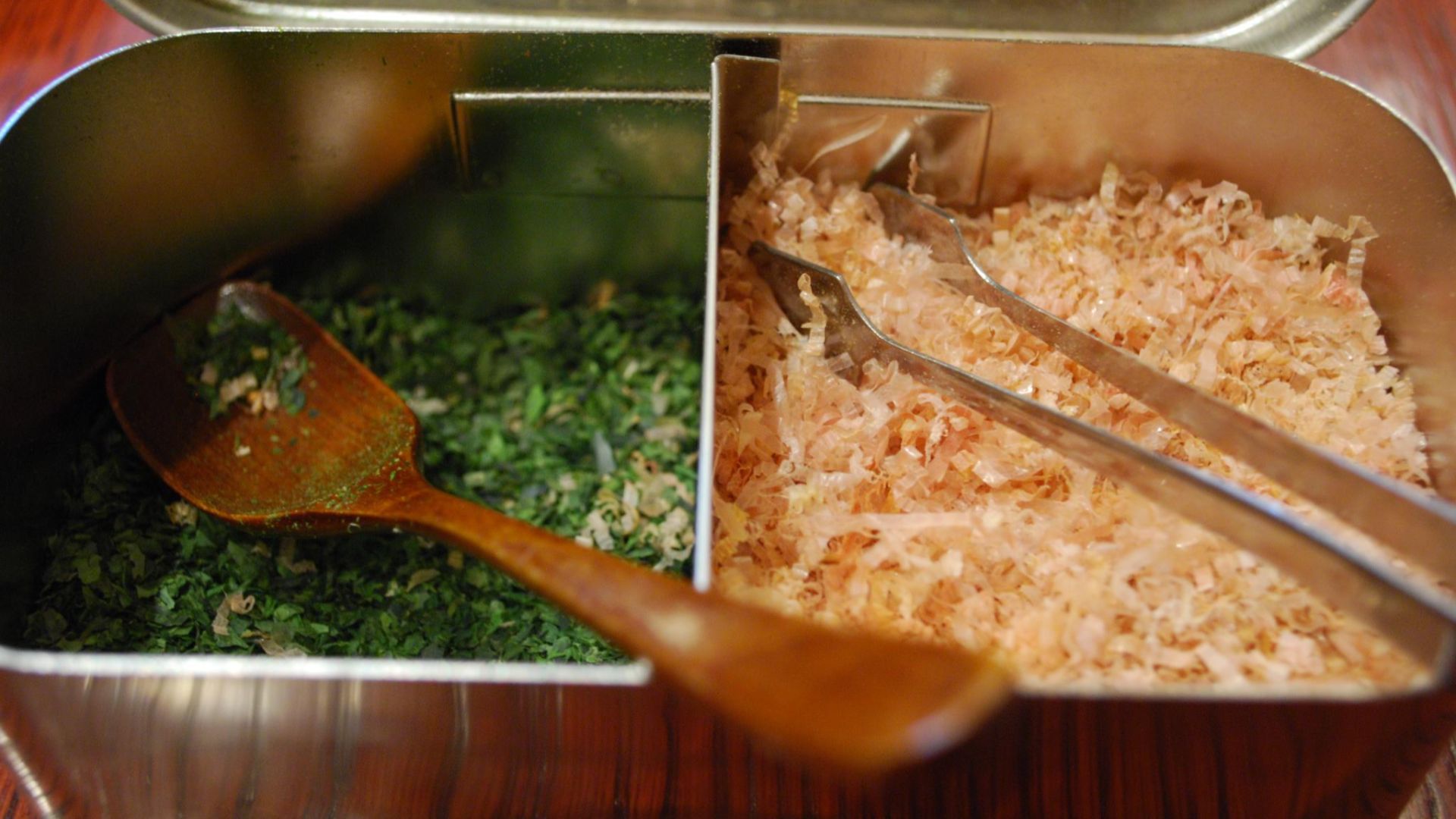
Nothing that hard can be sliced, so it gets planed instead. The traditional tool is a kezuriki, a wooden box with a blade set into the top and a drawer underneath to catch the shavings. You push the block across the blade at an angle, and thin pink-brown curls collect in the drawer. Most households buy their flakes already shaved, so the boxes are mostly found in restaurant kitchens and the homes of committed cooks.
Freshly shaved flakes tend to smell sweeter and smokier than anything from a sealed bag, and some home cooks keep a block around for that reason. Most of the shavings end up in dashi, steeped briefly with kombu seaweed. Kombu brings glutamate and the flakes bring inosinate, and the two together taste stronger than either one does alone. The broth takes minutes, because the slow work already happened inside the block.
Scatter a handful of flakes over something hot, like takoyaki, and they curl and wave in the rising air. They're cut so thin that steam alone is enough to move them. Mixed with a little soy sauce they become okaka, a standard filling for rice balls and an easy way to use up the last bits of a block.
KEEP ON READING