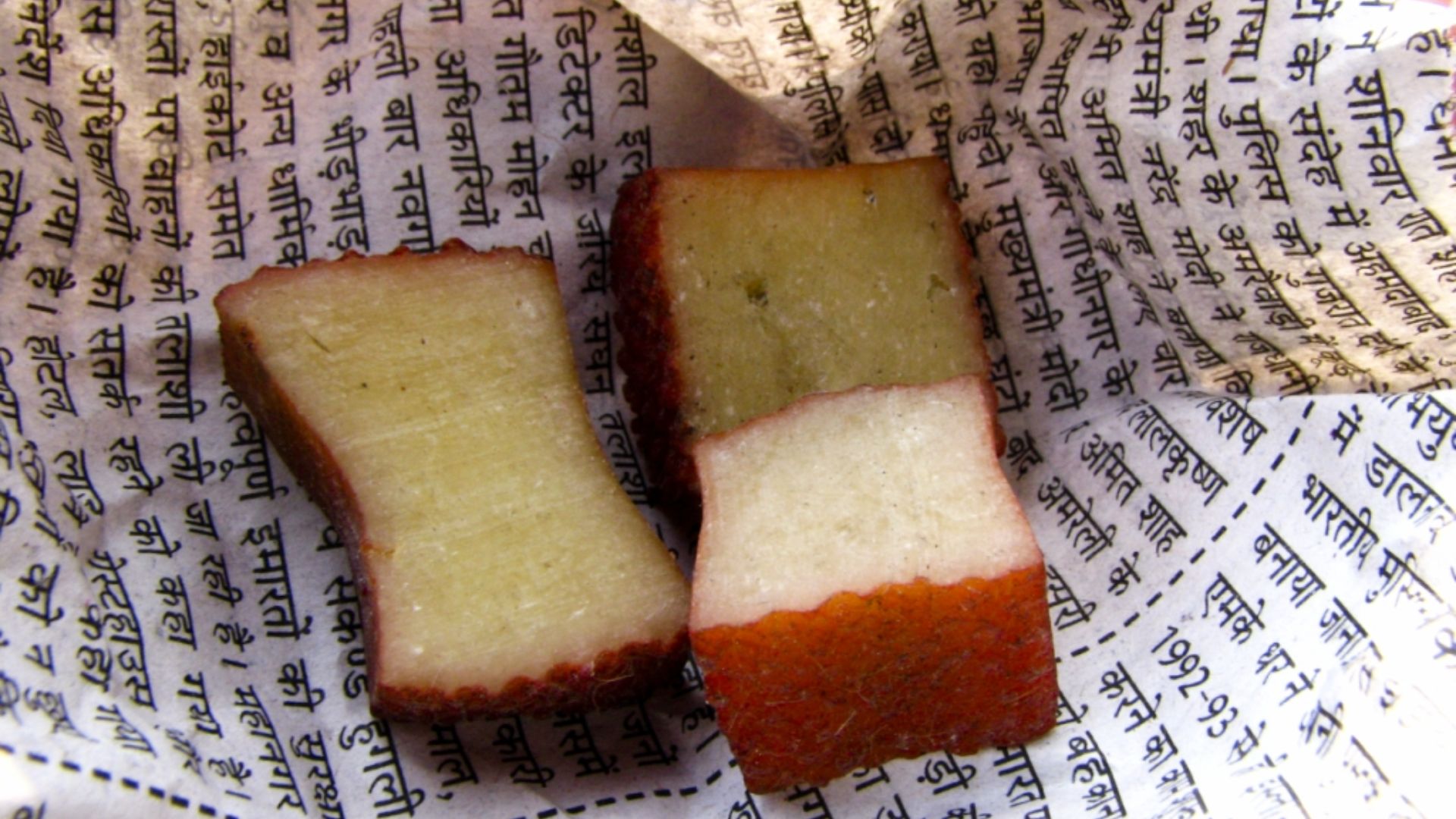
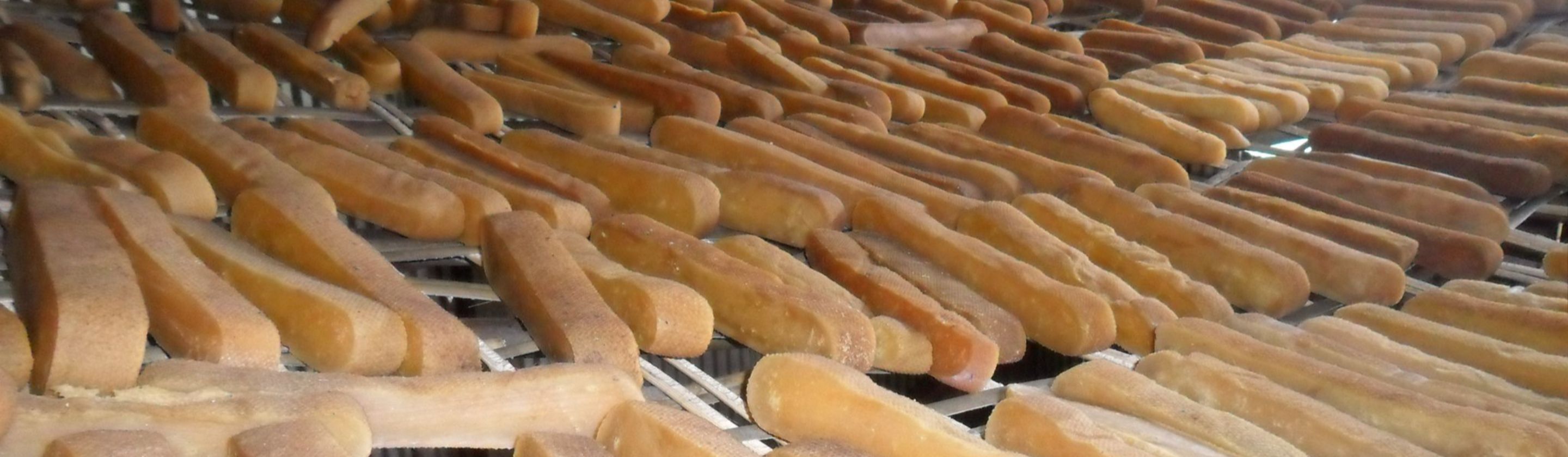
This particular chew in the pet aisle costs more than a steak and looks like a bar of soap left too long in a drawer. It's cheese. More precisely it's chhurpi, a Himalayan cheese dried until a determined dog can work at one for days without making much progress. The packaging usually says yak somewhere on it. The people who make the stuff have been eating it themselves for generations.
Nepal now ships thousands of metric tons of it abroad every year, and most of that ends up in American dog mouths. The trade is recent and the cheese is not. The recipe hasn't changed, only the customer.
How It Gets That Hard
Chhurpi starts as milk from a yak or a chauri, a yak crossed with hill cattle. A 2023 study of Nepali producers describes the hard version as mostly yak milk, with cow milk going into the soft version instead. Curdling is done with whatever is at hand, usually lime juice or rennet, and the whey gets drained once the curd sets. Buffalo milk on its own tends to crack, so producers cut it with something steadier.
The next steps are pressing and drying, with the drying doing much of the work. As moisture evaporates, the cheese becomes harder and denser, eventually forming a block that's difficult to cut with a knife. Drying time and temperature affect the final texture, so two producers using the same milk can end up with noticeably different results. Traditionally stored in yak skin, the hardest variety can reportedly keep for twenty years or more.
An aged parmesan is brittle and crumbles under pressure. Chhurpi behaves differently, holding together under a hammer and giving way only to saliva and patience. A fresh piece will take the edge off a cheap knife before it shows a mark. The hardness is deliberate, and it's the whole reason the cheese survives a winter.
People Chewed It First
Long before any of it reached a pet store, hard chhurpi was pocket food for people working at altitude. You park a piece in your cheek and wear it down over a long stretch rather than chewing it in any normal sense. The habit has more in common with chewing betel nut than with eating cheese off a board. One piece can cover a good part of a day's walk.
Most production still occurs in the eastern hill districts of Ilam and Taplejung, where the animals are and the cold does half the preserving. The work is done by hand, without preservatives or coloring, largely because none of it needs any. The hard version leaves in cubes and sticks, cut down to whatever size the buyer asks for. The soft version is a different food altogether, eaten with rice or folded into momos. Only the hard one travels.
The nutritional profile is strange for a dairy product, running above sixty percent protein by weight once the water is gone. Most of the lactose leaves with the whey, and that's part of why dogs with mild dairy trouble often handle it fine. Western pet owners read all of this as a health food. Keeping milk edible through a Himalayan winter came first, and the premium chew arrived a long time afterward.
How It Reached the Pet Aisle
Somebody worked out that a cheese a person can chew for hours is a cheese a dog can chew for days, and the trade followed. Nepal exported more than 2,700 metric tons in eleven months of the last fiscal year, with roughly three-quarters of that going to the United States. Canada takes a distant second, and another twenty-odd countries split what's left
The European Union doesn't allow imports, citing animal disease concerns rather than problems with the finished product. Exporters estimate that access to the European market could more than double the industry's size. The appeal is easy to understand for anyone with a dog that chews through ordinary treats in minutes. These hard cheese blocks can last considerably longer than rawhide, making them particularly attractive to owners of persistent chewers.
People who write about canine nutrition are less uniformly keen. The chews are hard enough to fracture a tooth, particularly with a dog that bites rather than gnaws, and a nub worn down small enough to swallow can cause a blockage. The standard advice is to supervise the session and take the piece away before it reaches that size. Soaking the last of it and microwaving it puffs the thing up like a cheese curl, which is the recommended way to finish one off.
KEEP ON READING
The Cheese So Hard It's Now Sold as a Dog Chew

Does Japan Do Sandwiches Better Than America?
20 Recipes People Used to Know by Heart