
Why Every Generation Has A Different Idea Of “Healthy Eating”

People from different generations often have very different ideas about what belongs on a healthy plate. One person may picture meat, potatoes, vegetables, and a glass of milk, while someone else reaches for low-fat yogurt and avocado. A younger adult may be more interested in plant-based protein, simple ingredients, environmental impact, or whether a meal supports a healthier relationship with food. These choices reflect the food advice people heard while they were growing up.
Nutrition guidance hasn’t changed without a reason. Each generation has lived with its own food supply, health concerns, government recommendations, and sources of information. Over the years, healthy eating has grown from a conversation about getting enough essential nutrients into one that also covers chronic disease, food labels, production methods, and online wellness advice. The meaning keeps shifting because new priorities continue to join the old ones.
When Healthy Eating Meant Getting Enough
 Unknown authorUnknown author or not provided on Wikimedia
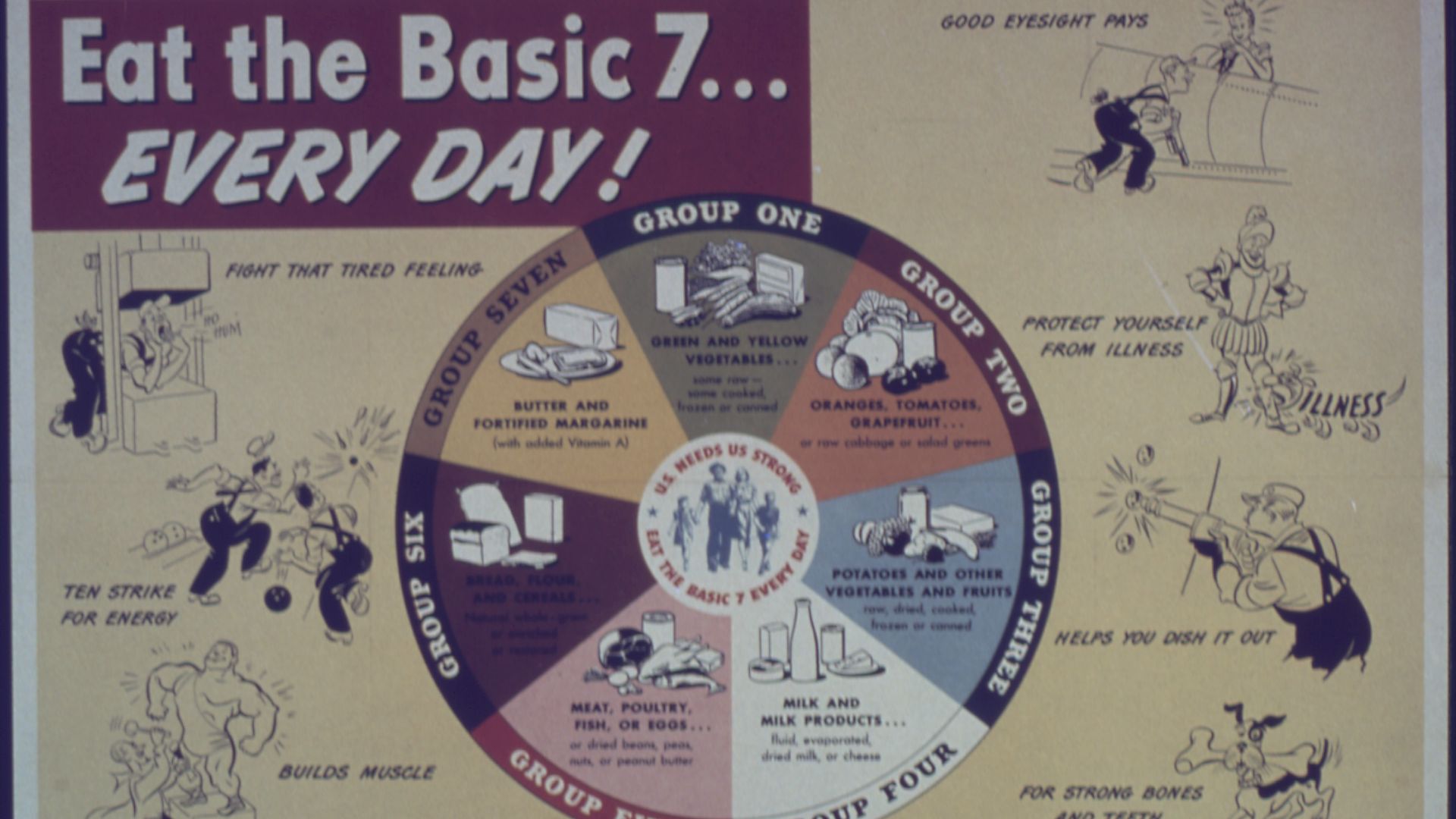
For Americans shaped by the Great Depression and World War II, healthy eating was closely tied to getting enough dependable nourishment. The USDA released the Basic Seven food guide in 1943 as the National Wartime Nutrition Guide. It helped people plan meals while supplies of certain foods were limited and offered a basic diet designed to provide much of the recommended intake of essential nutrients. Food advice at the time was purely practical.
That history helps explain why many older ideas about a proper meal place so much value on variety, fullness, and avoiding waste. Milk, meat, eggs, bread, potatoes, fruits, and vegetables weren’t sold as fashionable wellness foods. They were familiar staples that helped households cover their basic nutritional needs, often while sticking to a tight budget. A healthy dinner was filling, dependable, and easy enough to repeat throughout the week without making family life more complicated.
In 1956, the USDA introduced a simpler food guide widely known as the Basic Four. It recommended minimum amounts from four main groups: milk, meat, fruits and vegetables, and grain products, and it remained widely used for the next two decades. Convenience foods were also becoming a bigger part of postwar kitchens, with the Smithsonian’s National Museum of American History recording that Swanson introduced its frozen TV dinner in 1954. The disposable tray reduced cleanup, while the meal still followed the familiar pattern of meat, starch, and vegetables that many families already recognized.
Focusing In On Fat, Calories, And Labels
By the 1970s, federal nutrition guidance was becoming less centered on nutrient deficiencies and more concerned with dietary factors linked to chronic disease. The first Dietary Guidelines for Americans were released in 1980, and the federal government has issued an updated edition every five years since then. For people who grew up during this period, eating well increasingly meant paying attention to fat, saturated fat, cholesterol, sodium, and calories. Food became something that could be measured, tracked, and compared through a growing collection of numbers.
The Food Guide Pyramid made those ideas easy to recognize when it arrived in 1992. Grains filled the broad base, while fats, oils, and sweets sat in the small section at the top and were meant to be used sparingly. The design was built around variety, proportionality, and moderation, and the USDA created it to help people put federal nutrition advice into everyday practice. For many households, that triangle became a quick visual guide for deciding what should appear most often on the table.
Packaged food labels soon made nutrition feel even more exact. The Nutrition Labeling and Education Act of 1990 required nutrition information on most packaged and processed foods, and the familiar Nutrition Facts label was introduced during the mid-1990s. That shared format gave shoppers a straightforward way to check serving sizes, calories, fat, and Daily Values, according to the U.S. Food and Drug Administration. Grocery shopping became less about judging a product only by what it was, and more about the numbers.
When Healthy Eating Became Personal

Millennials inherited nutrition labels, calorie counts, and decades of advice about fat, yet the food conversation started moving beyond the back of the package. Shoppers became more interested in ingredients, processing, where food came from, animal welfare, and environmental impact. USDA organic certification became one visible part of that change, with “organic” defined as a regulated label for foods produced and handled under approved standards. Healthy eating was no longer only about the nutrients inside a product.
Gen Z entered adulthood with old diet rules, new wellness trends, and social media advice all competing for attention. In the International Food Information Council’s 2022 survey, 72% of Gen Z respondents said they’d followed a diet or eating pattern during the previous year, compared with 51% of Gen X respondents and 29% of baby boomers. The most common approaches reported by Gen Z included calorie counting, clean eating, mindful eating, and plant-based eating. That mix brings together older habits based on numbers with newer concerns about ingredients, personal values, and how eating feels in daily life.
The source of health advice has changed just as much as the advice itself. Pew Research Center reported in 2026 that only 7% of people who received health information from social media rated it as highly accurate, even though many found it convenient and easy to understand. A social media feed can place a registered dietitian beside a celebrity routine, a personal story, or an unsupported food rule, giving younger adults more competing versions of healthy eating than earlier generations usually encountered.
KEEP ON READING


20 Food Requests Only Spoiled People Ask For


20 Hardest Foods on Earth To Eat

Do Vitamin Supplements Actually Make You Healthier?