
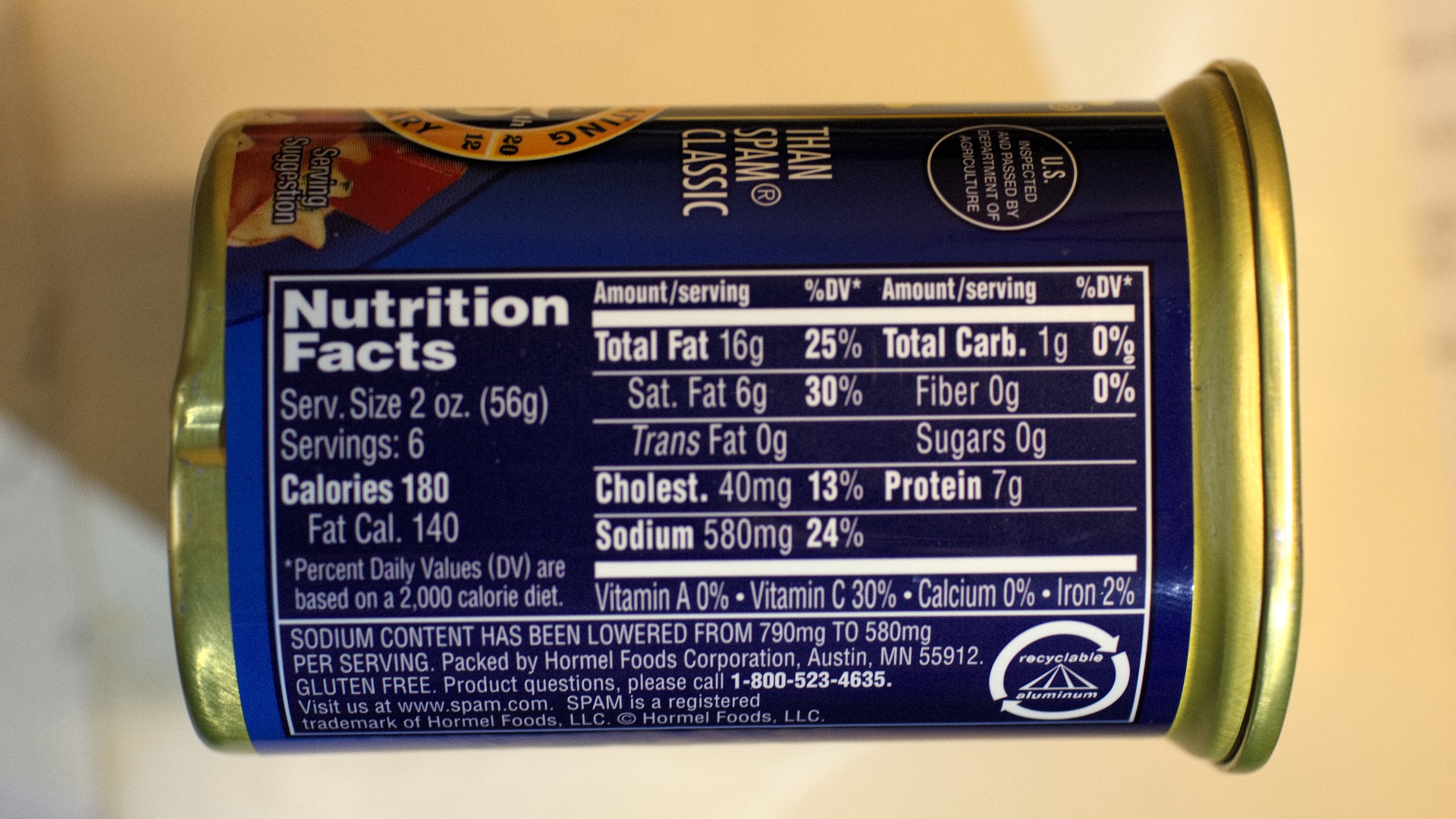
Most people have picked up a food package, glanced at the nutrition label, and put it back down feeling more confused than before. What's actually good for you? What's bad for you? The numbers, percentages, and unfamiliar terms can make it difficult to know what you're actually looking at, and more importantly, what any of it means for your diet. It doesn't help that understanding how to read these labels properly is one of the best things you can do when it comes to managing your health.
But before you throw in the towel and ignore all the numbers listed on there, there's an easier way to grasp it all. Whether you're just curious about how many calories are in a single serving or how much sugar you might accidentally be consuming, here's how to decode what's detailed on the nutrition label so you can enjoy your food without worry.
Start with the Serving Size
Believe it or not, the serving size is the single most important piece of information on a nutrition label, yet it's also the most commonly overlooked. Every value on the label—calories, fat, sodium, fiber, and everything else—is calculated based on that specific serving size, not the entire package. If you eat more or less than what's listed, all of those numbers shift proportionally. It's the foundation of everything else you'll read, so it deserves your attention before you look at anything else.
It's worth noting that serving sizes aren't recommendations for how much you should eat; they're standardized reference amounts set by the U.S. Food and Drug Administration (FDA) to make it easier to compare similar products. A bag of chips, for example, might list a serving size of 1 ounce, but most people consume considerably more than that in one sitting. The calories and nutrients you're actually taking in could easily be two or three times what the label appears to show at first glance.
Packages that contain two or more servings but are commonly eaten in one go, like a small bag of trail mix or a bottled smoothie, are now required to display a "dual column" label showing per-serving and per-package nutrition information side by side. This update, introduced as part of the 2016 FDA overhaul, makes it much clearer what you're actually consuming when you finish the whole container. Checking for dual-column labeling is a useful habit to develop when you're shopping for portioned snacks or single-serve beverages.
Understand What % Daily Value Actually Tells You
The % Daily Value (%DV) column shows how much of a specific nutrient one serving contributes to your total daily intake, based on a 2,000-calorie diet. It's a quick reference tool that lets you gauge whether a food is high or low in a given nutrient without doing any calculations yourself. As a general guideline, 5% DV or less is considered low, and 20% DV or more is considered high. This makes the %DV particularly useful when you're comparing two similar products side by side.
Nutrients you'll typically want more of include dietary fiber, vitamin D, calcium, iron, and potassium; a higher %DV for these is generally a good sign. Saturated fat, trans fat, added sugars, and sodium are ones you'll want to keep lower, so a high %DV for any of those is worth paying close attention to. Using the %DV as a comparison tool rather than an absolute target is one of the most practical ways to put this information to use during your grocery runs.
Again, keep in mind that the %DV is based on a 2,000-calorie daily intake, which means it won't apply equally to everyone. Athletes, children, older adults, and people managing specific health conditions may have very different calorie and nutrient requirements. If you're unsure how the %DV translates to your personal needs, a registered dietitian can help you make sense of these numbers in a way that's actually relevant to your situation.
Watch the Added Sugars, Sodium, and Ingredients List
Added sugars are one of the most important things to check on a nutrition label, and they've been listed separately from total sugars since the 2016 FDA update. Total sugars include both naturally occurring sugars found in foods like fruit and dairy, and any sugars added during manufacturing. The American Heart Association recommends no more than 36 grams of added sugar per day for men and 25 grams for women, which is surprisingly easy to exceed across just a few packaged products.
Sodium is another nutrient that warrants close attention, particularly in packaged and processed foods where it tends to accumulate. A single serving of canned soup or a flavored seasoning packet can contain well over half your recommended daily sodium intake without looking like much on the label. For people managing blood pressure, heart health, or kidney function, tracking sodium across every product you buy is especially important.
The ingredients list, which appears alongside the nutrition label, tells you exactly what a product is made of in a way the numbers alone can't convey. Ingredients are listed in descending order by weight, so whatever appears first is present in the largest amount. That means if added sugar (whether labeled as cane syrup, dextrose, or high-fructose corn syrup) shows up near the top of the list, be wary.
Ultimately, once you get the hang of reading nutrition labels, you'll be much more equipped to understand all of the different numbers and percentages they're trying to tell you. For some, that's a big step towards eating healthier—and smarter.
KEEP ON READING

Happy Hour: The 20 Best Foods For Social Snacking