Most people who rinse their fruits and vegetables before eating them are trying to do the responsible thing. You've probably stood at the sink wondering if a quick splash of water does anything against dirt or pesticide residue, and that uncertainty might push you toward stronger measures. You might, for one, reach for the same products you use to clean your hands. Unfortunately, that instinct is where things go wrong.
As you've likely guessed, the number one mistake people make when washing produce is reaching for soap or dish detergent instead of plain water. A 2025 survey from the Environmental Working Group found that some respondents still use soap or detergent on their produce, among other methods like baking soda or a mix of vinegar and water. How should you actually wash your fruits and veggies? Let's take a deeper look.
Why Soap and Detergent Don't Belong on Your Produce
Fruits and vegetables have surfaces that are far more porous than the dishes you're used to cleaning. The FDA explains that soap and household detergents can be absorbed into produce despite thorough rinsing, since these products were never designed for food. That absorption is the core problem; once a chemical works past the skin, no amount of rinsing pulls it back out. You end up eating exactly what you were trying to wash away.
Believe it or not, some people have even reached for highly abrasive methods, such as bleach and other household cleaning agents, thinking that plain water isn't enough. But ingesting even a small amount of bleach residue can cause stomach irritation and permanent tissue damage. Though this sounds obvious, it's worth a reminder: You should never use products meant for cleaning the home on the food you eat.
Furthermore, commercial produce washes don't solve the problem either, despite being marketed as a food-safe alternative to soap. The National Pesticide Information Center notes that these products haven't been proven any more effective at removing residue than water alone; you could be paying for something that offers no real advantage while introducing an unknown substance onto food. A label that says "produce safe" doesn't guarantee any real improvement over your kitchen faucet.
What This Habit Can Actually Do to Your Body
The most immediate risk of washing produce with soap or detergent is straightforward chemical exposure. These products contain surfactants and fragrances never meant for ingestion, and trace amounts left behind can lead to nausea, cramps, or digestive upset. Children and people with sensitive stomachs tend to notice these effects fastest. None of this is necessary, since removing dirt and germs is already achievable with water alone.
There's also a false sense of security at play here. Many people assume a stronger product must work better, but that assumption doesn't hold up against the research. Plain running water removes most surface bacteria and a meaningful share of pesticide residue without adding anything new, so soap and detergent aren't adding protection so much as adding risk.
Washing produce at the sink can introduce its own contamination, regardless of which product you use. The FDA notes that produce labeled "pre-washed" or "ready-to-eat" shouldn't come into contact with unclean surfaces or utensils, since sinks see regular contact with raw meat and other bacterial sources. Running already-clean greens through a contaminated sink can undo the work the processing facility already did. Sometimes skipping a step entirely is the safer choice rather than a shortcut.
The Right Way to Clean Fruits and Vegetables
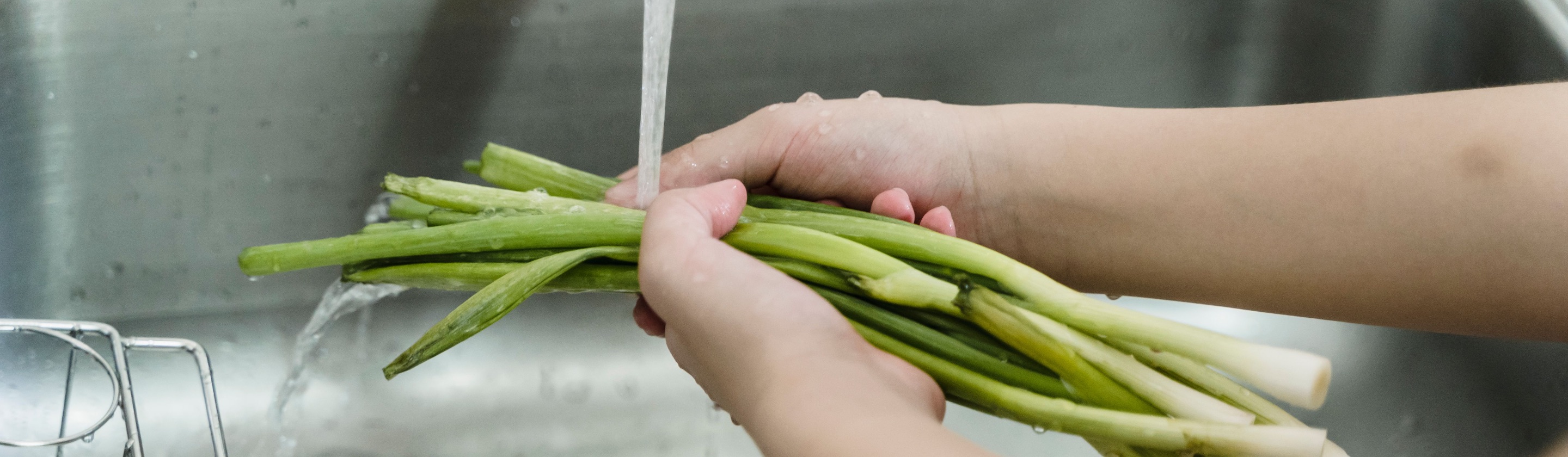
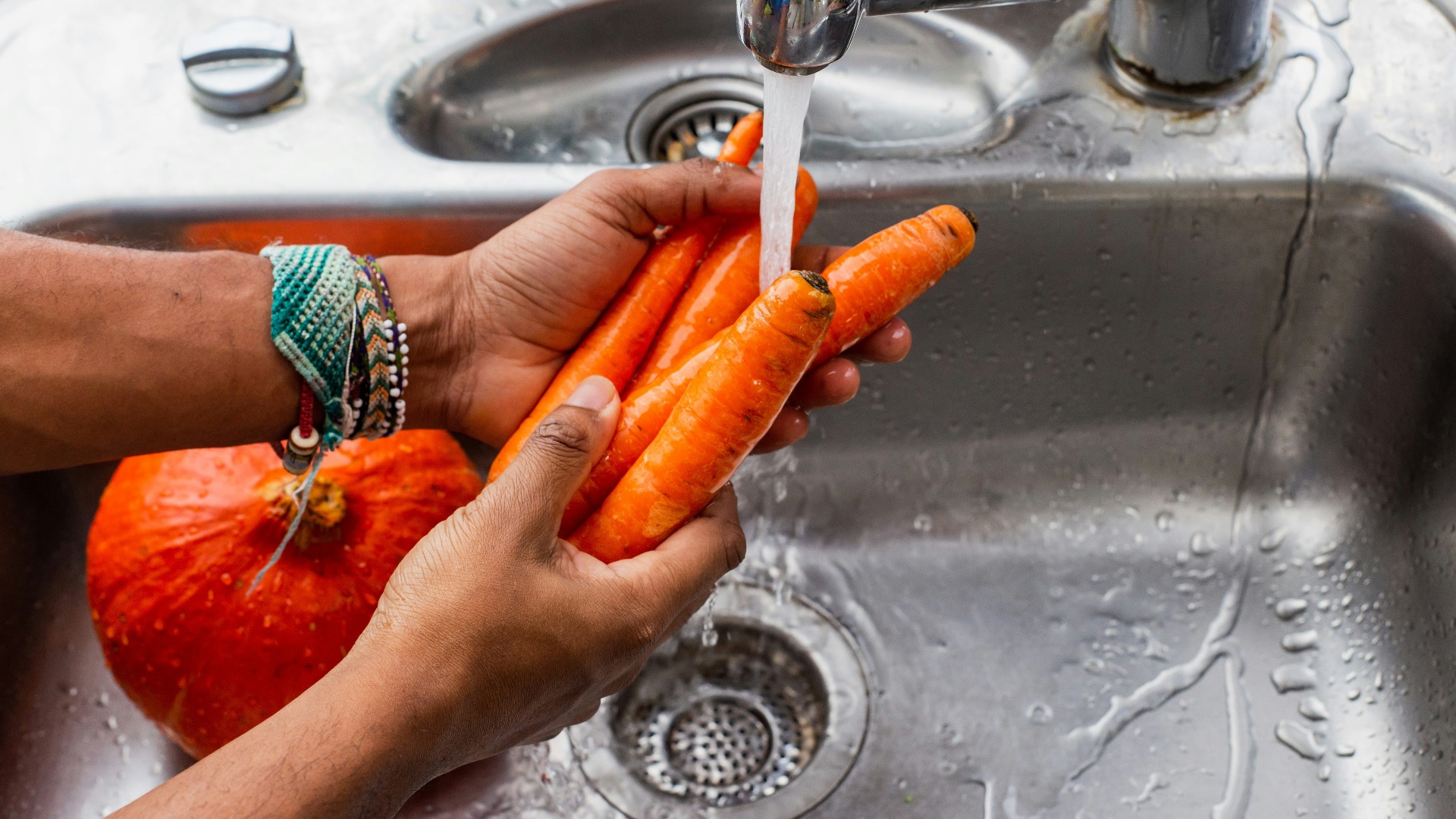
So, what's the "right" way to wash your fruits and veggies? The FDA's actual recommendation is much simpler than most people expect. Hold produce under cold, running tap water and gently rub the surface with your hands, then dry it with a clean towel afterward. This removes dirt, residue, and most surface bacteria without introducing chemicals that don't belong on food. It's also free, which makes it an easy habit to maintain.
Firmer produce with thick skin, like melons, cucumbers, and potatoes, benefits from more effort than a quick rinse. A clean produce brush scrubbed across the surface under running water dislodges dirt trapped in grooves that your hands can't reach. Colorado State University Extension points out that the rough, netted surfaces of some melons can harbor microorganisms that transfer to the flesh during cutting, which is why this step matters even if you don't eat the skin. Melons carry this risk more than most produce because of their texture.
Ultimately, washing your produce is a habit worth keeping, but the method matters as much as consistency. Reaching for soap, detergent, or bleach will not make fruits and vegetables safer; it only trades one risk for another. Plain running water, a produce brush for firmer items, and even an occasional baking soda soak for pesticide-heavy produce cover nearly everything you need. Once you make that swap, you'll get the same clean produce without the unnecessary chemical exposure.