 Fernando Santander on Unsplash
For 95 years, you couldn't legally buy a bottle of absinthe anywhere in the United States. The ban started in 1912, five years before Congress passed Prohibition, and it outlasted Prohibition by more than seven decades. Bartenders in New Orleans made do with Herbsaint, an anise liqueur created in 1934 as a legal stand-in that's still sold today.
That reputation for madness rested on shaky science. The proof arrived about a century late. The detour involved a Swiss murder case and a chemical that also sits in most spice racks. Absinthe is back on American shelves now, a few bottles down from the bourbon.
The Green Hour in Paris
Absinthe is a spirit distilled with wormwood and anise, and it's usually a pale green. It started in Switzerland's Val-de-Travers region in the late 1700s, and Henri-Louis Pernod opened a distillery just across the border in Pontarlier, France, in 1805. Decades later, an insect called phylloxera wiped out huge stretches of French vineyards, and cheap absinthe filled the gap that expensive wine left behind.
Drinking it came with a ritual. You set a slotted spoon across the glass, balanced a sugar cube on top, and slowly dripped cold water over it until the green liquor turned cloudy. The sugar took the edge off the wormwood's bitterness. Some cafés set out tall glass fountains with little spigots so drinkers could handle the dripping themselves, and five in the afternoon became known as l'heure verte.
Many absinthes were bottled at around 70% alcohol, far above the 40% of a typical vodka. Edgar Degas painted a slumped pair of café drinkers in his 1876 work L'Absinthe, and Henri de Toulouse-Lautrec reportedly kept the drink in a hollowed-out walking cane.
How a Drink Became a Villain
In 1905, a Swiss laborer named Jean Lanfray killed his pregnant wife and two young daughters after a day of heavy drinking in the village of Commugny. He'd had two glasses of absinthe that day, along with a lot of wine and brandy. The newspapers focused on the absinthe anyway. A petition for a ban gathered more than 80,000 signatures, and Swiss voters approved one in 1908. It took effect in 1910 and lasted until 2005.
The U.S. followed on July 25, 1912, when the Department of Agriculture barred absinthe from import and sale. France banned it in 1915, during World War I. The temperance movement pushed hard for these bans, and the French wine industry had its own reasons to want a popular competitor gone. Vermouth, whose name comes from the German word for wormwood, stayed on the shelf the whole time.
The main target was thujone, a compound found in wormwood. Doctors of the era blamed it for a condition they called absinthism, with symptoms like hallucinations and seizures. The French psychiatrist Valentin Magnan gave animals concentrated wormwood oil and watched them convulse, which seemed to settle the question. Thujone also shows up in ordinary garden sage, which nobody ever tried to outlaw.
The Comeback
A 2008 study led by German food chemist Dirk Lachenmeier tested 13 sealed bottles of absinthe made before the bans. The thujone levels were far lower than people had assumed and roughly the same as in modern absinthe. According to the researchers, nothing in the bottles besides the alcohol itself could explain absinthism, which they suspected was mostly plain alcoholism. They found no unusual levels of methanol or heavy metals either.
Europe had already eased its limits back in 1988. On the American side, the Alcohol and Tobacco Tax and Trade Bureau approved Lucid Absinthe Supérieure on March 5, 2007. It was the first real absinthe cleared for sale in the country since 1912. The standard was simple. Any bottle with less than 10 parts per million of thujone counts as thujone-free under federal rules. Its creator, Louisiana chemist Ted Breaux, had spent years analyzing vintage bottles and was a co-author on the 2008 study.
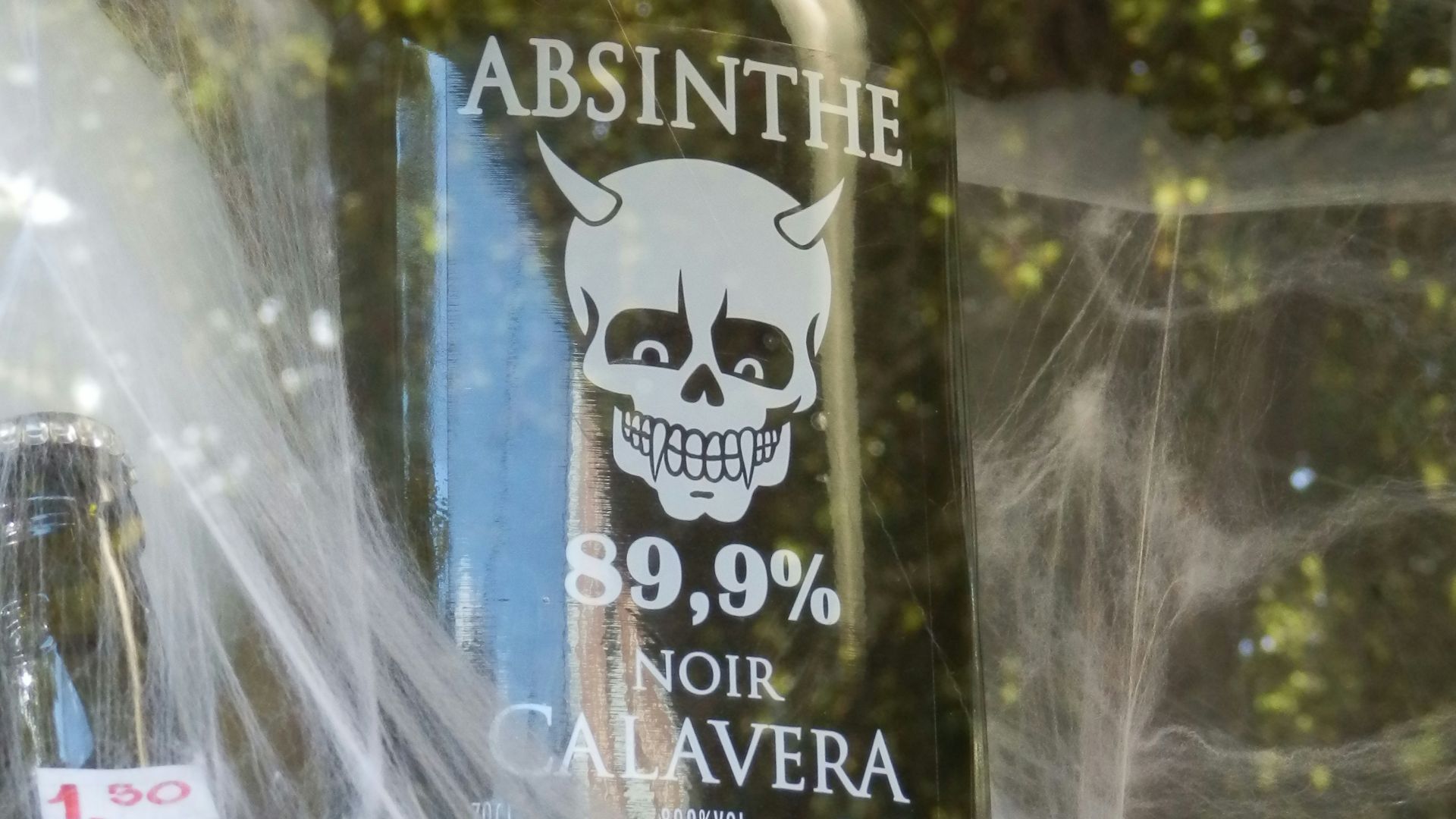
A few quirks survived the ban. American labels can't use the word absinthe as a brand name on its own, and they can't hint at hallucinations or other mind-altering effects. St. George Spirits in California released one of the first American-made versions later in 2007, and it now sells for roughly the price of a nice gin at most liquor stores. The louche still works the same way, since the anise oils cloud up the moment cold water hits them.