The History of Jell-O Salads & How They Once Dominated American Tables
 Internet Archive Book Images on Wikimedia
Jell-O salads are one of those foods that make modern diners pause and ask several fair questions. Why is there shredded carrot in lime gelatin? Who decided cottage cheese needed to float in a molded dessert? And how did something wobbly, shiny, and sometimes full of vegetables become the centerpiece of dinner parties?
The answer isn't just that people had strange tastes, although a few recipes do make a strong case. Jell-O salads became popular because they were affordable, colorful, convenient, and impressive at a time when packaged foods felt modern. They could stretch ingredients, decorate a table, and let a home cook show effort without spending the whole day over a stove. For decades, that was enough to make them nearly unavoidable.
Gelatin Went From Luxury to Pantry Staple
Long before Jell-O salads appeared at church suppers, gelatin dishes were associated with wealth and skill. Making gelatin from scratch required boiling animal parts, clarifying the liquid, and setting it carefully. Molded jellies and aspics appeared on elegant tables because they showed off time, labor, and access to help. If your dinner could stand upright and shimmer politely, you were making a statement.
The story changed when powdered gelatin made the process easier. In the 19th century, commercial gelatin became more available, and by 1897, Pearle Bixby Wait introduced a flavored gelatin dessert called Jell-O in Le Roy, New York. He and his wife, May, added fruit flavors to granulated gelatin and sugar, making it easier for ordinary cooks to prepare something bright and sweet.
Jell-O’s real growth came through marketing. After Orator Francis Woodward’s Genesee Pure Food Company bought the brand in 1899, the company pushed it with advertising and free recipe booklets. Those booklets mattered because they didn't just sell a product; they taught Americans what to do with it. Once people saw gelatin as dessert, salad, centerpiece, and kitchen shortcut, its future became much more exciting and much more questionable.
Convenience Made Jell-O Salads Feel Modern
By the early 20th century, Jell-O fit perfectly into a country fascinated by modern household science. Home economists, advertisers, and food companies promoted tidy, efficient cooking that looked attractive and saved labor. Gelatin salads checked all those boxes because they were neat, colorful, make-ahead dishes that could hold fruit, vegetables, nuts, cream cheese, or leftovers in one obedient mold.
Refrigeration also helped Jell-O salads take over. As more homes gained access to iceboxes and later electric refrigerators, chilled molded dishes became easier to prepare and serve. A gelatin salad could be made ahead, stored cold, and unmolded with a little ceremony when guests arrived. That made it useful for parties, holidays, ladies’ luncheons, potlucks, and family dinners.
During the Great Depression and wartime years, Jell-O salads had practical advantages too. They could stretch canned fruit, leftover vegetables, or small amounts of dairy into something that felt like a dish. A molded salad also made humble ingredients look cheerful, which helps explain some combinations that feel alarming today. When budgets were tight, a bright gelatin mold could make the table seem fuller and more festive.
The Midcentury Table Loved a Mold
 Internet Archive Book Images on Wikimedia
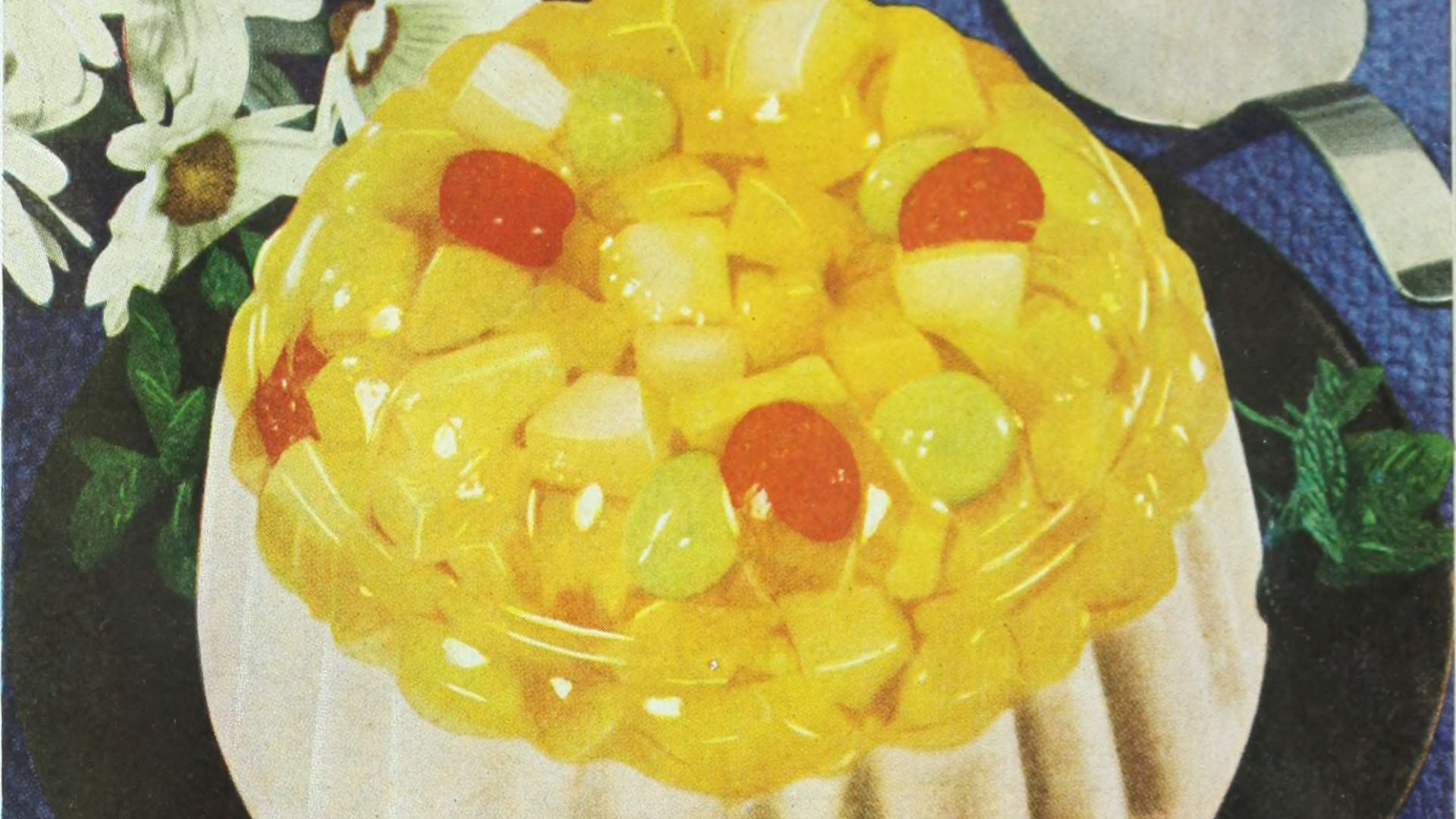
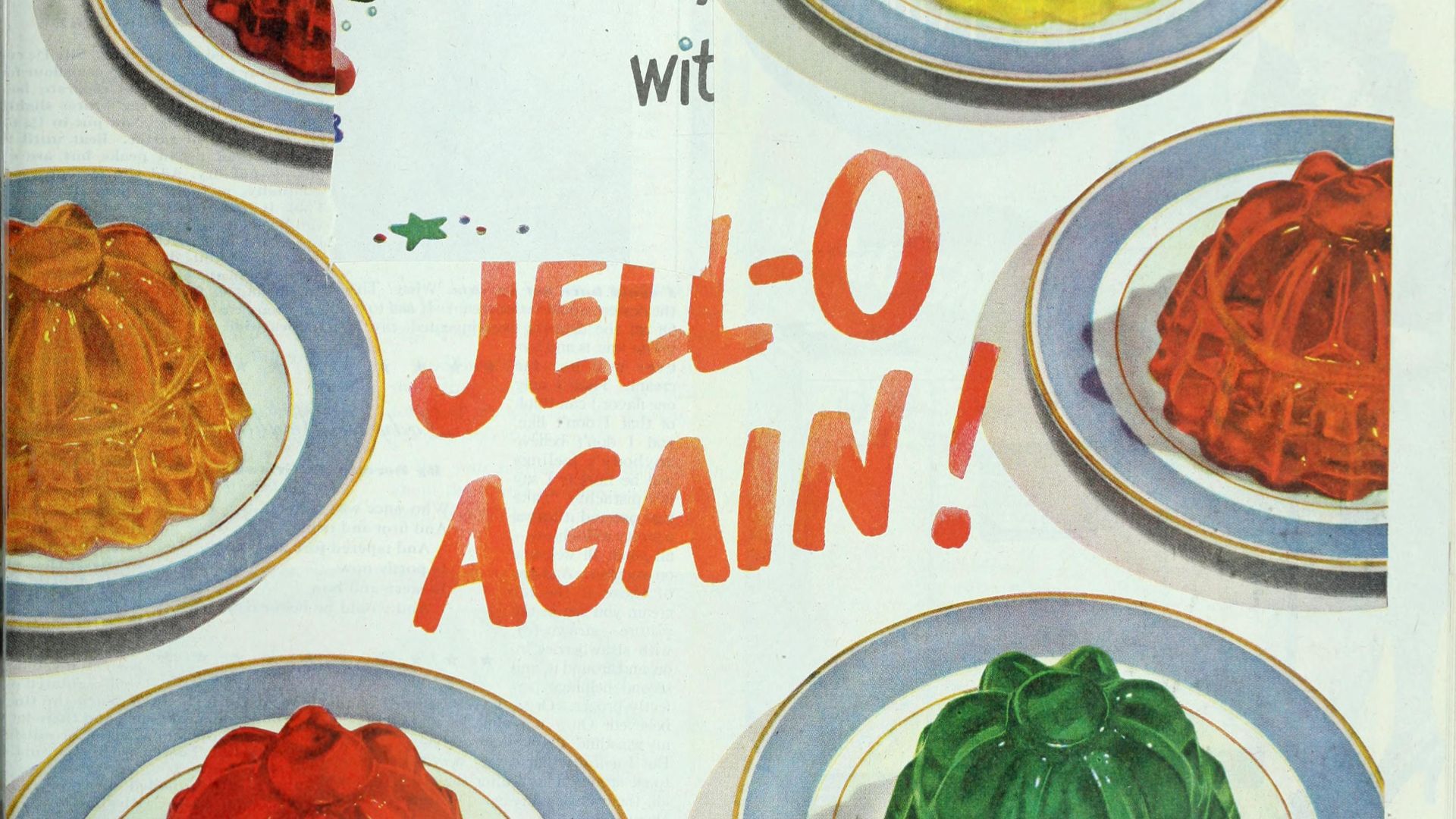
After World War II, Jell-O salads reached their peak because they matched the mood of midcentury American cooking. Processed foods, canned goods, boxed mixes, and convenience products were seen as smart and modern. A home cook could use lime gelatin, crushed pineapple, cottage cheese, nuts, marshmallows, or mayonnaise and still feel like she had made something properly presentable. The refrigerator had become a stage, and gelatin was ready for its big entrance.
Cookbooks and advertisements encouraged endless creativity. Recipes promised salads that were sweet, savory, creamy, crunchy, fruity, or sometimes, all of those at once. There were molded rings, layered squares, holiday colors, and dramatic shapes that made the dish look more complicated than it usually was. Even if the flavor was debatable, the visual effect could be oddly persuasive.
Social life also kept Jell-O salads alive. They traveled well, served a crowd, and fit neatly onto buffet tables beside casseroles, cold meats, rolls, and desserts. At community gatherings, a molded salad could signal generosity, domestic skill, and a willingness to participate in the shared ritual of bringing something. You might not personally want tuna suspended in lemon gelatin, but someone’s aunt probably arrived proudly carrying it.
Eventually, tastes changed. By the 1970s and 1980s, many Americans became less enchanted with heavily processed foods and more interested in fresh ingredients, lighter meals, and less theatrical salads. Some gelatin dishes survived as regional favorites, family traditions, or nostalgic holiday sides, but they no longer ruled the table with the same confidence. The Jell-O salad didn't disappear completely, but it definitely became retro.
Today, Jell-O salads occupy a strange and charming place in American food history. They're funny, nostalgic, occasionally delicious, and sometimes genuinely baffling. They remind us that convenience, technology, advertising, and social expectations can shape what people think belongs on the dinner table.
KEEP ON READING

The Most Popular Signature Dishes Around the World