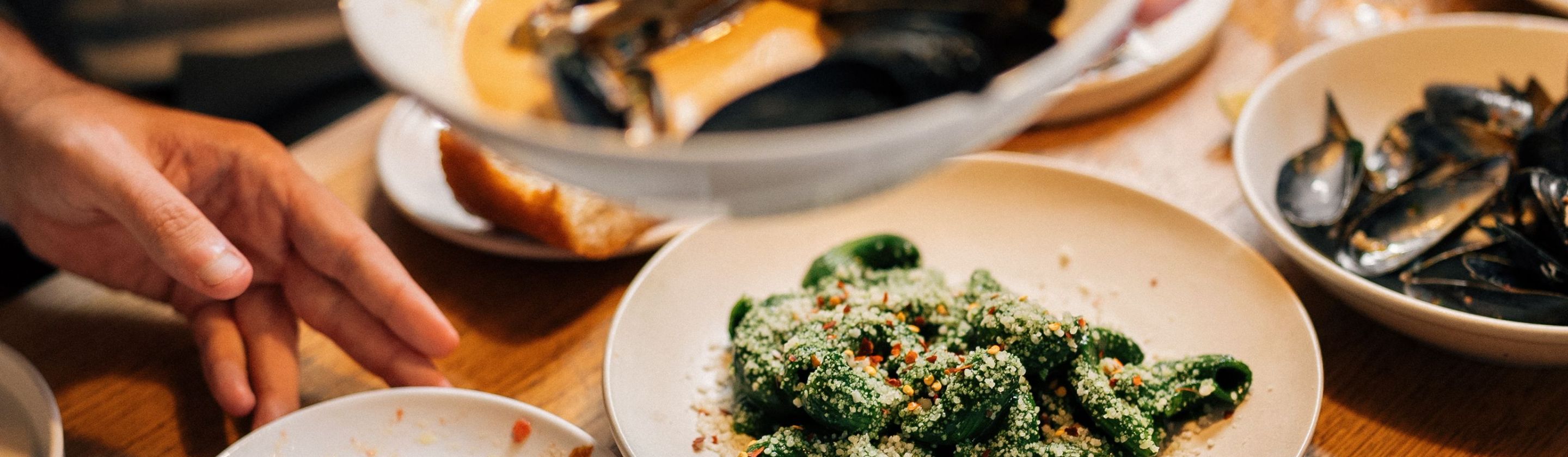
Food at a party does more than prevent guests from becoming distracted by hunger. The way each dish is served can influence conversation, comfort, and the feeling of connection around the table. Shared plates create repeated opportunities to pass, offer, choose, and wait, turning the meal into a group activity rather than several separate dining experiences.
This serving style can make a gathering feel relaxed, but it also introduces quiet decisions about fairness, etiquette, and personal boundaries. Guests may wonder how much they should take, whether someone else should be served first, or who gets the final portion of a popular appetizer. The psychology of sharing plates at parties helps explain why communal dining can encourage closeness while occasionally producing moments of hesitation.
Shared Food Encourages Natural Interaction
Passing a dish gives people an immediate reason to speak, which can be especially helpful among guests who haven’t met before. Asking for the vegetables or offering someone a serving creates contact without requiring either person to invent a clever conversation starter. These brief exchanges can reduce social tension because interaction begins through a practical task.
Offering food can also communicate care and attention without turning the gesture into a major production. A guest who notices that someone hasn’t received a platter may pass it over, explain what’s in it, or help place a portion on their plate. Small acts like these contribute to a cooperative atmosphere because people begin looking beyond their own immediate needs.
A shared selection gives the group a common subject that can support conversation throughout the meal. People can compare favorite dishes, ask about ingredients, or discuss a recipe without needing to reveal anything deeply personal. Food is usually a comfortable topic, so it provides a useful bridge between basic introductions and more substantial discussions. Those casual exchanges may eventually help guests discover shared interests that have nothing to do with dinner.
Communal Meals Reveal Group Dynamics
Shared plates require diners to make quick judgments about fairness, even though nobody usually announces official rules. Most people understand that taking an oversized first portion could leave less for everyone else, so they check the amount available before serving themselves. They may also observe how much others are taking and adjust their own choices to match the group. This type of social monitoring helps people cooperate without requiring direct instructions from the host.
The final piece of a popular dish often creates the clearest example of unspoken negotiation. One person may take it confidently, while another offers it around despite secretly hoping nobody accepts. Several guests might suggest dividing it, and someone else may avoid it altogether because they don’t want to appear inconsiderate. These reactions don’t define anyone’s entire personality, but they show how strongly concern about social judgment can shape an ordinary decision.
Relationships and cultural habits further affect what people consider acceptable at a shared table. Close friends may reach freely, tease one another about favorite foods, and take second helpings without asking, while new acquaintances usually behave more cautiously. A clear invitation from the host can prevent polite hesitation from becoming an unnecessarily long wait.
Choice And Boundaries Shape The Experience

Communal dishes let people taste several foods without committing to a full serving of each one. Trying a small amount of an unfamiliar item can feel less risky, especially when other guests are already enjoying it. Positive reactions around the table may also make someone more willing to sample something they initially planned to avoid. Research on social influence has consistently shown that people’s eating behavior can be affected by the choices and reactions of those around them.
Variety can increase enjoyment, but an overloaded table may leave guests uncertain about where to begin. Too many dishes, unfamiliar serving methods, or missing utensils can turn a generous spread into a confusing experience. Hosts can make the meal easier by arranging foods logically, labeling less familiar options, and placing suitable serving tools beside every plate. A little organization allows people to explore the selection without constantly requesting assistance.
Personal comfort also depends on hygiene, dietary needs, and respect for individual preferences. Some guests may be concerned about shared dipping bowls, cross-contact between allergens, or several people handling the same serving utensil. Separate spoons, clearly identified dishes, and individual sauces can address these concerns without removing the communal atmosphere.
Sharing plates works because it turns eating into a sequence of cooperative moments that guests experience together. Passing food, considering portion sizes, discussing flavors, and making space for others can help a gathering feel more connected without forcing constant conversation. The arrangement is most successful when hosts provide enough variety, explain unfamiliar dishes, and respect different comfort levels. With those details handled, a shared meal can create an inviting social setting where interaction develops naturally around the food.
KEEP ON READING

The Quiet Death Of The Sit-Down Family Dinner