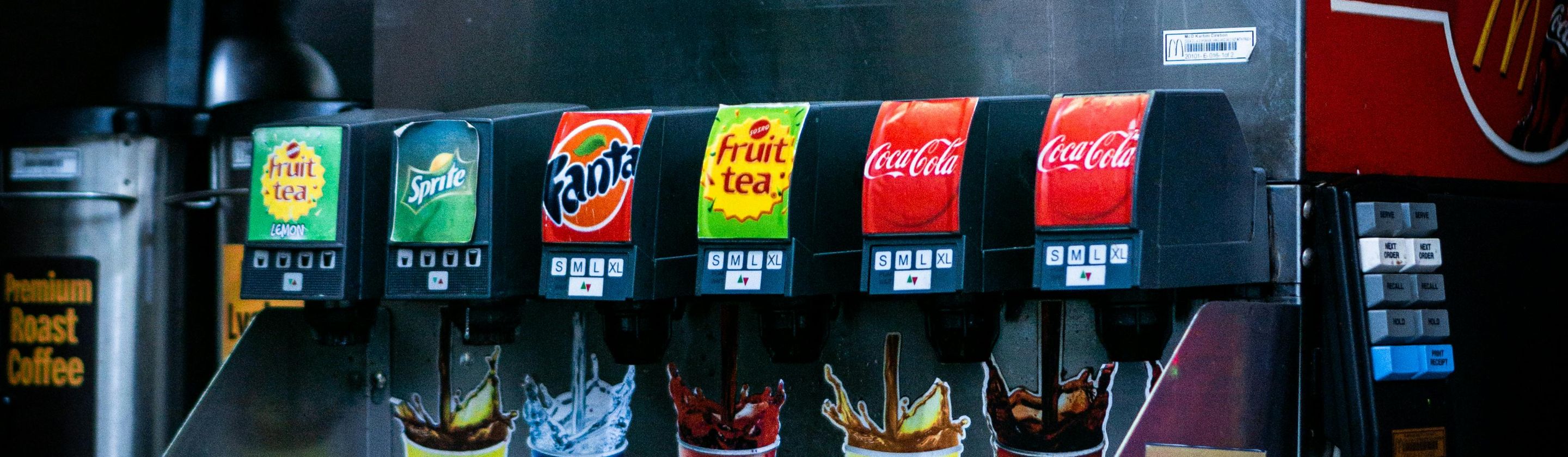
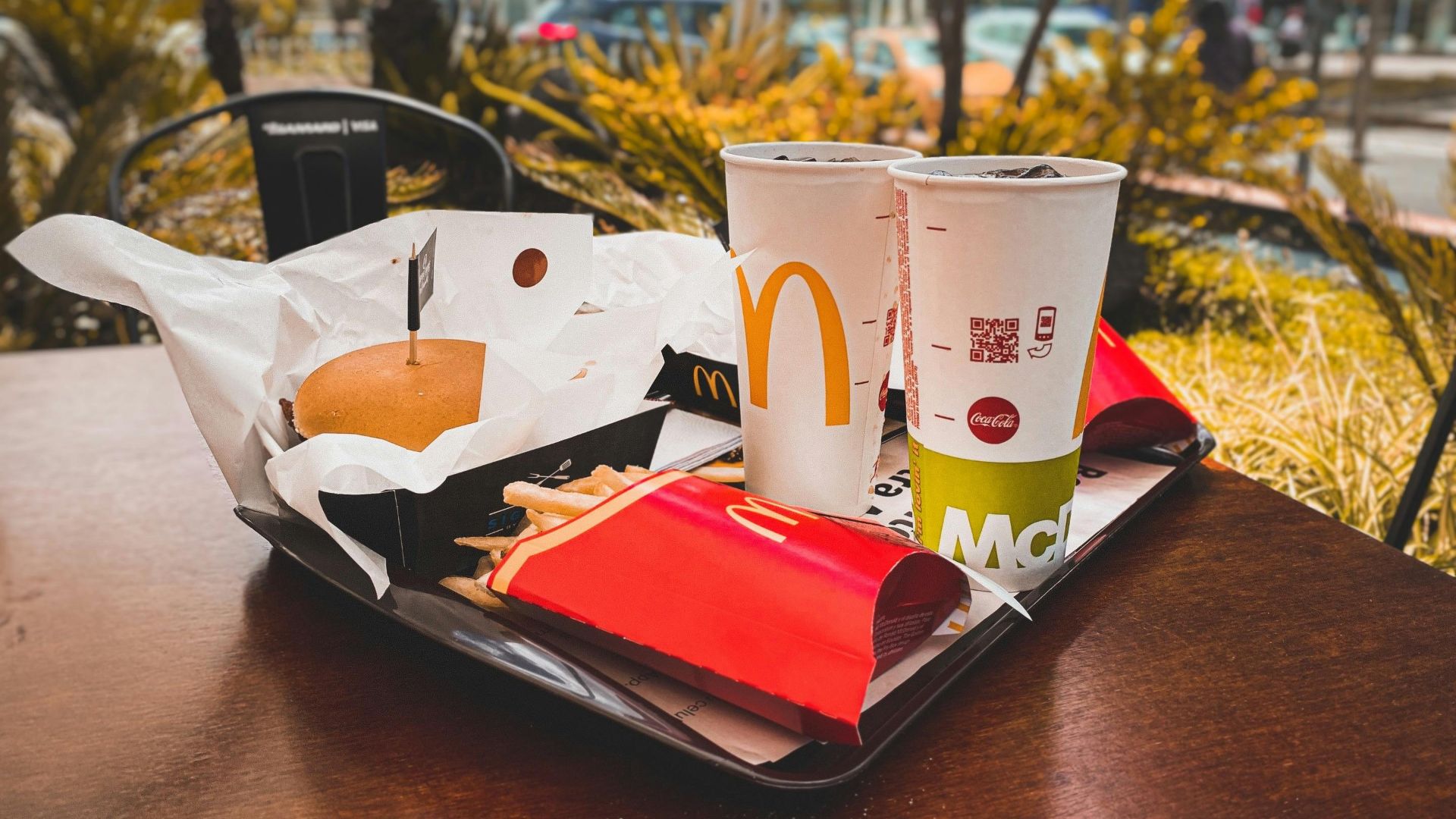
There's a specific craving that only a McDonald's Coke can satisfy. Not a Coke from the gas station, not a can from the fridge, not even a bottle from the same restaurant if it comes from a two-liter. Something about the drive-thru cup, the wide straw, and the specific cold of it produces a drink that tastes noticeably different from the exact same product poured anywhere else. This is not a placebo. The science behind it is real, documented, and surprisingly involved.
Coca-Cola and McDonald's have maintained one of the longest corporate partnerships in fast food history, stretching back to the early 1950s when Ray Kroc approached the company before he'd even opened his first franchise location. That relationship has produced a set of preparation standards that most restaurants simply don't follow, and the cumulative effect of those standards is a Coke that routinely gets described as crisper, colder, and more carbonated than anything you'd pour from a can at home.
The Syrup Comes In Steel, Not Plastic
Most restaurants that serve fountain Coke receive their syrup in a bag-in-box format, the same kind of packaging used for a wide range of commercial beverages. The syrup sits in a cardboard box with a plastic bag inside, gets stored in a back room, and eventually moves into a dispenser. McDonald's operates under a different arrangement. Coca-Cola delivers its syrup to McDonald's locations in stainless steel containers, a detail that Coca-Cola has confirmed in its own FAQ documentation on their website.
Steel matters here for a straightforward reason. Plastic is permeable enough to allow minor flavor transfer over time, and the ambient temperature of a storage room is rarely ideal. Steel is inert, meaning the syrup doesn't pick up competing flavors or odors during storage, and the container itself helps maintain a more consistent temperature between delivery and use. You're starting with a cleaner base before a single drop of carbonated water enters the picture.
McDonald's also pre-chills its syrup before it reaches the dispenser, which is another departure from standard practice. Most fountain systems mix syrup with water at roughly room temperature and rely on the ice in the cup to bring the drink down. Pre-chilling the syrup means the mixing temperature is lower from the start, which matters enormously for how well carbon dioxide stays dissolved in the final liquid.
Cold Water Holds More Gas
Carbonation is fundamentally a gas-in-liquid solution, and that solution is highly sensitive to temperature. Carbon dioxide dissolves more readily and stays dissolved longer in cold water than in warm water, a principle described by Henry's Law, which establishes that the solubility of a gas in a liquid is proportional to the partial pressure of that gas and inversely related to temperature. When the water used in a fountain machine is warmer, CO2 escapes faster, and the drink tastes flatter even before it hits the ice.
McDonald's runs its water through a filtration system calibrated specifically for Coke production, and that water is kept near freezing before it mixes with the syrup. The company also pre-chills the lines that carry water through the machine. The result is a drink that's closer to 34 degrees Fahrenheit at the point of dispensing, compared to the 40-plus degrees that many standard fountain systems produce. That difference translates directly into carbonation retention, which is the primary reason the Coke tastes sharper.
Canned Coke, by comparison, is mixed and sealed at a facility under high-pressure conditions, then shipped and stored at ambient temperature. By the time it reaches your hand, the can may have spent weeks in a warehouse, on a truck, and on a shelf at varying temperatures. Even a properly refrigerated can begins losing carbonation the moment you crack the tab, and it lacks the continuous CO2 pressure that a fountain system maintains all the way to the cup.
The Straw And The Ratio Finish The Job
McDonald's uses a wider straw than most fast food restaurants, a fact you can confirm by simply looking at one next to a standard straw. The typical straw diameter at most chains hovers around 6 millimeters, while McDonald's straws measure closer to 8 millimeters. That sounds trivial, but straw width determines how much of the drink contacts your taste buds simultaneously, and flavor perception is partly a function of the volume delivered per sip.
The ice ratio also plays a role that tends to get underestimated. McDonald's uses a substantial amount of ice, which keeps the liquid temperature low throughout the drink rather than just at the bottom of the cup. As the ice melts, it dilutes the Coke slightly, and the base syrup-to-water ratio at McDonald's is formulated to account for this, calibrated so the drink hits its intended flavor profile even after some dilution has occurred.
All of this adds up to something that feels disproportionate to its ingredients. A Coke is sugar, water, caramel color, phosphoric acid, natural flavors, and CO2. The gap between a mediocre version and an excellent one comes entirely from how those elements are handled before they reach you, and McDonald's has spent decades optimizing every single step of that process with a level of specificity that most people never think to question.
KEEP ON READING

The Most Popular Signature Dishes Around the World