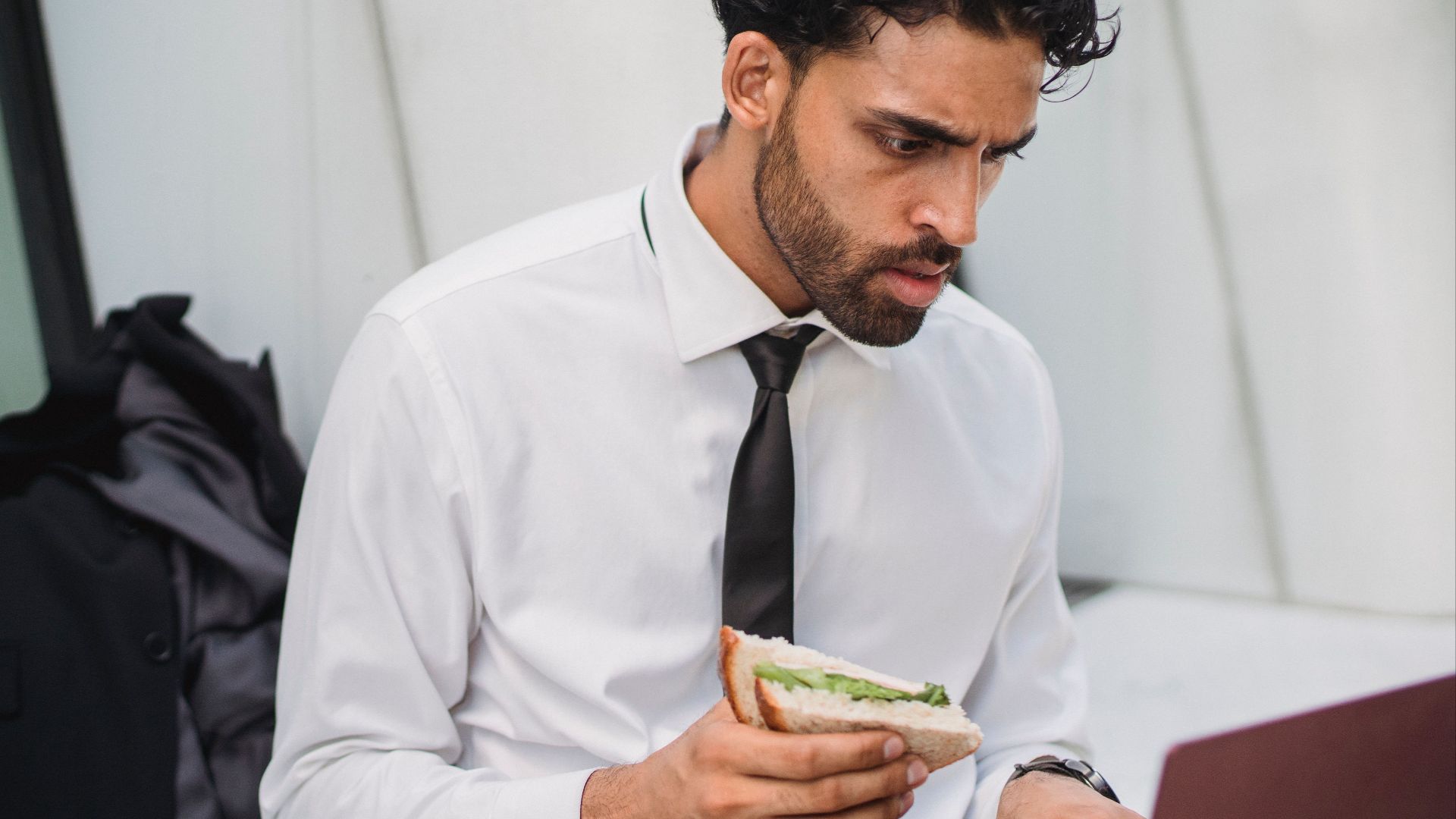
There is a particular walk from the break room to a desk that feels longer than it should, container in hand, still faintly steaming from the microwave. Whatever was inside smelled fine at home last night. In the office, under fluorescent lighting and forty feet of open floor plan, it suddenly smells like a confession.
Nobody explains why this happens, and yet almost everyone who has ever brought lunch to work knows the feeling exactly. Eating food that was already eaten once, in front of people who are paid to sit near you for eight hours, turns into a small performance nobody asked to give.
The Smell Turns You Into Public Property
Food smell does something no other office disturbance manages, which is travel. A loud phone call stays roughly where it started. Curry, on the other hand, finds its way into conference rooms two doors down within about four minutes flat. Smell psychologist Rachel Herz has written about how odor bypasses a lot of the usual mental filtering that sound and sight go through, landing directly in memory and emotion instead. That is part of why a coworker's fish leftovers from three years ago still get mentioned occasionally, half joking, in a tone that suggests it was not entirely a joke.
Once the smell is out, there is no taking it back. Someone at the next desk glances over. Someone else opens a window that does not open. And whoever is holding the container becomes, for a solid ninety seconds, the reason the whole floor now knows what was for dinner Tuesday. Nobody says anything unkind about it. The silence somehow feels worse than if they did.
This is probably why break rooms have such a strong lingering signature of whoever ate there last. Popcorn smell hangs around for days. Leftover salmon becomes something close to a haunting. The person reheating it knows this going in, and does it anyway, because lunch has to happen somewhere, and the guilt of smelling up a shared space rarely outweighs the hunger of skipping a meal entirely.
Reheated Food Reads Like Evidence
There is an odd hierarchy that shows up around lunch, one where a fresh sandwich from the deli downstairs somehow reads as more put together than a container of last night's dinner, even though the leftovers are usually the better meal. Reheated food carries a whiff of not having planned well enough, or worse, of having planned too well, the kind of overly responsible meal prepping that makes everyone else feel slightly judged by a stack of labeled containers in the office fridge.
Neither impression is fair. A plate of leftover roast chicken took real effort the night before, probably more effort than whatever came out of a plastic clamshell at the corner store. Somehow that effort gets erased the moment food goes through a second heating. What is left behind is just a container that used to be dinner, now doing a less convincing impression of lunch.
Part of this comes down to timing rather than taste. Freshly made food signals that someone had the time and energy that morning to think about food, which on a rough week can feel like a small brag nobody meant to make. Leftovers, by comparison, quietly announce that yesterday's version of you did the thinking instead, and today's version is just along for the ride.
It is a strange thing to feel self-conscious about, and yet plenty of people time their lunch breaks around avoiding exactly that feeling.
The Break Room Turns Into A Stage
Eating alone at a desk is one thing. Eating in a break room, next to people mid-conversation about a deadline, turns lunch into something closer to a small audience situation. Researchers who study social eating, including work published by psychologist John de Castro on what is called social facilitation of eating, have found that people genuinely eat differently around others than they do alone, adjusting pace, portion, and even food choice depending on who is nearby.
That adjustment gets more noticeable with leftovers specifically. A sandwich barely registers. A container of last night's pasta, sauce included, somehow becomes the center of attention for a few seconds too long. Eating it neatly while a coworker is midsentence about quarterly numbers takes a kind of multitasking nobody trains for.
None of this stops people from doing it, of course. Lunch still has to happen, smell or no smell, audience or no audience. The container gets opened anyway, the microwave gets used anyway, and a few minutes later, the whole thing is forgotten by everyone except the person who briefly worried it wouldn't be.
KEEP ON READING

Happy Hour: The 20 Best Foods For Social Snacking