
 https://kaboompics.com/ on Pexels
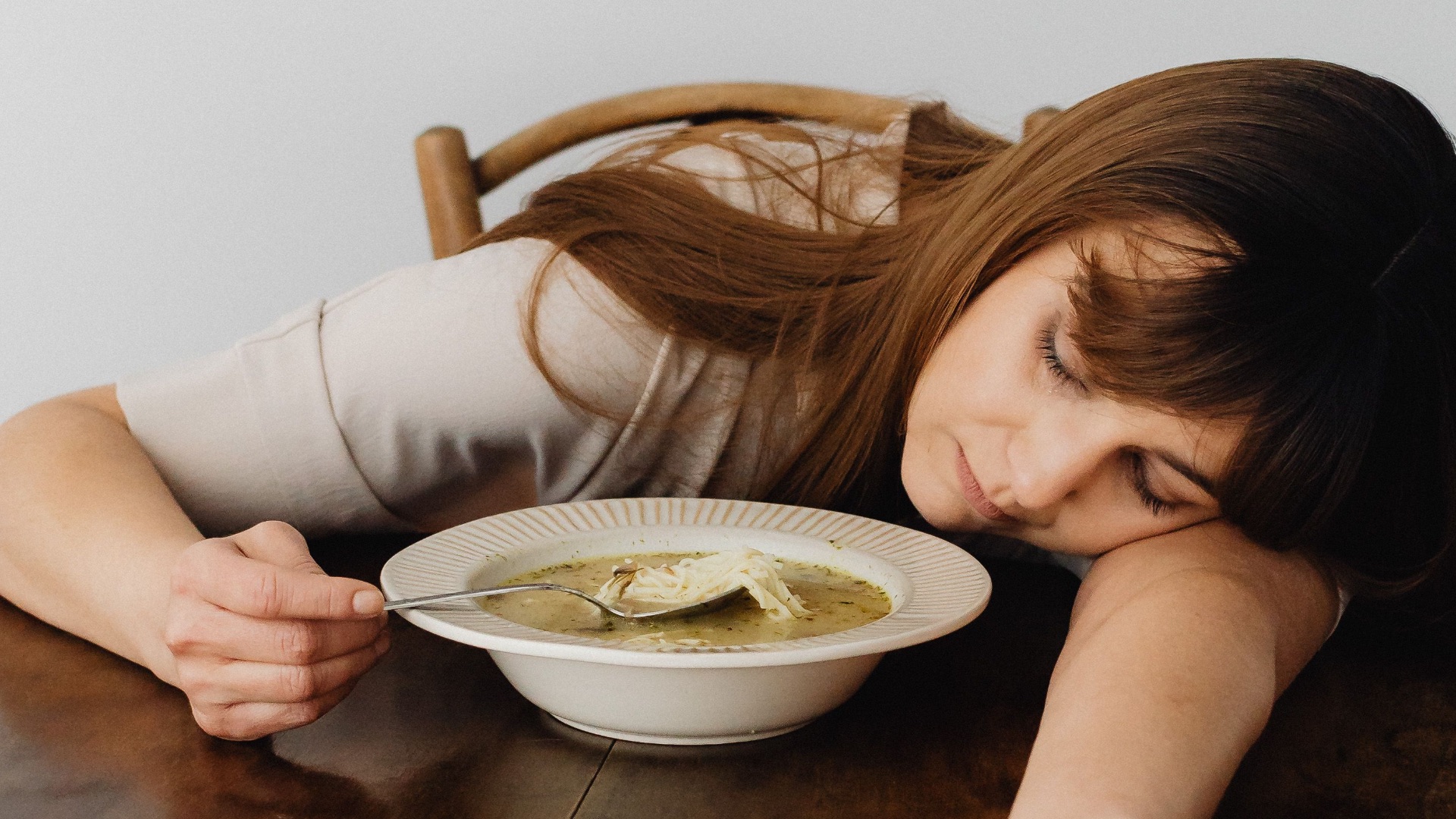
Ever felt perfectly awake and alert before lunch, but as soon as you head back to your desk, you can't seem to keep your eyes open? Contrary to what you might think, this doesn't just happen with big meals. That familiar wave of tiredness has a medical name, too: postprandial somnolence. While it'll unfortunately leave you feeling a little sluggish (goodbye productivity), it usually fades within a few hours.
Yet, despite what you may have heard, this condition doesn't happen simply because all your blood has rushed toward your stomach for digestion and away from your brain. In fact, post-meal sleepiness is the result of several processes working together, including digestion-related signals, changes in nutrients circulating in your blood, the brain systems that regulate alertness, and your natural body clock. As you'll see, what and how much you eat can influence the effect, but other habits matter as well.
Eating Changes More Than Just How Full You Feel
Let's start from the beginning of the process. When you eat, food reaching your digestive system sets off a series of signals between your gut, bloodstream, and brain. Nutrients such as glucose and amino acids, for example, change after a meal, while digestive hormones and neural signals communicate that you've eaten. Subtle as they may seem, it's these slight shifts that researchers believe can affect your overall wakefulness, which may explain why eating can make you feel drowsy even when you weren't feeling tired before the meal.
It should probably come as no surprise, though, that the more you eat, the drowsier you'll feel. Larger, higher-energy meals, after all, require more work for your digestive system, meaning a bigger lunch can leave you noticeably more sluggish than a modest one. But portion size alone doesn't tell the whole story. It also depends on what you eat. Alas, if you're inhaling a massive burger and a greasy plate of fries, you're probably going to feel more sapped than someone who snacked on nuts and yogurt.
Of course, while it's tempting to blame carbohydrates alone, the science isn't that simple. Studies comparing high-carbohydrate, high-fat, and mixed meals have produced differing results: some detected changes in alertness, while others didn't find significant differences. It goes to show that several factors, including calorie content and individual metabolism, influence the phenomenon.
Your Body Clock May Be Adding to the Problem
Though lunch often gets blamed for the afternoon energy slump, part of that decline can happen even if you don't eat. Here's a fun fact: humans have a natural tendency to feel sleepy during the early to mid-afternoon, and it's so common that there's a name, too—the post-lunch dip. Research has even demonstrated this period of sluggishness even when people don't eat lunch, suggesting that circadian biology plays an important role.
Given that you might already feel sleepy without eating lunch at all, it's probably not shocking that when you do eat, that drowsy feeling only increases. Eating a big meal at 1 p.m., for example, can overlap with that natural reduction in alertness, making you much more likely to knock out. By contrast, the same meal eaten at another time may not produce exactly the same level of drowsiness because your circadian drive for wakefulness is different throughout the day.
Your previous night's sleep matters, too. When you're already sleep-deprived, you won't be able to fight the normal afternoon decline as much, and research proves this: disrupted sleep can worsen the post-lunch slump. Shift workers and people who regularly get insufficient sleep may therefore notice post-meal tiredness more strongly, while older adults can be more susceptible under certain circumstances.
You Can Make the After-Lunch Slump Less Intense
Knowing all this, is there a way to potentially stop yourself from feeling sleepy? Well, one of the simplest strategies is to rethink your meal size. Instead of eating an enormous lunch that leaves you uncomfortably full, consider a smaller, balanced meal built around protein, fiber-rich foods, vegetables, and less-refined carbohydrate sources. Experts even recommend smaller but more frequent meals, especially plates that emphasize essential macronutrients and lower-glycemic carbohydrates for people trying to reduce postprandial sleepiness.
Another tip? Get moving after your meal! Studies have found that exercising after a meal, particularly walking relatively soon afterward, reduced post-meal glucose rises more effectively than exercising before eating or remaining sedentary. Of course, that doesn't prove that walking will eliminate sleepiness altogether, but it doesn't hurt to try, and it'll help keep you active, too.
Other everyday habits can make a difference. You don't need us to tell you to get enough sleep or to avoid excessive lunchtime alcohol—both can help prevent that sedating effect. Cut down on the coffee also; as awake as it may make you feel temporarily, it'll only backfire at bedtime. If your schedule allows it and you really can't keep your eyes open, try a 20-minute power nap. Just don't sleep for too long.
All in all, feeling a little sleepy after eating is normal: it's just the way your body works. But many factors can influence it, which is why eating more balanced meals, sleeping consistently, and staying physically active may all help to lessen the slump. If daytime sleepiness is unusually persistent or interfering with your daily life, however, it's worth discussing with a healthcare professional.
KEEP ON READING




20 Dishes That Built Modern American Cuisine