Here's Why You Should Be Cleaning Your Kitchen Sink Regularly
The kitchen sink sees more daily use than almost any other surface in your home. You rinse produce in it, wash your hands after handling raw meat, scrub greasy pots, and toss food scraps down the drain multiple times a day. With all of that activity, it's easy to assume that the soap and water passing through it are doing the cleaning for you. Unfortunately, that's not quite how it works.
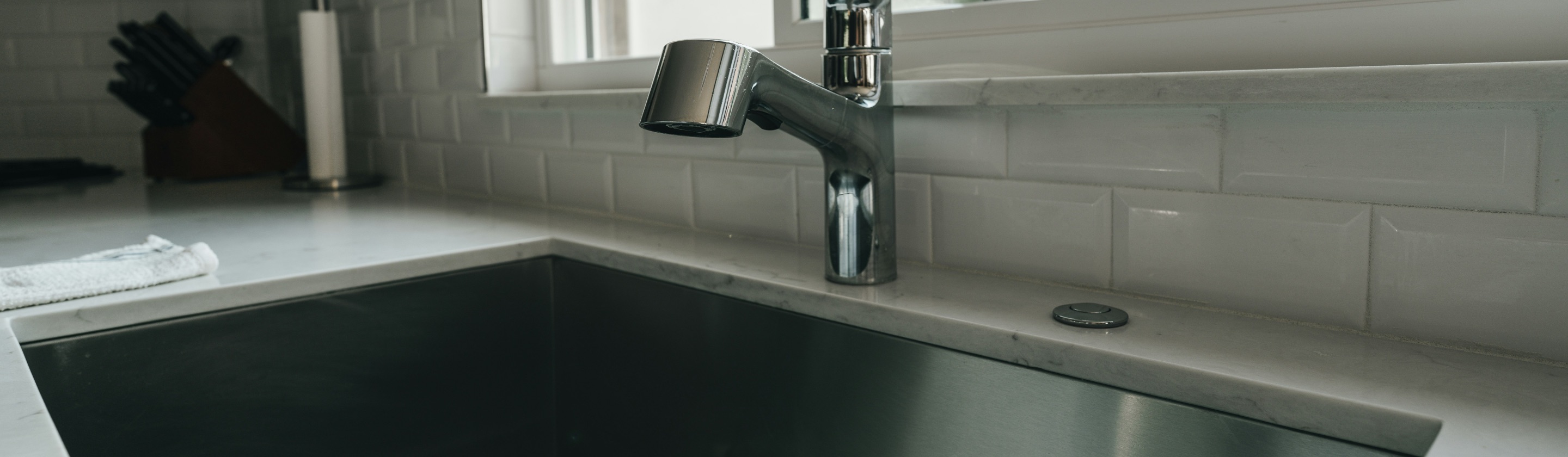
According to NSF International, the kitchen sink is actually the germiest place in your home—yep, beating out even the toilet bowl. In fact, there's more fecal matter in the sink you wash your food in than in the place you do your number twos. So, if you've been giving your sink a quick rinse and calling it a day, it's worth understanding what's really going on in that basin and why a more thorough routine is long, long overdue.
Your Sink Is a Breeding Ground for Harmful Bacteria
But how can your kitchen sink be that gross if you're washing dishes in it every day? Well, it might surprise you to learn just how much bacterial activity is happening in there. To put it into perspective, a 2011 study tested swabs from 30 household items across 22 families and found that 45% of kitchen sink samples tested positive for coliform bacteria—a group that includes E. coli and Salmonella. For context, that figure was higher than what they found on bathroom faucet handles and toilet handles.
Cross-contamination is one of the most pressing concerns here. The U.S. Department of Agriculture (USDA) has highlighted that bacteria transferred to your sink during food prep can easily spread to other foods placed in the same sink afterward. In one of their studies, 34% of sinks were contaminated after a breakfast meal (containing raw sausage, shell eggs, and fruit salad) was prepared, and 26% of cut cantaloupe was contaminated because it was washed in a bacteria-laden sink. That's a sobering reminder of how quickly germs travel.
It's important to note that foodborne illness-causing bacteria can survive on surfaces for a surprisingly long time; Salmonella, for example, can linger for up to 32 hours. Simply rinsing your sink with water after cooking doesn't remove that risk. The USDA recommends a two-step process: cleaning first with warm, soapy water to remove grease and food particles, then sanitizing with a diluted bleach solution or an approved disinfectant to actually kill off remaining bacteria.
How often should you be doing this? Most experts suggest a thorough cleaning and sanitizing session at least once a week under normal conditions, and immediately after you've handled raw meat or poultry. If you cook every day, some experts argue that daily attention is the better standard. The key is consistency; letting bacteria build up over several days creates a far bigger problem than staying on top of it in smaller, regular bursts.
Don't Forget the Dish Sponge
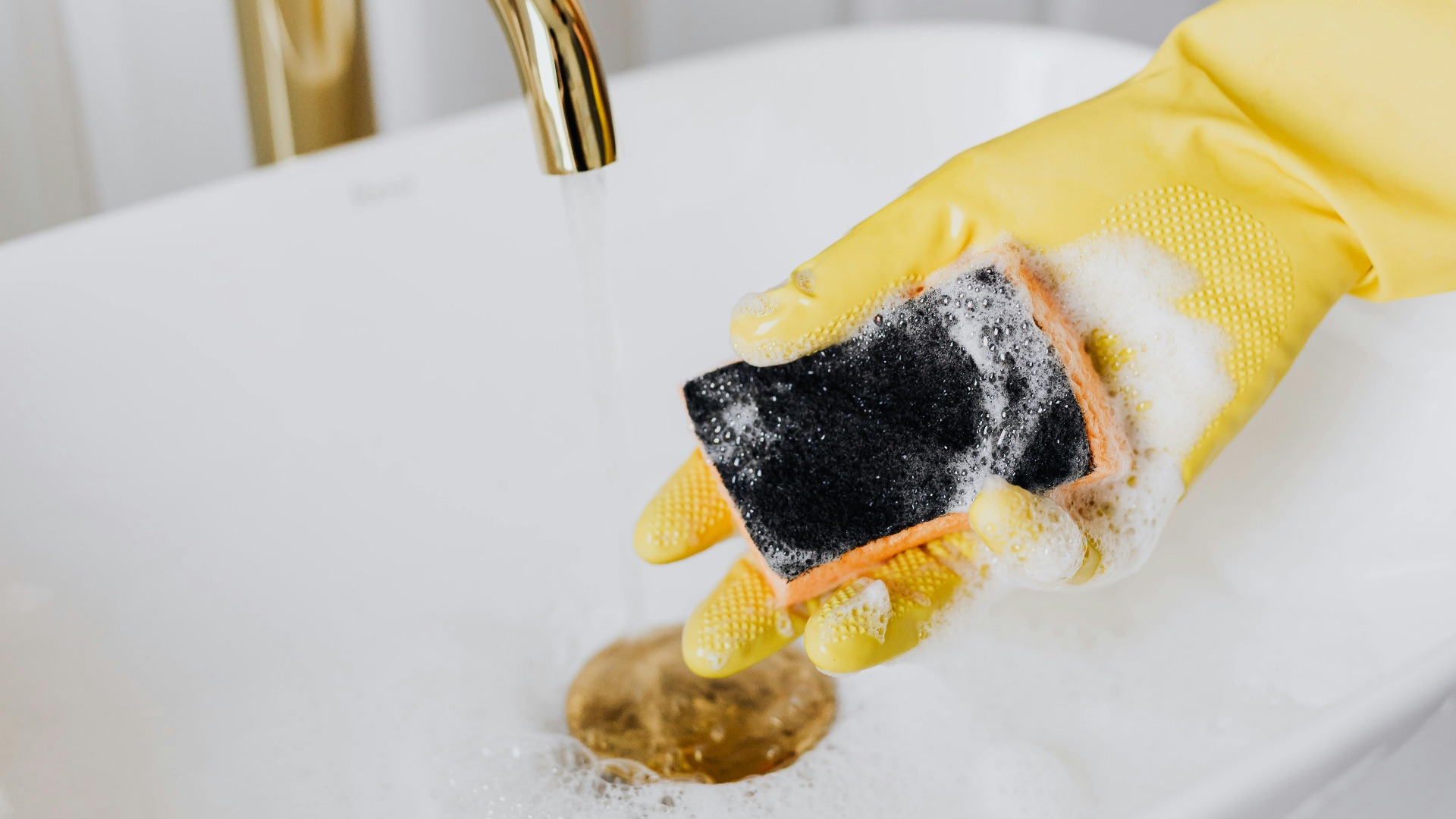
Your kitchen sink and your dish sponge share the same environment, and if you're cleaning one without addressing the other, you're only doing half the job. A 2017 study found more than 360 kinds of bacteria on kitchen sponges tested from real homes, including—you guessed it—E. coli and Salmonella. Microwaving, boiling, or throwing it in the dishwasher doesn't always help either; sometimes, the germs just grow back.
The issue compounds when you consider how sponges actually get used. Most people reach for the same sponge to scrub dishes, wipe down the stovetop, and clean the sink basin itself (which might mean scraping raw bits of meat), and each of those tasks introduces a new wave of bacteria and food residue into the sponge's pores. If you're not swapping it out regularly or using different designated sponges, you're introducing those germs to your dishes every time you wash them with that same sponge.
How soon, then, should you be replacing your dish sponge? Even if it looks well-maintained, most experts recommend replacing it every one to two weeks, or immediately if it develops an odor, looks discolored, or starts to fall apart. Storing it in a spot where it can fully dry out between uses also makes a measurable difference, since bacteria multiply far more quickly in a sponge that stays perpetually damp.
Regular Cleaning Protects Your Sink's Condition and Your Home's Cleanliness
Consistent cleaning does more than keep harmful bacteria at bay; it also preserves the physical condition of your sink over time. Hard water deposits, soap scum, and mineral stains can accumulate quickly, and the longer they're left, the harder they are to remove. Stainless steel sinks benefit from a quick daily rinse and dry to prevent water spots and minor scratches, while porcelain sinks may need a more targeted scrub periodically to address staining. Staying on top of it means you won't need to deal with stubborn buildup.
It's also worth paying attention to the areas you might normally overlook. Aside from your murky-looking dish sponge, the faucet base, the drain cover, and the edges of the sink where it meets the counter are all spots where grime tends to collect. An old toothbrush might come in handy here; it's the right size to get into the gaps around faucet hardware and the grooves of the drain without damaging the surface. A quarterly deep clean that includes these hard-to-reach areas keeps everything in significantly better shape than a surface-level wipe-down alone.
There's a practical upside to all of this beyond the obvious health benefits: a clean sink makes your entire kitchen feel cleaner and more organized. Since the sink tends to sit in the center of most kitchen activity, its appearance sets the tone for the rest of the space. A grimy, odorous sink can make an otherwise tidy kitchen feel unkempt; a clean, well-maintained one has the opposite effect. Building the habit of regular sink cleaning is one of the lower-effort ways to maintain a kitchen you actually feel comfortable cooking and eating in.
KEEP ON READING


20 Foods You Can't Eat Without Teeth