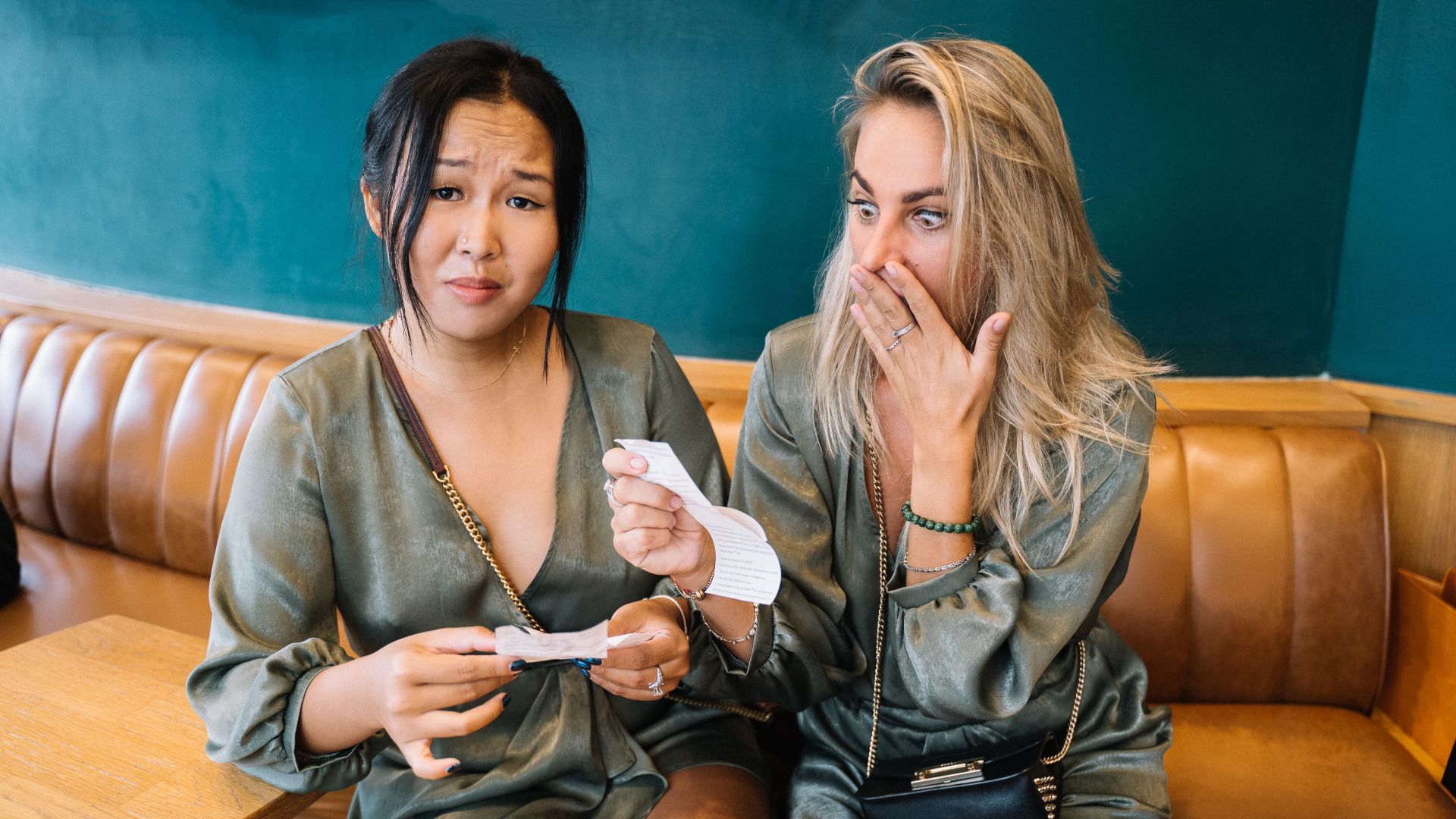
The check lands in the middle of the table, and for a few seconds nobody touches it. Someone reaches for their phone to use their calculator, someone else says not to worry about it, they've got this one, and somewhere underneath all that politeness a small negotiation is already happening. Nobody planned it. Nobody would call it a negotiation out loud. But splitting a bill turns out to be one of those tiny social rituals that carries far more weight than the actual math involved.
Economists and psychologists have actually poked at this exact moment more than you'd expect, and the findings tend to land somewhere between funny and a little humbling. What looks like simple arithmetic at the end of a meal is doing quiet work on trust, status, and how everyone at the table sees the relationship they're actually in.
Splitting Evenly Changes What People Order
Researchers Uri Gneezy, Ernan Haruvy, and Hadas Yafe ran a study testing exactly what happens when a group agrees in advance to split a restaurant bill evenly rather than paying individually. Diners who knew the cost would be divided equally ended up ordering noticeably more food than diners paying only for what they personally chose.
The logic works a lot like any shared resource problem. When six people split one bill, ordering the fifteen-dollar appetizer only costs any single diner two and a half dollars of it, so the appetizer starts feeling like a much better deal than it actually is. Everyone at the table is quietly running that same math, which is exactly how a modest dinner turns into a meal nobody quite remembers agreeing to.
None of this makes anyone at the table greedy or dishonest. It's a structural nudge built into the arrangement itself, the same way an all-you-can-eat buffet nudges people toward a second plate they didn't plan on. Splitting evenly just moves the cost far enough away from each individual choice that the choice stops feeling like spending at all.
Money Changes What A Favor Means
Behavioral economist Dan Ariely has written at length about the gap between what he calls social norms and market norms, the idea being that people behave very differently once money enters an exchange that used to run on goodwill. Offering to pay a friend's mother for a home-cooked holiday dinner usually lands as an insult rather than a compliment, since it accidentally reclassifies a warm gesture as a paid transaction.
A bill split does something similar in miniature. As long as nobody's counting, a dinner between friends runs on social norms, on the loose assumption that things will roughly even out over time and nobody's really keeping score. The second someone pulls out a calculator or asks the server to split the check four ways, the table quietly shifts into market territory, where fairness gets measured to the dollar instead of felt in general terms.
That shift explains why the person suggesting an even split sometimes gets a slightly frosty response, even when the math is completely reasonable. It's rarely about the few dollars in question. It's the sudden reminder that the group just swapped a friendship running on trust for one running on a ledger, even if only for the length of one transaction.
Reaching For The Check Is Rarely Just About The Check
Social psychologists studying relationship equity, going back to work by Elaine Hatfield and colleagues in the 1970s, found that people track fairness in relationships even when they insist they aren't keeping score. Grabbing the check isn't just generosity in that framework, it's a small deposit into an ongoing account that most people track more closely than they'd admit.
Whoever reaches first often isn't just being nice. Sometimes it's a genuine gesture, and sometimes it's a subtle move to signal status, close out an old favor, or avoid an awkward conversation about splitting fairly when the orders were wildly uneven. Watch a group of coworkers after a work dinner sometime, and the reach for the check often has less to do with generosity than with who's trying to make an impression on whom.
None of that makes the gesture insincere. It just means the check rarely arrives as neutral as it looks. By the time it's actually paid, the table has usually settled something that had nothing to do with food at all.
KEEP ON READING
The 10 Best Fried Chicken Sandwiches & The 10 Worst