 James Petts from London, England on Wikimedia
When you think about it, figgy pudding takes up a lot of Christmas real estate in pop culture compared to the amount of people who actually eat it. After all, the carolers in "We Wish You A Merry Christmas" refuse to leave someone's doorstep until they are given figgy pudding. While the Crachit family in A Christmas Carol may not enjoy a figgy pudding, per se, pudding is definitely consumed.
Like rocky mountain oysters or head cheese, figgy pudding is just one example of a food that does not fit its name. Though the earliest recipes called for figs, you can make a Christmas pudding without them. As for the pudding half of the name, well....if you're expecting a sort of fig custard, you're sure to be disappointed.
You may already know this, but "pudding" has two different definitions depending on which side of the pond you're own. To Americans, it's a custard-type dish that can often be found in many a school lunchbox. To Brits, it can mean any number of dishes, both sweet and savory.
What Is Figgy Pudding
 Smabs Sputzer (1956-2017) on Wikimedia
While "pudding" can be used as a general stand-in for any and all desserts, it can also refer to a manner of savory dish, normally made with some type of sausage. Think Yorkshire pudding or black pudding. However, in the case of figgy pudding, it's definitely sweet; those carolers weren't demanding an entire blood sausage like rabid dogs!
The first recorded recipe for figgy pudding comes from the 14th century cookbook, The Forme of Cury. In the recipe, figs and raisins are mixed with honey and ground almonds to form a sort of steamed cake. Eventually, figs turned into plums that turned into raisins.
Most figgy puddings made today are made without any figs. Dried fruit such as currants, raisins, and mixed peel is mixed with suet and breadcrumbs to form the basis of your figgy pudding. The pudding is steamed for several hours to create an optimal soft texture with plenty of air pockets.
Making figgy pudding is an all-day affair. In fact, it can be a several-day affair. The fruit is typically left to soak in alcohol (commonly rum or brandy) overnight so that the flavors penetrate. Traditionally, figgy pudding preparations started the first week before Advent, or five weeks before Christmas!
Don't worry, the alcohol and sugar content of the figgy pudding acted as preservatives. The pudding was also tightly wrapped in cloth to ensure it stayed moist. Figgy pudding was stored in a basement or cellar, somewhere that was cool without being dry.
The Cooking Process
Traditionally the cooking of the figgy pudding was almost more important than the eating of it. The whole family would come together to take turns stirring the mixture. A sixpence coin was added, and whomever found it in their slice would go into the next year with good luck.
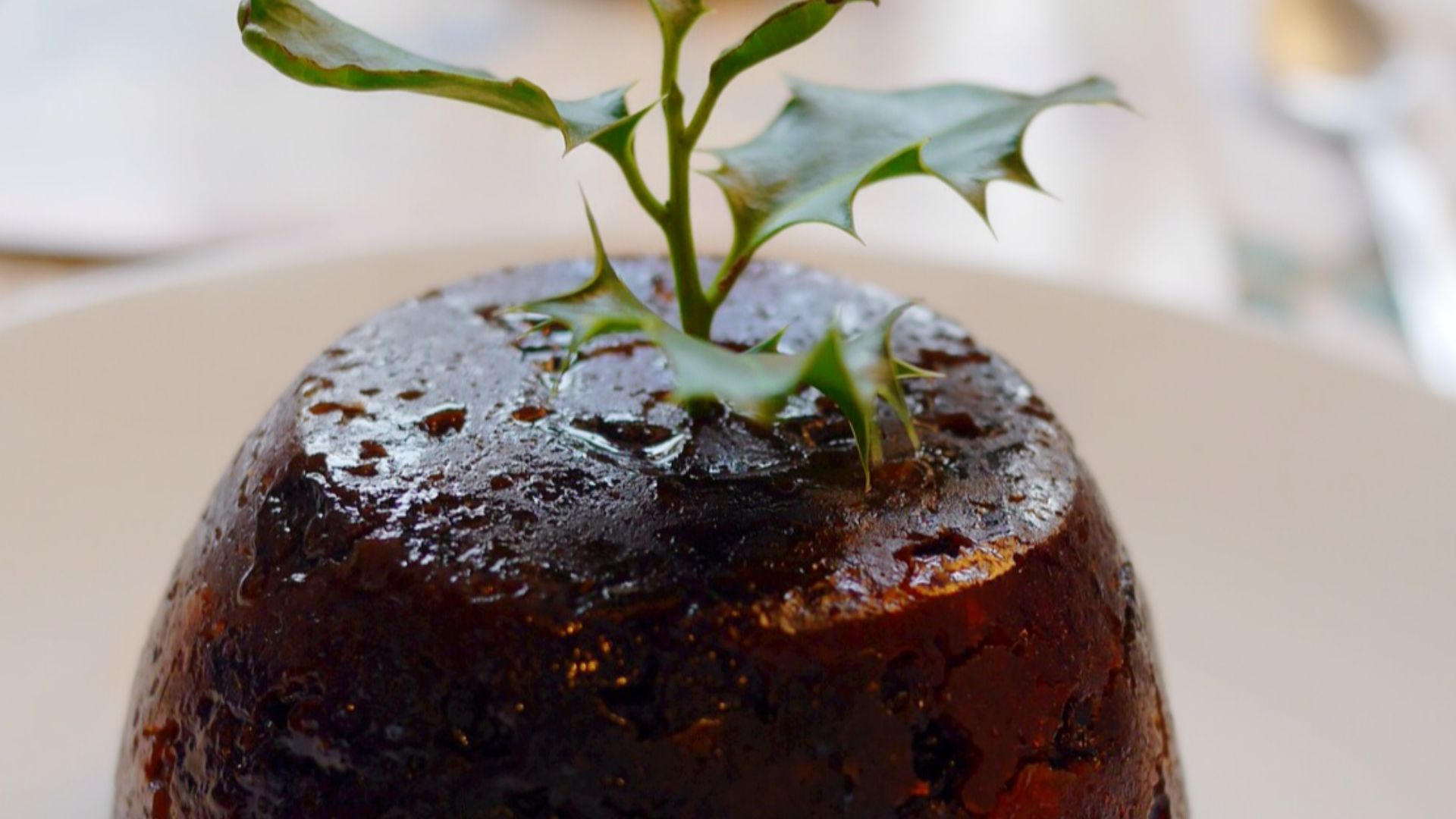
The ingredients of a figgy pudding were also steeped in ritual. Traditionally, the pudding comprised of 13 ingredients for Jesus and his 12 apostles. Once the pudding was ready to serve, it was topped with a holly leaf to represent the crown of thorns.
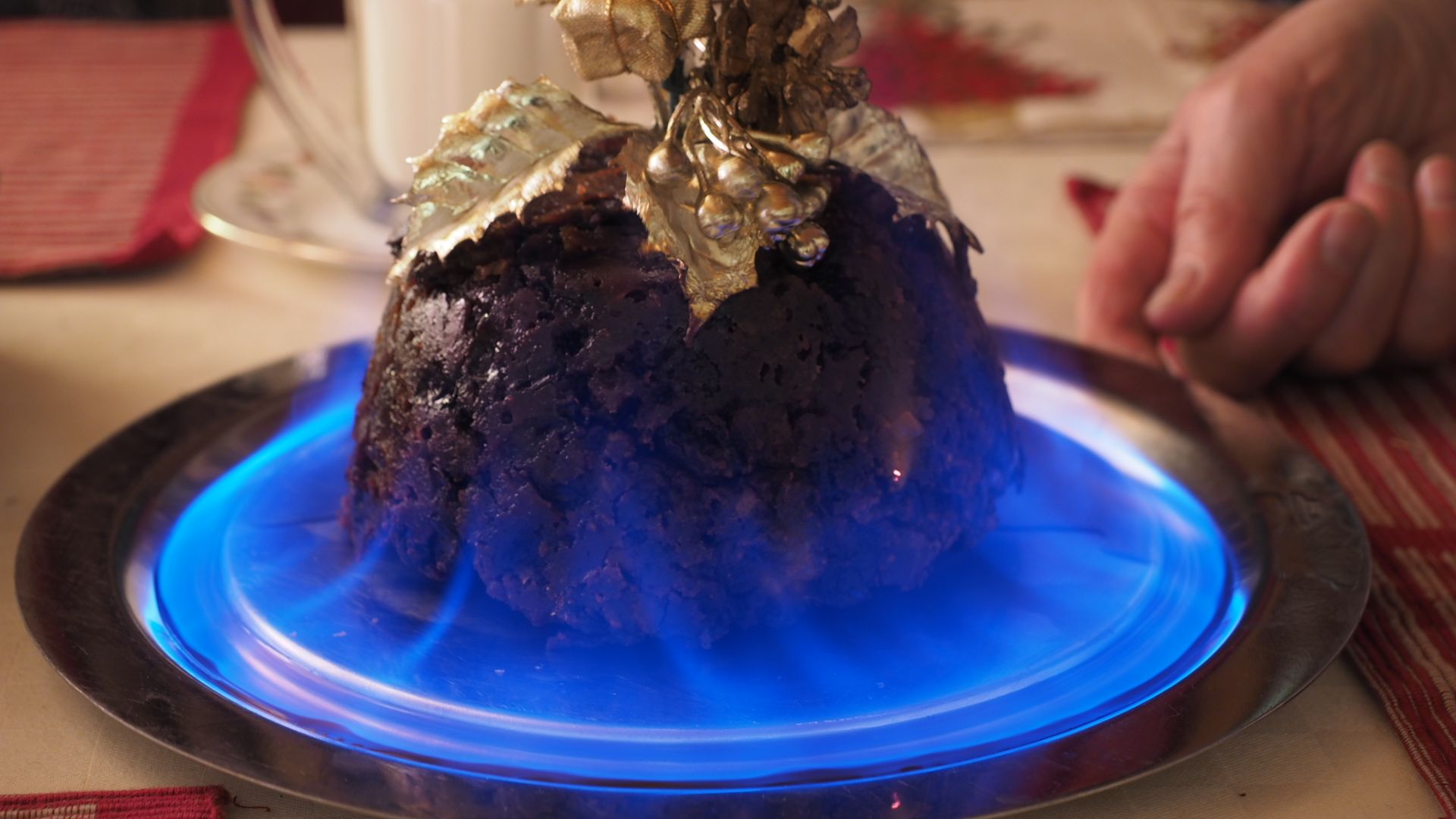
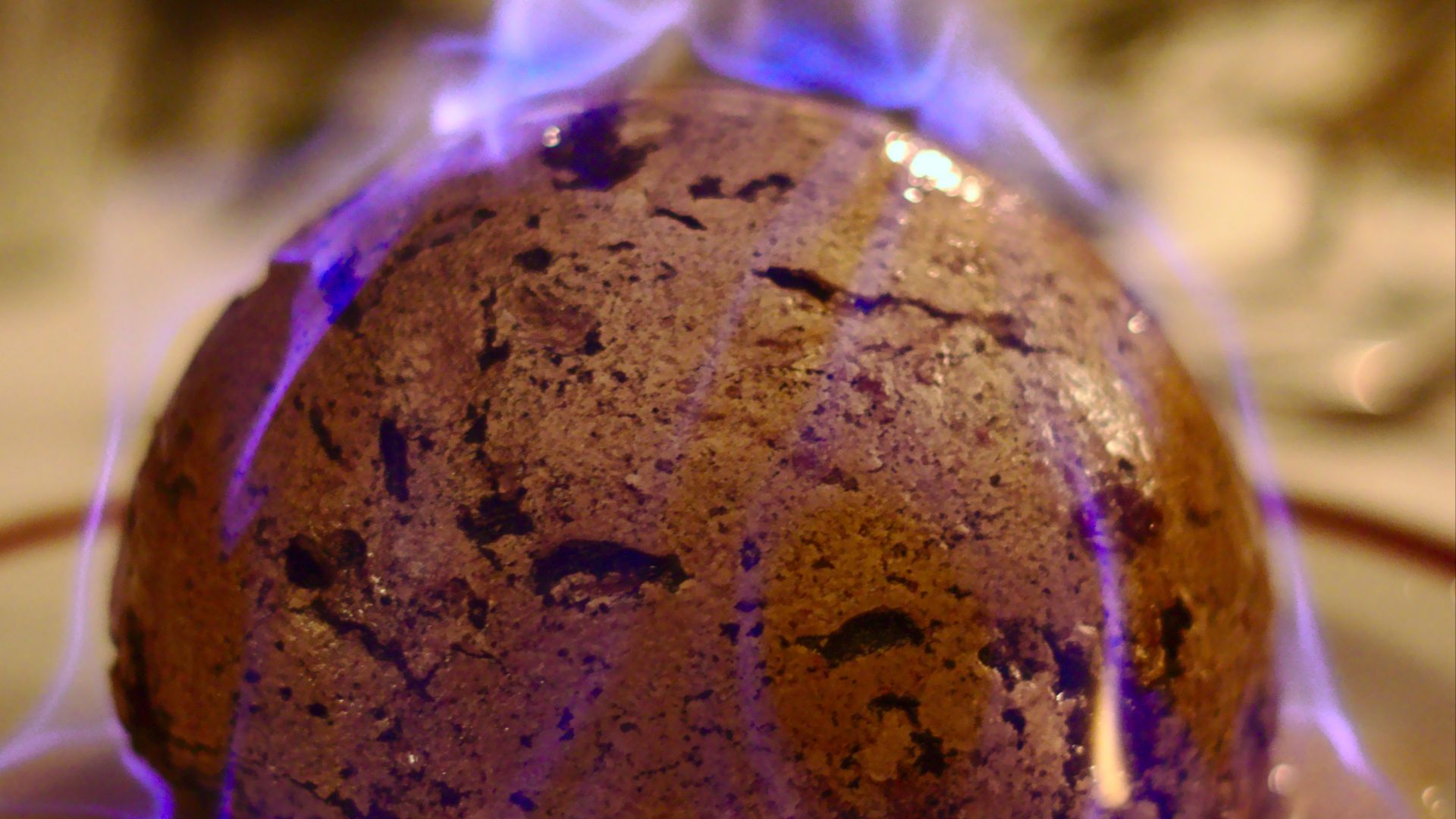
The final step before tucking into your figgy pudding is also the most flamboyant. Right before it's served, the lights are doused, and the figgy pudding is anointed with a final serving of alcohol. The pudding is then lit on fire for dinner and a show.
Figgy pudding looks like a cannonball and, if reports are to be believed, it tastes a little like one as well. It's a hearty throwback dessert that can now be purchased pre-made.
Maybe those hungry carolers were onto something when they demanded a snack in exchange for their song.
KEEP ON READING