Every cheese counter has one wheel that customers approach like it might bite them. Somewhere under all that rind sits something that smells less like dairy and more like a gym bag left in a hot car. Most people assume that reputation is exaggeration, the kind of thing food writers repeat because it makes a good line. It is not exaggeration. There is an actual cheese, French and washed-rind and proud of it, that gets talked about in the same breath as public transportation bans, and the story behind that reputation is stranger and more scientific than the joke usually lets on.
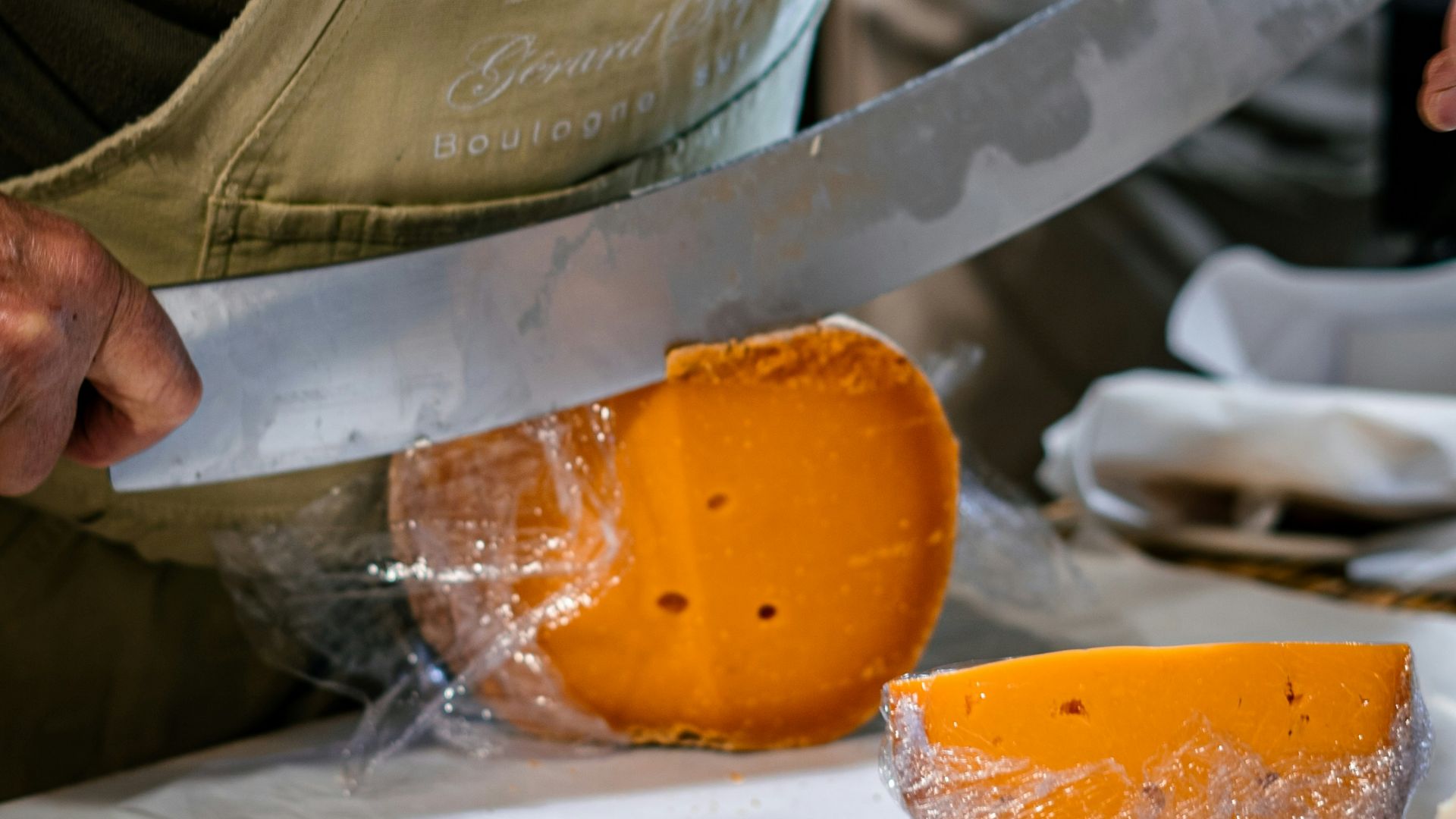
The cheese in question is Vieux Boulogne, a soft, orange-rinded cheese from the Nord-Pas-de-Calais region, and it has spent years trading the title of world's smelliest cheese with a Burgundian rival called Époisses. Both have long histories of being politely, and sometimes not so politely, asked to leave shared spaces. The reasons for that turn out to have less to do with folklore and more to do with actual chemistry happening on the surface of the cheese.
Why It Smells The Way It Does
The stink comes from a bacteria called Brevibacterium linens, the same organism responsible for a lot of the sharper smells on a cheese board and, somewhat unfortunately, a decent chunk of human foot odor. Washed-rind cheeses like Vieux Boulogne get their rinds scrubbed regularly with brine, sometimes with beer, which encourages this bacteria to thrive on the surface rather than just inside the paste. That process is what gives the rind its sticky orange color and its reputation.
As the bacteria break down proteins on the rind, they release sulfur compounds and ammonia, the same general family of smells associated with rotting vegetables or an overripe gym locker. None of that is a flaw in the cheesemaking. It is the entire point. Cheesemakers in the region have been washing rinds this way for centuries because the process also produces a soft, almost meaty flavor that fans of the style genuinely love, even while holding their nose to eat it.
The smell and the taste are not really separate things, which is part of what makes the cheese confusing to newcomers. A lot of the compounds responsible for the stronger aromas also carry flavor once the cheese hits your tongue, so the parts of your brain reacting to smell and taste are working from the same chemical information. People who grew up eating washed-rind cheeses tend to describe the smell as intense but not unpleasant, in the same way some people love the smell of a campfire on their clothes days later.
The Study That Made It Official
The smelliest-cheese title is not just internet chatter. In 2004, researchers at Cranfield University in England ran a study using an electronic nose, a device originally built to detect gas leaks and food spoilage, to measure the intensity of aromas given off by different French cheeses. Vieux Boulogne came out on top, beating older favorites like Époisses and Munster in raw aroma intensity, and the results were covered by BBC News at the time as a genuinely serious bit of food science rather than a novelty piece.
The electronic nose worked by measuring volatile compounds in the air around each cheese sample, which meant the ranking was not based on a panel of tasters holding their opinions against each other. It was closer to a lab measurement, similar to how breathalyzers or smoke detectors work. That gave the whole competition a credibility that pure taste-testing panels usually lack, since human noses fatigue quickly and start to normalize strong smells after just a few samples.
Once the study made headlines, Vieux Boulogne's reputation solidified in a way that Époisses, despite decades of its own bad press, never quite managed to shake off either. Cheese shops in France still bring up the ranking when customers ask which cheese is the strongest in the case, and it has become something of a selling point rather than a warning label.
What Actually Happens When You Bring It On The Train
The public transit stories are less about official policy and more about lived experience repeated so often that it hardened into legend. Riders on the Paris Métro have reported for years that a wheel of Époisses or Vieux Boulogne, improperly wrapped, can clear out half a train car within a few stops. Cheesemongers in France have picked up on this and now sell these cheeses in vacuum-sealed or heavily wrapped packaging specifically so customers can carry them home without an incident.
There is no single transit authority document banning either cheese by name, and RATP has never issued a formal policy targeting soft cheese. The ban language that gets repeated online is really shorthand for something closer to social enforcement, the kind of unwritten rule that develops after enough commuters complain loudly enough, often enough, for long enough.
Still, the reputation does real work. Bakeries and cheese shops near Métro stations often ask customers buying strong cheeses whether they are traveling far, and some will double-wrap the product without being asked. The cheese itself never really cared about any of this. It has been made the same way for centuries, smell and all, long before anyone thought to measure it with a machine or complain about it on a train.
KEEP ON READING



Can't Sleep? Try These 3 Bedtime Drinks