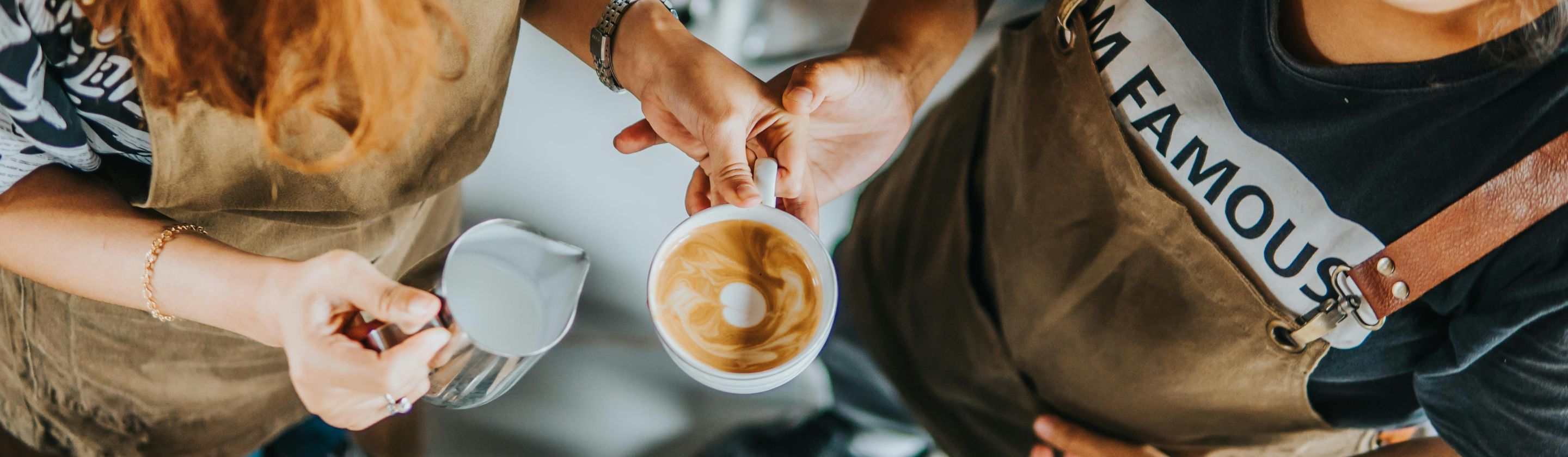
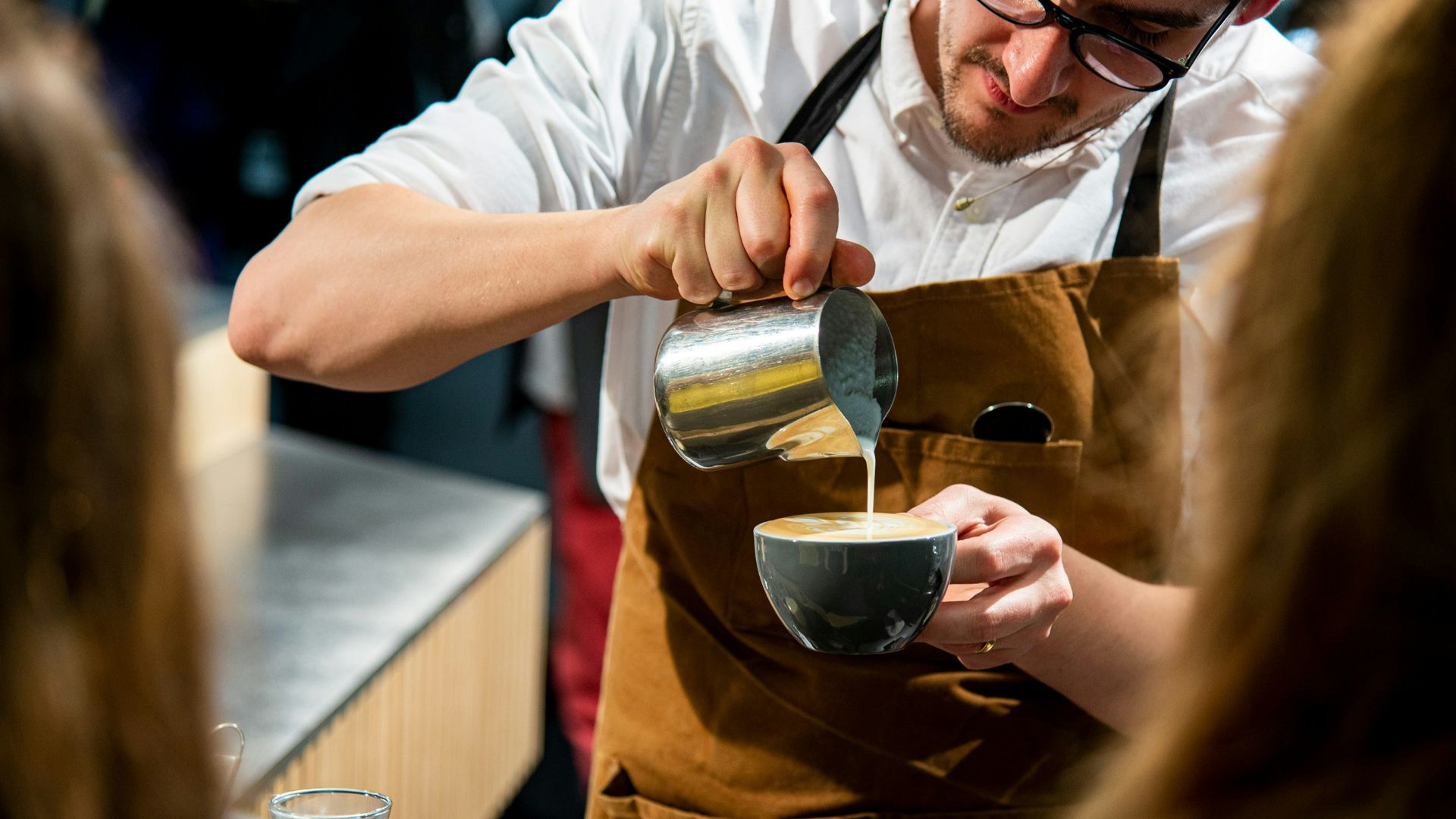
There is a moment at any coffee counter where the person ahead of you says their order and you learn something about them you didn't ask to know. Not because the drink itself is revealing, exactly, but because of how they say it, what they assume, what they don't bother explaining. The barista already knows what a flat white is. Whether the customer does is a different question.
Coffee orders have always carried social information, the same way accents do, or the restaurant someone suggests on a first date. Most people don't think about it consciously, but the thinking happens anyway, on both sides of the counter, fast and automatic, before the name even makes it onto the cup.
The Order As A Kind Of Autobiography
Walk into a specialty coffee shop and watch the room for a few minutes. The person who steps up and asks for a large coffee with room gets processed slightly differently than the person who asks for a cortado, who gets processed differently from the person who orders a latte but pronounces the double t like a t in butter. None of these differences are necessarily fair, and none of them say anything reliable about intelligence or character. They say something about where a person learned to order coffee, and that is not the same thing.
Pierre Bourdieu, the French sociologist who spent decades studying how class gets transmitted through daily habit, had a term for this. He called it habitus, the set of dispositions people absorb from their upbringing that make certain choices feel natural and others feel like performing. In his 1984 book Distinction, Bourdieu argued that taste in food, art, and drink tracks with class background more closely than people tend to admit. Nobody decides to be comfortable with a flat white and vaguely uncertain about a macchiato. That comfort or uncertainty just arrives, carried in from wherever coffee was first encountered.
A cappuccino ordered in the right register, with the right casual fluency, reads as someone who has spent time in places where the cappuccino was treated seriously. An americano ordered by someone who clearly knows it is espresso and hot water, and not just a large black coffee with an Italian name, reads slightly differently than the same drink ordered by someone who discovered it as a cheaper way to fill a large cup. The drink is identical. The order is not.
What The Modifiers Say
Once the base drink is sorted, the modifiers start doing their own work. Oat milk arrived in American coffee shops almost overnight and brought a whole set of assumptions with it. United States retail sales of oat milk jumped 303 percent between 2019 and 2020, reaching over 200 million dollars in a year, according to industry data cited by Oatly, and the modifier went from niche to nearly standard in the same window. Ordering it now reads as health-adjacent, environmentally aware, and comfortable spending a dollar or two extra without making it a decision.
Extra shot signals a long day or a long habit. Oat milk signals something about how the person shops on weekends. One pump of syrup, not two, signals a familiarity with how sweet the full version is, which signals prior exposure, which loops back to something like experience. None of this is what the person is trying to say. The order is just a drink order. The signal is what leaks out around the edges.
The person who orders a flat white and immediately adds that they want it in a large cup is negotiating two different coffee cultures in real time, the Australian tradition where the drink has a specific size that is part of its point, and the American expectation that coffee is generally a vessel you hold for a while. That small friction, that one extra clause, tells you something about the person's coffee history without them meaning to share it.
The Confidence Variable
What cuts across all of it, more than the drink itself, is the confidence behind the order. Someone who asks for a latte without hesitation reads differently than someone who asks for a latte and then immediately checks whether that is the right word for what they want. Someone who says americano and leaves it there reads differently than someone who says americano and then explains it to the barista, who already knows.
Ordering coffee in a specialty shop is a small, low-stakes social performance, which is probably why it functions so efficiently as a read. Starbucks launched the pumpkin spice latte in 2003 and built a seasonal identity around a single drink, proof that a coffee order can carry emotional weight that has nothing to do with caffeine. What people choose, and how settled they seem in that choice, says something about where they feel at home in the world.
KEEP ON READING
10 Most Hated Foods in the Entire World