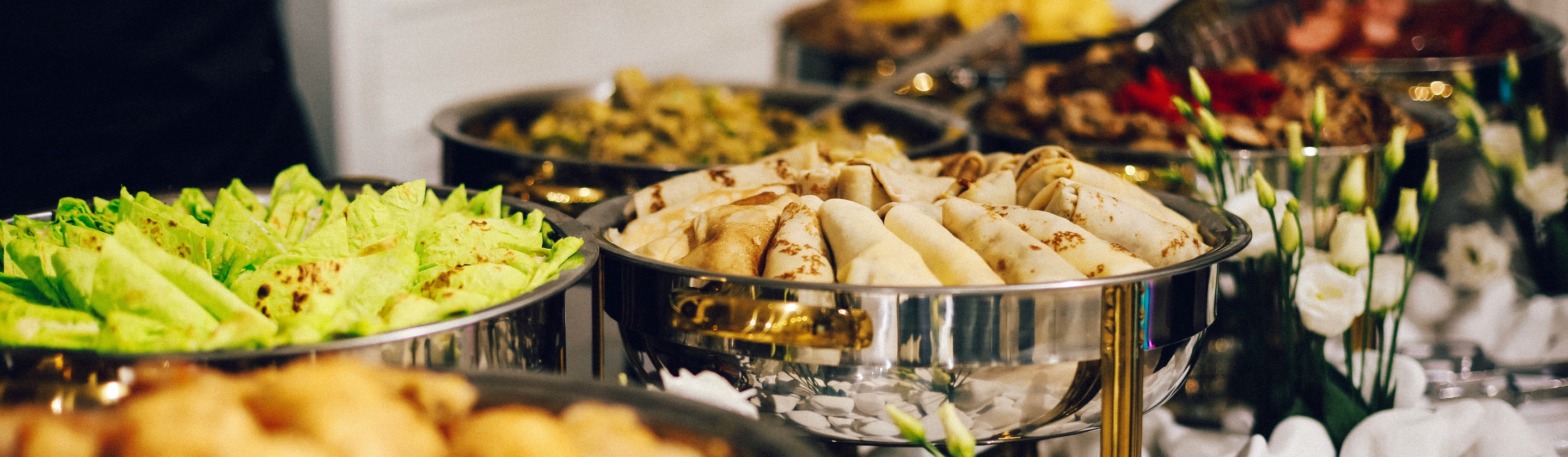
There's something undeniably appealing about walking into a restaurant, paying one flat fee, and knowing you can eat as much as you want for the rest of the night. All-you-can-eat buffets have built an entire business model around that promise, and for decades, diners have flocked to them expecting to walk away having gotten the better end of the deal. But the math behind these establishments is a lot more calculated than it looks from the dining room floor.
The truth is that buffets aren't designed around the idea of you cleaning them out; they're designed around the statistical certainty that most people won't. Once you understand how these restaurants price their meals, design their floor plans, and even choose their plates, it becomes a lot harder to see the AYCE model as a straightforward win for the customer. So which is it: are you actually getting a steal, or are you just falling for a very well-engineered illusion of value?
The Business Model Behind AYCE
Buffets survive on razor-thin margins, and most operators aim for a pre-tax profit of just a few percentage points once food, labor, and overhead are all accounted for. U.S. all-you-can-eat buffets report average revenue per customer of $20 to $30, though premium buffets in urban centers or tourist areas can charge upward of $35 per person. You might think that number sounds arbitrary, but it's actually calculated by estimating how much the average person eats and working backward from there. Marketplace notes that restaurants generally assume a customer will consume about a pound of food, then divide their daily food costs by their average customer count to land on a price point.
What makes this system work hinges on the fact that big eaters are rare. According to The Hustle's breakdown of buffet economics, over-eaters who truly cost the restaurant money account for only about 1 in every 20 diners, while the rest either eat an average amount or actually undereat relative to what they paid. That means for every person who piles their plate five times, roughly 19 others are subsidizing the meal without realizing it.
Labor savings play just as big a role as food costs do. Buffets cut out the need for a full waitstaff by having customers serve themselves, and a single buffet cook can prep enough food for far more people than a line cook working a traditional kitchen. Because self-service allows buffets to bypass a wait staff, and buffet dishes are generally less complex and prepped in enormous batches, a much smaller kitchen crew can serve a large volume of diners. That efficiency is baked directly into the price you pay at the register.
The Psychological Trick
If the pricing model relies on people eating a moderate amount, it makes sense that buffets would go out of their way to encourage exactly that. One of the most well-documented tactics is plate size. Buffets almost never hand you a full dinner plate; instead, you're often given smaller plates or bowls that physically limit how much food you can carry back to your table in a single trip.
Food placement matters just as much as plate size does. Cheaper, carbohydrate-heavy items like potatoes, pasta, and bread tend to sit at the very front of the buffet line, where hungry customers are most likely to load up before they've even seen the pricier options. Research has found that 75% of buffet customers select whatever food is in the first tray they encounter, and 66% of everything they eat comes from just the first three trays in the line. By the time you reach the shrimp or the carved roast, you've likely already filled up on the cheap stuff.
Pricing itself can also shape how satisfied you feel, regardless of how much you actually eat. In particular, a Cornell study split customers into two groups at the same pizza buffet, charging one $4 and the other $8; the group that paid more reported feeling considerably more satisfied with the experience overall. That finding suggests buffets are doing much more than just managing your stomach; they're warping your perception of value long before you take your first bite.
So, Is It Actually Worth It?
Whether a buffet is a good deal really comes down to your personal eating habits and how strategic you're willing to be about your visit. If you show up starving, skip the bread and pasta, and go straight for the priciest proteins on the line, there's a real chance you'll eat more in dollar value than you paid. For the average diner, though, the math tends to work out in the restaurant's favor, since most people simply don't have the appetite to outpace a hefty price tag.
There's also the matter of what you give up by choosing a buffet over a traditional sit-down meal. A regular restaurant lets you order exactly what you want, cooked to order, without wading through trays of pasta salad and dinner rolls to get there. If you compare a well-portioned, single entrée at a decent restaurant to the average buffet visit, you might find the à la carte option gives you better food for a similar, or even lower, price.
Of course, none of this means buffets are inherently dishonest and that you should stop going to them altogether. The unlimited food is still a real perk, and nobody's holding you back from ordering your 10th plate of chicken wings or California rolls if you're determined to. But the entire system, from the size of the plates to the layout of the food line to the price on the sign out front, is engineered around the assumption that you won't. Whether that makes a buffet a steal or a scam probably depends less on the restaurant and more on how hungry, and how strategic, you're willing to be when you walk through the door.
KEEP ON READING