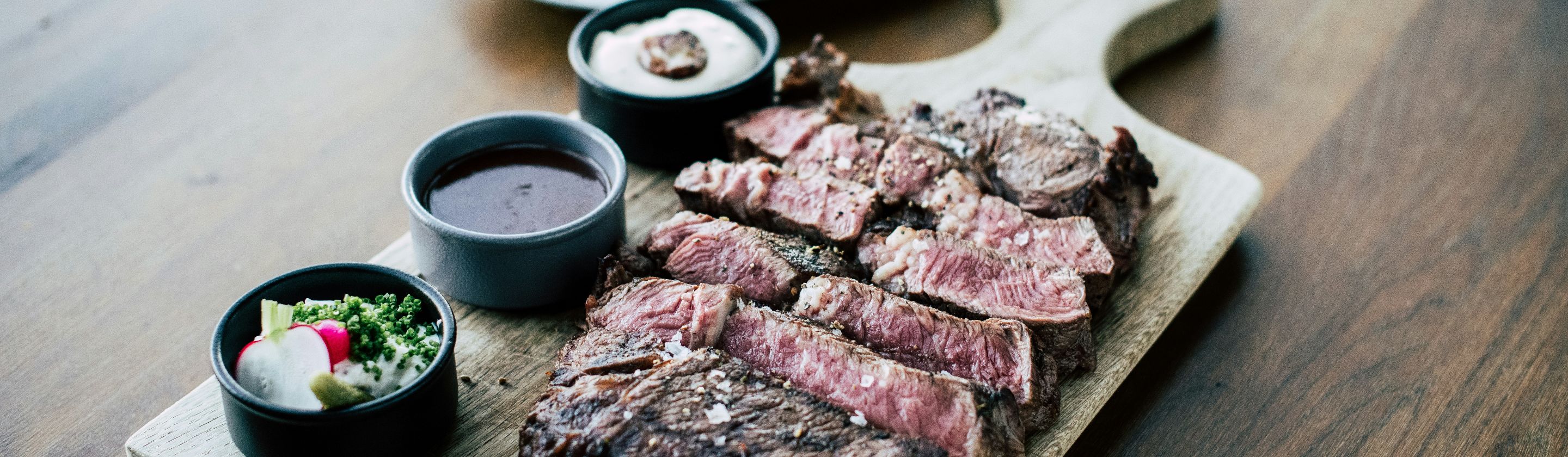
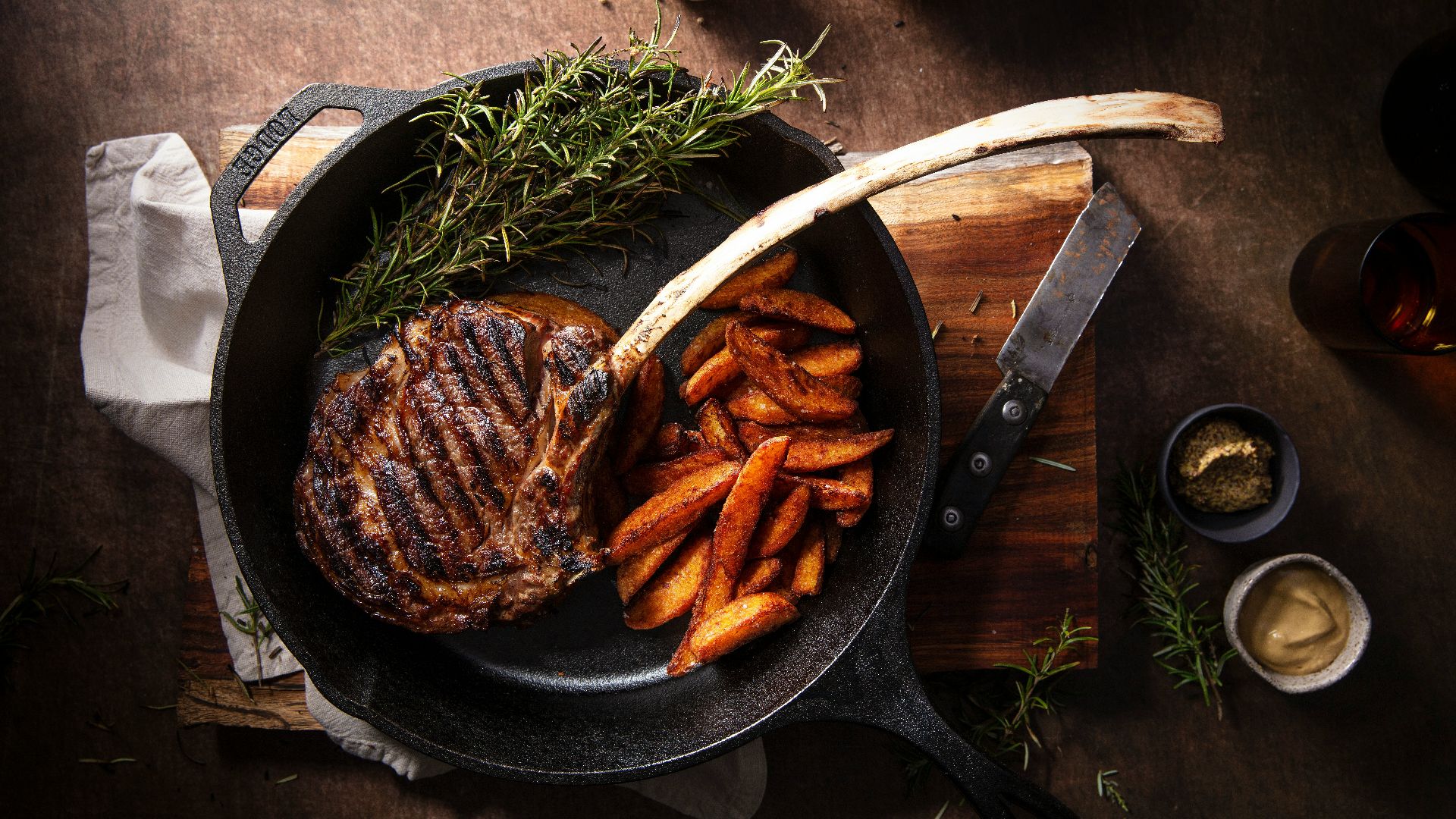
Most home cooks never quite achieve that golden-brown crust on a perfectly seared steak. Instead, they end up with gray, steamed meat that tastes like mediocrity. The culprit isn't your stove or your pan or even the cut of meat you bought. It's technique, plain and simple. We've been told for decades that searing "locks in juices," which is complete nonsense, and that myth has led us down a path of mediocre, under-browned proteins that could've been spectacular.
The Pan Isn't Actually Hot Enough
You think your pan is screaming hot. It isn't. When droplets of water skitter across the surface and evaporate in two seconds, that's barely warm enough. The Maillard reaction, that magical chemical process that creates the complex flavors and aromas we associate with seared meat, doesn't really kick into high gear until surface temperatures hit around 300°F.
When the cold meat hits the pan, the temperature plummets instantly. Now you're basically boiling your steak in its own juices instead of searing it. Professional kitchens know this, which is why they preheat their pans for up to seven minutes on high heat.
You're Overcrowding and Flipping Too Soon
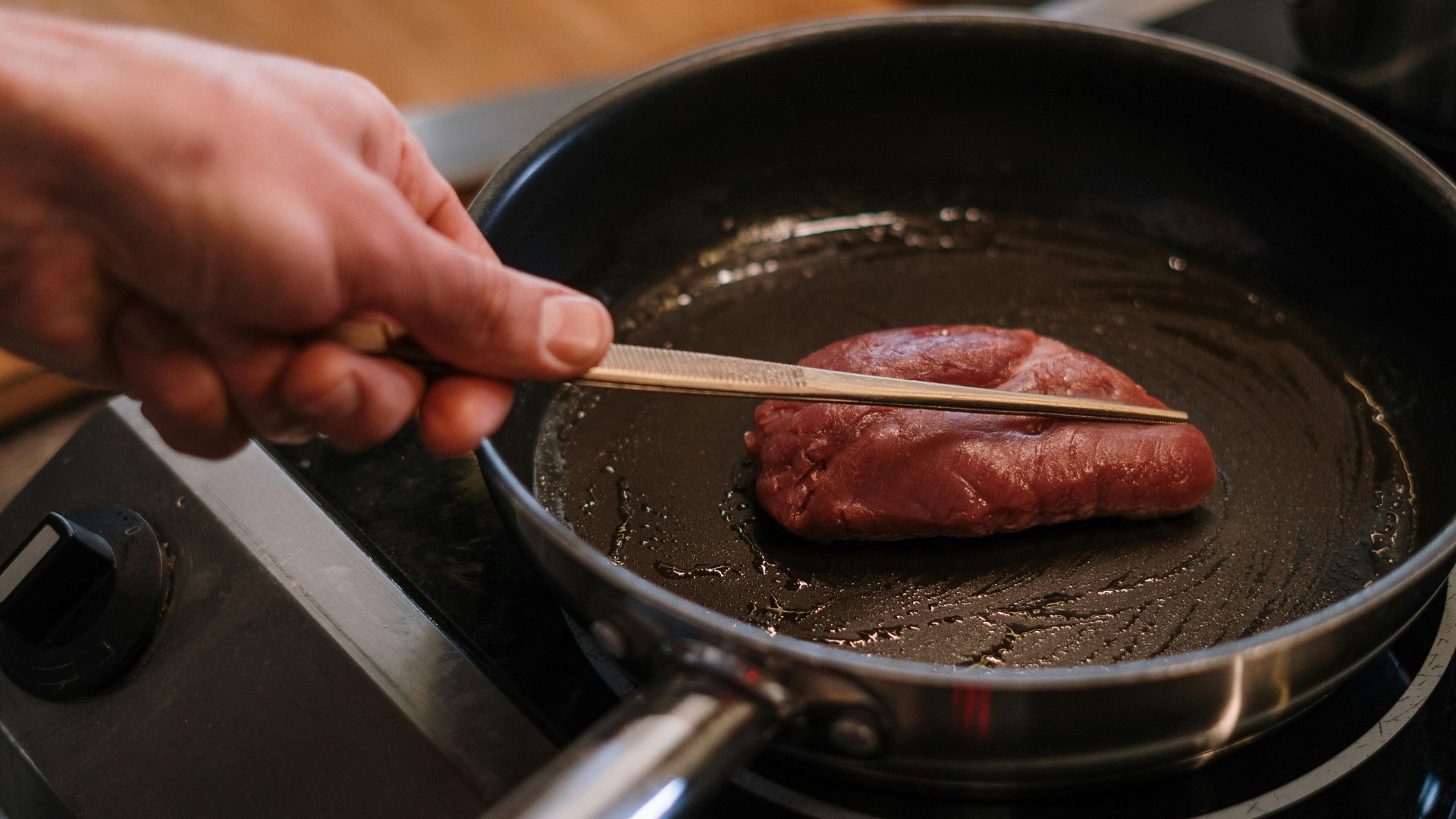
Throw three chicken thighs into a ten-inch skillet and watch the temperature crater. Each piece of cold protein is a heat sink, and when they're touching each other, they create pockets of steam that prevent browning. Professional chefs work in batches for a reason that has nothing to do with presentation and everything to do with physics.
Each piece needs at least an inch of clearance on all sides as steam needs somewhere to go. When moisture gets trapped between proteins, you're braising, not searing. That's fine if you're making coq au vin but terrible if you want a crust.
The Meat Is Straight from the Fridge
Cold meat doesn't just lower pan temperature. It creates an impossible scenario where the exterior burns before the interior warms up. Or worse, you end up with a decent crust on the outside and a cold, raw center. Temperature differentials matter enormously.
Restaurants bring their steaks to room temperature before preparing. That can take anywhere from thirty minutes for a thin cut to an hour for thicker cuts. The surface moisture also evaporates during this time, which is exactly what we want. Dry surfaces brown. Wet surfaces steam.
You're Using the Wrong Fat
Olive oil burns at around 375°F, give or take. Butter starts breaking down even sooner, somewhere around 350°F. When fats burn, they turn acrid and bitter, and those burnt flavors transfer directly to your meat, imparting an unpleasant, almost chemical taste.
Refined oils with high smoke points make sense for searing. Avocado oil handles temperatures up to 520°F. Grapeseed oil goes to about 420°F. Even regular vegetable oil sits around 400°F to 450°F depending on how it’s been refined.
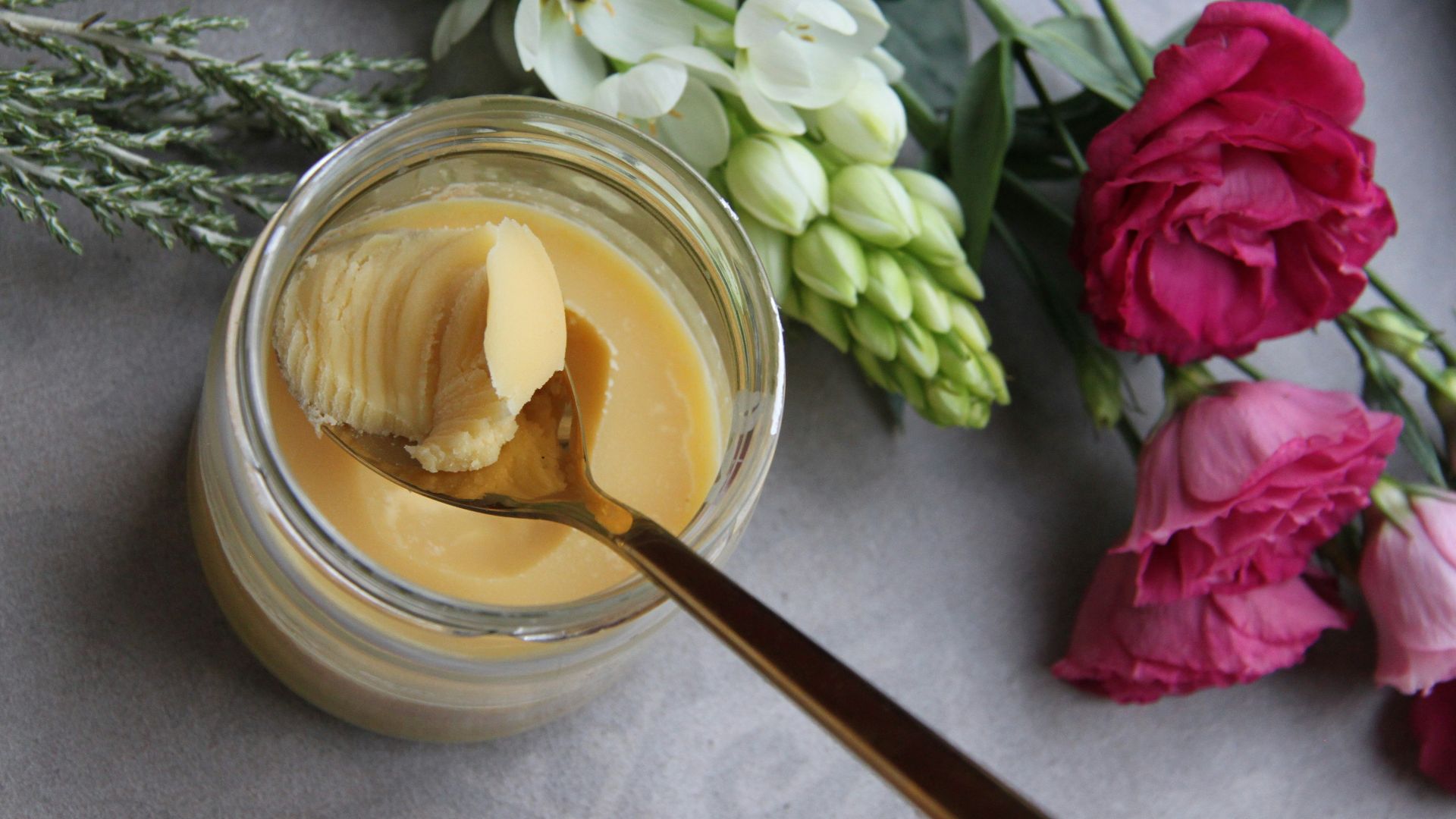
Restaurants often use clarified butter or ghee, which has the milk solids removed and can withstand much higher heat than regular butter. Or they add butter at the very end, basting the meat in that last minute for flavor rather than trying to sear in it from the start.
You're Salting at the Wrong Time
Salt draws moisture out of meat through osmosis. What people don't realize is that timing determines whether this helps or hurts.
There are two available methods. You can salt immediately before the meat hits the pan or forty-five minutes to an hour ahead. When you salt that far in advance, the moisture that gets drawn out eventually reabsorbs back into the meat along with the dissolved salt, essentially dry-brining the protein and allowing the surface to dry out.
That middle window between ten minutes and forty minutes is where we consistently mess up. The meat sits there, sweating, getting wetter by the minute and sabotaging the crust before we even turn on the stove.
KEEP ON READING
20 Dishes That Built Modern American Cuisine