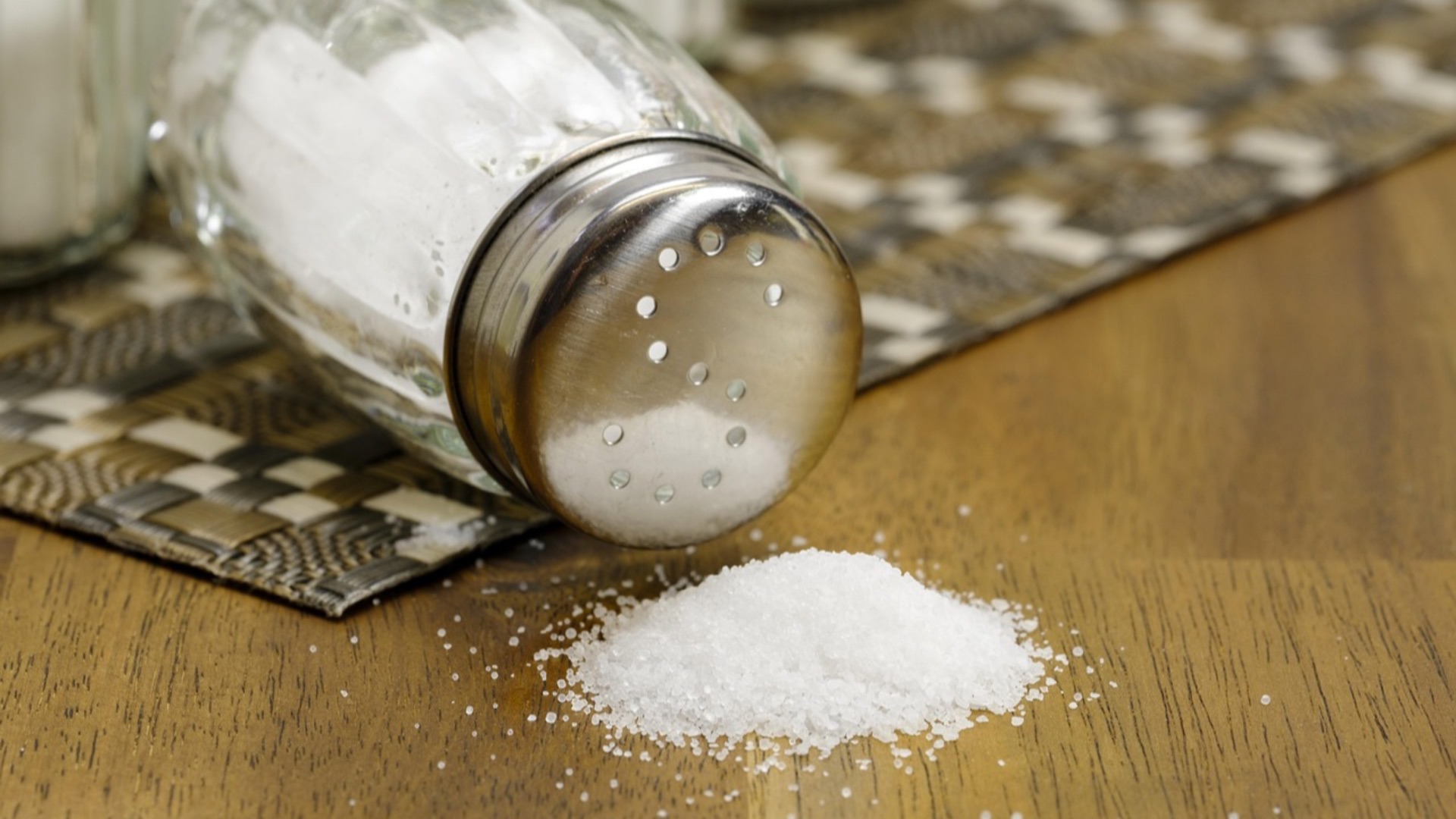
Sodium is one of those nutrients that most people don't think twice about until a doctor brings it up. It doesn't help, either, that it's in almost everything, from the obvious culprits like chips and fast food to less expected sources like bread, canned soups, and salad dressings. Plus, most dietary sodium (over 70%) comes from packaged and prepared foods, not from the salt shaker at the table. That means even if you're not seasoning your meals heavily, you could still be consuming far more than you realize.
The Dietary Guidelines for Americans recommends that adults limit their sodium intake to less than 2,300 mg per day, which is roughly equivalent to one teaspoon of table salt. Unfortunately, the average adult eats about 3,400 milligrams of sodium per day, well above that threshold. If you're thinking of cutting your intake, here are three easy habit changes you can make that (thankfully) don't require a complete diet overhaul.
Start Reading Nutrition Labels
One of the simplest things you can do to reduce your sodium intake is to actually pay attention to the nutrition labels on the food you buy. The Nutrition Facts label on packaged foods shows the sodium content per serving, and you can use it to compare products and make more informed decisions at the grocery store. Many people are surprised to find that two brands of the same product (say, canned tomatoes or chicken broth) can have wildly different sodium levels.
In particular, the Percent Daily Value for sodium on a label tells you how much of the recommended amount a single serving contains, based on a daily value of 2,300 mg. If a product shows 50% DV, for example, one serving is already providing 1,150 mg of your daily limit. Aiming for products with a lower % DV per serving is a practical strategy that adds up over the course of a day. As a general rule, foods with a % Daily Value of 5% or lower are considered low in sodium, while anything above 15% is considered high.
It's also worth knowing that sodium goes by more names than just "salt" on an ingredient list. Sodium can appear as monosodium glutamate (MSG), sodium citrate, sodium alginate, and sodium phosphate, among many other names. Keep in mind, too, that ingredients are listed in descending order by weight, so if any form of sodium appears near the top of the list, there's likely a significant amount in that product. Some foods that don't taste salty at all, like sugary cereals and pastries, can still contain substantial amounts of sodium, which is why relying on your taste buds alone isn't an accurate way to assess a food's sodium content.
Cook More Meals at Home
Preparing your own food is one of the most effective ways to take control of how much sodium you're consuming on a daily basis. Restaurant and fast-food meals contain significantly more sodium per 1,000 calories than food prepared at home—about 1,879 mg versus 1,552 mg per 1,000 calories, respectively. When you're cooking at home, you decide what goes into the dish and how much salt is added, which gives you a level of control that eating out simply doesn't allow.
That control extends to the ingredients you choose, not just how much salt you reach for. Rinsing canned beans and vegetables before use can reduce the sodium content by up to 40%, and cooking pasta, rice, and hot cereals without salt is an easy swap since you'll typically be adding other flavorful ingredients anyway. Swapping processed meats for fresh cuts is another meaningful change; while fresh cuts of beef, chicken, or pork contain natural sodium, the content is still much less than the sodium added during processing in products like bacon or ham.
Flavor doesn't have to suffer when you cut back on salt, though. Herbs, spices, lemon, lime, vinegar, and salt-free seasoning blends can all boost flavor in place of salt or high-sodium seasonings like soy sauce and spice mixes. Your palate will also adjust more quickly than you might expect; it typically takes about six to eight weeks to get used to eating food with much lower quantities of salt, and once you've adapted, heavily salted foods can actually start to taste unpleasantly strong.
Cut Back on Processed and Packaged Foods
Processed and packaged foods are by far the largest contributor to high sodium intake in most people's diets, and reducing how much of them you eat is one of the highest-impact changes you can make. Foods with only moderate amounts of sodium per serving, like bread, can become major sources over the course of a day simply because they're eaten so frequently. The problem often stems from the accumulation of sodium across multiple products throughout the day, not just a single high-sodium snack.
Swapping out processed options for fresh alternatives wherever possible is another reliable way to bring your intake down. Fresh vegetables, proteins prepared without brines or seasonings, and canned goods labeled "no salt added" are all good starting points for building a lower-sodium shopping cart. When fresh isn't an option, look for products labeled "low sodium," "reduced sodium," or "no salt added"; this often helps you make smarter choices without spending a lot of time comparing labels.
Condiments and sauces are another area worth reviewing, since they can add a surprising amount of sodium to an otherwise reasonable meal. Soy sauce, bottled salad dressings, ketchup, jarred salsas, capers, mustard, pickles, olives, and relish can all be loaded with sodium, and most people use these in quantities that go well beyond a single serving. If that sounds like you, try opting for lower-sodium versions of these items, or use them more sparingly to keep your daily intake in check without eliminating the foods you enjoy.
Ultimately, reducing your sodium intake doesn't have to mean giving up flavor or completely restructuring your diet. Try starting with small, consistent changes, like the ones we've suggested; when done together, they may bring your daily sodium intake down significantly, or at least closer to the recommended limit. However, it's also worth noting that if you're managing a specific health condition, you should speak with your doctor or a registered dietitian first to discuss the sodium targets that make the most sense for your individual needs.
KEEP ON READING

10 Most Hated Foods in the Entire World