Nobody announces it. Nobody prints it on a menu or hangs it in a produce aisle. And yet everyone who has ever ordered a salad, built a burger, or stared into the refrigerator drawer at 11 p.m. understands instinctively that lettuce has a caste system. Some varieties signal effort and discernment. Others signal that you grabbed whatever was closest to the door. The gap between iceberg and arugula is not just botanical. It is cultural, nutritional, and faintly moral in a way that says something revealing about how we've decided to feel about food.
The hierarchy mostly goes unexamined, which is what makes it worth examining. Lettuce is the most widely consumed leafy green in the United States, and according to the USDA, it accounted for nearly one-fifth of all vegetable cash receipts in 2022. Inside that ubiquity lives a remarkably rigid set of assumptions about which leaves are acceptable and which ones reveal something unflattering about your choices.
The Bottom Of the Ladder
Iceberg lettuce is where the hierarchy starts, which is slightly unfair and almost entirely earned. Introduced by the Burpee Seed Company in 1894 and named for the crushed ice that kept it fresh during transcontinental rail transport, iceberg was designed for logistics more than flavor. Its dense, pale head travels well, bruises slowly, and carries almost nothing in the way of nutritional weight. Per cup, it delivers roughly 10 calories and a small contribution of vitamins A and K, but compared to darker varieties, it has been consistently outperformed on nearly every metric that nutritionists track.
What iceberg does have is texture and history. By the mid-1950s, Americans were eating about 14 pounds of lettuce per person annually, up from just over 4 pounds in 1919, and iceberg drove most of that growth. It was the lettuce of mid-century America, of wedge salads at steakhouses and shredded toppings at fast food counters, and that association never fully dissolved. Ordering a wedge salad in a good restaurant is practically retro-chic now, but putting iceberg in a home salad that isn't consciously nostalgic invites quiet judgment from the kind of person who has opinions about olive oil.
The iceberg problem is less about taste and more about what it signals. Using it reads as not having tried, even when you technically did try. The defense of iceberg, that its high water content aids hydration and its neutral crunch balances bitter greens, is correct and goes largely unheard.
The Respectable Middle
Romaine occupies the solid center of the hierarchy, the place where competence lives. It has genuine nutritional credentials, providing significantly more vitamin A, folate, calcium, and iron than iceberg, and a 2016 study found that romaine contains roughly 45 percent more beta-carotene and lutein than crisphead varieties. It holds up under dressing without going limp, it works in a Caesar, and it doesn't make any demands of you. Romaine is the lettuce equivalent of a reliable midsize sedan: not exciting, never embarrassing.
Butterhead sits just below romaine in prestige but slightly above it in tenderness. The soft, pliable leaves of a Boston or Bibb variety read as gentle and considered, the kind of lettuce that appears in restaurant salads with carefully sliced radishes and a vinaigrette made tableside. Too delicate for a taco and structurally unreliable under anything heavy, but in the right setting it signals something quietly refined.
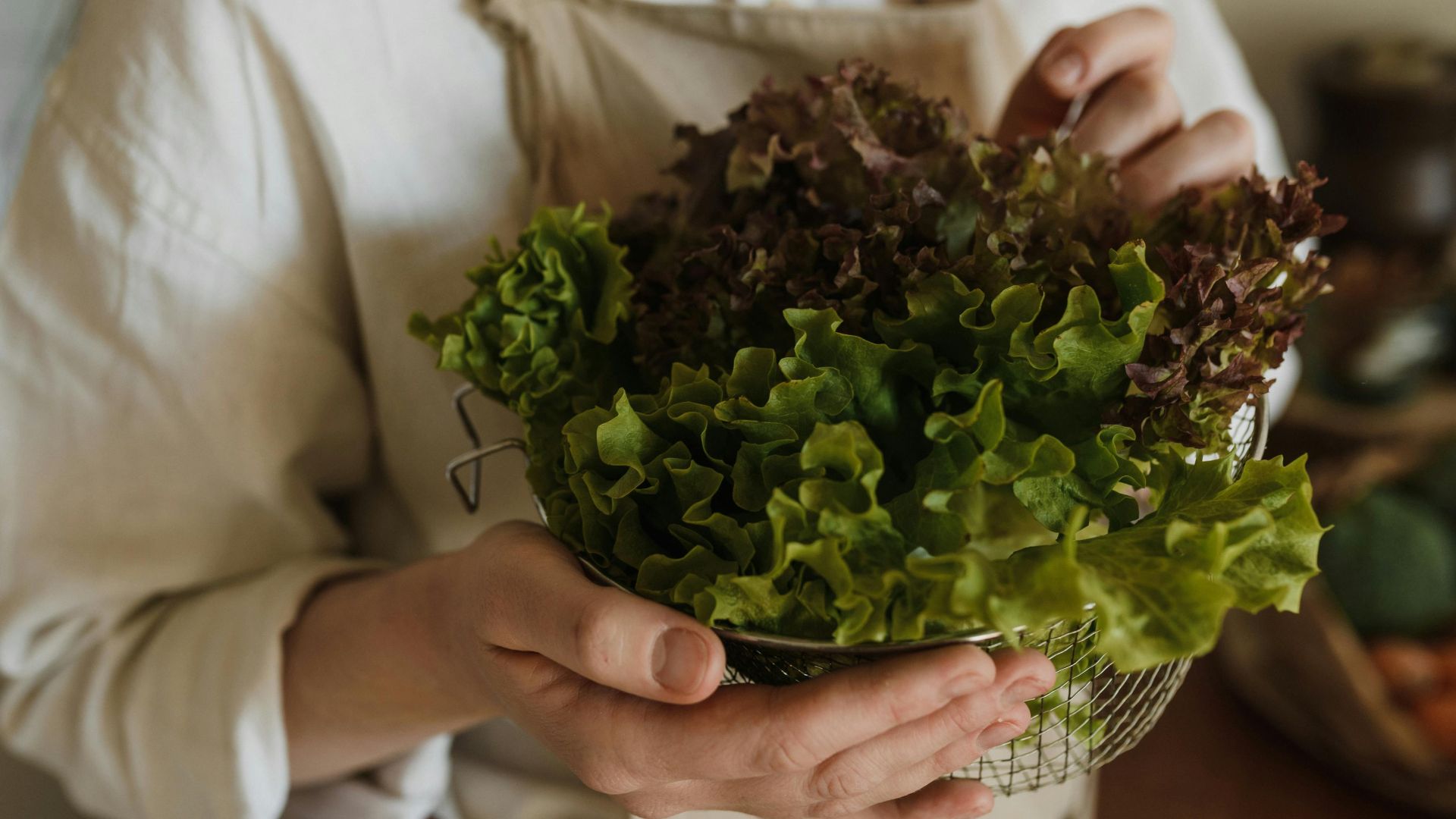
Leaf lettuces, both red and green, occupy a transitional zone where they're good enough that nobody questions them and interesting enough to occasionally get credit for being a deliberate choice. Red leaf lettuce has a mild bitterness and deep color that suggests more nutrients than iceberg, which is accurate, and its loose structure means it wilts quickly, which is the built-in penalty for anything that signals effort.
The Top of the Hierarchy
Arugula sits at the peak. According to USDA nutritional data, arugula contains roughly 187 percent more protein per 100 grams than iceberg lettuce and considerably more calcium, potassium, and vitamin K. The European Food Safety Authority has also noted that arugula contains approximately three times more nitrates than standard lettuce, which matters for cardiovascular function. The peppery bite is polarizing, but that's part of the social work it does. Enjoying arugula is a mild personality statement, the kind that ends up on a charcuterie board without being announced.
Watercress and radicchio occupy the upper end of the hierarchy as well, both distinguished by a bitterness that functions as a kind of gatekeeping. They are lettuces for people who have made peace with vegetables that do not try to please you. Radicchio's deep burgundy color and sharp flavor suggest you know what you're doing in a kitchen, even if all you did was tear it into a bowl.
The real signal at the top of the hierarchy is dark color, which turns out to be nutritionally meaningful rather than merely aesthetic. Darker lettuce leaves receive more sunlight during growth and accumulate more chlorophyll, vitamins, and antioxidants as a result. The visual hierarchy maps roughly onto the nutritional one, and the people who reach for the darkest leaves without consciously thinking about why are operating on an instinct that is more accurate than it first appears.
KEEP ON READING


The Most Popular Chocolate Bars in the USA

The Most Popular Candies in the USA


20 Annoying Foods That Get Stuck In Your Teeth